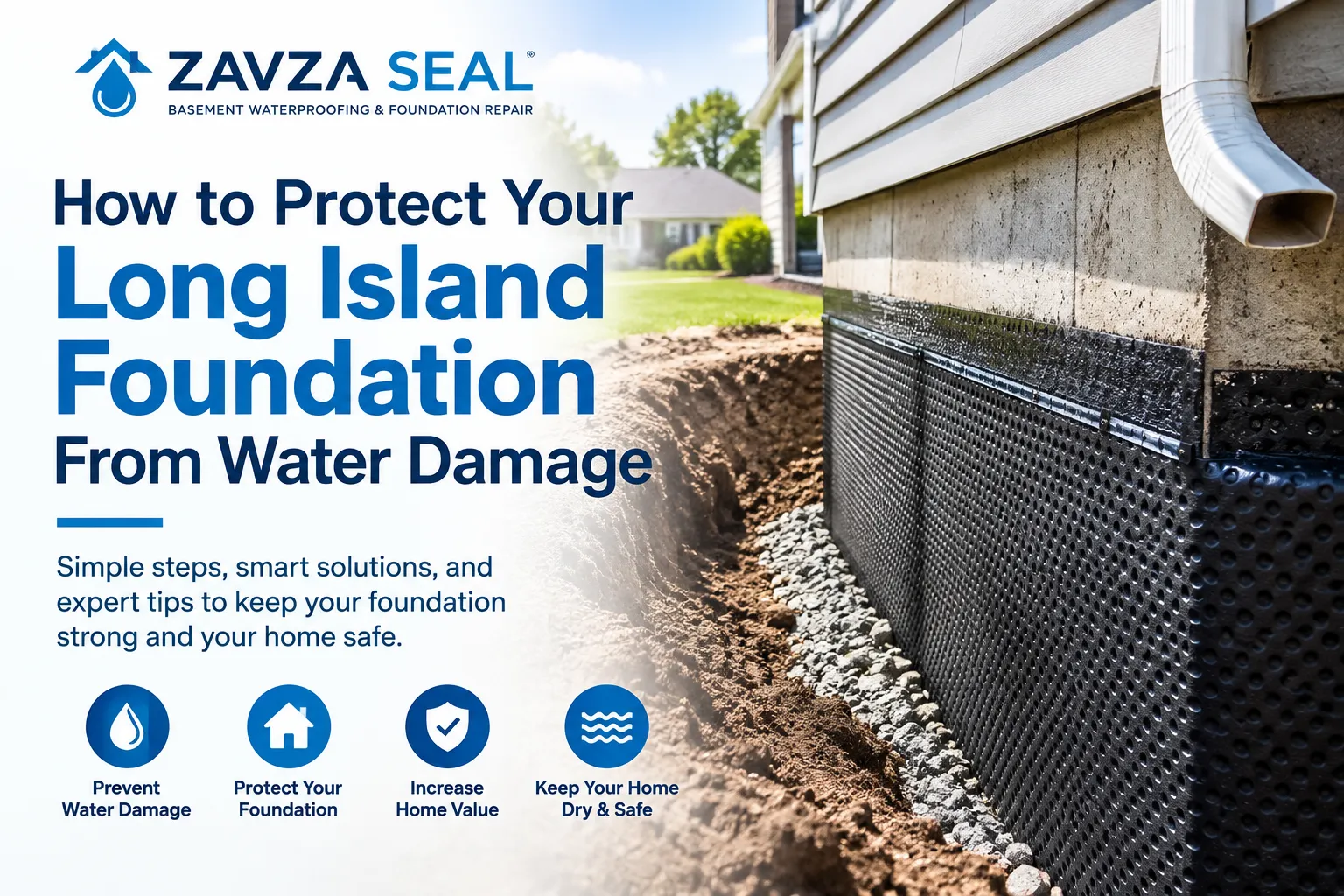

Your home’s foundation is one of its most important structural components, but it is also constantly exposed to moisture. For homeowners on Long Island, heavy rain, coastal weather, seasonal temperature changes, groundwater, and poor drainage can all contribute to foundation water damage. What may begin as a small crack or occasional dampness can eventually lead to serious moisture problems, mold growth, foundation deterioration, and expensive repairs.
Fortunately, homeowners can take several steps to protect their foundations from water damage. Understanding where water comes from and addressing drainage and waterproofing issues early can help keep your basement and foundation dry for years.
1. Keep Gutters and Downspouts Clear
One of the simplest ways to protect your Long Island foundation is to maintain your gutters and downspouts.
When gutters become clogged with leaves, dirt, and debris, rainwater can overflow and collect around the foundation. Downspouts that discharge water too close to the house can create similar problems by concentrating large amounts of water against foundation walls.
Clean your gutters regularly, especially during the fall and before periods of heavy rainfall. Downspouts should direct water away from the foundation and discharge it in an area where it can drain safely.
Proper gutter maintenance may seem like a small task, but it can significantly reduce the amount of water reaching the soil around your foundation.
2. Maintain Proper Yard Grading
The slope of the soil surrounding your home plays an important role in foundation protection.
Ideally, the ground should slope away from your foundation rather than toward it. When soil slopes toward the house, rainwater can flow directly toward foundation walls and increase the amount of moisture entering the ground around your basement.
Over time, water-saturated soil can contribute to hydrostatic pressure against foundation walls. This pressure may force moisture through cracks, joints, and other vulnerable areas.
Inspect the areas around your foundation after heavy rainfall. If you notice standing water or water flowing toward your home, correcting the grading may help reduce the problem.
3. Inspect Your Foundation for Cracks
Foundation cracks should never be ignored simply because they appear small.
Some cracks may be minor, while others can indicate movement, settlement, or water intrusion. Cracks can also provide an entry point for groundwater, especially during periods of heavy rain.
Walk around your basement and inspect visible foundation walls for:
- Horizontal or vertical cracks
- Stair-step cracks
- Damp spots
- Water stains
- Efflorescence or white powdery deposits
- Peeling paint
- Musty odors
- Areas where water appears after rainfall
If a crack is growing, leaking, or accompanied by other structural concerns, have it evaluated by a qualified professional.
4. Consider Professional Basement Waterproofing
Exterior drainage improvements can reduce water around your foundation, but they may not address an existing moisture problem.
Professional basement waterproofing can involve several different approaches depending on the source of the water and the condition of the property. Potential solutions include interior drainage systems, exterior waterproofing, crack repair, sump pump systems, and other moisture-management measures.
The appropriate solution depends on factors such as the foundation type, soil conditions, water source, drainage configuration, and severity of the problem.
Rather than applying a one-size-fits-all solution, homeowners should have the basement and foundation evaluated to determine where water is entering and why.
5. Maintain Your Sump Pump
A sump pump can be an important part of a basement water-management system, particularly in homes susceptible to groundwater or flooding.
However, a sump pump can only protect your basement if it is functioning properly.
Test your sump pump periodically by adding water to the sump pit and confirming that the pump activates and removes the water. Check that the discharge pipe is clear and that water is being directed away from the foundation.
Homeowners may also consider a backup sump pump or battery backup system if basement flooding could cause significant damage during a power outage.
Regular maintenance can help reduce the risk of discovering a failed pump during the next major storm.
6. Address Basement Moisture Quickly
A damp basement should not be treated as normal.
Persistent moisture can contribute to mold growth, unpleasant odors, damaged finishes, deteriorating materials, and poor indoor air quality. Excess moisture can also make an existing foundation problem worse.
If you notice condensation, damp walls, puddles, or recurring water stains, identify the source as soon as possible.
Depending on the situation, the source may be groundwater, surface runoff, plumbing leaks, condensation, foundation cracks, or inadequate drainage. Correctly identifying the source is essential because treating only the visible symptom may not solve the underlying problem.
7. Protect Foundation Walls From Exterior Water
Exterior waterproofing can help protect foundation walls from water that reaches them from surrounding soil.
Depending on the property, exterior waterproofing may include excavation, cleaning and preparing foundation walls, applying a waterproofing membrane or coating, improving drainage, and installing or repairing drainage components.
Exterior solutions can be particularly useful when the problem originates outside the foundation and when access to the exterior walls is practical.
Because exterior waterproofing can involve excavation and specialized installation, homeowners should work with experienced waterproofing professionals rather than attempting complex repairs without proper knowledge.
8. Keep Landscaping Away From the Foundation
Landscaping can improve the appearance of your property, but certain landscaping choices can also contribute to moisture problems.
Large plants and trees should be positioned carefully around the home. Irrigation systems should not continuously spray water against foundation walls. Garden beds should also be designed so they do not trap water against the foundation.
When planning landscaping, consider both aesthetics and drainage. The goal is to ensure that rain and irrigation water can move away from the home efficiently.
9. Prepare Before Long Island Storms
Heavy storms can quickly expose weaknesses in a home's drainage and waterproofing system.
Before major rainfall, inspect gutters, downspouts, sump pumps, window wells, and visible drainage areas. Remove leaves and debris that could prevent water from flowing properly.
After the storm, check your basement and the exterior foundation area for signs of water intrusion.
Taking preventive action before severe weather is often easier and less expensive than dealing with extensive water damage afterward.
10. Schedule a Professional Foundation and Waterproofing Inspection
Regular inspections can help homeowners identify developing problems before they become major repairs.
A professional can look for signs of water intrusion, drainage problems, foundation cracks, hydrostatic pressure, failing waterproofing materials, and other potential concerns.
For Long Island homeowners, local environmental conditions make effective water management particularly important. Rather than waiting until a basement floods, consider evaluating your home's drainage and foundation protection measures proactively.
Protect Your Long Island Foundation With Zavza Seal
Water damage can affect more than just your basement. Persistent moisture can damage walls and flooring, encourage mold growth, affect stored belongings, and potentially contribute to long-term deterioration of building materials.
The best approach is prevention: maintain your drainage system, keep water away from foundation walls, monitor cracks and moisture, maintain your sump pump, and address problems promptly.






























Sign in to leave a comment.