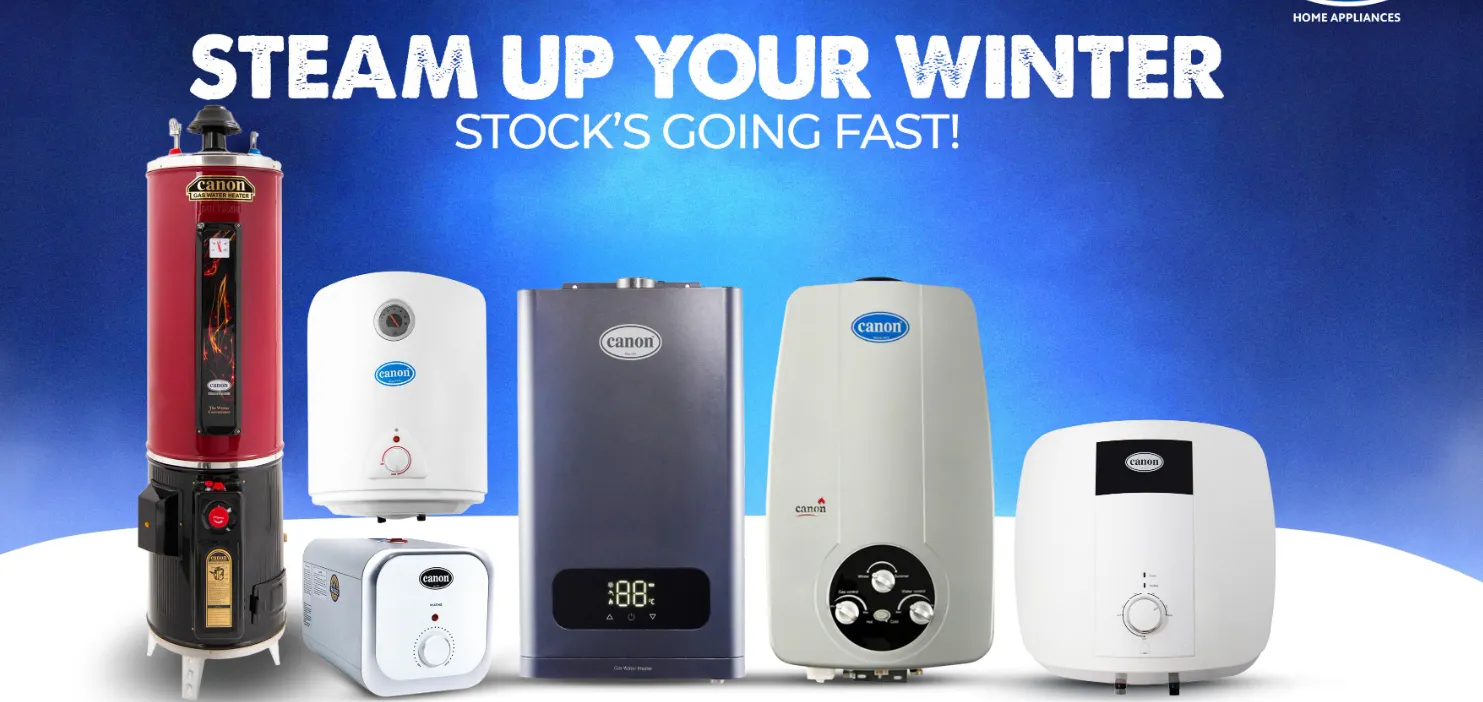

Winter brings a welcome change in weather across Pakistan, but it also increases the need for hot water. From early-morning showers to washing dishes and completing household chores, a geyser can quickly become one of the most frequently used appliances in a home.
The problem is that frequent water heating can also increase household energy expenses.
With electricity tariffs, gas availability and household budgets being major concerns for Pakistani families, using a geyser efficiently has become increasingly important. The good news is that reducing geyser-related energy costs does not always require replacing the appliance. Simple changes in capacity, temperature settings, usage habits, maintenance and insulation can make a meaningful difference.
Whether your home uses an electric, gas or hybrid water heater, understanding how the appliance consumes energy can help you make better decisions throughout the winter season.
Why Geyser Costs Increase During Pakistani Winters
Geyser usage naturally increases when temperatures fall.
During warmer months, many households may only use hot water occasionally. In winter, however, hot water becomes part of the daily routine. People may take longer showers, use more hot water for cleaning and turn the geyser on multiple times throughout the day.
Cold incoming water also means the appliance may need to work harder to bring water up to a comfortable temperature.
Several factors can contribute to higher energy consumption:
- Frequent geyser usage
- Excessively high temperature settings
- Oversized water heaters
- Poor tank insulation
- Water leakage
- Old or inefficient heating components
- Keeping stored water hot for unnecessarily long periods
- Using hot water when it is not actually required
The first step toward lowering costs is therefore understanding your household's actual hot-water requirements.
Choose the Right Geyser Capacity
One of the most common mistakes is choosing a geyser that is significantly larger than necessary.
A larger storage tank requires more energy to heat. If your household only needs a limited amount of hot water, continuously heating a large volume can result in unnecessary energy use.
At the same time, choosing a geyser that is too small can also be inconvenient. A family may end up reheating water repeatedly because the available hot water is insufficient.
The ideal capacity depends on:
- Number of household members
- Number of bathrooms
- Showering habits
- Kitchen hot-water usage
- Peak usage periods
- Frequency of daily use
A small family may have very different requirements from a household with six or seven members.
Before buying a new appliance, assess how much hot water your family actually uses instead of automatically selecting the largest capacity available.
Set a Reasonable Temperature
Another simple way to control energy consumption is to avoid unnecessarily high temperature settings.
Heating water to an extremely high temperature requires more energy. It may also mean that users have to mix the hot water with cold water before using it, which can reduce the practical benefit of heating it so much in the first place.
A comfortable temperature is generally more sensible for everyday household use.
If your geyser has adjustable temperature controls, use them according to your needs rather than keeping the appliance at its maximum setting throughout winter.
The exact setting will depend on the appliance, household preferences and manufacturer's recommendations.
Avoid Keeping the Geyser Running Unnecessarily
Storage geysers are designed to heat and retain water. However, keeping a heating system active continuously when hot water is not required can lead to unnecessary energy consumption.
For example, if a family generally uses hot water during the morning and evening, there may be little benefit in heating water continuously throughout the entire day.
Electric storage geysers can sometimes be managed with appropriate timers or scheduled usage, provided the appliance supports this type of operation.
The important principle is simple:
Heat water according to your actual usage pattern.
However, users should always follow the manufacturer's instructions and avoid modifying electrical or gas systems themselves.
Improve Water Heater Insulation
Heat naturally escapes from hot water and storage tanks.
Good insulation helps reduce this heat loss by slowing the transfer of heat from the stored water to the surrounding environment.
If an older storage geyser has poor insulation, it may need to reheat water more frequently to maintain the desired temperature.
When purchasing a new unit, look at insulation quality as well as capacity and heating technology.
A slightly more efficient appliance can sometimes provide better long-term value than choosing a cheaper unit with poorer insulation.
This is particularly relevant in colder regions of Pakistan, where surrounding temperatures can be considerably lower during winter.
Fix Hot Water Leaks Quickly
A small leak may not appear serious, but continuous hot-water leakage can waste both water and energy.
If heated water escapes through a faulty connection, tap, pipe or valve, the geyser may need to heat additional water to replace what has been lost.
Check your hot-water system regularly for:
- Dripping taps
- Leaking pipes
- Loose connections
- Faulty valves
- Water around the tank
- Unusual pressure changes
If you identify a problem, have it inspected by an appropriate professional.
Fixing a small issue early can be much cheaper than dealing with a larger plumbing or appliance problem later.
Use Hot Water More Efficiently
Energy savings are not only about the geyser itself. Household habits also matter.
For example, leaving a hot-water tap running while washing dishes can waste a significant amount of heated water.
Instead:
- Use only the amount of hot water required.
- Turn taps off when they are not needed.
- Avoid unnecessarily long hot showers.
- Repair dripping hot-water taps.
- Use moderate water temperatures.
- Plan high-usage activities around the time your geyser is already heating water.
Small changes may seem insignificant individually, but they can add up over an entire winter.
Electric Geysers and Electricity Bills
Electric geysers deserve special attention because their energy consumption directly contributes to electricity usage.
The amount of electricity consumed depends on factors such as:
- Geyser capacity
- Heating element power
- Starting water temperature
- Desired water temperature
- Frequency of use
- Insulation
- Duration of operation
A larger electric geyser is not automatically better.
If a household only needs a modest amount of hot water, selecting an appropriately sized appliance can help avoid unnecessary energy use.
When comparing electric geyser options in Pakistan, look beyond the purchase price and consider capacity, heating technology, controls, insulation and expected daily usage.
Gas Geysers and Winter Efficiency
Gas geysers can also consume more fuel when used heavily during winter.
For households using natural gas, efficiency depends on the condition of the appliance, heating system and gas supply.
Low gas pressure can affect performance, while an improperly maintained appliance may not operate as efficiently as intended.
Gas geysers should always be installed correctly and used in an adequately ventilated area.
If a gas geyser appears to be taking significantly longer to heat water than usual, producing unusual sounds or behaving differently, it should be inspected rather than simply used for longer periods.
Extending operating time to compensate for a performance problem may increase energy consumption without solving the underlying issue.
Compare the Total Cost Before Buying a New Geyser
When replacing an old geyser, buyers often focus on the initial purchase price.
That is understandable, especially when household budgets are tight. However, the cheapest appliance is not necessarily the cheapest option over its entire useful life.
The total cost can include:
- Purchase price
- Installation
- Electricity or gas consumption
- Maintenance
- Repairs
- Replacement parts
- Expected lifespan
This is why comparing the current geyser price in Pakistan should be only one part of the buying decision.
A slightly more expensive appliance with appropriate capacity, better insulation and useful safety features may provide better long-term value.
Think About Your Local Energy Situation
Pakistan does not have one uniform energy situation.
A household in one city may have relatively dependable gas supply, while another may regularly experience low pressure. Similarly, some homes may have reliable electricity but need to carefully manage monthly bills.
Your local conditions should therefore influence your choice.
Before purchasing a new geyser, ask:
- Is gas pressure reliable in my area?
- Are electricity costs a major concern?
- How frequently will the geyser be used?
- Does the household need instant or stored hot water?
- How many people will use the appliance?
- Is there enough space for installation?
- What type of maintenance will be required?
These questions can prevent buyers from selecting an appliance that looks good on paper but does not suit their actual circumstances.
A Practical Approach When Shopping from a Local Electronics Retailer
Buying from an established electronics retailer can make it easier to compare different water-heating technologies, capacities and price ranges in one place.
For example, Pakistani shoppers researching geysers through retailers such as Jalal Electronics can compare available options according to household requirements rather than choosing solely on brand name or advertised price.
The important thing is to compare products based on practical criteria.
Look at capacity, energy source, heating technology, safety features, warranty and installation requirements.
A reliable retailer can also make it easier for buyers to understand the differences between electric, gas and hybrid systems before making a decision.
Maintain the Geyser Before Winter
Waiting until the coldest part of winter to discover a geyser problem can be inconvenient.
A better approach is to inspect the appliance before heavy seasonal use begins.
Depending on the type of geyser, maintenance may include:
- Checking water connections
- Inspecting valves
- Checking electrical connections
- Examining gas connections
- Looking for corrosion
- Checking unusual noises
- Inspecting temperature controls
- Cleaning components according to manufacturer recommendations
Gas appliances should be inspected and serviced by qualified professionals where necessary.
Electrical components should also not be opened or modified by inexperienced users.
Regular maintenance can improve reliability and may help identify efficiency problems before they become expensive repairs.
Do Not Ignore Safety for the Sake of Saving Energy
Energy efficiency should never come at the expense of safety.
For gas geysers, proper ventilation is essential. Combustion appliances should not be installed or operated in unsuitable enclosed spaces.
For electric geysers, proper wiring, earthing and electrical protection are important.
Homeowners should never attempt unsafe modifications simply to reduce energy consumption.
For example, bypassing safety mechanisms or changing electrical connections without professional guidance can create serious hazards.
The safest energy-saving strategy is to use the appliance according to its design and manufacturer's recommendations.
How Much Can You Actually Save?
The amount a household can save depends on its existing appliance, usage pattern and energy source.
Someone who uses a geyser for several hours every day may have considerably more opportunities to reduce consumption than a household that uses hot water only briefly.
The biggest savings often come from combining several small improvements:
- Select an appropriate capacity.
- Avoid unnecessarily high temperatures.
- Reduce unnecessary operating time.
- Improve insulation where appropriate.
- Fix leaks.
- Maintain the appliance.
- Use hot water efficiently.
- Consider energy efficiency when replacing an old unit.
Instead of relying on one dramatic change, a combination of sensible habits can gradually reduce winter energy consumption.
Final Thoughts
For Pakistani households, a geyser is often essential during winter, but it does not have to become an unnecessary burden on the household budget.
The key is to match the water heater with your actual requirements and use it intelligently.
Choosing the correct capacity, maintaining reasonable temperature settings, avoiding unnecessary heating, fixing leaks and maintaining the appliance can all contribute to better efficiency.
Energy availability should also be considered. A household with unreliable gas pressure may need a different solution from one with dependable gas supply. Similarly, families concerned about electricity costs should carefully consider the size and expected consumption of an electric water heater.
When shopping for a replacement, compare more than the initial purchase price. Consider capacity, energy source, insulation, safety features, maintenance requirements and long-term operating costs.
For anyone preparing their home for winter, researching different geyser options in Pakistan before purchasing can help identify a solution that provides reliable hot water without unnecessary energy waste.

























Sign in to leave a comment.