

An older pickup doesn't necessarily need to be replaced just because it has developed rust, worn body panels, or years of visible wear. In many cases, a solid restoration can bring an aging truck back to life while preserving the vehicle you already know and enjoy.
The key is knowing which components should be repaired, which should be replaced, and where restoration efforts will make the biggest difference.
Start With a Thorough Inspection
Before buying parts or starting repairs, inspect the truck from top to bottom. Pay particular attention to the frame, suspension mounting points, cab, doors, fenders, truck box, and areas around the wheel openings.
Surface rust and cosmetic damage are very different from severe structural corrosion. If rust has compromised important structural components, have the vehicle assessed by a qualified professional before proceeding.
For body restoration, make a list of damaged panels and prioritize the areas where corrosion or damage is most advanced.
Replace Severely Rusted Body Panels
One of the biggest mistakes in an older truck restoration is trying to repair every piece of rust.
Small areas of surface corrosion can sometimes be cleaned and treated. However, when rust has created holes, weakened the metal, or spread across a large section of a panel, replacement may provide a more practical solution.
Depending on the truck, this could include replacement truck boxes, fenders, doors, bumpers, or tailgates.
Replacing a severely deteriorated panel can also provide a better foundation for painting and finishing the vehicle.
Give the Truck Box Extra Attention
The truck box often takes a tremendous amount of abuse. It carries equipment, tools, materials, and cargo while being exposed to rain, snow, road salt, and debris.
Inspect the floor, wheel wells, corners, tailgate area, and lower sections for corrosion.
If the box has extensive rust or structural deterioration, repairing individual sections may not always be the most efficient approach. A properly matched replacement truck box can transform the appearance and usability of an older pickup.
Before ordering one, verify the truck's year, make, model, bed length, cab configuration, and other fitment details.
Don't Ignore the Fenders
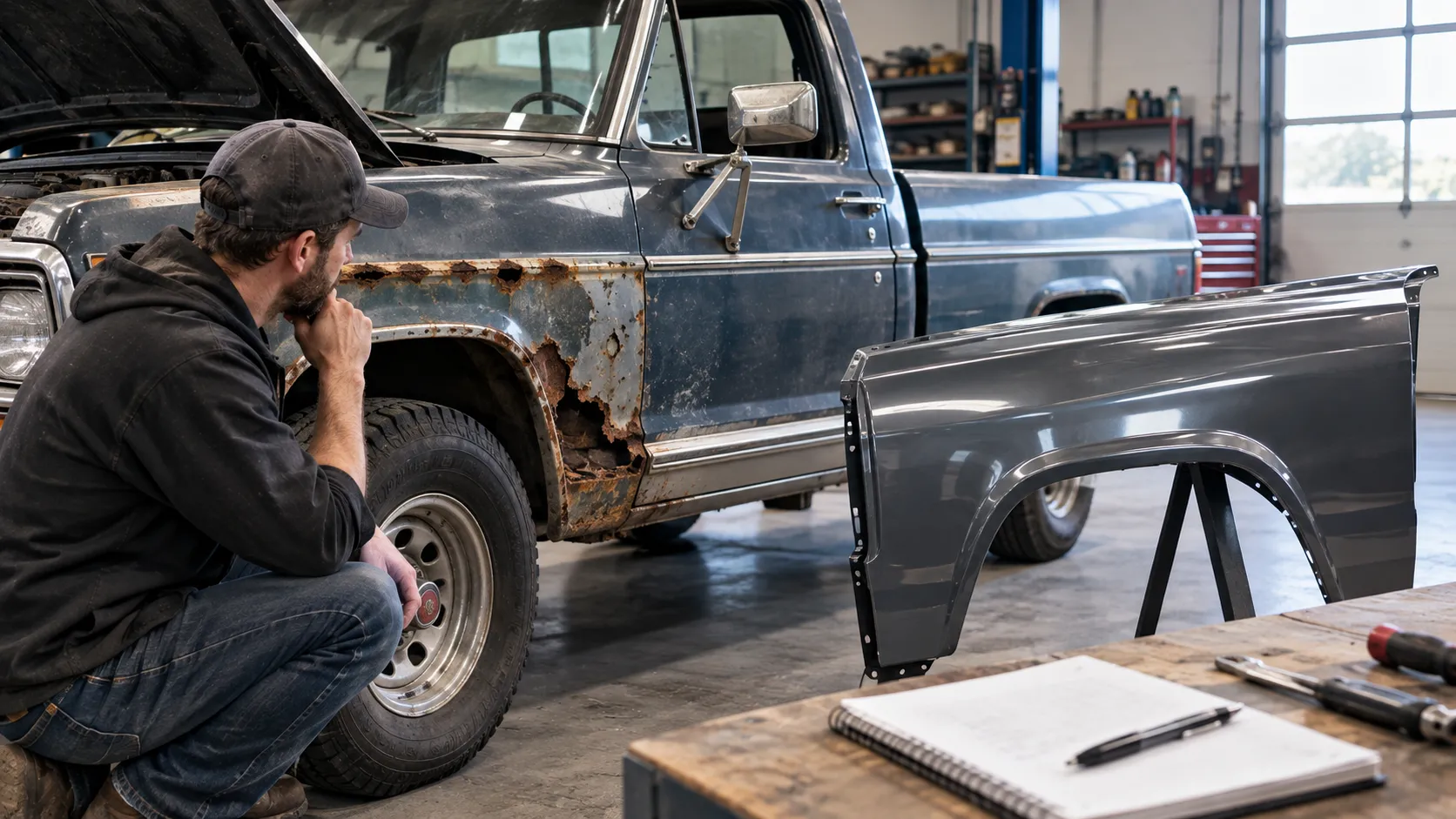
Fenders are another common problem area on older pickups. Rust often develops around the wheel openings and lower sections because these areas are constantly exposed to water, dirt, gravel, and road salt.
Minor corrosion can sometimes be treated, but badly rusted fenders may need replacement.
Installing replacement truck fenders can restore the original body lines and provide a clean surface for finishing work.
Restore the Exterior in Stages
A complete truck restoration doesn't have to happen all at once.
Consider dividing the project into stages:
Stage 1: Address structural and safety-related concerns.
Stage 2: Replace severely damaged body panels.
Stage 3: Repair smaller dents and imperfections.
Stage 4: Prepare and paint the exterior.
Stage 5: Complete trim, lighting, and finishing details.
Working in stages allows you to manage costs while keeping the project organized.
Choose Parts Based on Fitment
When restoring an older pickup, finding the correct replacement part is just as important as finding a quality part.
Always confirm the year, make, model, cab style, bed length, and side of the vehicle where applicable. Two trucks that look similar may use different body panels.
Proper fitment can reduce installation problems and help ensure that the finished truck has consistent panel gaps and body lines.
Protect the Truck After Restoration
Restoration doesn't end when the new panels are installed.
Regular washing, particularly underneath the truck and around wheel wells, can help remove dirt and road salt. Inspect vulnerable areas periodically for early signs of corrosion.
If the truck is driven in areas where winter road salt is common, corrosion protection should be part of your long-term maintenance routine.
Restore What You Have
An older pickup can still have plenty of life left in it. Instead of replacing the entire vehicle, focus on the components that need attention most.
Replacing severely damaged truck body parts, restoring the truck box, addressing rusty fenders, and protecting the finished work can dramatically change the appearance of an aging pickup.
With careful planning and the right replacement parts, restoring an older truck can be a practical way to preserve a vehicle while giving it a renewed appearance and another chapter on the road.




























Sign in to leave a comment.