

An old car can become expensive to maintain as it ages. Frequent repairs, declining fuel efficiency and fitness-related concerns may encourage an owner to consider scrapping it. However, selling a vehicle for scrap should involve more than handing over the keys to an ordinary scrap dealer.
Understanding How to scrap a car legally in India helps owners complete the required documentation, receive the applicable scrap value and ensure that the vehicle's registration is cancelled through the proper process.
When Should You Consider Scrapping Your Car?
Several factors may influence the decision to scrap a vehicle, including its mechanical condition, repair costs, fitness status and applicable registration rules. Vehicle age alone should not automatically be treated as proof that every car must be scrapped.
Owners should check the relevant rules for their vehicle category and state, including registration validity and fitness requirements, before making a decision.
Where Can You Scrap a Car in India?
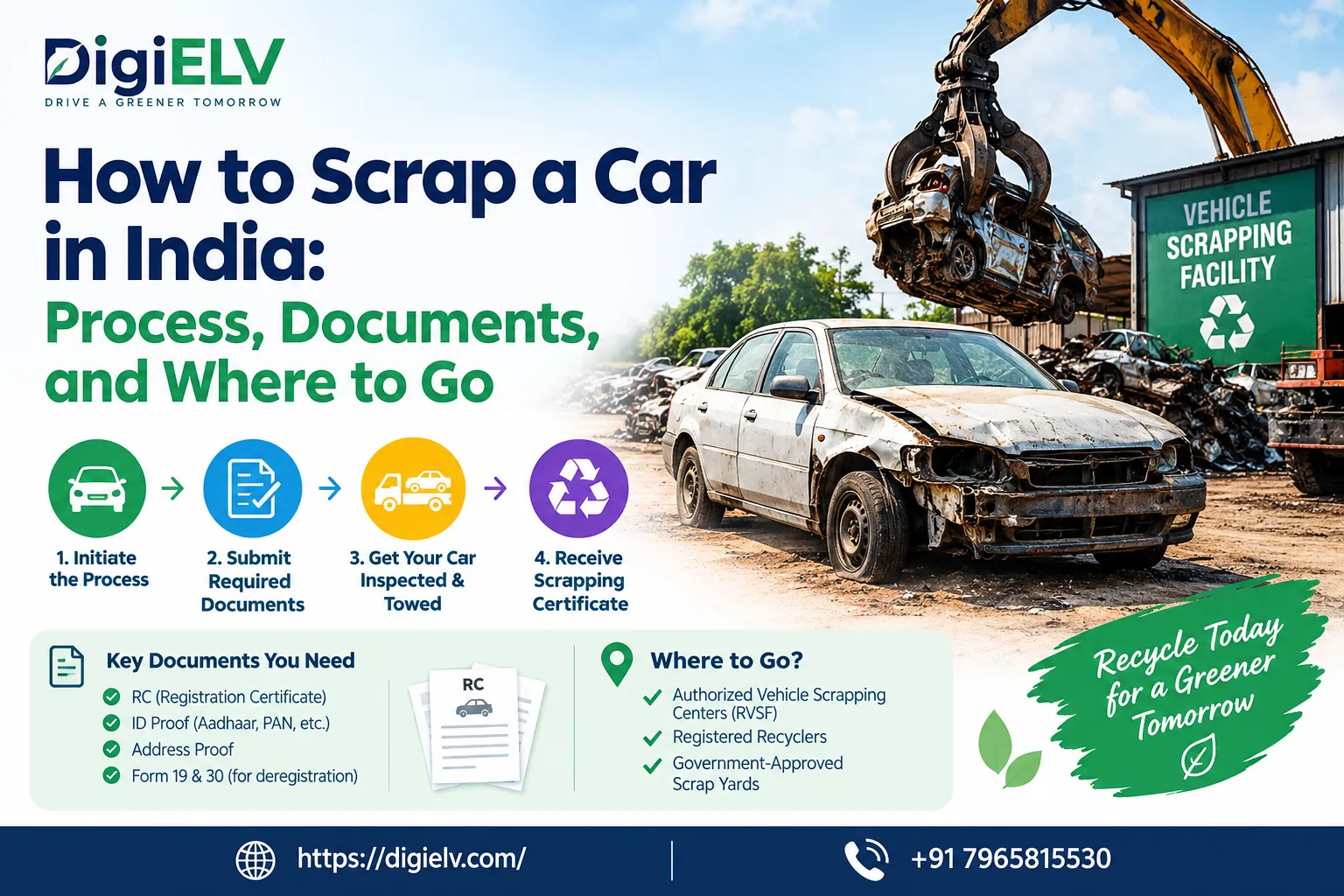
A car should be scrapped through a recognised RVSF (authorised scrapping facility) A Registered Vehicle Scrapping Facility follows the prescribed vehicle verification, depollution, dismantling and documentation procedures.
Using an authorised facility is important because an informal scrap transaction may not provide the same documentation or access to benefits associated with the formal scrappage process.
Before handing over the car, verify the facility's authorisation and confirm that it can process the vehicle under the applicable rules.
Documents Required for Car Scrapping
Prepare the following documents and details before starting the process:
- Registration Certificate (RC): Establishes the vehicle's registration details and ownership.
- Identity proof: Helps verify the registered owner's identity.
- Address proof: May be required for verification and records.
- PAN and bank details: May be needed for identification, compliance and payment processing.
- Financier's NOC: May be necessary if a loan or hypothecation remains recorded against the vehicle.
- Additional declarations: Documents may be required depending on ownership, pending dues or the vehicle's circumstances.
The exact requirements can vary. Confirm the current checklist with the authorised facility and relevant portal before submitting your application.
Step-by-Step Process to Scrap a Car
1. Check the Vehicle Records
Review the registration details and resolve applicable pending dues, ownership discrepancies or loan-related entries. A clean and accurate record can help avoid delays.
2. Start the Application
Use the prescribed government vehicle scrappage portal or ask the authorised facility to assist with the application. Enter the requested vehicle and owner details accurately.
3. Select an Authorised Facility
Choose a registered facility that accepts your vehicle category. If multiple offers are available through the prescribed process, compare the quotations and terms before deciding.
4. Complete Verification and Handover
The facility verifies the vehicle's identity and documentation. Follow its instructions for physical inspection and handover, and retain proof of the transaction.
5. Receive Payment and Certificates
After the applicable verification and acceptance process, the agreed scrap value is paid according to the facility's terms. The relevant Certificate of Deposit and Certificate of Vehicle Scrapping are issued through the prescribed process.
6. Confirm Registration Cancellation
Check that the vehicle's registration has been cancelled as required. Keep copies of the certificates and transaction records for future reference.
What Happens to the Car After Scrapping?
The authorised facility follows the required depollution and dismantling process. Recoverable materials can enter appropriate recycling channels, while fluids, batteries and other hazardous components need suitable handling.
This process helps reduce improper disposal and supports more responsible resource recovery.
Can You Earn Money from an Old Car?
Yes, an owner can receive an agreed scrap value for a vehicle accepted by the facility. The amount depends on factors such as vehicle weight, recoverable materials, condition and the facility's quotation.
An eligible Certificate of Deposit may also provide additional value under the applicable policy. The actual financial benefit depends on the certificate, applicable rules and available options; it is not a guaranteed fixed amount.
Conclusion
Scrapping a car legally involves checking its records, preparing the required documents, choosing an authorised facility and completing registration cancellation. Following the formal process helps owners maintain proof of disposal and understand the benefits for which they may qualify.
Before proceeding, compare quotations, verify the facility and retain all certificates and payment records.
Frequently Asked Questions (FAQs)
1. How can I scrap a car legally in India?
Use an authorised facility and complete the required documentation.
2. Which documents are required to scrap a car?
Usually, RC, identity proof and other applicable documents.
3. Where can I scrap my old car?
At a registered vehicle scrapping facility (RVSF).
4. Will I receive money for scrapping my car?
Yes, depending on the vehicle and the facility's offer.
#HowToScrapACar #CarScrapping #VehicleScrappingIndia #OldCarScrapping #LegalCarScrapping #RVSF #AuthorisedScrappingFacility #VehicleScrappingProcess #CertificateOfDeposit #DigiELV #CarRecycling #VehicleRecycling #ScrapCarValue #CarScrappingDocuments #SustainableRecycling























Sign in to leave a comment.