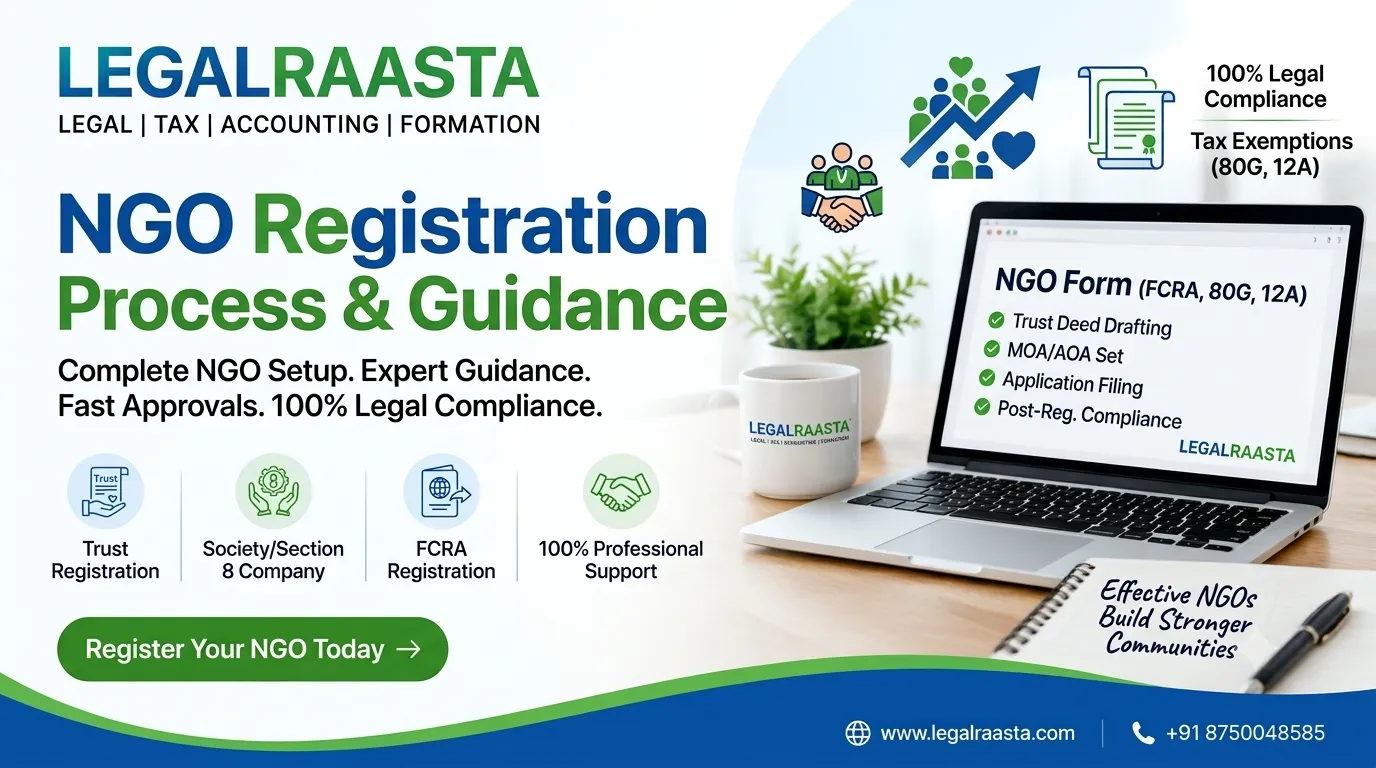

Starting a social welfare organization begins with creating a legally recognized identity. A properly registered non-profit can help you raise funds, apply for government grants, and pursue meaningful social initiatives while maintaining legal compliance. In India, social entrepreneurs and organizations can choose from three primary legal structures for establishing a non-profit. The right option depends on factors such as the size of your team, the scope of your activities, and your long-term funding objectives. Completing the NGO Registration process correctly provides a strong legal and operational foundation for carrying out transparent and impactful social work across India.
The Three Primary Legal Frameworks
India offers three distinct legal structures for non-profit organizations, each governed by different state or central legislation.
- Public Charitable Trust: Regulated under the Indian Trusts Act, 1882. Requires a minimum of two trustees and a registered Trust Deed.
- Society: Registered under the Societies Registration Act, 1860. Requires at least seven members and a formal Governing Body.
- Section 8 Company: Governed by the Companies Act, 2013. Offers maximum credibility, national reach, and limited liability protection.
Step-by-Step Filing Workflow
The filing process demands strict technical adherence to government rules.
- Select an appropriate structure based on your long-term charitable objectives.
- Obtain Digital Signature Certificates and Director Identification Numbers for founders.
- Reserve a unique name through the Ministry of Corporate Affairs or local registrar portal.
- Draft the Memorandum of Association, Articles of Association, or Trust Deed carefully.
- Submit the final application alongside necessary address proofs and member identity documents for government scrutiny.
Why NGO Registration Compliance is Complex
Navigating NGO Registration compliance involves strict scrutiny from multiple state and central government departments. Each state maintains specific guidelines for society rules and trust deed execution. Mismatched details in founder background checks or vague charitable objectives cause immediate objections from vigilant reviewing officers. Furthermore, securing subsequent tax exemptions under Section 12A and Section 80G requires meticulous accounting standards right from inception. Managing these overlapping legal requirements without expert guidance quickly becomes overwhelming for social founders.
Realistic Timelines and Scrutiny
The timeline for NGO registration can vary depending on the legal structure you choose and the applicable government procedures. Registration of a Public Trust or Society generally takes around 15 to 30 working days, subject to the relevant state authority’s processing time. In comparison, forming a Section 8 Company through the MCA portal may take approximately 20 to 45 working days. Authorities review the organization’s objectives and submitted documents to ensure they meet the applicable legal and public-benefit requirements before issuing the relevant registration or incorporation certificate.
Common Filing Mistakes to Avoid
Simple errors frequently delay official approvals for months.
- Drafted objectives that include commercial or profit-making motives.
- Incomplete utility bills or missing property owner NOCs for the registered office address.
- Mismatched names across official PAN, Aadhaar, and passport identity documents of founding members.
- Selecting restricted or misleading words in the proposed non-profit name.
Consequences of Unregistered Social Operations
Operating without legal recognition creates severe operational risks. Unregistered groups cannot open official bank accounts or accept corporate social responsibility funding legally. Public donations collected without statutory tax approval expose founders to severe tax liabilities. Furthermore, unauthorized fundraising activities invite heavy financial penalties and legal prosecution from regulatory authorities, permanently damaging your social reputation.
Scale Your Social Impact with LegalRaasta
Starting a non-profit organization doesn’t have to be complicated by lengthy paperwork and complex legal procedures. At LegalRaasta, our experienced professionals provide end-to-end support for your NGO Registration, making the entire process simple and hassle-free. From name reservation and deed preparation to MCA filings and applications for tax exemptions, we handle the essential legal and compliance requirements on your behalf. Our dedicated team takes care of the formalities so you can focus on creating a meaningful social impact. Partner with LegalRaasta for reliable legal guidance, smooth compliance, and a streamlined NGO registration process.

















Sign in to leave a comment.