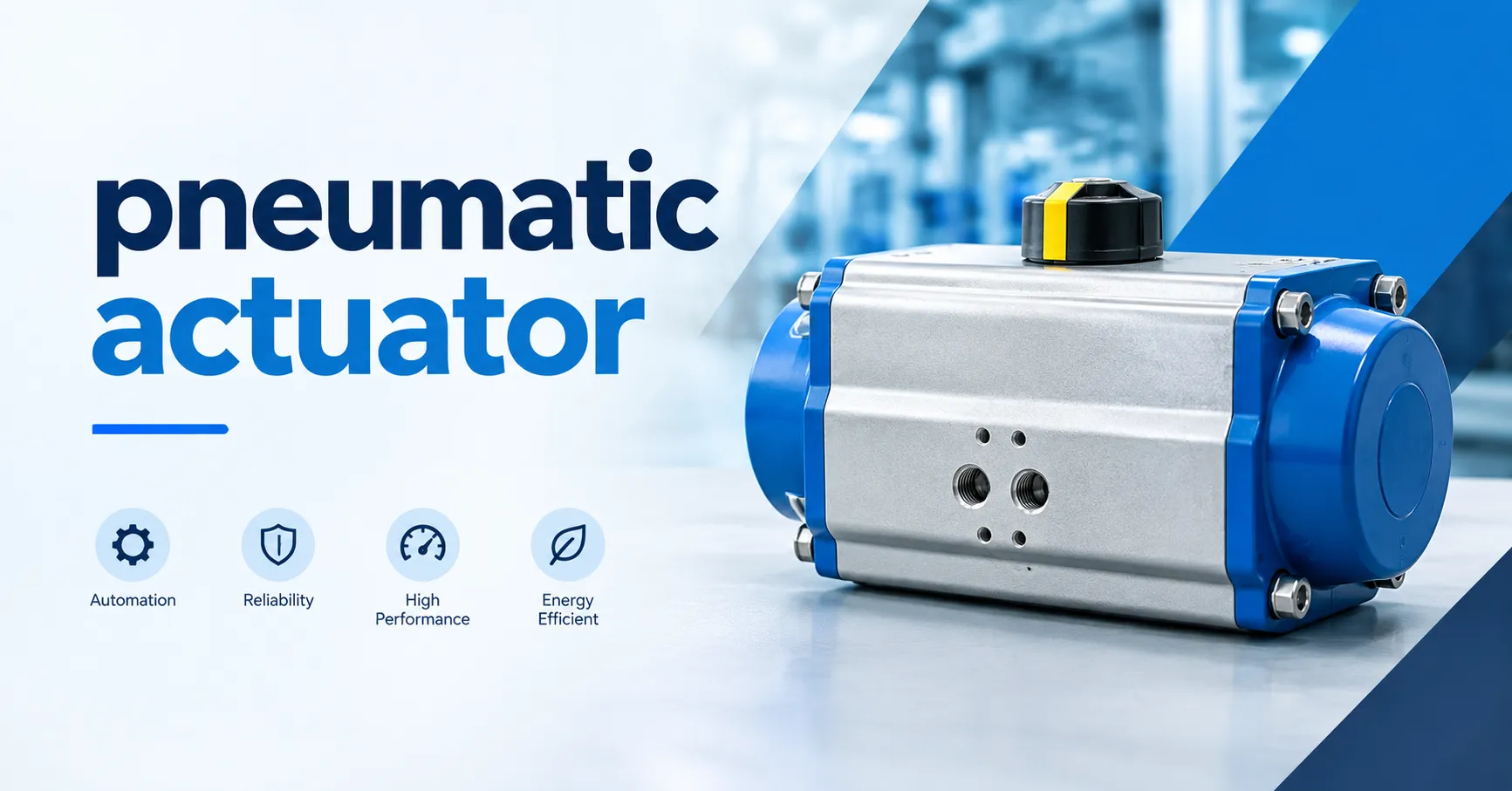

Choosing the right equipment can make a big difference in industrial performance. The wrong actuator may cause slow operation, unexpected downtime, or higher maintenance costs. A suitable pneumatic actuator helps control valves efficiently, improves process reliability, and supports workplace safety. But with different types, sizes, and specifications available, how do you make the right choice? This guide explains the key factors to consider, common mistakes to avoid, and practical steps to help you select an actuator that fits your industrial needs.
1. What Is a Pneumatic Actuator?
A pneumatic actuator is a device that uses compressed air to create mechanical movement. In industrial systems, it commonly opens, closes, or positions valves that control the flow of liquids and gases.
These devices are widely used in water treatment plants, oil and gas facilities, chemical processing, power generation, and manufacturing. They are popular because they offer fast operation, a simple design, and reliable performance when properly selected and maintained.
There are two common operating types:
- Rack-and-pinion actuators: These convert air pressure into rotary motion and are often used with ball and butterfly valves.
- Scotch-yoke actuators: These produce high torque and are useful for demanding valve applications.
Actuators can also be classified by their return mechanism. Double-acting models use compressed air for both opening and closing. Spring-return models use air for movement in one direction and a spring for the other, which can support a fail-safe design.
Understanding these differences is the first step toward choosing equipment that matches your process requirements.
2. Key Steps to Select the Right Actuator
Selecting an actuator involves more than comparing prices. Follow these practical steps before making a purchase.
Step 1: Identify Your Application
Start by identifying the valve type, operating conditions, and purpose of the system. A small water pipeline may require different equipment from a high-pressure industrial process.
Consider whether the actuator will operate a ball valve, butterfly valve, or another compatible valve. Also, determine how frequently the valve must operate and whether precise positioning is necessary.
Step 2: Calculate the Required Torque
Torque is one of the most important selection factors. It determines how much rotational force the actuator must provide to operate the valve.
Check the valve manufacturer's torque data across the full operating cycle. Account for factors such as pressure difference, seat friction, fluid properties, and possible changes during service.
The selected actuator must provide enough torque throughout the required operating range. A qualified engineer should also apply the appropriate safety margin based on the valve manufacturer's guidance and the relevant application standards.
Step 3: Check the Available Air Pressure
Compressed air pressure directly affects actuator output. Review the minimum and maximum supply pressure available at the installation point.
Do not select equipment using the compressor's rated pressure alone. Pressure losses through pipes, filters, regulators, and fittings can reduce the air pressure reaching the actuator.
Choose a model that meets the required torque at the lowest expected supply pressure.
Step 4: Choose the Correct Operating Action
Decide whether the system needs a double-acting or spring-return design.
A double-acting model generally offers controlled movement in both directions using air. A spring-return model can move to a predetermined position when its air supply fails, provided the complete system is designed accordingly.
For safety-critical applications, define the required failure position with your process and safety engineers.
Step 5: Evaluate Materials and Environmental Conditions
Consider temperature, humidity, dust, moisture, and exposure to corrosive substances. These conditions affect housing materials, seals, coatings, and service life.
For outdoor installations, check the enclosure protection rating and corrosion resistance. Hazardous areas may require appropriately certified equipment and accessories.
Step 6: Compare Total Ownership Costs
Compare more than the initial purchase price. Review air consumption, maintenance needs, spare-part availability, warranty coverage, and supplier support.
A reliable actuator that suits the application may cost more initially but reduce operating expenses over time.
3. Common Mistakes to Avoid
Several selection mistakes can affect performance and increase operating costs.
- Ignoring torque requirements: Undersized equipment may fail to operate the valve reliably. Always verify torque requirements using manufacturer data.
- Overlooking air pressure fluctuations: Check the minimum available pressure under actual operating conditions.
- Choosing the wrong failure position: Confirm whether the process requires the valve to open, close, or remain in position during a failure.
- Ignoring environmental conditions: Select appropriate materials, seals, and protection ratings for the installation.
- Buying on price alone: Compare technical specifications, lifecycle costs, warranty terms, and after-sales service.
A careful review of these factors can prevent avoidable installation problems and improve long-term reliability.
Conclusion
Selecting the right pneumatic actuator starts with understanding your valve, torque requirements, air supply, operating conditions, and safety needs. Material compatibility, maintenance support, and lifecycle costs are equally important. By reviewing these factors before purchasing, you can improve reliability and avoid unnecessary expenses. If you are planning an industrial installation or upgrading an existing system, consult a qualified supplier for product recommendations and sizing support. Compare technical specifications carefully to find a solution that meets your operational requirements.
Frequently Asked Questions
1. How do I choose the right pneumatic actuator for my application?
Start by identifying your valve type, required torque, operating pressure, and environmental conditions. Then select a compatible actuator with sufficient output torque across the operating range. Consult the manufacturer or a qualified engineer to verify sizing.
2. What are the main types of pneumatic actuators?
The main rotary types include rack-and-pinion and scotch-yoke designs. Actuators are also classified as double-acting or spring-return models. The best option depends on the required torque, operating conditions, valve design, and failure response.
3. What is the difference between single-acting and double-acting actuators?
A single-acting actuator typically uses compressed air in one direction and a spring for the return movement. A double-acting actuator uses compressed air for movement in both directions. Choose based on control requirements, available air supply, and the required response to air failure.
4. How do I calculate the torque required for a pneumatic actuator?
Obtain the valve's torque requirements from its manufacturer. Consider operating pressure, friction, fluid conditions, and torque variations throughout the valve's travel. Match the actuator's output torque at the minimum available air pressure, applying the manufacturer's recommended sizing margin.
5. How often should pneumatic actuators be maintained?
Maintenance frequency depends on operating cycles, air quality, environmental conditions, and manufacturer recommendations. Regular inspections should check for air leaks, loose connections, corrosion, unusual movement, and worn seals. Follow the manufacturer's maintenance schedule and document any recurring issues.
















Sign in to leave a comment.