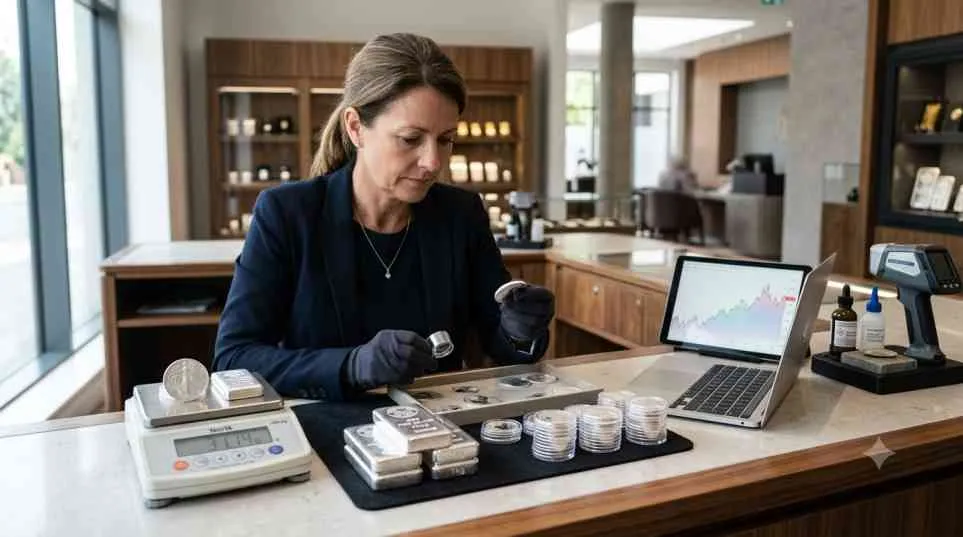

Selling silver can be a simple way to turn your investment into cash, but it is also easy to accept a lower offer than your bullion is really worth. If you want to sell silver bullion, the best first offer often starts with the research you do before contacting a buyer.
For example, imagine selling a 100-ounce silver bar at a discount of $2 per ounce below a fair market offer. That small difference adds up to a $200 loss. On top of that, some buyers may deduct testing, shipping, insurance, or payment fees from the final amount.
The key is to know your silver content, check the current spot price, and compare each buyer's final payout with the melt value of your silver. This guide explains how to do that step by step, so you can look for a fair offer without taking unnecessary risks.
Remember that silver prices can change quickly. A buyer's quote may also expire within minutes or hours, so always understand exactly when and how the price is set.
Know What Your Silver Is Worth Before Asking for a Quote
Before you contact a buyer, take time to understand exactly what you own. You cannot properly compare offers if you do not know the weight, purity, and silver content of your items.
Confirm Purity, Weight, and Silver Content
Start by checking each item for useful markings. Depending on the type of silver, you may find:
- .999 fine silver
- .9999 fine silver
- .925 sterling silver
- 90% silver
- A mint mark
- A serial number
- A manufacturer or refinery name
Most investment-grade silver bullion bars and rounds are marked .999 or .9999 fine silver. Sterling silver contains 92.5% silver, while 90% silver coins contain 90% silver by weight.
It is also important to understand the difference between gross weight and pure silver weight.
For example, a bar may weigh 10 troy ounces and be .999 fine silver. Almost all of its weight is pure silver, but the exact calculation can still matter when comparing different products.
Precious metals are usually measured in troy ounces, not standard household ounces.
One troy ounce equals approximately 31.1035 grams.
A simple starting formula is:
Pure silver weight × current spot price = approximate melt value
For example, if you have 100 troy ounces of pure silver and the spot price is $30 per ounce:
100 × $30 = $3,000 melt value
This does not automatically mean every buyer will pay $3,000. Dealer margins and other costs can affect the final offer.
Separate Bullion Value From Collector Value
Not every silver item should be sold based only on its melt value.
A standard silver bar from a recognised refinery will usually trade close to its bullion value. However, rare coins, proof coins, error coins, limited mintage pieces, and collectible items may be worth more than their silver content alone.
Before selling coins, consider checking:
- Mintage numbers
- Condition
- Mint reputation
- Grading reports
- Recent auction results
- Collector demand
One important rule is to avoid cleaning old or collectible coins before getting professional advice. Cleaning can sometimes affect the condition and collector value of a coin.
If you own both standard bullion and potentially collectible items, separate them before requesting offers. A bullion buyer may be the right choice for standard bars, while a specialist may offer more for rare coins.
Track the Right Market Price
Checking the silver spot price gives you a useful starting point, but spot price is not always the same as your final sale price.
You can follow market pricing through recognised precious metals market sources, established bullion dealers, and reliable financial news services. When comparing prices, make sure you are looking at the correct currency and unit.
Your final payout may include deductions for:
- Dealer margin
- Testing
- Refining
- Shipping
- Insurance
- Payment processing
Silver also has significant industrial demand, which can influence the wider market. The Silver Institute reported record industrial silver demand of approximately 680.5 million ounces in 2024. Industrial use in areas such as electronics, solar technology, and other manufacturing sectors can affect supply and demand conditions.
For sellers, the practical lesson is simple: check the market price before asking for quotes, but focus on the actual amount you will receive.
Compare Buyers Before Accepting an Offer
One of the easiest ways to avoid a low offer is to compare several buyers.
Do not assume that the first quote is automatically fair.
Request Quotes From Several Types of Buyers
Try to compare at least three offers from different types of buyers, such as:
- Local coin shops
- Online bullion dealers
- Precious metal refiners
- Private buyers
- Auction platforms
Each option has advantages and disadvantages.
A local buyer may offer a fast in-person transaction and immediate payment. An online bullion dealer may offer a stronger price but require insured shipping. Refiners can be useful for larger lots but may have minimum quantities or detailed testing procedures.
Ask every buyer for the same information:
- Price paid per ounce
- Total payout
- All fees
- Payment method
- Quote expiration time
- Testing process
- Return terms
Getting the same information from every buyer makes comparison much easier.
Compare Each Offer With Melt Value
Create a simple worksheet before making a decision.
| Item | Amount |
| Current spot price | $30 per ounce |
| Pure silver ounces | 100 ounces |
| Gross melt value | $3,000 |
| Buyer's stated payout | Compare |
| Total fees | Compare |
| Final net amount | Compare |
Here is a simple example.
A seller owns ten 10-ounce .999 silver bars. The total silver weight is 100 ounces. At a spot price of $30 per ounce, the gross melt value is $3,000.
Buyer A offers $2,850 with no additional fees.
Buyer B offers $2,940 but charges $65 for testing and shipping.
The final results are:
- Buyer A: $2,850 net
- Buyer B: $2,875 net
Buyer B advertised the higher offer and still produced the better final payout, but only by $25 after fees.
This is why you should never compare only the headline number. Compare the amount that actually reaches your bank account or is paid to you.
Judge the Buyer's Track Record
Price matters, but trust also matters.
Before selling, check reviews across more than one platform. Look for repeated complaints about:
- Changed quotes
- Delayed payments
- Unreturned shipments
- Surprise deductions
- Disputed weights
- Unexplained grading claims
A trustworthy business should normally provide:
- A physical business address
- Clear buying terms
- A working phone number
- A clear testing process
- Secure payment options
Written terms are especially important when shipping valuable bullion. Before sending your silver, make sure you understand how the buyer will test the metal, how the price is calculated, and what happens if you reject the final offer.
Use Timing and Negotiation to Improve Your Payout
You do not need to be an expert trader to improve your offer. You simply need to ask clear questions and use accurate information.
Ask How the Buyer Sets the Price
Different buyers may use different pricing times.
Ask whether your offer is based on:
- Spot price when you request the quote
- Spot price when the quote is accepted
- Spot price when the shipment arrives
- Spot price when the buyer tests the silver
Always ask for a written quote when possible.
Also ask how long the quote remains valid. A locked quote may reduce your exposure to market price changes while the silver is being shipped or inspected.
Negotiate With Facts, Not Pressure
A good negotiation starts with clear numbers.
You can say:
“The current spot price is $X per ounce.”
“This lot contains approximately X pure silver ounces.”
“Another buyer offered $X after fees.”
You can also ask:
- Can you improve the final payout?
- What fees are included in this offer?
- Do recognised mint bars receive a better price?
- Is there a better rate for a larger lot?
Large and well-organised lots may sometimes receive better terms because they are easier for a buyer to process.
However, avoid bluffing. If you claim another buyer offered a certain amount, be prepared to support that statement.
Choose the Right Time and Sales Format
The best time to sell depends on your personal situation.
You may want to consider:
- Strong market price movements
- Local buyer demand
- Dealer inventory shortages
- Shipping and insurance costs
- How quickly you need payment
For example, one seller may need cash within 48 hours and accept a reasonable discount for a fast and secure transaction.
Another seller may have two weeks available. They can compare six buyers, negotiate, and choose the highest trustworthy net payout.
For a large collection, selling items in smaller groups may also help you reach different types of buyers. However, do not split a collection without considering extra shipping, insurance, and transaction costs.
Avoid holding silver only because you hope the price will always rise. Set your own financial goal and make a decision based on your needs.
Protect Your Silver, Money, and Personal Details
A strong price is not useful if the sale itself is unsafe.
Pack and Ship Bullion Safely
Before packing your silver:
- Photograph every item
- Record bar serial numbers
- Record weights
- Photograph purity marks
- Keep a detailed item list
Use strong packaging and follow the buyer's shipping instructions carefully. Consider tamper-resistant inner packaging and a strong outer box.
Make sure the shipment is insured appropriately for its value.
Keep:
- Tracking details
- Shipping receipts
- Insurance records
- Photos
- Emails and messages
- Written quotes
These records can be useful if there is a dispute.
Avoid Common Scams and Bad Sales Tactics
Walk away if a buyer:
- Demands an unusual upfront fee
- Refuses to provide written terms
- Pressures you to decide immediately
- Claims genuine items are fake without proper testing
- Changes the offer without explanation
- Requests an unusual or unsafe payment method
Pressure tactics should always be treated carefully.
If selling to a private buyer, choose a safe location. Depending on local options, a bank or another secure public location may be more appropriate than meeting at a private address.
Only provide personal information that is genuinely needed to complete the transaction.
Understand Taxes and Keep Records
Keep your purchase receipts and sale documents.
Useful records include:
- Original purchase price
- Sale price
- Shipping costs
- Insurance costs
- Dealer statements
- Fees and commissions
Tax treatment can vary by country, state, and individual circumstances. In some situations, selling physical silver may result in a capital gain or capital loss.
Tax rules and reporting requirements can change, so check current guidance with a qualified tax professional before filing or making important financial decisions.
Use a Simple Sale Checklist to Protect Your Final Payout
A clear checklist can prevent expensive mistakes.
Prepare the Lot Before Requesting Offers
Sort your silver into categories such as:
- Bars
- Government-issued coins
- Silver rounds
- Junk silver
- Rare or collectible pieces
For each item, record:
- Weight
- Purity
- Brand or mint
- Quantity
- Condition
Before negotiations begin, decide on a minimum acceptable net price.
This helps you avoid making a rushed decision after receiving an offer.
Compare the Final Numbers
For every buyer, calculate:
- Gross melt value
- Dealer discount
- Testing fees
- Shipping costs
- Insurance costs
- Payment fees
- Final net payout
Reject offers that cannot be clearly explained.
Before handing over or shipping your silver, confirm:
- Final price
- Payment method
- Expected payment date
- Testing procedure
- Return process
Know When to Accept or Wait
Consider accepting an offer when the buyer provides:
- A clear price
- Fair terms
- Safe payment
- Transparent fees
- A strong net payout
Consider waiting when:
- You have contacted only one buyer
- Fees are unclear
- The buyer refuses written terms
- Genuine bullion is questioned without proper evidence
- A rare item may be worth more than its melt value
For example, imagine a seller with standard silver bars and several rare coins. One general buyer offers to purchase everything based only on silver weight.
Instead, the seller separates the items. The standard bars go to a bullion dealer, while the rare coins are offered through a specialist buyer or auction service.
By recognising the difference between bullion value and collector value, the seller avoids a potential $400 loss.
A Fair Silver Sale Comes Down to One Clear Number
When you sell silver bullion, the best offer is not always the highest number advertised by a buyer.
The most important figure is the highest trustworthy net payout after every fee, deduction, and risk has been considered.
Before selling:
- Verify the weight and purity.
- Calculate the approximate melt value.
- Check the current spot price.
- Separate collectible items from standard bullion.
- Request at least three written quotes.
- Compare all fees and final payouts.
- Protect your silver during shipping.
- Keep complete records.
Start by checking the live silver price and building a clear list of everything you own. Then request written quotes from several buyers and compare the final net amounts.
A little preparation can make a significant difference. When you understand what your silver is worth and how each buyer calculates their offer, you are in a much stronger position to avoid a low offer and sell with confidence.
























Sign in to leave a comment.