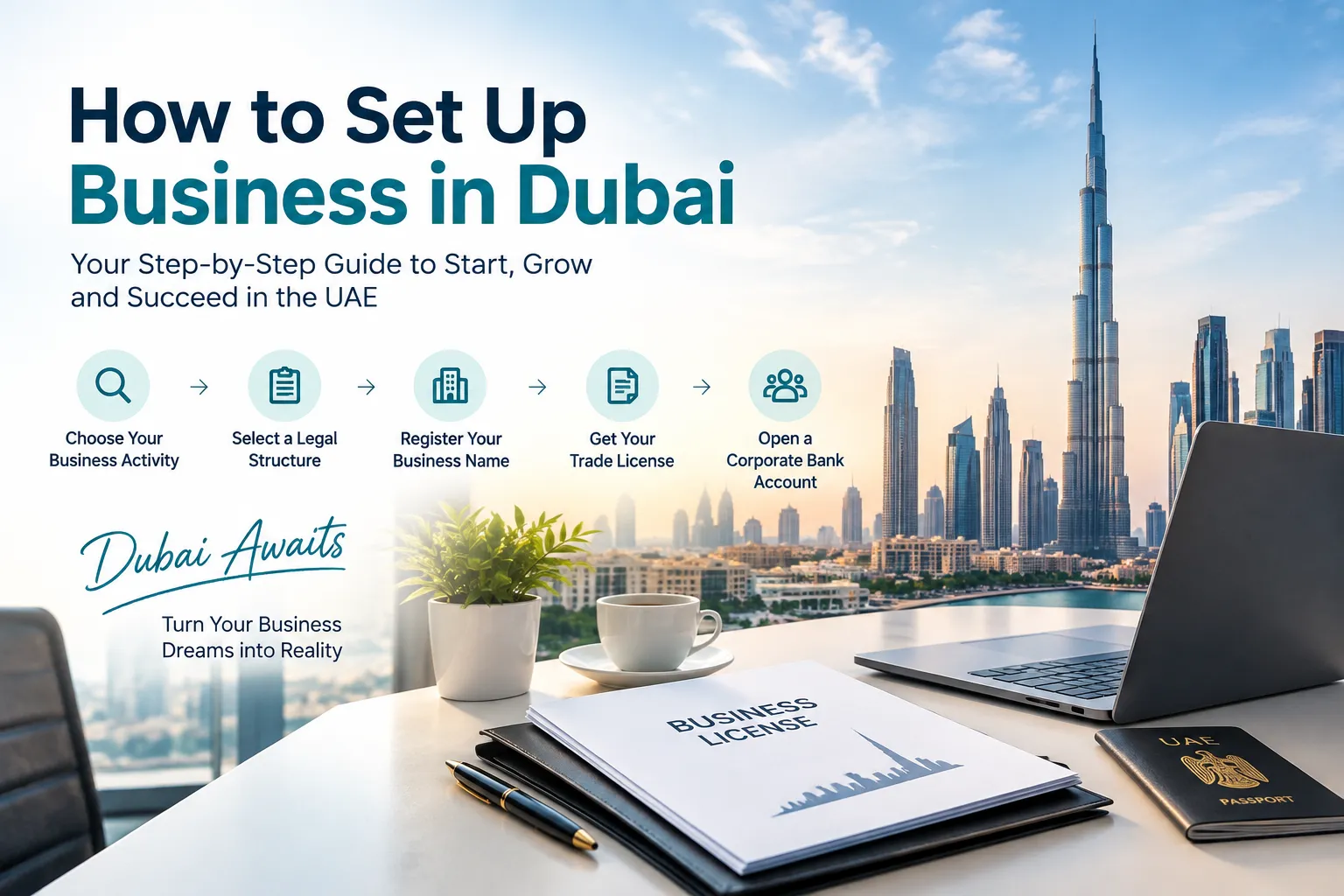

Dubai has become one of the most attractive places in the world to start a company. It offers a tax-friendly environment, world-class infrastructure, a strategic location between Europe, Asia and Africa, and a government that actively supports entrepreneurs. Yet for a first-time founder, the process can feel confusing. There are different license types, multiple authorities, and a long list of documents to prepare.
This guide explains How to Set Up Business in Dubai in clear, practical steps. It is written for first-time founders who want to understand the full journey, from choosing a structure to opening a bank account. At Takween Advisory, we work with entrepreneurs and investors every day, and the advice below reflects the questions and challenges we see most often in practice.
Why Dubai Is a Strong Choice for New Businesses
Dubai offers several advantages that draw founders from around the world. The city has a stable economy, modern ports and airports, strong digital infrastructure, and a diverse talent pool. Business owners also benefit from a straightforward legal framework for company formation and a wide range of free zones built for specific industries.
Ownership rules have also become more flexible. Since the UAE amended its Commercial Companies Law, foreign investors can fully own mainland companies in most commercial activities, without needing a local partner. Some strategic activities still carry restrictions, so it is important to confirm the rules for your specific business activity before you apply.
Step 1: Define Your Business Activity and Goals
Before you think about licenses or office space, be clear about what your company will actually do. Your business activity decides which authority regulates you, which license you need, and which setup options are open to you.
Ask yourself a few basic questions. Will you sell to customers inside Dubai, across the UAE, or mainly overseas? Do you need a physical shop or office? Will you hire staff? Do you need special approvals, such as for food, healthcare, education or financial services? The answers will guide every decision that follows.
Step 2: Choose Between Mainland, Free Zone and Offshore
This is the most important decision in the process, and it is where many first-time founders need guidance.
Mainland Company
A mainland company is licensed by the Dubai Department of Economy and Tourism (DET). It can trade directly in the local market, work with government entities, and open offices anywhere in Dubai. This route suits retail, restaurants, consulting firms, and businesses that serve local customers. It requires a physical office address that meets the licensing rules.
Free Zone Company
Free zones are special economic areas with their own regulations and licensing authorities. They are popular for trading, technology, media, e-commerce and services. Many offer simple setup, flexible office options, and full foreign ownership. Traditionally, free zone companies had limits on trading directly with the mainland market, although the rules and available arrangements have been evolving, so it is wise to check the current position for your chosen zone.
Offshore Company
An offshore company is mainly used for holding assets, international trading, and ownership structuring. It generally cannot operate in the local market or hold a standard residency-linked office. It suits investors with global activities rather than operating businesses based in Dubai.
Choosing the right option depends on your customers, budget, growth plans and visa needs. Our team at Takween Advisory helps founders compare these options against their real business goals instead of choosing based on price alone.
Step 3: Select the Right Legal Structure
Your legal structure affects ownership, liability and how the company is managed. Common options include:
- Limited Liability Company (LLC), the most popular structure for mainland businesses
- Sole establishment, owned by one individual
- Civil company, for professionals and consultants
- Branch of a foreign or local company
- Free zone company (FZ-LLC or FZE), depending on the zone
Each structure has its own requirements for shareholders, capital, managers and documentation. Choosing carefully at the beginning saves you from costly changes later.
Step 4: Choose and Reserve Your Trade Name
Your trade name must follow the naming rules of the licensing authority. It should not be offensive, should not use protected or restricted terms without approval, and should not duplicate an existing registered name. Many founders prepare two or three alternatives in case their first choice is not accepted.
Once approved, the name is reserved for your application. This is a quick step, but a rejected name can delay the whole process, so it is worth preparing early.
Step 5: Obtain Initial Approval
Initial approval is the authority's confirmation that your proposed activity and company structure are acceptable in principle. It does not yet allow you to operate, but it lets you move forward with the remaining steps. Some regulated activities need additional approvals from other bodies, such as the health, education, municipality or financial regulators.
Step 6: Prepare the Legal Documents and Secure Your Premises
At this stage you prepare the formal documents that define your company. These usually include the Memorandum of Association (MOA) or articles of association, shareholder and manager details, and passport copies of the owners. Documents issued abroad may need attestation before they are accepted in the UAE.
You will also need a registered business address. For mainland companies, this normally means a tenancy contract for office or commercial space registered through the proper system. Free zones typically provide their own office packages, including flexible and virtual options for certain activities.
Step 7: Pay Fees and Receive Your Trade License
After the approvals, documents and premises are in place, you pay the government fees and the license is issued. Costs depend on the authority, your activity, your legal structure, office requirements and the number of visas you need. Because fees differ widely and change over time, always request a written, itemised quotation and confirm it with the licensing authority.
Once the license is issued, your company legally exists and can begin the post-incorporation steps.
Step 8: Complete Post-License Registrations
Receiving a license is not the finish line. Depending on your company, you may need to complete the following:
- Register your company with the Federal Tax Authority for corporate tax, and for VAT if your turnover meets the threshold or you choose to register voluntarily
- Register with the Ministry of Human Resources and Emiratisation if you will employ staff
- Obtain a chamber of commerce membership where required
- Set up an establishment card for immigration and labour purposes
Staying compliant from day one protects your business from penalties and builds trust with banks and partners.
Step 9: Apply for Visas
Your license and premises determine how many visas you can sponsor. Founders and partners can usually apply for investor or partner visas, and you can sponsor employees and family members as well. The process typically includes entry permits, status change if you are already in the country, medical tests, Emirates ID applications and visa stamping.
We have covered the visa route in more detail in our guide on how to get an investor visa in Dubai, which is a useful companion to this article.
Step 10: Open a Corporate Bank Account
Opening a corporate bank account is often the step that surprises founders the most. Banks carry out thorough due diligence, and they review your business model, shareholders, source of funds and expected transactions. Having a clear business plan, proper documentation and a credible company profile makes a real difference.
Preparing in advance, and approaching a bank that fits your type of business, can shorten the process and reduce the chance of rejection.
Understanding Taxes for New Dubai Businesses
The UAE has a corporate tax regime that applies to most businesses. A standard rate of 9 percent applies to taxable income above the threshold set by the law, and a 0 percent rate applies below it. Certain free zone companies may qualify for special treatment if they meet the conditions. VAT is charged at 5 percent, and businesses must register once their taxable supplies exceed the mandatory threshold.
Tax rules can change and have conditions attached, so always review the latest guidance from the Federal Tax Authority or speak with a qualified adviser about your situation.
Common Mistakes First-Time Founders Should Avoid
Many setup problems come from avoidable errors. Watch out for these:
- Choosing a free zone or mainland route only because it looks cheaper
- Selecting a business activity that does not match what the company will really do
- Ignoring regulated activity approvals until late in the process
- Underestimating the time needed for bank account opening
- Skipping compliance tasks such as tax registration after receiving the license
- Relying on unverified information instead of official sources or experienced advisers
Why Work With an Experienced Advisor
Setting up a company involves several authorities, changing regulations and many small details that affect cost and timing. An experienced advisor can help you choose the right structure, prepare accurate documents, coordinate approvals and avoid delays.
Takween Advisory supports founders and investors through the entire journey, from selecting the right setup option to completing licensing, visas and post-setup requirements.
Frequently Asked Questions
Q: How to Set Up Business in Dubai as a foreigner?
A: A foreigner can set up a company in Dubai by choosing a mainland, free zone or offshore structure, reserving a trade name, obtaining initial approval, preparing the legal documents, securing premises and paying for the trade license. In most commercial activities, foreign investors can now own 100 percent of a mainland company, although some regulated activities have specific rules.
Q: How long does it take to set up a business in Dubai?
A: The timeline depends on your activity, structure and how quickly documents and approvals are ready. Simple free zone setups can often be completed faster, while mainland companies and regulated activities may take longer. Having complete documents prepared in advance is the best way to avoid delays.
Q: How much does it cost to set up a business in Dubai?
A: Costs vary based on the licensing authority, business activity, office type, legal structure and number of visas. Because fees change, you should ask for an itemised quotation and verify it with the relevant authority before paying.
Q: Do I need a local partner or sponsor to open a company in Dubai?
A: In most commercial activities, you no longer need a local partner for a mainland company, and free zones have long allowed full foreign ownership. Some strategic or regulated sectors may still have conditions, so check your specific activity first.
Q: Is a physical office required to set up a business in Dubai?
A: Mainland companies generally need a registered office address that meets licensing rules. Many free zones offer flexible desk, shared office or virtual options, depending on the activity and the zone.
Q: Can I get a residence visa after setting up my company?
A: Yes. Once your company is licensed and has suitable premises, founders and partners can usually apply for an investor or partner visa, and may sponsor family members and employees within the visa quota allowed.
Q: Do new businesses in Dubai have to pay tax?
A: Yes, businesses may be subject to corporate tax and VAT depending on their income and turnover. The rules include thresholds and special conditions, so review the latest official guidance or consult an adviser.
Conclusion
Knowing How to Set Up Business in Dubai comes down to making a few key decisions well: choosing the right activity, selecting the right setup type, preparing accurate documents, and staying compliant after your license is issued. When these steps are handled carefully, the process is far smoother than most first-time founders expect.





















Sign in to leave a comment.