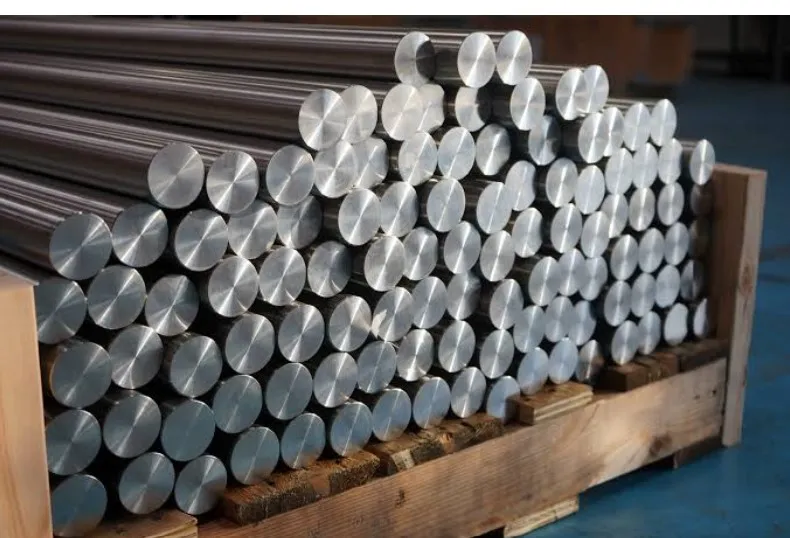

Industrial buyers often need metal bars for machining, fabrication, assembly, or specialized components. Titanium bars can provide a useful combination of corrosion resistance, low density, and mechanical performance, making them suitable for selected demanding applications.
However, sourcing the right material requires attention to technical specifications and supplier capabilities.
Start With the Application
Before contacting a supplier, buyers should identify how the bar will be used. A bar intended for machining may have different requirements from one used in a fabricated assembly.
The operating environment, expected loads, temperature, corrosion exposure, and manufacturing process should all be considered.
Confirm the Grade
Titanium is available in multiple grades, each with different characteristics. Grade 12 is one option for applications where its particular corrosion-resistant properties are appropriate.
The selected grade should always be checked against the engineering specification rather than chosen solely because of its availability.
Diameter and Length
Bar products are generally ordered according to diameter, length, and tolerance.
For machining applications, dimensional accuracy can affect how efficiently material can be processed. Buyers should provide the required dimensions and indicate whether standard or customized lengths are needed.
Manufacturing Quality
Consistent manufacturing quality is important when bars are used to produce precision components.
Suppliers should have appropriate inspection procedures for dimensions and material quality. Depending on the application, customers may also require testing documentation.
Surface Condition
Surface condition can influence machining and final appearance. Depending on the manufacturing process, buyers may require specific surface requirements.
These details should be clarified before ordering to avoid receiving material that requires unexpected additional processing.
Export Considerations
International buyers should consider the supplier's export experience as well as manufacturing capabilities.
Packaging, shipping documents, customs requirements, lead time, and communication can all affect delivery.
A supplier experienced in international orders can help make these steps more predictable.
Companies comparing international supply options can review titanium gr 12 bars exporters according to their required material specifications, quantities, and delivery conditions.
Quality Documentation
Documentation is an important part of industrial purchasing.
Depending on the project, buyers may request material certificates, inspection reports, dimensional reports, or other records.
These documents can support internal quality-control procedures and help maintain traceability.
Custom Orders
Some applications require non-standard dimensions or production quantities. Before placing a customized order, buyers should provide detailed drawings or technical information.
The supplier can then determine whether the requested specifications can be produced and what production process may be required.
Building a Reliable Supply Chain
A good supplier relationship is particularly valuable for companies that require repeat titanium orders.
Clear specifications, consistent communication, predictable lead times, and reliable quality can help reduce supply-chain uncertainty.
Frequently Asked Questions
1. What should I check when buying titanium bars?
Check the grade, diameter, length, tolerance, surface condition, applicable standards, quantity, documentation, and delivery requirements.
2. Can titanium bars be customized?
Depending on the manufacturer's capabilities, bars may be supplied in customized dimensions or lengths according to technical requirements.
3. Is supplier experience important for international orders?
Yes. Export experience can help with packaging, documentation, shipping coordination, and communication during the purchasing process.
Conclusion
Sourcing titanium bars successfully requires a clear understanding of the application and technical requirements. Grade, dimensions, surface condition, quality documentation, manufacturing capability, and export experience should all be evaluated before placing an order.
A well-defined specification gives both buyer and supplier a clear foundation for production. By focusing on technical suitability and long-term supply reliability rather than price alone, industrial purchasing teams can create a more organized and dependable sourcing process.
























Sign in to leave a comment.