
Recognizing the early signs of alternator failure in a generator is essential for facility managers, engineers, and plant operators who depend on uninterrupted standby power. While the internal combustion engine provides the raw mechanical horsepower, the alternator serves as the electrical heart of the genset, converting that kinetic motion into stable, usable alternating current. When this component begins to degrade, the entire backup power system faces imminent downtime, risking expensive industrial machinery, sensitive data centers, and essential emergency services.
Understanding how an alternator deteriorates allows operational teams to intervene long before a minor electrical irregularity escalates into complete stator burnout or total system seizure. Because modern generators are complex electromechanical assemblies, alternator problems often present a spectrum of subtle operational, acoustic, and thermal clues. By cultivating a keen diagnostic eye and implementing proactive monitoring protocols, industrial facilities can protect both their capital investments and their mission-critical workflows.

The Role of the Alternator in Power Generation
To understand how alternators break down, it helps to appreciate how heavily stressed their internal assemblies are during normal duty cycles. The alternator consists of two primary operational sections: the rotor, which spins inside a magnetic field, and the stationary stator, which captures this electromagnetic energy and routes it out as electrical current. Supporting these core components are automatic voltage regulators, exciter armatures, rectifier diodes, and bearing assemblies, all working in tight synchronization under extreme rotational forces and thermal loads.
Over time, continuous heat cycles, mechanical vibration, ambient humidity, and particulate ingress begin to degrade the delicate insulating varnishes and mechanical bearings. When any single sub-component within this electromechanical chain suffers degradation, the alternator struggles to sustain balanced excitation or clean power output. Consequently, the symptoms of failure do not always appear as a sudden shutdown; they frequently manifest as gradual electrical instability, anomalous physical sensations, or persistent starting issues that demand immediate engineering attention.
Irregular Voltage Output and Electrical Instability
One of the most immediate indicators of an alternator in distress is an erratic electrical output that deviates significantly from rated parameters. When the internal automatic voltage regulator or the rotor field windings begin to fail, the generator can no longer maintain a steady voltage under varying load demands. Facility operators will often notice downstream equipment behaving unpredictably, such as industrial lighting flickering erratically, variable frequency drives tripping on overvoltage or undervoltage faults, and sensitive electronic controllers rebooting without an obvious external cause.
Voltage drops during steady-state operation typically indicate that the exciter system or rectifier diodes are losing their ability to deliver sustained field current to the main rotor. Conversely, voltage spikes suggest that the voltage sensing circuit has lost calibration or that the regulator is overcompensating for internal short circuits within the stator coils. Leaving these electrical fluctuations unchecked not only risks burning out the generator’s own internal windings but can also destroy connected plant machinery, creating cascading equipment failures throughout an entire commercial or industrial facility.
Thermal Distress and Insulation Degradation
Excessive heat generation is both a primary cause and a telltale symptom of failing alternator components. When electrical resistance climbs due to corroded connections, deteriorating copper windings, or partial phase-to-phase shorts, the alternator converts excess electrical energy into intense thermal energy. Facility staff conducting routine walk-throughs may detect an acrid, pungent odor reminiscent of burning resin, chemical varnish, or melting synthetic insulation, which indicates that the dielectric coatings protecting the internal coils are actively scorching.
Thermal degradation quickly becomes a self-reinforcing cycle. As winding insulation cooks and degrades, internal leakage currents increase, generating even higher internal temperatures that can easily exceed the thermal tolerance class of the alternator. Surface thermography often reveals localized hot spots across the alternator housing or exciter end cap rather than a uniform temperature distribution. When operating temperatures breach standard engineering thresholds, the stator core risks permanent mechanical warping, leading to catastrophic phase-to-ground faults that necessitate a complete and expensive alternator rewind or total unit replacement.
Abnormal Acoustic Signatures and Mechanical Vibration
Experienced maintenance engineers can often diagnose a failing alternator simply by listening to the harmonic hum of the generator under load. A healthy alternator produces a steady, rhythmic, low-frequency electromagnetic hum accompanied by smooth mechanical rotation. When rotor bearings wear out, mechanical clearances shift, or internal magnetic fields become unbalanced, the generator emits distinctly harsh whining, growling, or grinding sounds that stand out clearly from normal engine noise.
Bearing degradation is particularly dangerous because it permits radial play within the rotor shaft. Because the air gap between the spinning rotor and the stationary stator is often measured in millimeters, even slight bearing looseness can allow the rotor to physically strike the stator lamination core. This metal-on-metal contact creates severe mechanical vibration, high-pitch screeching, and immediate structural destruction. Any sudden shift in the acoustic profile of the alternator housing should be treated as an urgent warning sign that demands immediate physical inspection and mechanical clearance verification.
Battery Depletion and Starting Inconsistencies
Many industrial and commercial diesel generators rely on an auxiliary charging alternator or dedicated stator battery-charging windings to keep the starting battery bank primed during standby readiness. When this section of the electrical system experiences diode failure or brush wear, the battery bank slowly drains rather than maintaining its nominal float voltage. Operators often misdiagnose this issue as a defective battery, replacing healthy battery sets only to find the new bank depleted within weeks.
A generator that struggles to crank, exhibits sluggish starter motor engagement, or shows an illuminated auxiliary charging fault light on its master control panel frequently traces its issues back to an internal alternator charging circuit fault. Regular testing of DC charge voltage across the battery terminals while the engine runs at rated RPM will quickly confirm whether the charging circuit is pushing the necessary float voltage or allowing the starting system to decay into unreliability.
Holistic Engine Strain, Exhaust Impact, and Emission Readiness
When an alternator suffers from internal electrical shorts or mechanical binding, it demands substantially more torque from the prime mover simply to maintain rated speed. This parasitic mechanical drag forces the diesel engine to consume more fuel, run at higher exhaust gas temperatures, and operate under uneven cylinder loading. An overworked engine that is continuously compensating for alternator resistance inevitably produces elevated particulate matter and incomplete combustion byproducts in its exhaust stream.
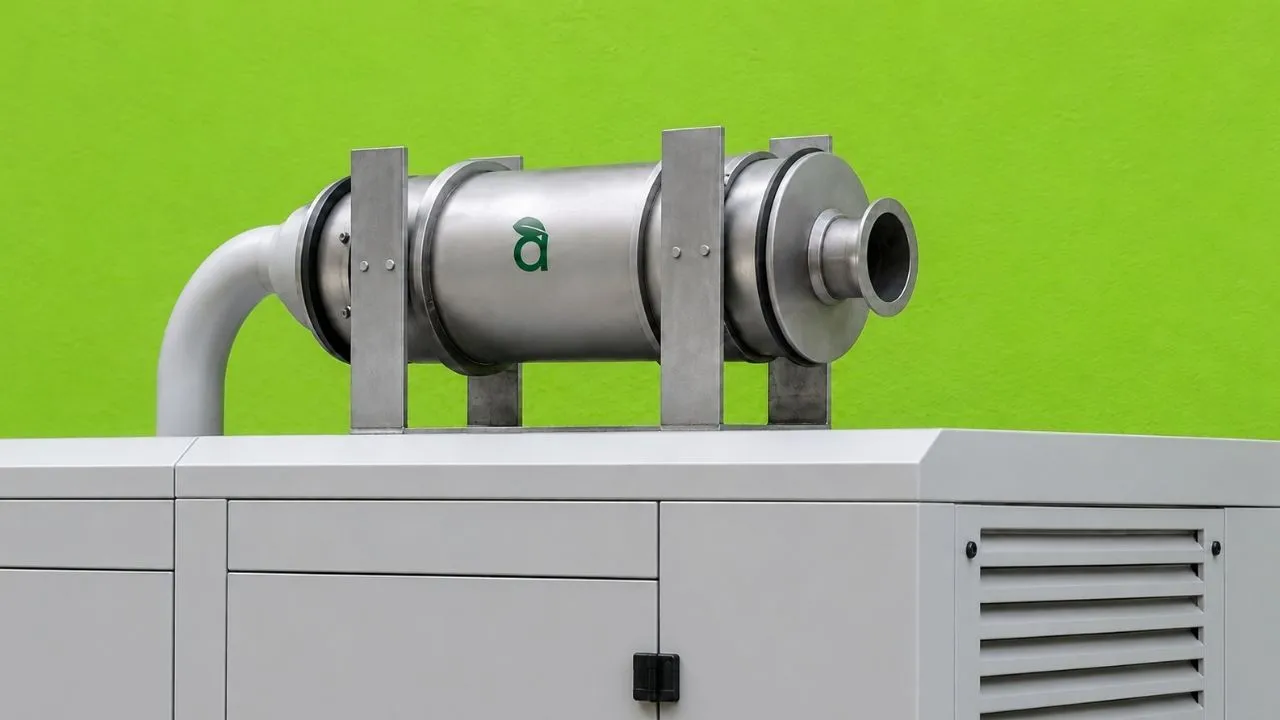
In heavy industrial operations, keeping the entire power generation ecosystem running cleanly requires balanced electromechanical operation paired with advanced exhaust aftertreatment. When a genset experiences abnormal engine drag, integrating an approved DG set RECD device helps curb hazardous particulate matter emissions before exhaust gasses enter the atmosphere. However, because environmental mandates continue to evolve rapidly across different administrative zones, facility operators must always consult the latest Central Pollution Control Board (CPCB) notifications, state pollution board guidelines, and statutory regulatory updates directly to verify specific equipment compliance requirements for their operational class.
Diagnostic Best Practices for Plant Managers
Preventing catastrophic alternator failure requires a disciplined testing regime rather than relying purely on passive observation. Facilities should regularly schedule insulation resistance tests—commonly referred to as Megger testing—to quantify the dielectric integrity of stator and rotor windings against ground. Tracking these resistance values over successive maintenance intervals provides clear predictive data, highlighting insulation decay months before it manifests as smoke or voltage collapse.
Additionally, periodic diode testing, winding resistance balancing across all three phases, and acoustic vibration analysis provide an all-around health profile of the alternator assembly. Proactive plant managers partner with specialized engineering teams who understand how to calibrate automatic voltage regulators, clean accumulated industrial carbon from cooling air channels, and balance rotor assemblies. Addressing subtle electrical anomalies early ensures that the generator remains fully operational, highly dependable, and ready to assume critical electrical loads at a moment's notice.
Conclusion
Maintaining standby power reliability requires looking beyond the prime mover engine block and treating the alternator as the critical precision component that it is. When facilities overlook subtle electrical drift, localized thermal spikes, or slight harmonic shifts in operational sound, they risk far more than an isolated generator outage. A sudden alternator failure during a main grid blackout can abruptly paralyze continuous manufacturing lines..
Frequently Asked Questions
What causes an alternator in a generator to fail prematurely?
Premature failure is typically driven by chronic electrical overloading, poor ventilation leading to excessive internal heat, high ambient moisture causing insulation breakdown, and unaddressed mechanical bearing wear. Operating a generator in dusty industrial environments without regular air filter maintenance can also lead to abrasive particulate buildup inside the windings, which wears away protective insulating varnishes.
Can an alternator be repaired, or does it always require total replacement?
Many alternator faults can be repaired successfully if identified early. Component-level issues such as blown rectifier diodes, worn carbon brushes, faulty automatic voltage regulators, and degraded rotor bearings are relatively simple and cost-effective to replace. However, extensive stator core burning, widespread winding insulation melt, or heavy mechanical contact between the rotor and stator often makes a full rewind or total alternator replacement the more economical and reliable option.
How often should alternator insulation resistance testing be performed?
Insulation resistance testing should ideally be conducted during major annual preventive maintenance services, or semi-annually for generators operating in severe industrial, humid, or coastal environments. Performing this test whenever a generator has been sitting idle in damp conditions for an extended period is also strongly recommended prior to restarting the unit under load.
How do I distinguish between an engine problem and an alternator problem?
Engine problems typically present as speed fluctuations, irregular exhaust smoke color, low oil pressure, or cooling system overheating. Alternator problems, by contrast, present as unstable electrical voltage, phase imbalances, burnt insulation smells around the electrical housing, or electrical fault trips on the control panel while the engine itself maintains a steady operating RPM.
Why is voltage instability dangerous to downstream facility equipment?
Unstable voltage causes connected electric motors to draw irregular current, leading to excessive internal heat and premature winding failure. Sensitive computing infrastructure, medical devices, and programmable logic controllers can suffer data corruption, unexpected hardware resets, or complete power supply destruction when subjected to unconditioned voltage surges and sags.
























Sign in to leave a comment.