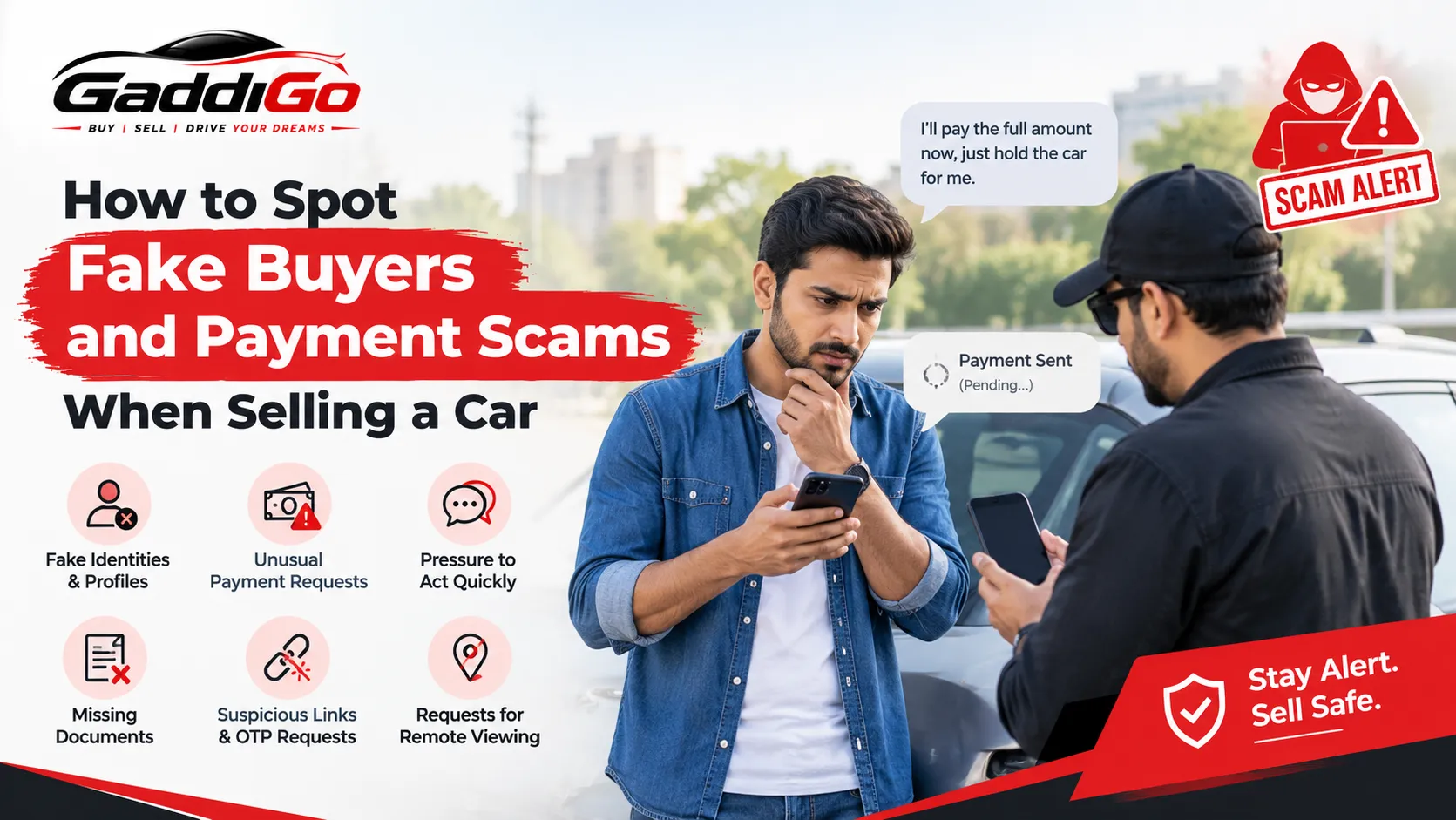

Selling a car online can help you reach more potential buyers and get competitive offers. However, it also requires caution. Fake buyers, fraudulent payment screenshots, suspicious UPI requests, and pressure tactics can put your money, personal information, and vehicle at risk.
If you are planning to sell your car in India, knowing how to spot fake buyers and payment scams can help you complete the transaction safely.
In this guide, we explain common car-selling scams, warning signs to watch for, payment safety tips, and the steps you should take before handing over your vehicle.
Why Do Car Sellers Need to Be Careful?
Online car listings make it easier for genuine buyers and sellers to connect. Unfortunately, scammers may also use these platforms to contact sellers with misleading offers or fake payment confirmations.
Some scammers try to collect money directly from sellers. Others attempt to obtain banking details, misuse identity documents, or take possession of a vehicle before completing payment.
The safest approach is to verify the buyer, confirm the payment independently, and complete the ownership-transfer process properly.
1. Watch Out for Fake Buyer Profiles
One of the first steps in avoiding car-selling fraud is checking whether a potential buyer appears genuine.
A suspicious buyer may contact you immediately after you publish your listing and claim to be ready to purchase the vehicle without asking reasonable questions.
Common warning signs
- The buyer refuses to share basic identifying information.
- Their name or contact details change during the conversation.
- They avoid a phone call or in-person meeting without a convincing reason.
- They offer to purchase the car without inspecting it or reviewing its documents.
- They pressure you to reserve the car before you have verified their identity.
- They provide inconsistent information about the purchase.
These signs do not automatically prove fraud, but they should encourage you to verify the buyer before proceeding.
Safety tip: Arrange meetings in a public, well-lit location during the day. If possible, take someone you trust with you. Do not share unnecessary personal information or sensitive document copies before you understand why they are needed.
2. Never Trust a Payment Screenshot Alone
A fake payment screenshot is a common warning sign in online transactions. A buyer may send an edited image or a fabricated confirmation showing that the money has supposedly been transferred.
They may then insist that you hand over the car immediately.
Remember that a screenshot, SMS, email, or message from the buyer is not sufficient proof that you have received the money.
How to verify a payment
- Open your own bank application or official banking website.
- Check your account balance and transaction history.
- Confirm that the correct amount has actually been credited.
- Contact your bank through its official channels if anything appears unusual.
- Hand over the vehicle only after you are satisfied that the payment is genuine and available.
Never rely solely on the buyer's phone screen. Avoid handing over the keys because someone shows you a transaction receipt or says the payment will arrive shortly.
3. Understand UPI and QR Code Scams
UPI is convenient for receiving payments, but scammers may misuse confusion about how it works.
A buyer might ask you to scan a QR code, approve a collect request, enter your UPI PIN, or follow a link to receive money.
Important: You do not need to enter your UPI PIN simply to receive money. Entering your PIN generally authorises a payment from your account. Read every payment prompt carefully before approving anything.
Protect yourself from UPI fraud
- Never share your UPI PIN, bank password, or OTP with a buyer.
- Do not scan an unfamiliar QR code just because someone claims it is required to receive payment.
- Do not approve unexpected payment requests.
- Avoid clicking unknown payment links.
- Use your own trusted banking or UPI application to check transactions.
If a buyer insists that you must pay a fee, scan a code, or approve a request before receiving the sale amount, stop and verify the situation independently.
4. Be Careful of Buyers Who Create Urgency
Scammers often try to make sellers act before they have time to think.
A potential buyer might say they are travelling immediately, have arranged a vehicle transporter, or will lose their payment opportunity unless you hand over the car within minutes.
They may also offer an unusually attractive price to encourage a quick decision.
What should you do?
Do not let urgency replace verification. A genuine buyer should generally be willing to follow reasonable checks for a high-value purchase.
Before agreeing to the sale:
- Confirm the final price in writing.
- Arrange a proper vehicle inspection.
- Verify payment independently.
- Review the required documents.
- Complete the sale and handover process carefully.
You can lose a genuine opportunity by being too cautious, but handing over a car without confirmed payment can be far more costly.
5. Recognise Fake Army, Government, or Company Buyers
Some scammers claim to be defence personnel, government employees, corporate executives, or representatives of a large company to gain your trust.
They may say they cannot inspect the vehicle personally and will send a colleague or transporter to collect it. They might also share a fake identity card, employment document, or payment confirmation.
A professional-sounding story does not guarantee that a buyer is genuine.
How to stay safe
- Do not rely on an identity card or uniform photograph as proof of authenticity.
- Verify the person's identity through an independent and appropriate channel.
- Do not pay supposed registration, security, clearance, or transportation fees requested by the buyer.
- Confirm the full payment before releasing the vehicle.
- Do not make exceptions to your normal safety checks because someone claims to hold an official position.
The key principle is simple: verify the transaction, not just the story.
6. Avoid Suspicious Links and Requests for OTPs
A scammer may send a link that looks like a payment page, vehicle verification portal, courier website, or banking service. The page may be designed to steal your credentials or personal information.
Another warning sign is a buyer who asks you to share an OTP supposedly needed to verify your identity or complete the payment.
Protect your information
Never share an OTP, banking password, UPI PIN, or card security details with a prospective buyer. Do not install unfamiliar applications or allow remote access to your phone or computer at their request.
If you receive a suspicious link, avoid opening it. If you have already entered sensitive information, contact your bank or payment provider promptly and follow its security instructions.
7. Do Not Hand Over the Car Before Payment Is Confirmed
Even when the buyer appears genuine, the final handover needs careful planning.
A buyer may ask to take the car for a test drive, send a driver to collect it, or arrange a transporter before the payment is complete.
A test drive should never become an opportunity for someone to take the vehicle without your permission.
Safe vehicle handover checklist
- Verify the buyer's identity.
- Accompany the buyer during the test drive and keep control of the keys.
- Confirm the agreed sale price and payment method.
- Verify the funds independently before releasing the vehicle.
- Prepare the sale receipt and relevant documents.
- Record the vehicle's condition and the date and time of handover.
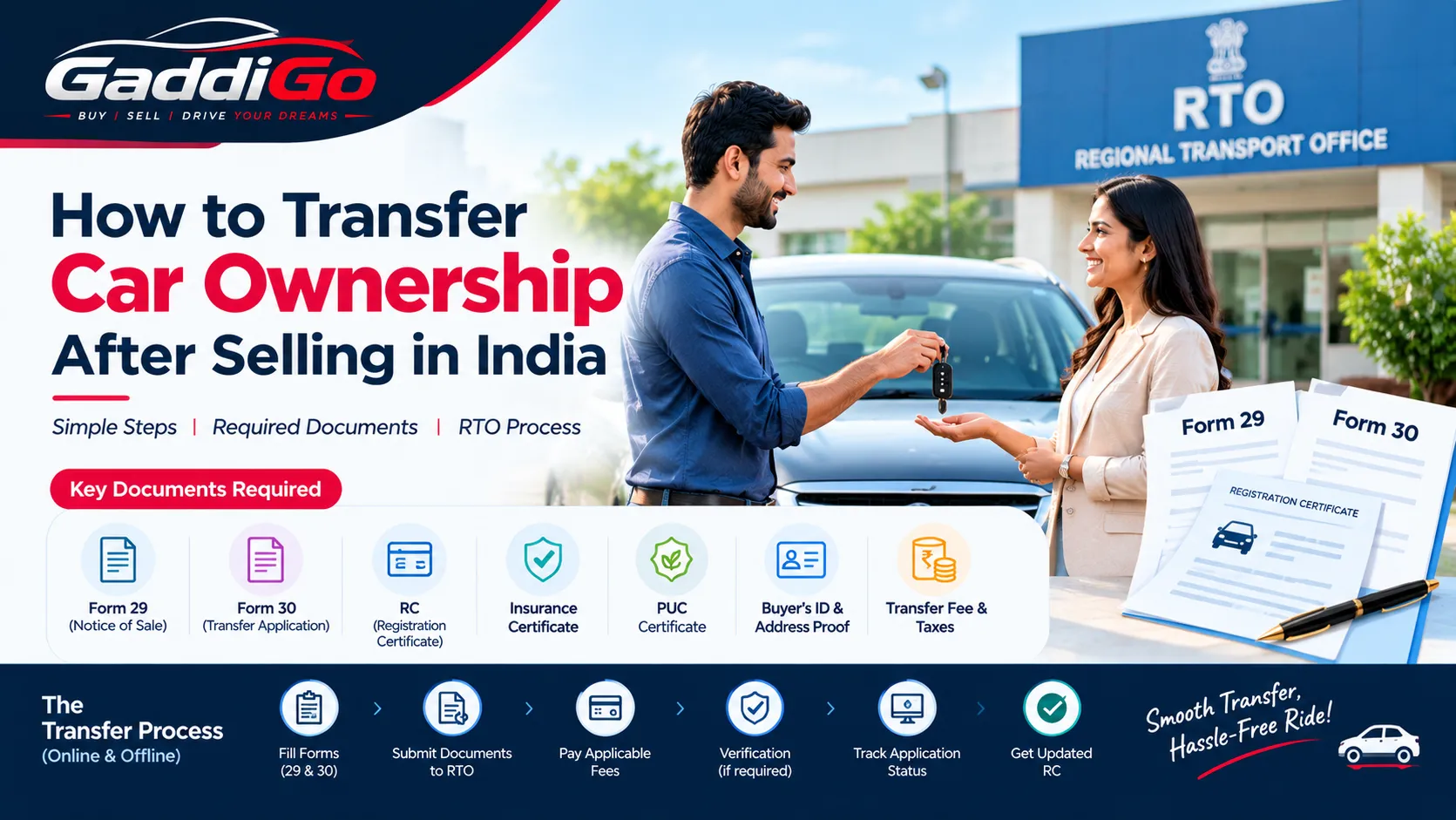
- Follow the applicable process for ownership transfer with the RTO or through the authorised online system.
- Keep copies of the signed documents and payment records.
Do not assume that handing over the keys or signing a sale receipt automatically completes the official ownership-transfer process.
8. Verify Documents Before Finalising the Sale
A safe car sale requires more than receiving the money. Both parties should complete the relevant documentation correctly.
Depending on the transaction and applicable requirements, documents may include:
- Registration Certificate (RC)
- Valid motor insurance details
- Pollution Under Control (PUC) certificate, where required
- Identity and address documents, as appropriate
- Sale receipt or written sale agreement
- Applicable ownership-transfer forms
- Finance clearance or a No Objection Certificate (NOC), where required
Requirements can vary depending on the state, RTO jurisdiction, vehicle financing status, and transaction details. Check the current requirements with the relevant transport authority before completing the transfer.
Keep records of the buyer's details, payment confirmation, signed documents, and ownership-transfer application. Follow up until the transfer status is clear.
9. Use a Safer Approach When Selling Your Car Online
Online platforms can help you reach more buyers, but you should still evaluate every enquiry independently.
When preparing to sell, organise your vehicle documents, set a realistic asking price, describe the car accurately, and arrange inspections safely.
You can explore car-selling information and vehicle options through GaddiGo. Whichever channel you choose, remember that a listing platform is not a substitute for independently verifying the buyer and payment.
A few extra minutes spent checking details can help prevent financial loss and unnecessary disputes.
10. What to Do If You Suspect a Car-Selling Scam
If a buyer makes suspicious requests, stop the transaction until you can verify the details.
If you have already lost money or shared sensitive banking information:
- Contact your bank or payment provider immediately through its official customer-service channel.
- If a financial cyber fraud has occurred in India, call 1930 as soon as possible.
- Report the incident through the official National Cyber Crime Reporting Portal.
- Preserve messages, phone numbers, transaction IDs, payment screenshots, links, and other relevant evidence.
- Report threats, theft, or other criminal activity to the appropriate local police authority.
Quick reporting may help the authorities and financial institutions respond, but recovery of money is not guaranteed. Do not pay anyone who promises to recover your money in exchange for an advance fee.
Conclusion
Selling your car online can be straightforward when you know what to check. Fake buyer profiles, edited payment screenshots, suspicious UPI requests, pressure tactics, and requests for sensitive information are all reasons to pause and verify.
Always confirm the payment through your own bank account, protect your OTPs and PINs, inspect the required documents, and complete the ownership-transfer process properly.
Before you sell your car, take time to verify every important detail. Stay alert, protect your money, and never release your vehicle based only on a promise of payment.
Frequently Asked Questions
1. How can I identify a fake car buyer?
Look for inconsistent identity details, unusual payment requests, pressure to act quickly, refusal to follow reasonable inspection procedures, or requests for money before the purchase. Verify the person and transaction independently before proceeding.
2. Can someone fake a UPI payment screenshot?
Yes. A screenshot can be edited or fabricated. Check your own bank account or official payment application to confirm that the amount has actually been credited.
3. Should I share my UPI PIN to receive payment for my car?
No. You do not need to enter your UPI PIN simply to receive money. Never share your PIN or OTP with a buyer, and do not approve unfamiliar payment requests.
4. Is it safe to hand over a car after receiving a payment message?
Not until you independently confirm that the agreed amount has been credited. A message or screenshot alone does not establish that the payment is genuine.
5. What should I do if a buyer asks me to pay a fee to receive money?
Stop the transaction and verify the request independently. Do not pay supposed release, security, verification, or processing fees just because the buyer claims they are necessary to complete the sale.
6. Where can I report a car-selling payment scam in India?
For suspected financial cyber fraud, call 1930 promptly and report the incident through the National Cyber Crime Reporting Portal. Contact your bank or payment provider immediately as well.























Sign in to leave a comment.