
How to Start a TMT Rolling Mill in India: Complete Setup and Profit Guide
India's steel industry is one of the largest and fastest-growing in the world. With rapid urbanisation, massive infrastructure investment, and a booming real estate sector driving consistent demand for construction materials, setting up a TMT rolling mill in India presents a genuinely attractive business opportunity for entrepreneurs and industrialists alike.
TMT bars — Thermo-Mechanically Treated steel bars — are the backbone of modern reinforced concrete construction. From residential buildings and commercial complexes to bridges, dams, and metro rail projects, TMT bars are indispensable. This means the market for quality TMT steel is deep, consistent, and geographically widespread across every Indian state.
If you are seriously considering entering this sector, here is a comprehensive guide covering everything from initial setup requirements to profit potential.
Understanding the TMT Rolling Mill Business
A TMT rolling mill is a steel processing unit that converts raw billets — semi-finished steel blocks — into finished TMT bars of various diameters, typically ranging from 8mm to 32mm. The process involves reheating the billets in a furnace, passing them through a series of rolling stands that progressively reduce and shape the steel, and then subjecting the bars to a controlled water quenching process that gives TMT bars their distinctive combination of a hardened outer surface and a tough, ductile inner core.
This thermo-mechanical treatment is what separates TMT bars from ordinary mild steel bars, giving them superior tensile strength, earthquake resistance, corrosion resistance, and weldability — properties that modern construction demands.
Market Opportunity and Demand Analysis
Before investing, understanding the market landscape is essential.
India's steel consumption is projected to grow significantly over the coming years, driven by government infrastructure programmes including smart city development, highway expansion, affordable housing schemes, and industrial corridor projects. TMT bars account for a substantial portion of long steel product consumption in the country.
Importantly, demand is not concentrated in metros alone. Tier-2 and Tier-3 cities, semi-urban areas, and rural regions are witnessing rapid construction activity, creating strong local demand that large distant steel plants cannot efficiently serve. This is where regional and mid-sized rolling mills have a distinct competitive advantage — proximity to the end customer translates into lower freight costs and faster delivery.
Location Selection and Land Requirements
Choosing the right location for your TMT rolling mill is one of the most important decisions you will make. Key factors to evaluate include:
Proximity to raw material suppliers: Billets are either sourced from integrated steel plants or imported. Being close to major steel-producing regions or well-connected ports reduces input logistics costs significantly.
Infrastructure availability: Your plant needs reliable power supply (rolling mills are energy-intensive operations), access to water for the quenching process, and good road connectivity for inward raw material and outward finished goods movement.
Land area: A small to medium-capacity rolling mill typically requires 1 to 3 acres of land, depending on the production capacity and layout of auxiliary facilities like the billet yard, finished goods storage, offices, and transformer yard.
Industrial zone compliance: Setting up within a designated industrial area simplifies regulatory approvals and often provides access to better infrastructure.
Machinery and Equipment Required
The core equipment configuration for a TMT rolling mill includes:
Reheating Furnace: The entry point of the rolling process, where cold billets are heated uniformly to approximately 1,100°C to 1,200°C before rolling. Fuel efficiency and temperature uniformity are critical parameters.
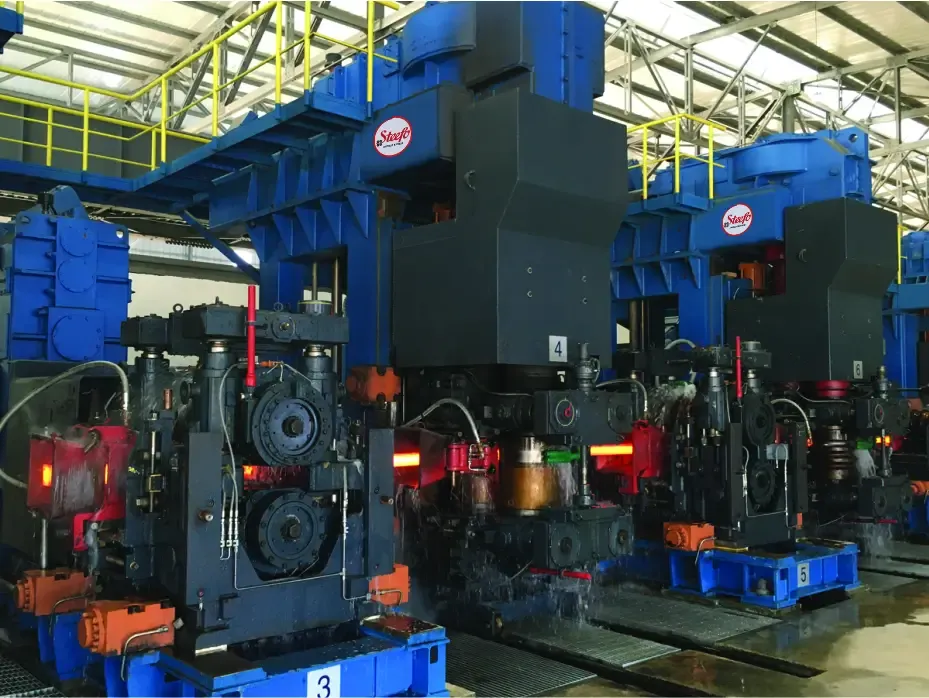
Rolling Mill Stands: A series of roughing, intermediate, and finishing stands equipped with grooved rolls that progressively shape the hot steel into bar form. The number of stands depends on the desired product range and production speed.
TMT Quenching System: The heart of TMT bar production — a specially designed water cooling box where the hot rolled bar is rapidly quenched after the finishing stand to develop the characteristic hardened martensitic outer layer while the core remains austenitic, later transforming to a tough ferrite-pearlite structure.
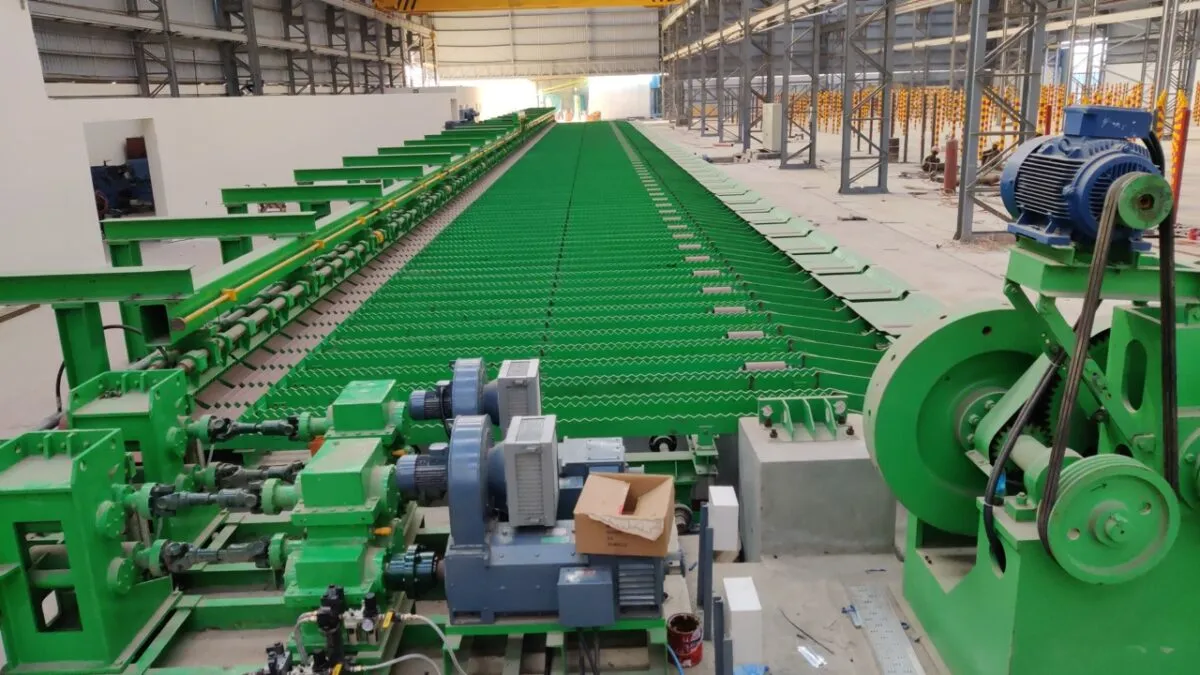
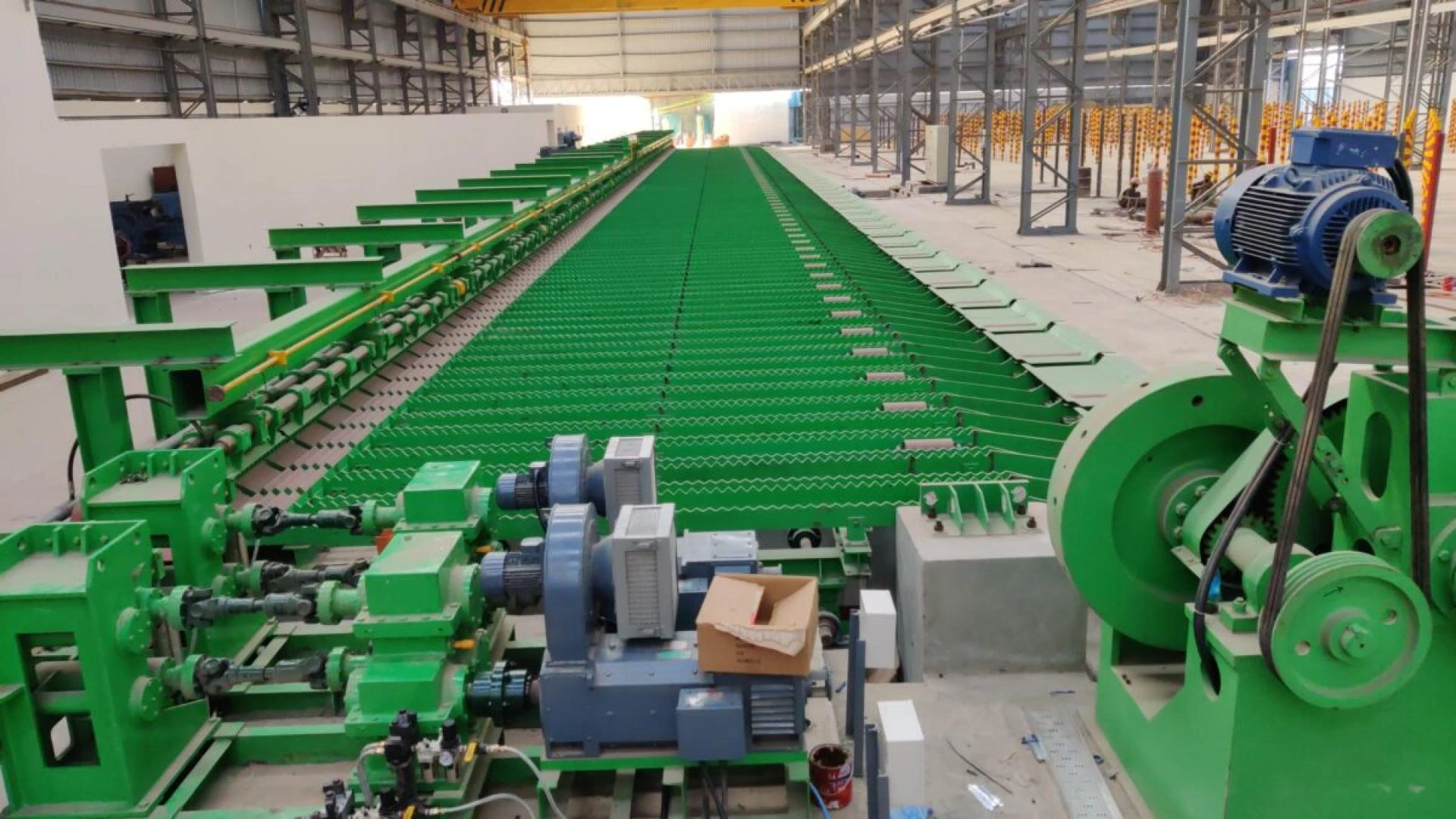
Cooling Bed: Where the quenched bars are air-cooled to ambient temperature in a controlled manner before being cut and bundled.
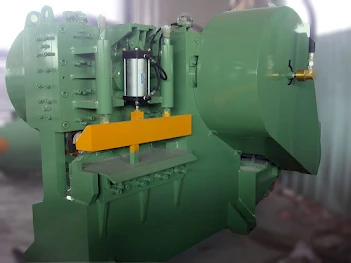
Shear and Bar Cutting Equipment: For cutting bars to standard lengths (typically 12 metres for commercial supply).
Electrical and Automation Systems: Modern rolling mills are increasingly automated with PLC-based controls for consistent product quality, reduced manpower dependency, and better energy management.
Industry leaders like The Steefo Group have established themselves as trusted technology and equipment partners for rolling mill projects in India, offering complete plant solutions from concept and engineering to commissioning and after-sales support.
Licenses, Approvals, and Compliance
Starting a TMT rolling mill requires navigating a series of regulatory requirements:
- Factory License under the Factories Act from the State Labour Department
- Pollution Control Board NOC and Consent to Establish — rolling mills involve furnace emissions and must comply with environmental norms
- Bureau of Indian Standards (BIS) Certification — mandatory for selling TMT bars in India under IS 1786 standard
- Electricity connection and load sanction from the State Electricity Board
- Fire NOC from the local fire authority
- GST Registration and other applicable business registrations
- MSME Registration if applicable, for availing government scheme benefits
BIS certification deserves special attention — without it, your TMT bars cannot be legally sold under a branded IS mark, which significantly limits market access and customer confidence.
Investment and Cost Estimation
The capital investment required depends heavily on production capacity:
Small-scale mill (1–1.5 lakh tonnes per annum): Total project cost typically ranges from ₹15 crore to ₹30 crore, including land, civil construction, equipment, electrical systems, and working capital margin.
Medium-scale mill (2–4 lakh tonnes per annum): Investment requirements range from ₹40 crore to ₹80 crore or more depending on the level of automation and technology.
Key cost heads include land acquisition or lease, civil and structural works, main plant and machinery, electrical infrastructure including transformer and switchgear, erection and commissioning, pre-operative expenses, and initial working capital for billet procurement.
Financing options include term loans from public sector and private banks, MSME credit schemes, state government investment subsidy programmes, and equipment financing from machinery suppliers.
Profitability and Return on Investment
The profitability of a rolling mill is primarily driven by the conversion margin — the difference between the cost of input billets and the selling price of finished TMT bars, after accounting for all variable and fixed costs.
Typical conversion costs (energy, labour, consumables, maintenance, overheads) for a reasonably efficient Indian rolling mill range from ₹2,500 to ₹4,000 per tonne. Conversion margins in the TMT bar market typically range from ₹3,000 to ₹6,000 per tonne depending on market conditions, product mix, and operational efficiency.
For a mill producing 1 lakh tonnes annually at a net margin of ₹3,500 per tonne, annual profit before tax would be approximately ₹35 crore — representing a strong return on capital for a well-managed operation.
Energy efficiency, yield optimisation, scrap minimisation, and strong sales network development are the key levers that separate highly profitable rolling mills from average performers.
Building a Market and Distribution Network
Production capacity means nothing without a strong sales channel. TMT bar marketing in India operates through:
- Direct supply to large construction contractors and real estate developers
- Distribution through steel traders and stockists in nearby districts
- Tie-ups with government contractors for infrastructure projects
- Building a branded product with BIS marking for retail and project sales
Establishing brand trust through consistent quality and reliable supply is the most sustainable competitive strategy in this business.
Frequently Asked Questions (FAQs)
Q1. What is the minimum investment required to start a small TMT rolling mill in India?
For a small-scale TMT rolling mill with a capacity of around 1 lakh tonnes per annum, the minimum total project investment typically ranges from ₹15 crore to ₹30 crore. This includes land, civil construction, plant and machinery, electrical infrastructure, and initial working capital. Costs vary based on location, level of automation, and equipment sourcing.
Q2. Is BIS certification mandatory for selling TMT bars in India?
Yes, BIS certification under IS 1786 is mandatory for selling TMT bars in the Indian market. This certification verifies that your product meets the national standard for high-strength deformed steel bars used in reinforced concrete construction. Without BIS certification, your product cannot carry the ISI mark, which severely restricts market acceptance among contractors, developers, and government project buyers.
Q3. How long does it take to set up and commission a TMT rolling mill in India?
From the date of project sanction and land finalisation, a typical small to medium-scale TMT rolling mill takes approximately 12 to 24 months to complete civil construction, equipment installation, erection, trial runs, and full commercial commissioning. The timeline depends on the speed of regulatory approvals, equipment delivery schedules, civil construction progress, and the complexity of the plant layout and automation systems chosen.

























Sign in to leave a comment.