

Ask any swimmer which stroke looks the most impressive, and butterfly usually wins. Both arms sweep over the water together, the body ripples like a dolphin, and a strong swimmer seems to skim along the surface. It also has a reputation as the hardest of the four competitive strokes, and that reputation is partly deserved.
Still, learning how to swim butterfly stroke has more to do with timing than raw strength. Once the rhythm clicks, the stroke feels smoother than most people expect. This guide covers the technique step by step, along with drills, common mistakes and an honest look at how long it takes. It is written for parents supporting a young swimmer as well as teenagers and adults taking on the challenge themselves.
What Is Butterfly Stroke?
Butterfly is a swimming stroke in which both arms move together in a circular pattern over the water while the legs perform a dolphin kick. The body moves in a wave-like rhythm, and the swimmer breathes forward, usually every one or two strokes.
The stroke began in the 1930s as a variation of breaststroke. Swimmers found that carrying the arms forward over the water was faster than recovering them underneath. That arm action was later paired with the dolphin kick, and butterfly became a separate Olympic event at the 1956 Games in Melbourne.
It is demanding because it asks for shoulder strength, core control and precise timing all at once. If one of those is missing, you feel it straight away. For that reason, swim schools usually introduce butterfly after children are comfortable with freestyle, backstroke and breaststroke.
Benefits of Swimming Butterfly
Butterfly works the shoulders, chest, back and abdominal muscles hard, and the core does a lot of the stroke's real work. Because the whole body moves with every cycle, it is one of the more energy-demanding strokes, which makes it a good way to build stamina.
The benefits go beyond fitness. The full range of arm movement encourages shoulder mobility and an upright posture out of the water. The dolphin kick is also used underwater after dives and turns in other strokes, so the skill carries over. For children, butterfly is a useful lesson in coordination, since arms, legs and breathing have to cooperate.
Before You Start
You will find butterfly far easier if the basics are already in place. That means:
- Comfortable freestyle and backstroke, with relaxed breathing
- A steady streamline position and the ability to float
- Confidence putting your face in the water and blowing bubbles
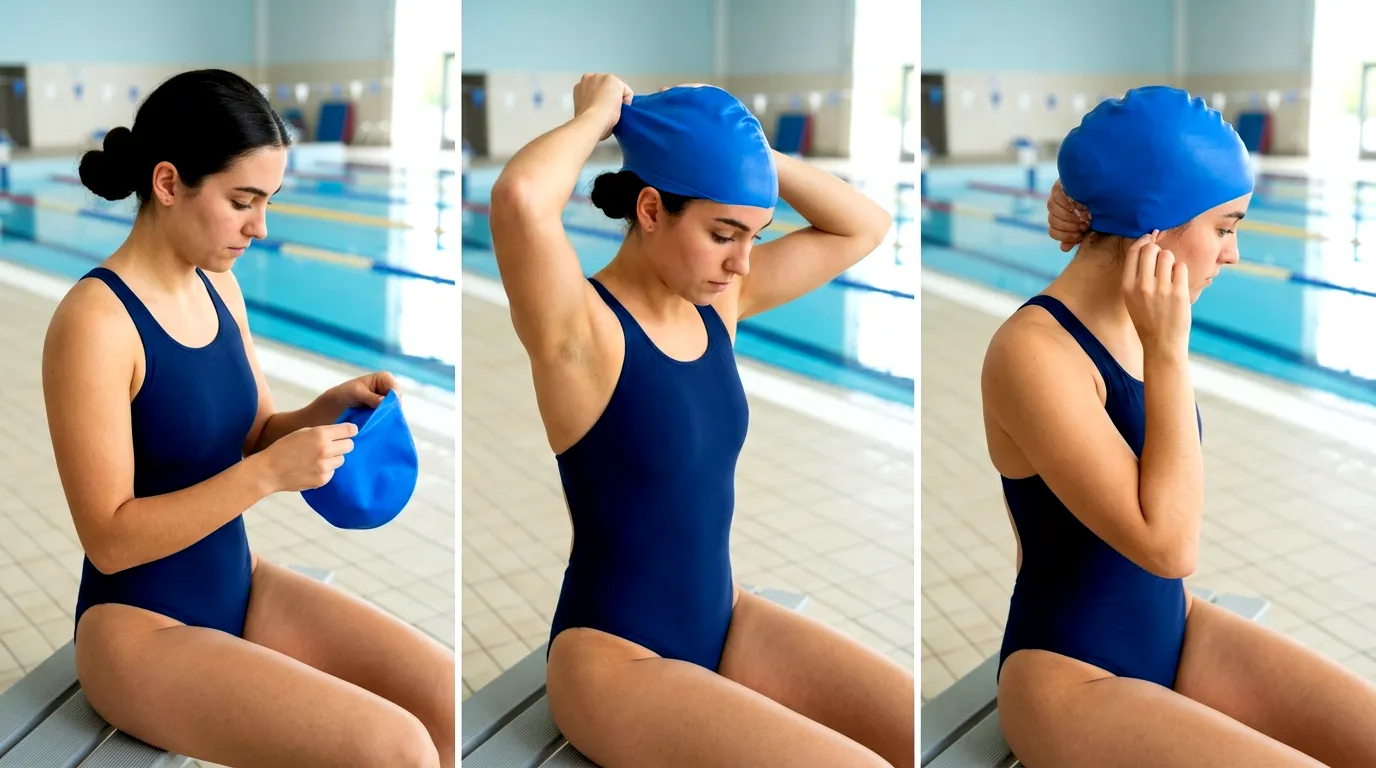
For equipment, goggles are essential. A pair of short fins helps beginners feel the rhythm of the kick, and a kickboard is handy for early practice. Warm up properly with shoulder circles, gentle arm swings and a few easy lengths of freestyle. Butterfly puts real demands on the shoulders, so it should never be attempted cold.
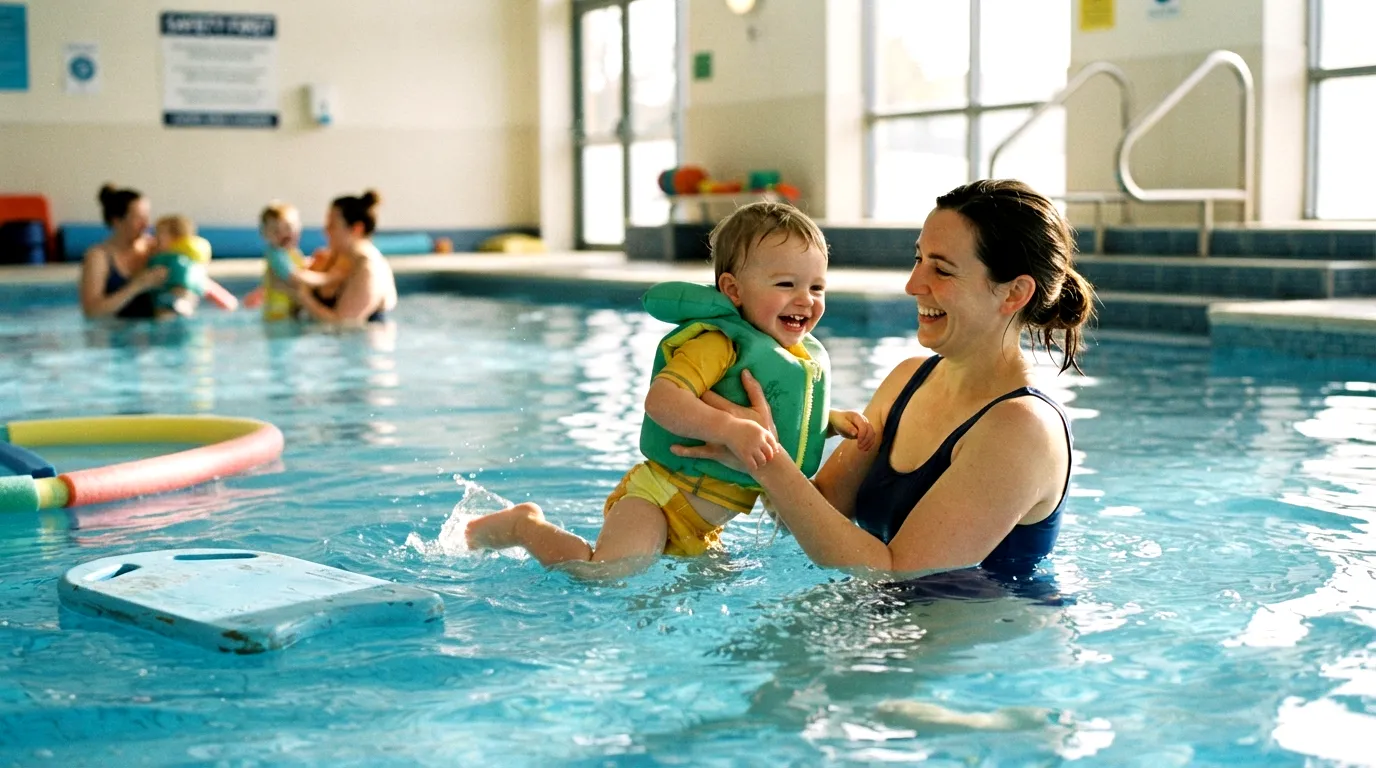
For children, readiness depends on strength, attention and technique more than on age. An instructor can tell you when your child is ready to try it.
How to Swim Butterfly Stroke: Step by Step
Step 1: Body Position and Streamline
Start in a streamline with your arms stretched forward, your head between them and your body long and flat. In butterfly, the body is never completely still, but the hips stay close to the surface while the chest presses down and rises. Keep your head in line with your spine, eyes looking down and slightly forward. Lifting the head too early drops the hips and creates drag.
Step 2: The Butterfly Kick (Dolphin Kick)
The dolphin kick begins in the chest and core, not the knees. Press your chest down gently, let the hips rise, then send a wave down through the body so the legs whip down and up together. Keep the feet relaxed with toes pointed.
Butterfly uses two kicks per arm cycle. The first happens as your hands enter the water and the second as they push past your hips and exit. Many beginners over-kick in their excitement. A smaller, relaxed kick keeps the rhythm much better than a huge one.
Step 3: Arm Movement
Your hands enter the water in front of your shoulders, about shoulder-width apart, with thumbs leading or palms angled slightly outwards. From there:
- Catch: Press your hands outwards and downwards, keeping the elbows high.
- Pull: Sweep the hands inwards beneath your chest in a keyhole shape, wide at the start, narrower in the middle and wide again at the end.
- Push: Finish by pressing the water back past your thighs.
- Recovery: Swing both arms forward low and relaxed over the surface, as if skimming the water.
A common beginner error is lifting the arms high during recovery. This wastes energy and pushes the body down.
Step 4: Breathing Technique
Breathe at the end of the pull, when your hands are pushing past your hips, and your chest is at its highest point. Keep your chin close to the water and look forward, without lifting the whole head. Your face should be back in the water before your arms enter.
Many coaches start learners with a breath every second stroke because it keeps the body flatter, though some prefer every stroke early on. Both approaches work. If breathing is the part that trips you up, our guide to swimming breathing technique explains the fundamentals in more detail.
Step 5: Timing and Coordination
Timing is the real secret of butterfly. The sequence runs like this: hands enter and the first kick fires, the pull begins, hands push past the hips as the second kick fires, you breathe, and the arms recover. Saying "kick, pull, kick, breathe" quietly to yourself during practice sounds silly but helps many swimmers find the rhythm.
Butterfly Stroke Drills for Beginners
Good drills break the stroke into manageable pieces. These are the ones instructors reach for most often:
- Dolphin kick on your back or side: Practise the body wave with your arms by your sides or stretched forward. It builds the undulation without any arm coordination to worry about.
- One-arm butterfly: Swim with one arm while the other stays extended in front, then switch. It teaches the pull and the breath with far less effort.
- 3-3-3 drill: A common version is three kicks on your side, three single-arm strokes, then three full butterfly strokes. It links the kick and arms gradually.
- Butterfly with short fins: The extra lift from fins lets you focus on rhythm and timing.
Common Butterfly Mistakes and How to Fix Them
| Mistake | Why it happens | Fix |
| Lifting the head too high | Trying to see or breathe | Keep the chin low and look forward, not up |
| Entering the arms too wide | Over-reaching | Aim for shoulder-width entry |
| Kick too big or too small | Rushing, or forgetting the kick | Keep it small, relaxed and twice per cycle |
| Breathing late | Waiting until the arms are already recovering | Breathe as the hands push past the hips |
| Relying on the shoulders | Tired arms, weak core | Strengthen the core and practise kick sets |
Getting Faster and How Long It Takes
Butterfly is genuinely hard, so be realistic. Many swimmers take longer than eight weeks to feel comfortable, and children progress at very different speeds depending on strength, coordination and confidence. As a rough guide, an eight-week progression might look like this:
- Weeks 1 to 2: Dolphin kick and body wave
- Weeks 3 to 4: One-arm drills with breathing
- Weeks 5 to 6: Full stroke over very short distances
- Weeks 7 to 8: Building towards a clean 25 metres with rests
To build speed and endurance, work on your core with planks and similar exercises, keep up shoulder mobility work and begin with short distances. Stop a set when your technique starts to fall apart, because tired butterfly is sloppy butterfly.
How Butterfly Compares With Other Strokes
| Stroke | Difficulty | Main muscles worked |
| Freestyle | Easier to learn, fastest overall | Shoulders, back, legs |
| Backstroke | Easy to moderate | Back, shoulders, core |
| Breaststroke | Moderate | Chest, legs, shoulders |
| Butterfly | Hardest for most swimmers | Shoulders, chest, core |
Safety Tips
Butterfly puts a lot of load on the shoulders, so stop and rest if you feel pain. Do not overtrain, particularly young swimmers, whose bodies are still developing. Use fins in short sets only, as they can strain the ankles and hips. Children should always learn butterfly under the guidance of a qualified instructor, and nobody should practise it alone.
Conclusion
Butterfly rewards patience. Get the body position and the dolphin kick right first, add the arms gradually and treat timing as a skill to be practised. Slow, regular practice with good drills will always beat a few exhausting attempts at full strokes.
Ask a qualified instructor to watch your stroke and give feedback. A small correction to head position or timing can transform how the stroke feels.
FAQs
Is butterfly the hardest stroke to learn?
Most swimmers find it so, because of the timing and strength involved. Broken into small steps, it is entirely manageable.
How do you breathe in butterfly?
Breathe forward at the end of the pull, with your chin low, then return your face to the water before the arms enter.
How many kicks per arm stroke are there?
Two. One as the hands enter and one as they exit.
Can a beginner learn butterfly?
Yes, though it is best to be comfortable with freestyle and backstroke first.
Which muscles does butterfly work?
The shoulders, chest, upper back, abdominals, lower back, glutes and legs.
Why is butterfly so tiring?
Both arms recover together, the body is constantly moving and there is little time to rest. Poor technique makes it more tiring still.
What is the difference between the butterfly kick and the dolphin kick?
They describe the same movement. "Dolphin kick" is the general term, while "butterfly kick" is used when it is part of the stroke.














Sign in to leave a comment.