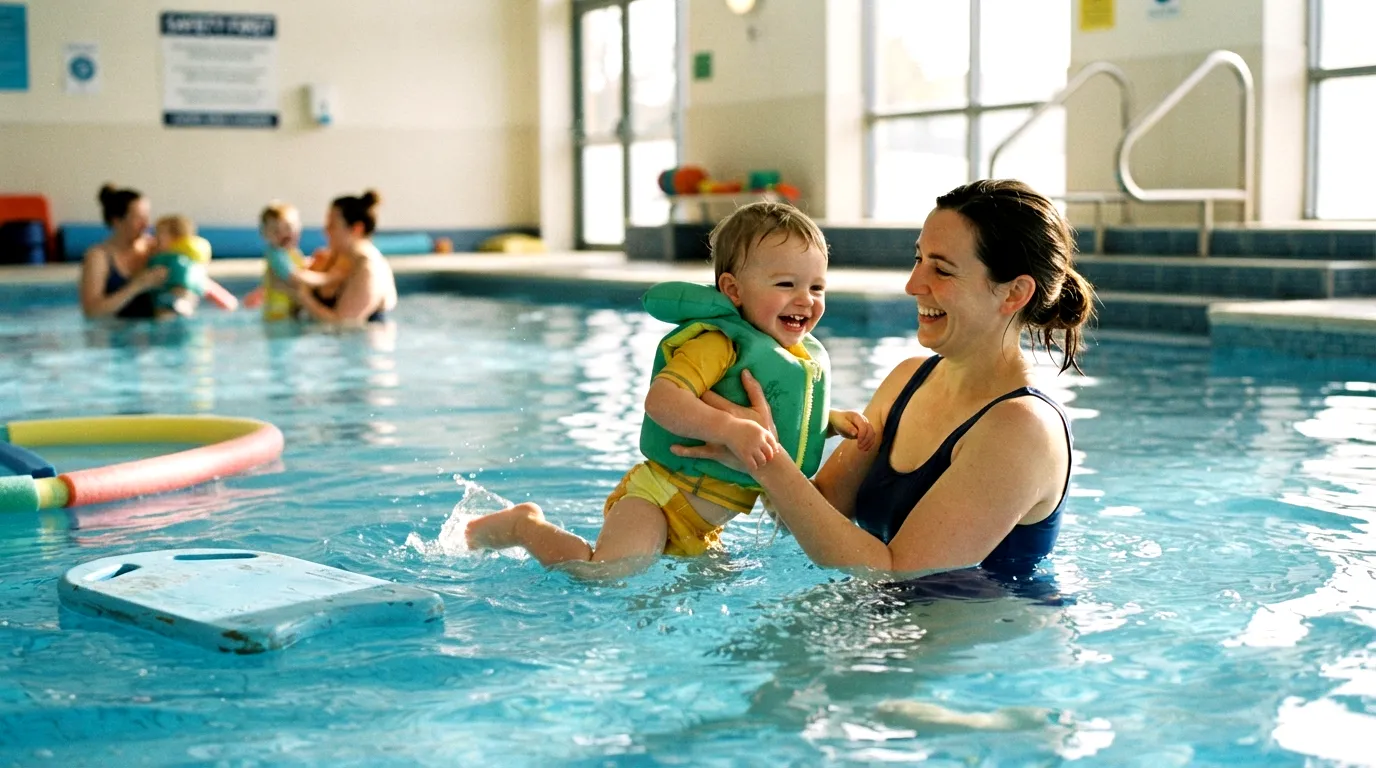

Few things are as heartwarming as watching a toddler realise that water can be fun. Few things matter as much, either. Drowning remains one of the leading causes of accidental death in young children, and early, positive experiences in the water are one part of keeping them safe.
So, how do you teach a toddler to swim? Start with short, relaxed sessions in warm water, stay within arm's reach at all times and build skills in small steps: splashing, blowing bubbles, floating, kicking and reaching the wall. Let your child set the pace and keep it playful.
One important point before we begin. Swimming skills never replace supervision. Even a confident toddler needs an adult close by every time they are near water.
At What Age Can You Start Teaching a Toddler to Swim?
There is no single correct age, and children develop at very different speeds. That said, it helps to think in two stages.
Babies (6 to 12 months): getting used to water
At this stage, the goal is familiarity, not technique. Bath time, gentle splashing and parent-and-baby classes all help your little one see water as a comfortable place to be.
Toddlers (1 to 3 years): basic skills
Between one and three, children can begin learning simple skills such as kicking, floating with support and moving towards the pool wall. The American Academy of Paediatricians says lessons may be considered from around the age of one for children who are ready, but it also stresses that lessons do not make a child "drown-proof".
Is my toddler ready?
Look for a child who enjoys the bath, copes calmly with water on their face, follows simple instructions and stays relaxed in your arms in the pool. If your toddler is unwell, tired or upset, leave it for another day.
Why Teach Your Toddler to Swim?
Early water skills can support water safety, but the benefits reach further. Swimming works the whole body, which helps coordination and motor development. Many parents also notice a boost in confidence and social skills, especially in group settings, and the one-to-one time in the water is a lovely way to bond. Every child responds differently, so treat these as possible benefits, not guarantees.
Safety Rules to Follow Before You Start
Touch supervision. Stay within arm's reach of your toddler whenever they are in or near water. Put your phone away and never leave an older sibling in charge.
Life jackets, not floaties. A properly fitted, approved life jacket or buoyancy aid is far safer than inflatable arm bands. Arm bands can slip off or deflate, and they encourage an upright position that is not how a child would naturally float or swim.
Barriers. Home pools should have fencing with a self-closing gate. Empty paddling pools, drain buckets and keep garden ponds covered.
CPR training. Every parent and carer who supervises swimming should learn infant and child CPR. Local Red Cross or first aid providers usually offer short courses.
Water temperature. Toddlers lose heat quickly. Water at around 30 to 32°C suits most little ones, and you should get them out at the first sign of shivering or blue-tinged lips.
The "drown-proofing" myth. No amount of practice makes a toddler safe alone. Layers of protection work together: supervision, barriers, life jackets and skills.
What You Need: Toddler Swimming Kit
Keep it simple:
- Swim nappies, plus a well-fitting swimsuit (UV-protective if you are outdoors)
- An approved life jacket or buoyancy aid
- Soft pool toys, a small kickboard or a pool noodle
- A warm towel, a change of clothes and a snack for afterwards
How to Teach a Toddler to Swim: Step by Step
Step 1: Start in the bath
Pour water gently over your toddler's shoulders and back, sing songs and let them splash. If they enjoy the bath, the pool will feel far less strange.
Step 2: Introduce the pool gradually
Carry your toddler into the water slowly, holding them close. Let them sit on the steps and explore before you move deeper. Short first visits of five to ten minutes are plenty.
Step 3: Blow bubbles
Show your child how to blow bubbles on the surface, then with their mouth and nose just under. Make it silly. A toddler who laughs while blowing bubbles is learning breath control without realising it.
Step 4: Float on the front and back
Support your toddler's head and body while they lie back, with their ears in the water if they are happy with that. Talk to them calmly and keep your face visible. Front floating usually follows once back floating feels comfortable.
Step 5: Kick
Hold your toddler under the arms, facing you, and encourage big splashy kicks. A kickboard or noodle can help once they are steady.
Step 6: Add arm movements
Show a gentle "reach and pull" motion, or make it a game like scooping up treasure. Early paddling looks messy, and that is completely normal.
Step 7: Practise breath control
Combine bubbles with short, supported submersions only when your child is relaxed and willing. Never push their head under. Confidence with water on the face is worth waiting for.
Step 8: Learn to reach the wall
Safe entry and exit are life skills. Practise sitting on the edge, sliding in with your help, turning and holding the wall. Then practise climbing out, again and again.
Step 9: Keep practising through play
Repetition is how toddlers learn, and games keep it fresh.
Water Games That Teach Swimming Skills
Songs such as "Row, Row, Row Your Boat" or a favourite local rhyme give sessions a rhythm your toddler will come to expect. A toy retrieval game (start in the shallows with floating toys) builds reaching and balance. Bubble races encourage breath control, and follow-the-leader gets everyone kicking and moving. Keep each game short, and stop while your child is still smiling.
Common Mistakes Parents Make
- Forcing it. Pushing a reluctant toddler can create fear that lasts. Slow and positive wins.
- Relying on floaties. They give a false sense of security and may hinder proper body position.
- Sessions that run too long. Tired, cold toddlers stop learning and get frightened. Twenty minutes is often enough.
- Dropping supervision. A child who has learned to kick is still a toddler. Stay close.
What If My Toddler Is Afraid of the Water?
Fear is common, and it is not a sign that you are doing anything wrong. A scared toddler may cling, cry, arch away from the water or refuse to get in.
Go back a step. Play with cups and toys in the bath, or splash together in a paddling pool. Get in the water yourself and let your toddler watch you having fun. Praise small wins, such as touching the water with a foot or sitting on the steps. If your toddler is still struggling, our guide on how to help your child overcome fear of water has more practical ideas.
If the fear does not ease after several weeks, or if it seems to be getting worse, consider a qualified instructor who works with anxious young children. A fresh face and a calm, structured approach sometimes help where parents' best efforts have stalled.
Home Practice or Swim Lessons?
Both have a place, and many families do both.
| Teaching at home | Professional lessons | |
| Cost | Low | Higher |
| Structure | Flexible, informal | Progressive, planned |
| Expertise | Your own | Trained instructor |
| Social benefit | Limited | Group interaction |
Group classes suit sociable children and cost less. Private lessons can suit anxious toddlers or those with particular needs. When choosing a school, ask about instructor qualifications, class sizes, pool temperature and whether parents join in the water for this age group.
How Long Does It Take a Toddler to Learn to Swim?
There is no honest fixed answer. Some toddlers are floating with support within a few weeks. Others need months to feel relaxed with their face in the water. Independent swimming is unlikely at this age, and that is fine.
Keep sessions short, ideally 15 to 30 minutes, and aim for once or twice a week. Little and often works better than one long splash on a Sunday.
Final Thoughts
Teaching a toddler to swim is mostly about patience, play and staying close. Keep sessions short and warm, build skills a small step at a time, and protect your child with layers of safety, not just swimming ability. Every toddler moves at their own pace, and that is exactly as it should be.
If you would like extra guidance, a qualified instructor can help you plan the next steps, whether that is a parent-and-toddler class or a few confidence-building sessions.
FAQs
Can a 2-year-old learn to swim?
Yes, in the sense of learning basic water skills such as kicking, floating with support and reaching the wall. Fully independent swimming is unlikely at this age.
What is the best age to start swimming lessons?
Many children are ready between one and four, though readiness matters more than age.
How do I help my toddler stop being afraid of water?
Go slowly, use play, stay close and celebrate tiny steps. Never force it.
Are floaties safe for toddlers?
They are not recommended as a safety device. Choose an approved life jacket or buoyancy aid, and stay within arm's reach.
How often should a toddler swim?
Once or twice a week for short sessions suits most families.
Can toddlers learn to swim on their own?
No. Toddlers need an adult in the water with them, always.



























Sign in to leave a comment.