

Children often learn more enthusiastically when a lesson feels like an adventure. Storytelling offers parents and coaches a creative way to introduce chess rules, explain strategic ideas, and encourage independent thinking. Instead of asking children to memorize every movement, teachers can use simple characters and situations to make the game easier to explore.
Teaching children chess through storytelling works best when imaginative explanations are connected to real positions on the board. This allows children to enjoy the story while learning how chess actually works.
1. Introduce Chess Pieces as Characters
Begin by giving each chess piece a role in a royal kingdom. The king is the character everyone must protect, the queen is a versatile leader, and the rooks are castle guards. Bishops can be travelers who follow diagonal paths, while knights are brave horses that jump over obstacles. Pawns represent foot soldiers who advance toward the opposite side of the board.
These descriptions provide a simple introduction to the pieces. Once children understand the characters, explain their actual movements and ask them to demonstrate each one. For example, a knight's ability to jump over other pieces can be illustrated by imagining a horse leaping over a fence.
Keep the stories short so that children spend enough time practising the rules rather than simply listening.
2. Explain the Board and Starting Positions
Present the chessboard as a kingdom divided into 64 squares. Each player begins with an army arranged in a specific formation, and every piece has a designated starting square.
Let children set up the pieces themselves using a reference board. If they place a knight or bishop incorrectly, ask them to check the arrangement and find the mistake.
You can also introduce the idea that both players have different objectives: protecting their own king and working toward checkmate against the opponent.
This activity helps beginners become familiar with the board's layout before they move on to more complicated ideas.
3. Use Stories to Introduce Basic Strategy
After children understand the rules, introduce simple strategic decisions through short scenarios.
Imagine that a kingdom is preparing for an approaching challenge. The army needs to develop its pieces, establish control of important central squares, and find a safe position for its king. Show how these ideas appear in an actual opening position.
Rather than presenting a list of rules to memorize, ask children to compare two possible moves. Which move brings a piece into the game? Which one helps protect the king? What might the opponent do next?
These questions introduce the importance of planning ahead. Children begin to see that a useful move should contribute to a purpose rather than be chosen at random.
4. Turn Tactical Ideas into Puzzles
Tactics can be introduced as small mysteries that children must solve. Choose one concept for each activity and demonstrate it with a clear board position.
A fork occurs when one piece creates two threats at the same time. For example, a knight might attack an opposing king and another valuable piece, forcing the opponent to respond to the check.
A pin restricts a piece because moving it would expose a more valuable piece behind it. A skewer attacks a valuable piece that may have to move, revealing another target behind it.
After explaining the idea, present a suitable position and invite the child to find the solution. Give a hint if needed, but allow time for the child to calculate possible moves.
This activity develops tactical recognition and encourages children to consider their opponent's responses before committing to a move.
5. Explain Checkmate Through a Final Challenge
Checkmate is an important concept for beginners because it defines the objective of the game. Children may initially think they must capture all the opponent's pieces to win.
Use a simple position to show that the game ends when the opposing king is in check and has no legal way to escape. The king is not captured; checkmate ends the game.
Start with straightforward checkmate puzzles. Ask children to identify the attacking pieces, examine the king's available escape squares, and determine whether the defending side has another legal response.
As their skills develop, introduce basic checkmate patterns, such as using a queen or rook with the king to checkmate a lone king. Encourage children to explain why the solution works instead of memorizing a sequence of moves.
6. Encourage Children to Tell Their Own Chess Stories
Once children have played a few games, invite them to describe important moments in their own words. They might explain why they moved a knight, how they protected a piece, or what they were trying to achieve with a pawn move.
The purpose is not to create elaborate fictional stories. It is to help children explain their decisions and reflect on the position.
Useful questions include:
- What were you trying to achieve with that move?
- What did your opponent threaten?
- Which move would you reconsider, and why?
- What could you try differently next time?
These conversations can reveal misunderstandings that may not be obvious during a game. They also help children become more comfortable explaining their reasoning.
7. Plan Lessons Around the Child's Attention Span
Storytelling should be a practical part of the lesson, not a long introduction that leaves little time for chess. A simple structure can keep activities focused:
- Introduce one concept through a short story.
- Demonstrate it on the board.
- Ask the child to practise or solve a puzzle.
- Finish with a mini-game or a quick review.
Adjust the activity to the child's age and experience. Beginners may need more time with piece movements, while experienced children can explore tactical puzzles or strategic decisions.
Avoid correcting every mistake immediately. Give children a chance to notice problems and learn from them. Praise thoughtful decisions and effort, not only victories.
Benefits of Storytelling in Chess Education
Storytelling can support chess learning in several ways:
- Memory: Character-based explanations may help children recall rules and piece movements.
- Engagement: Interactive activities give children a reason to participate and ask questions.
- Reasoning: Tactical challenges encourage them to compare options and anticipate responses.
- Communication: Explaining a game helps children express their decisions clearly.
- Creativity: Inventing their own scenarios gives children another way to explore chess positions.
The results will vary from child to child. Storytelling is most useful when combined with accurate instruction, regular practice, and opportunities to apply new concepts in games.
Conclusion
Storytelling can make chess more approachable by connecting unfamiliar rules with situations children can imagine and understand. From learning how pieces move to solving tactical puzzles, each story can introduce one clear idea and lead into practical activity.
Parents and coaches can use this method to create lessons that are structured, interactive, and suited to the child's progress. The aim is not simply to make chess entertaining, but to help children understand the decisions behind their moves.
MM Chess Academy offers online chess learning opportunities for children who want to develop their skills through guided instruction and practice. Visit www.mmchess.org or email [email protected] for more information.
Frequently Asked Questions
Q1. Is storytelling suitable for children learning chess for the first time?
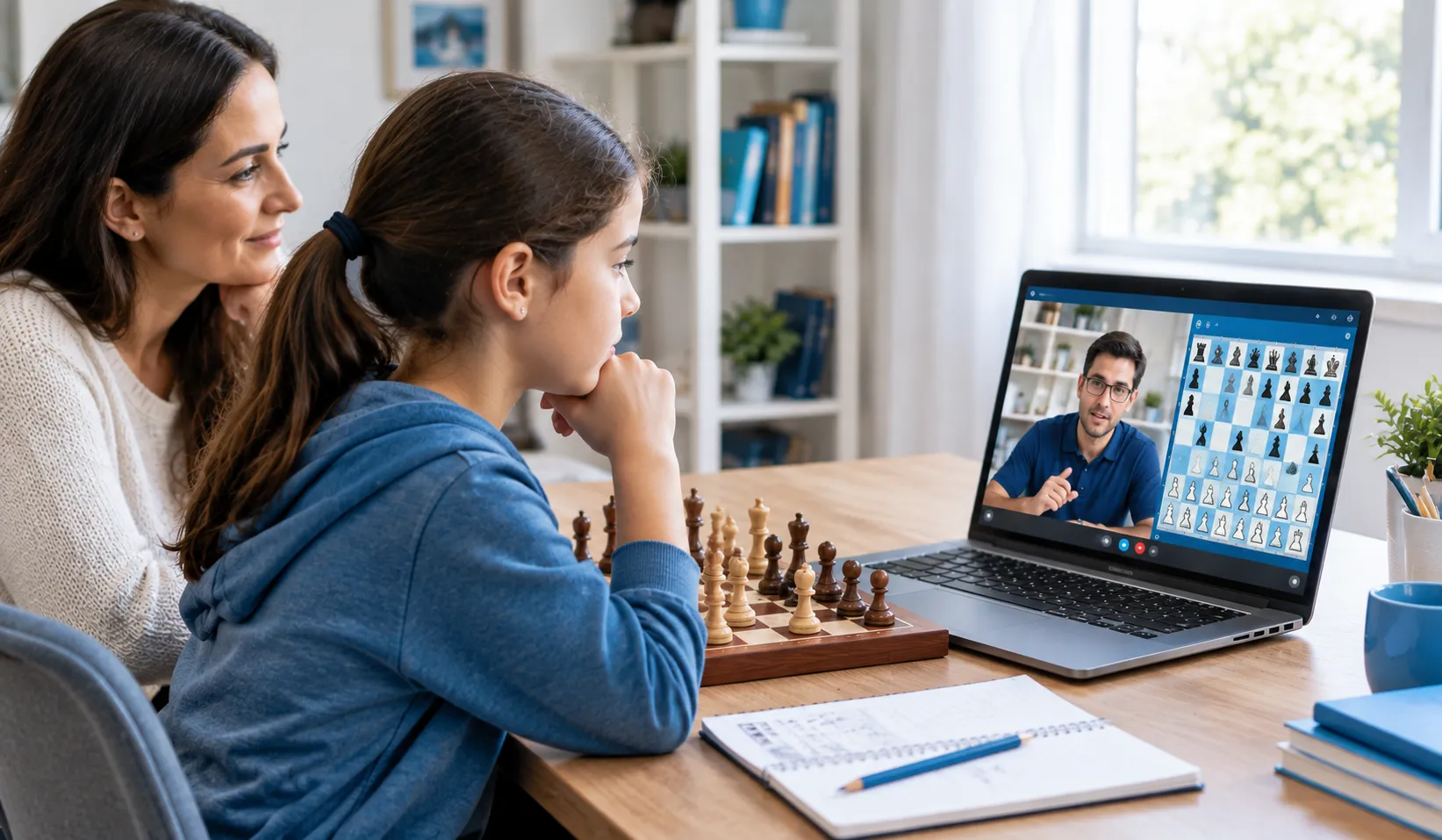
Yes. Simple characters and short explanations can introduce the board and piece movements. Children should practise each rule on the board as they learn it.
Q2. Can storytelling help children understand chess strategy?
It can introduce ideas such as piece development, king safety, and planning. Demonstrating these concepts in real positions helps children understand how to apply them.
Q3. How can I teach chess tactics to children?
Choose one tactic at a time, demonstrate a clear example, and give children a puzzle to solve. Ask them to explain their solution so you can assess their understanding.
Q4. Should children create their own chess stories?
Yes, if they enjoy the activity. Describing their moves in their own words can encourage reflection and help them communicate their thinking.
Q5. How should storytelling be combined with chess practice?
Use a short story to introduce a concept, then move directly to board demonstrations, puzzles, and games. Review the child's decisions to identify what they understand and what needs more practice.






















Sign in to leave a comment.