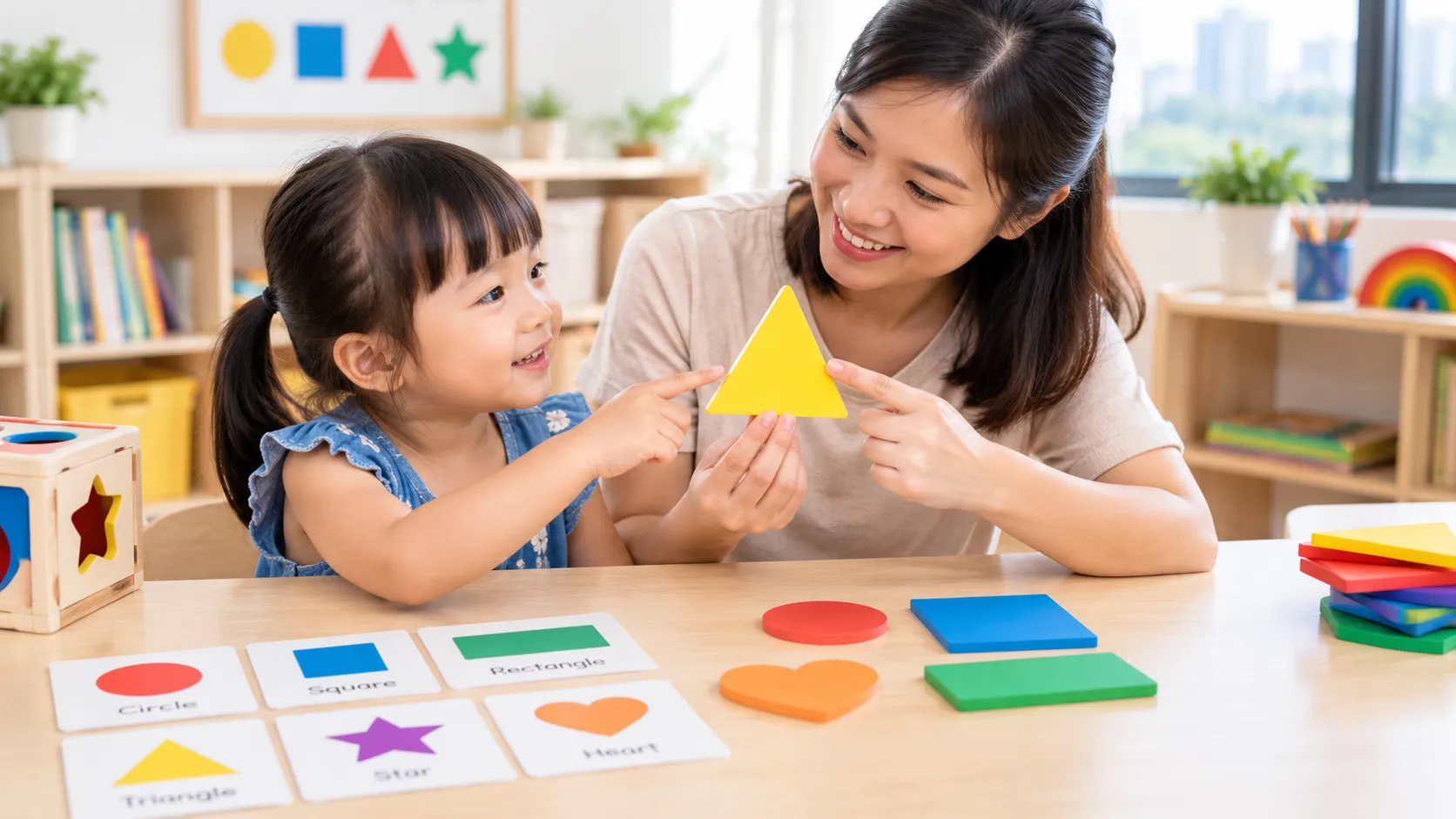

Young children notice the world in simple forms. Circles in the sun, squares in HDB windows, triangles in rooftops. From the very first years, shapes are everywhere around them.
Most parents know that shapes matter, but are not always sure how to teach shapes to preschoolers, what to teach first, how to explain them simply, or how to keep a three-year-old interested long enough to learn.
For parents in Singapore, shape learning is more than naming circles and squares. It helps children build early math skills, improve language, and develop problem-solving abilities. Many preschool programmes in Singapore use hands-on activities because young children learn best through play. With simple ideas at home, parents can make shape learning enjoyable every day.
Why Is Shape Learning Important for Preschoolers?
Learning shapes supports many parts of a child’s development. It is one of the early skills taught in early Preschool education in Singapore because it lays the foundation for future learning.
When children recognise shapes, they also learn to:
- Notice patterns and similarities
- Improve observation skills
- Build early maths understanding
- Develop language and communication
- Strengthen problem-solving skills
Research from organisations such as the National Institute of Early Childhood Development (NIEC) and Singapore’s Early Childhood Development Agency (ECDA) highlights the value of play-based learning in helping children understand concepts naturally.
Parents can learn more about Singapore’s early childhood framework through the Early Childhood Development Agency (ECDA) and the National Institute of Early Childhood Development (NIEC).
Start with Everyday Objects
Children learn shapes more easily when they see them in everyday life. You do not need special learning materials because many objects at home can become simple teaching tools. A plate is a circle, a book is a rectangle, and a slice of pizza is a triangle. These familiar examples help children understand shapes naturally.
You can also continue learning outdoors. While walking around Singapore, encourage your child to spot circles on MRT signs, squares in HDB windows, and triangles on road signs. These everyday discoveries make shape recognition activities fun, engaging, and easy to remember.
Use Play to Teach Shapes
Play helps children remember concepts because they are active and engaged. Many preschool learning Singapore programmes use games and creative activities to teach shapes.
Children can:
- Build shape patterns with blocks.
- Make shapes using playdough.
- Draw shapes with crayons.
- Create collages from coloured paper.
Activities like these improve fine motor skills while naturally teaching preschool shapes.
Read Books About Shapes
Books make shape learning fun and meaningful. Picture books help children connect words with images.
Choose books that feature:
- Shapes in everyday life
- Colourful illustrations
- Interactive questions
- Simple stories
Public libraries managed by the National Library Board Singapore (NLB) offer many children’s books that support early learning. Reading together also improves vocabulary and listening skills.
Explore Shapes During Outdoor Activities
Learning does not have to stay indoors. Parks, playgrounds, and neighbourhood walks provide many opportunities to discover shapes.
Children may find:
- Circular stepping stones
- Rectangular benches
- Triangular roofs
- Square tiles
Popular places such as Gardens by the Bay, Singapore Botanic Gardens, and local playgrounds can become exciting spaces for learning shapes for kids.
Introduce Shapes One Step at a Time
Children learn new ideas more easily when they are introduced gradually. Begin with simple shapes such as circles, squares, triangles, and rectangles, as these appear in many everyday objects. Once your child can recognise these confidently, introduce more challenging shapes like ovals, stars, hearts, and hexagons. Regular practice during playtime, story time, or daily routines helps children remember shape names without feeling overwhelmed. This steady approach builds confidence and makes learning shapes for kids enjoyable.
Use Arts and Crafts to Make Learning Fun
Arts and crafts give children the chance to see, touch, and create shapes, making learning more meaningful. Activities such as painting with shape stamps, making paper collages, building pictures from cut-out shapes, or completing simple shape puzzles encourage creativity while improving fine motor skills. These hands-on shape activities for preschoolers also strengthen shape recognition because children are actively exploring instead of simply memorising names. Many ECDA preschool Singapore programmes use creative learning experiences to support children's curiosity and early development.
Encourage Everyday Conversations About Shapes
Simple conversations throughout the day can reinforce shape learning without feeling like a lesson. While walking outside, shopping, or reading a book together, ask your child questions about the shapes they notice around them. You might encourage them to identify a circular clock, a triangular road sign, or a rectangular window. These natural discussions help children connect shapes with real-life objects, improve their vocabulary, and develop observation skills while making shape recognition activities part of everyday life.
How Singapore Preschools Support Shape Learning
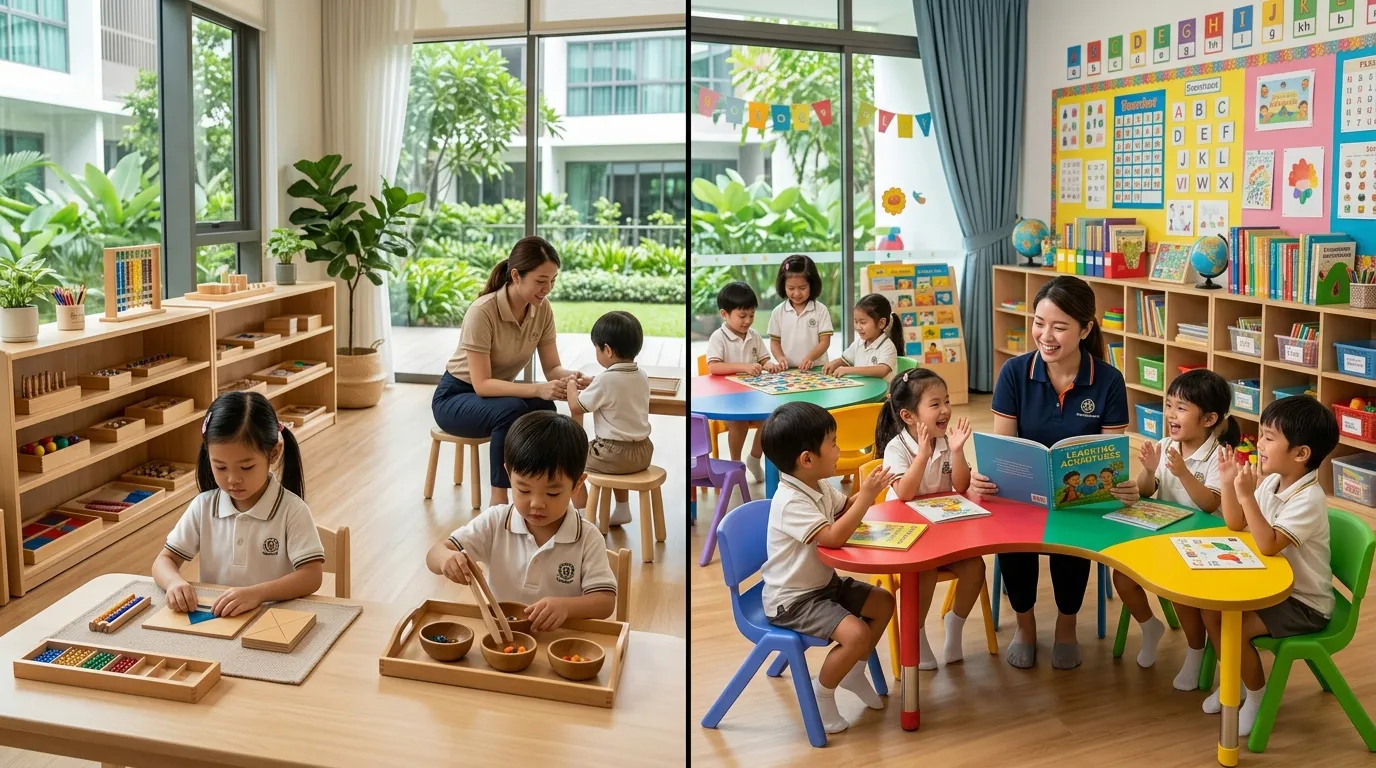
Many preschools in Singapore teach shapes through play, exploration, and hands-on experiences rather than worksheets alone. Teachers often combine storytelling, music, movement, building activities, and creative play to help children recognise and understand different shapes. This approach reflects the Nurturing Early Learners (NEL) Framework, developed by the Ministry of Education Singapore (MOE), which encourages children to explore, ask questions, and learn through meaningful experiences. By combining guided activities at preschool with simple practice at home, children develop stronger confidence and a deeper understanding of shapes.
Conclusion
Teaching shapes to preschoolers does not need to be complicated. Children learn best when shapes become part of everyday life through play, stories, conversations, art, and outdoor exploration. Parents in Singapore can support early learning by turning simple moments into fun opportunities for discovery. Shape recognition builds important foundations for maths, language, creativity, and problem-solving, helping children grow into confident learners.
FAQs
1. At what age should children start learning shapes?
Most children begin recognising simple shapes between two and three years old, although every child learns at their own pace.
2. What are the easiest shapes for preschoolers to learn first?
Circles, squares, triangles, and rectangles are usually the best starting points.
3. Can digital learning apps help children learn shapes?
Yes, educational apps can support learning, but hands-on activities and real-world experiences are often more effective.
4. How long does it take a child to recognise shapes?
Some children learn quickly, while others need more repetition and practice over several months.
5. Why do children confuse shapes?
Young children are still developing visual and thinking skills, so mixing up shapes is a normal part of learning.




















Sign in to leave a comment.