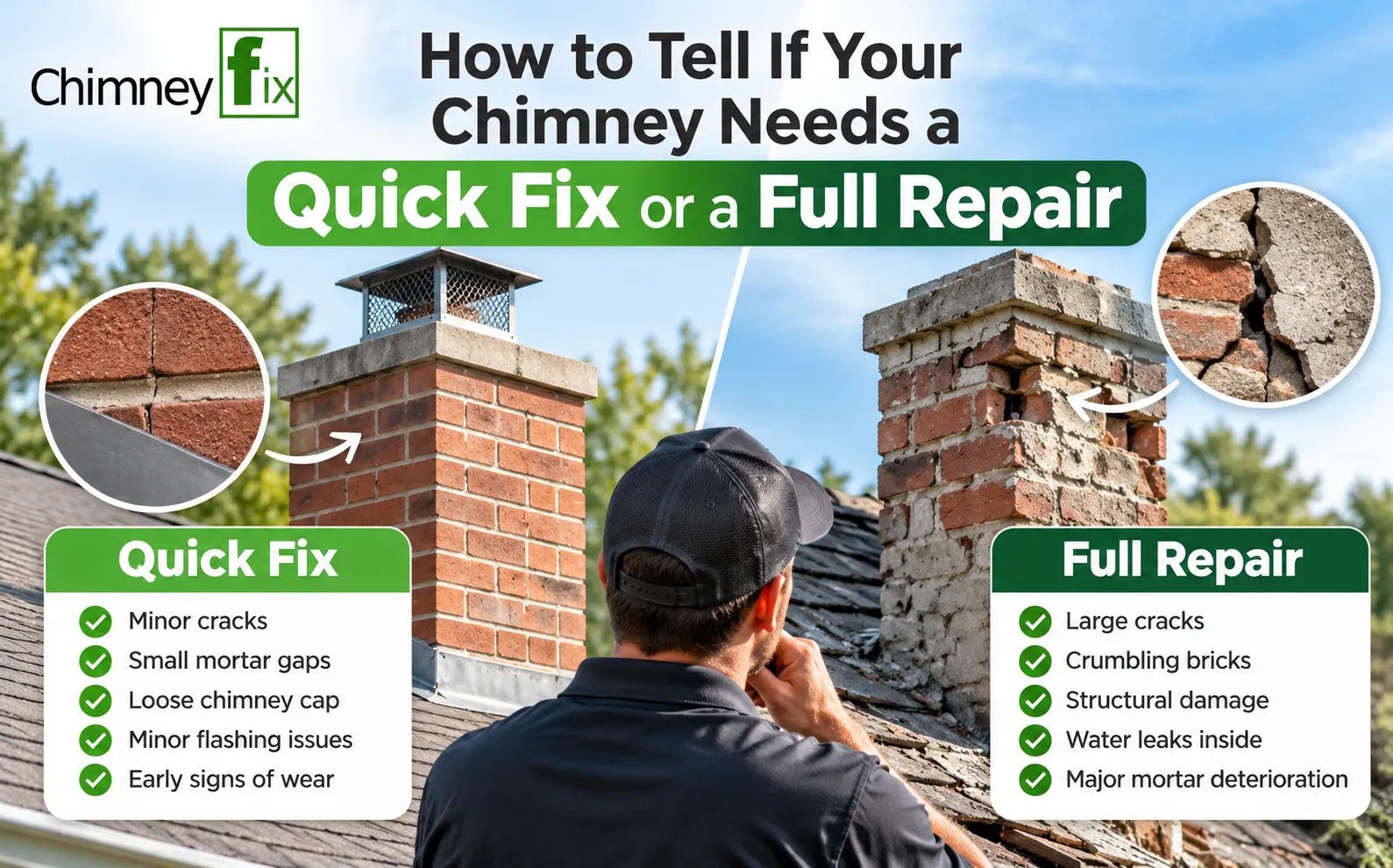

One of the most common questions homeowners ask when something looks off with their chimney isn't "what's wrong" — it's "how bad is this, really?" A hairline crack and a genuinely structural problem can look deceptively similar from the ground, and that uncertainty is exactly what leads people to either panic-spend on unnecessary work or, more often, ignore something that needed attention months ago. Learning to tell the difference doesn't require a professional eye — just knowing what to actually look for.
Why This Distinction Matters
Chimney problems generally fall into two buckets: surface-level issues that a targeted repair resolves cheaply, and deeper structural or water-related damage that requires a more involved fix. Treating the second category like the first — patching over a symptom instead of addressing the cause — tends to mean paying for the same repair twice, once now and once again when the underlying issue resurfaces.
Signs That Usually Mean a Minor Fix
These issues are still worth addressing, but they typically don't point to anything structural underneath:
Small Cracks in the Crown
The crown — the concrete cap at the very top of the chimney — is exposed to more weather than almost any other part of the structure. Small hairline cracks from normal thermal expansion are common and usually resolved with a sealant or crown coating, especially when caught early.
Minor Mortar Wear Between Bricks
A little erosion in the mortar joints, especially on the weather-facing side of an older chimney, is often just age and exposure. Spot repointing — replacing the worn mortar without touching the brick itself — handles this without a larger project.
A Damper That's Sticking or Loose
Damper issues are mechanical, not structural. A damper that's hard to open or doesn't seal fully is usually a replacement or adjustment job, not a sign of anything deeper going on.
Signs That Usually Point to a Bigger Problem
These are the indicators worth taking more seriously, because they often mean the damage extends beyond what's visible on the surface.
Spalling Brick
When the face of a brick flakes, crumbles, or pops off entirely, that's called spalling — and it's a sign water has been getting into the brick itself, freezing or expanding, and pushing the surface apart from the inside. One or two spalled bricks might be an isolated repair. Spalling across multiple courses usually means the chimney has been absorbing water for a while, and the repointing alone won't fix it — the water source needs addressing too.
A Leaning or Visibly Shifted Chimney
Any visible lean, separation from the house, or gap where the chimney meets the roofline is a structural red flag, not a cosmetic one. This typically points to foundation settling or long-term moisture damage to the mortar and requires a full structural assessment before any cosmetic work makes sense.
Interior Water Stains That Keep Returning
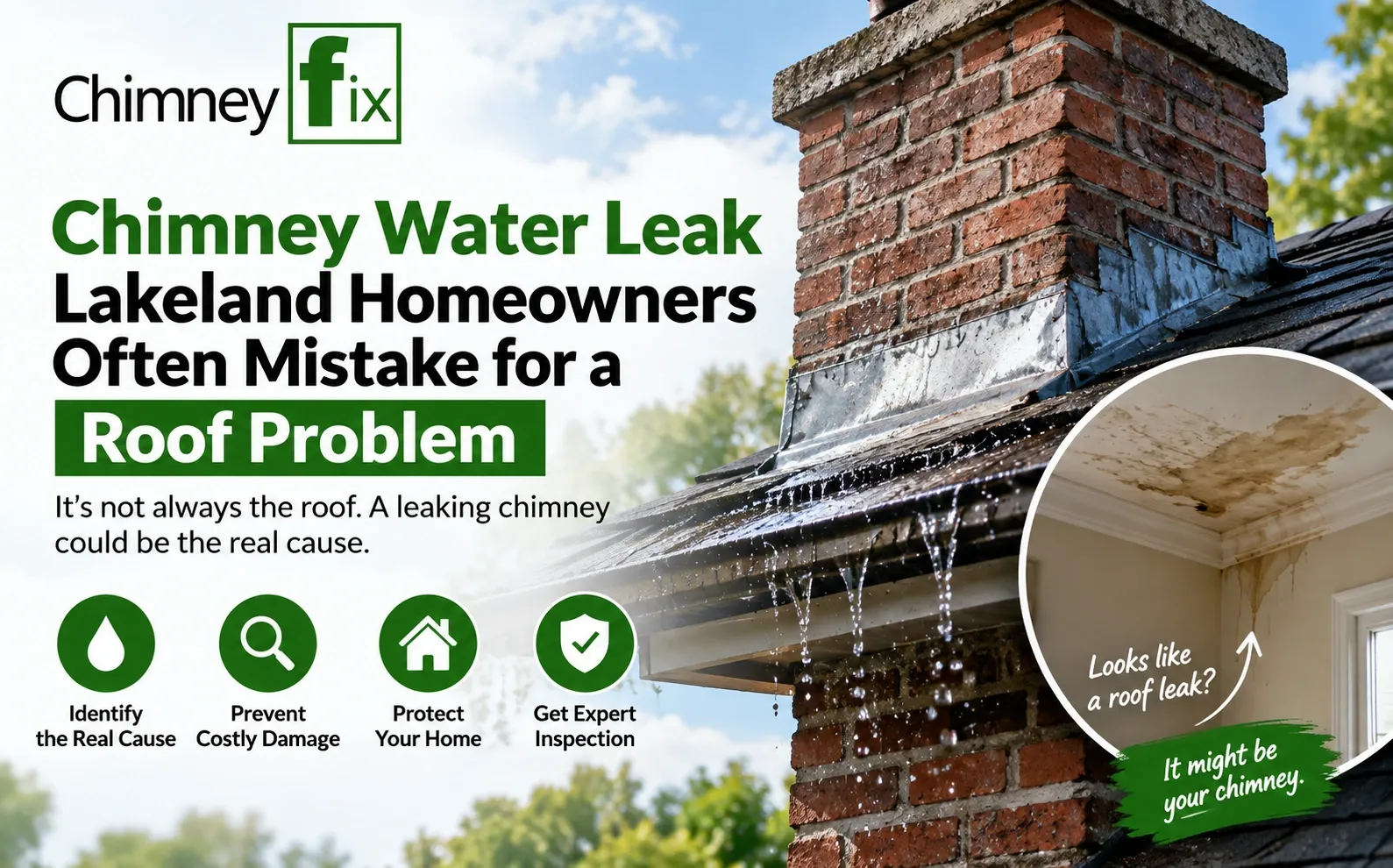
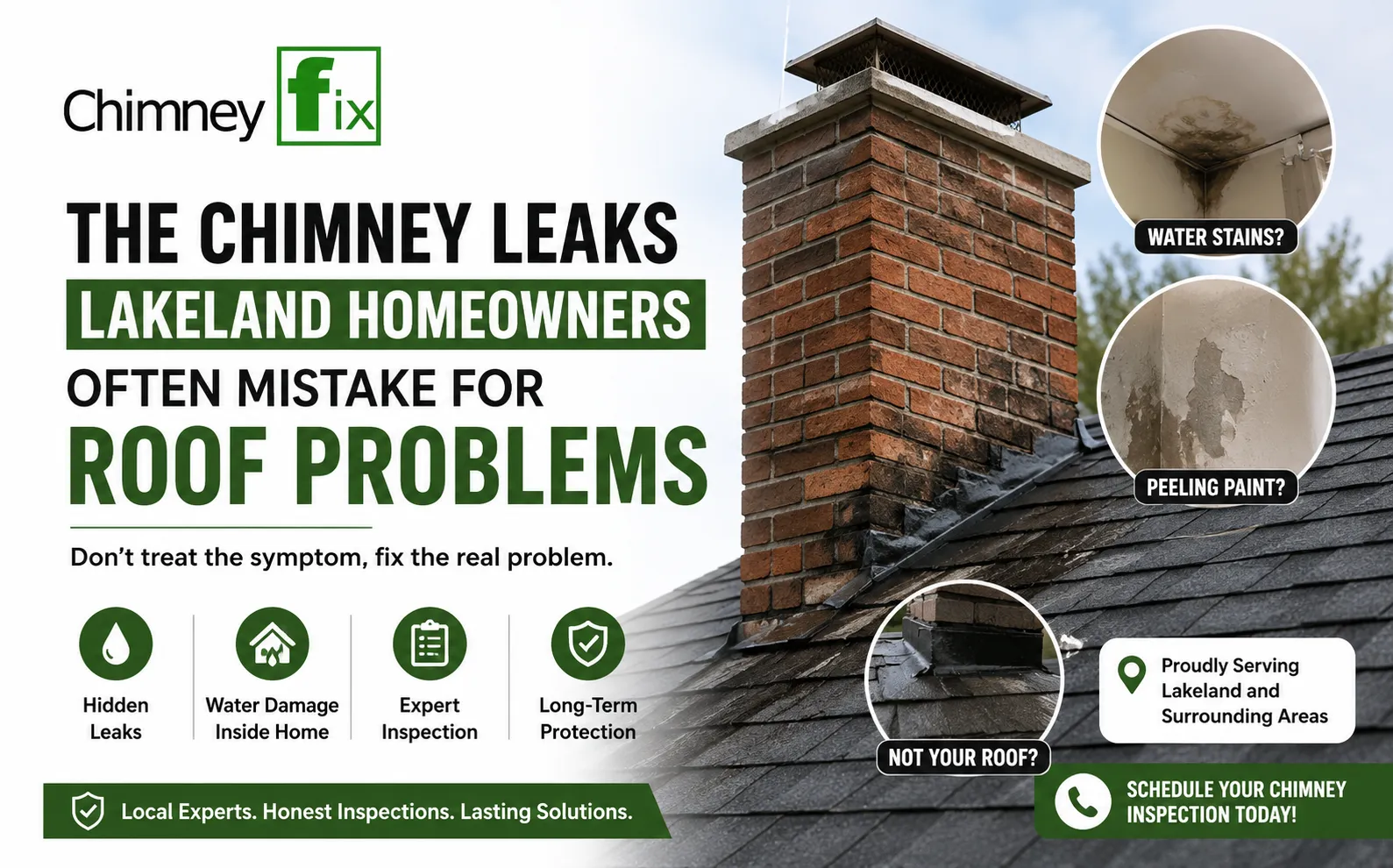
A single water stain after one bad storm might be an isolated flashing issue. A stain that keeps reappearing after repeated attempts to seal it usually means the actual source of the leak hasn't been found yet — often because it's coming from a crack or gap that isn't visible from the roof.
Rust-Colored Streaks Combined with Cracking
When you see rusty streaking on the exterior brick paired with visible cracks, this often points to a damaged flue liner rather than just surface weather damage. The rust is typically coming from a metal component reacting to sustained moisture exposure inside the structure.
Why a Camera Inspection Settles the Question
The honest answer to "is this minor or major" often can't be determined from the ground, no matter how carefully you look. A video scan of the interior flue — standard practice for a proper inspection — shows what's actually happening inside the structure, not just what's visible on the exterior. This is the step that turns a guess into an actual diagnosis, and it's worth insisting on rather than accepting a verbal assessment from the driveway.
What a Real Repair Estimate Should Include
Whether the issue turns out minor or major, a trustworthy estimate should clearly separate what's being fixed and why. Vague line items like "chimney work" without specifics are a signal to ask more questions. A detailed estimate should identify the specific damage found, explain whether it's isolated or indicative of a broader issue, and outline what happens if the underlying cause — water intrusion, structural settling, age — isn't addressed alongside the visible symptom.
When to Just Call Someone
If you're seeing any combination of spalling, visible lean, recurring stains, or rust with cracking, that's past the point of guessing. A licensed chimney repair Lakeland provider can run the camera inspection needed to actually confirm scope before any work starts, rather than quoting a fix based on a surface glance.
The Bottom Line
Not every chimney issue needs the same level of intervention, and knowing the difference saves both unnecessary spending and the bigger cost of ignoring something real. The surface-level signs — small crown cracks, minor mortar wear, a sticky damper — are usually straightforward. The deeper signs — spalling, leaning, recurring stains, rust with cracking — deserve a proper look before anyone reaches for a patch kit. When in doubt, a camera-based inspection is the fastest way to know which category you're actually in.
About the Author
This article was written by the ChimneyFix team, a chimney sweep and repair service serving Lakeland, FL and the surrounding Central Florida area. ChimneyFix technicians are CSIA (Chimney Safety Institute of America) certified and follow NFPA 211 standards for chimney inspection and repair. Learn more at chimneyfix.com.

























Sign in to leave a comment.