

Managing multiple life insurance policies can quickly become complicated. One policy may have been purchased years ago through a family member, another through an employer, another through a bank, and yet another through an insurance agent. Each policy may come with its own documents, policy number, renewal schedule, and insurer login.
For many Indian families, this means their insurance portfolio is spread across different platforms and physical documents.
So, how do you keep track of all your life insurance policies in one place?
An e-Insurance Account (eIA) can help. With CIRL, eligible insurance policies can be maintained electronically through a single account, making it easier to view and manage your insurance portfolio.
Why Multiple Life Insurance Policies Can Be Difficult to Track
It is common for individuals and families to purchase insurance at different stages of life. A person might start with a traditional life insurance policy, later purchase a term plan, receive insurance through an employer, and eventually add another policy for long-term financial planning.
The challenge is that these policies may come from different insurers.
Each insurer can have its own website, mobile application, customer portal, policy documents, and premium reminders. Over time, keeping track of everything can become difficult.
Physical documents add another layer of complexity. A policy document may be stored in a cupboard, while another may be available only as a PDF in an old email.
This can make it surprisingly difficult to answer basic questions such as:
- How many insurance policies do I currently have?
- Which insurers have issued my policies?
- How much life insurance coverage do I have?
- When are my premiums due?
- Where can I find my policy details?
An Insurance Repository is designed to make this information easier to manage by maintaining eligible insurance policies electronically under a single account.
The Solution: One e-Insurance Account for Your Policies
CIRL operates as an Insurance Repository and provides policyholders with an e-Insurance Account (eIA).
An eIA acts as a central digital account where eligible insurance policies can be maintained electronically. Instead of keeping track of several physical documents or relying on multiple insurer portals, policyholders can access their linked policies through their eIA.
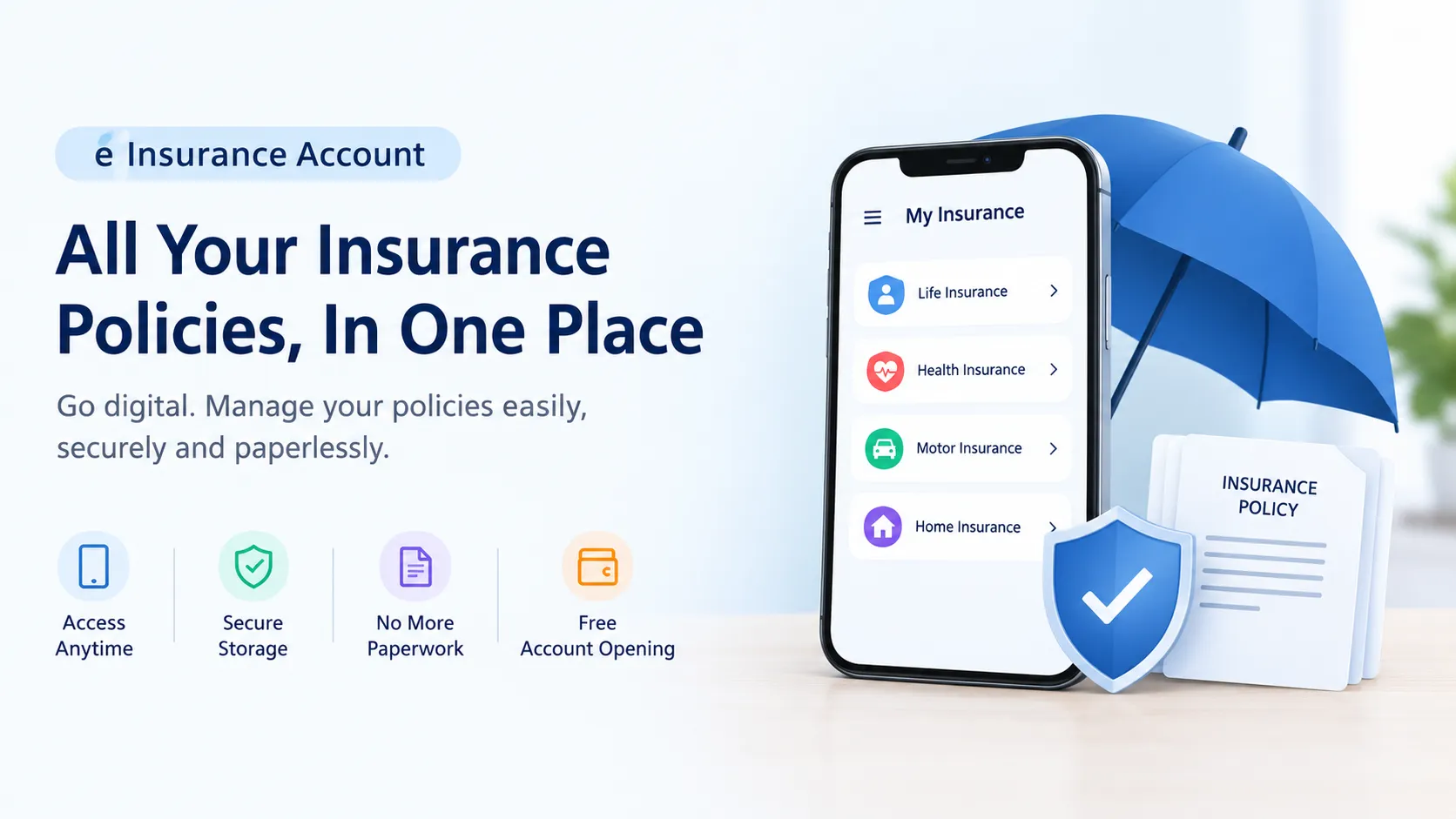
CIRL's current platform supports digital management of eligible life, health, and motor insurance policies.
This can make it easier to maintain a consolidated view of your insurance portfolio.
How Does an e-Insurance Account Work?
Think of an eIA as a digital record of your insurance policies.
Once an eligible policy is linked to your eIA, its details can be accessed through the account. This means your insurance information is no longer dependent entirely on paper documents or separate records maintained by you.
You can use the account to review the policies credited to you and keep your insurance information organised in one place.
The Insurance Regulatory framework for e-Insurance Accounts is designed to provide policyholders with electronic access to their insurance portfolio.
How to Add an Existing Insurance Policy to Your eIA
Already have an insurance policy? You do not necessarily need to wait until you purchase a new one to start consolidating your insurance records.
Existing eligible policies can be converted into electronic form and linked to an eIA through the applicable service request process.
CIRL's eIA opening form also provides for policyholders to submit details of policies held with different insurance companies for electronic conversion.
This can be particularly useful if you have older policies that are still maintained primarily through physical documents.
For example, consider a family that has:
- An LIC policy purchased several years ago
- A term insurance policy through an employer
- A ULIP purchased through a bank
- A policy purchased through an insurance agent
- Another life insurance policy purchased later
Instead of maintaining a separate folder for each policy, eligible policies can be brought together under the same eIA.
Add New Insurance Policies to the Same Account
Once you have an eIA, you can continue using it as you purchase eligible insurance policies.
When buying a new policy, providing your eIA details as required can help ensure that the policy is credited to the same electronic account.
This means your insurance portfolio can remain consolidated as it grows, rather than becoming fragmented every time you purchase a new policy.
Store More Than Just Life Insurance Policies
An eIA is not limited to life insurance.
CIRL currently describes its e-Insurance Account as a digital account for managing eligible Life, Health, and Motor insurance policies.
For a family, this can provide a more complete view of its insurance portfolio.
For example, one account may help you keep track of:
- Life insurance policies
- Term insurance policies
- Health insurance policies
- Motor insurance policies
Having these records organised electronically can make it easier to review your overall insurance position when required.
Check Your Insurance Policy Details Online
Once your policies are credited to your eIA, you can access the available policy information through the CIRL platform.
This can be useful when you need to quickly check details without searching through physical files or old emails.
For example, before reviewing your financial plans, you may want to confirm which policies you currently hold and whether an older policy is still part of your portfolio.
Instead of searching through multiple files, you can start by checking the policies listed in your eIA.
Why an eIA Can Be Better Than a Personal Spreadsheet
A spreadsheet can certainly help you track your insurance.
You could create columns for:
- Insurer name
- Policy number
- Policy type
- Sum assured
- Premium amount
- Premium due date
- Policy maturity date
However, a spreadsheet depends on you manually entering and updating the information.
An eIA serves a different purpose. It is part of the Insurance Repository framework and maintains eligible policy information electronically based on insurer records.
That means it can act as the central electronic record for your eligible insurance policies rather than simply being a list that you maintain yourself.
How CIRL Can Help With Insurance Policy Tracking
One of the biggest advantages of consolidating policies is visibility.
When insurance policies are spread across different insurers, it is easy for a policy to become overlooked. A policyholder may remember the newer policies while forgetting about an older policy purchased many years ago.
Having eligible policies accessible through one eIA can make regular insurance reviews simpler.
Instead of checking multiple insurer accounts individually, you can start with your consolidated insurance record and review the policies associated with your account.
CIRL also provides premium payment facilities through its platform, including digital payment options.
CIRL's Life Insurance Partners
CIRL works with a network of insurance companies whose eligible policies can be supported through its Insurance Repository services.
Its 2025-26 annual report confirms that CIRL has continued expanding its insurance ecosystem and has also gone live with LIC for select categories of customers, subject to LIC's internal policies.
The life insurance companies listed in CIRL's partner network include:
- Acko Life Insurance Company Limited
- Aditya Birla Sun Life Insurance Company Limited
- Ageas Federal Life Insurance Company Limited
- Aviva Life Insurance Company India Limited
- Axis Max Life Insurance Company Limited
- Bandhan Life Insurance Company Limited
- Bajaj Allianz Life Insurance Company Limited
- Bharti AXA Life Insurance Company Limited
- Canara HSBC Life Insurance Company Limited
- Edelweiss Tokio Life Insurance Company Limited
- Future Generali India Life Insurance Company Limited
- Go Digit Life Insurance Company Limited
- HDFC Life Insurance Company Limited
- ICICI Prudential Life Insurance Company Limited
- IndiaFirst Life Insurance Company Limited
- Kotak Mahindra Life Insurance Limited
- Life Insurance Corporation of India, for select categories
- PNB MetLife India Insurance Company Limited
- Pramerica Life Insurance Company Limited
- Reliance Nippon Life Insurance Company Limited
- Sahara India Life Insurance Company Limited
- Star Union Dai-ichi Life Insurance Company Limited
- SBI Life Insurance Company Limited
- TATA AIA Life Insurance Company Limited
The participating insurer network can change over time, so policyholders should check the latest information on the official CIRL website before assuming that a particular policy is eligible.
A Simple Way to Start Organising Your Insurance
If you have multiple insurance policies, you do not need to organise everything manually at once.
A simple approach is:
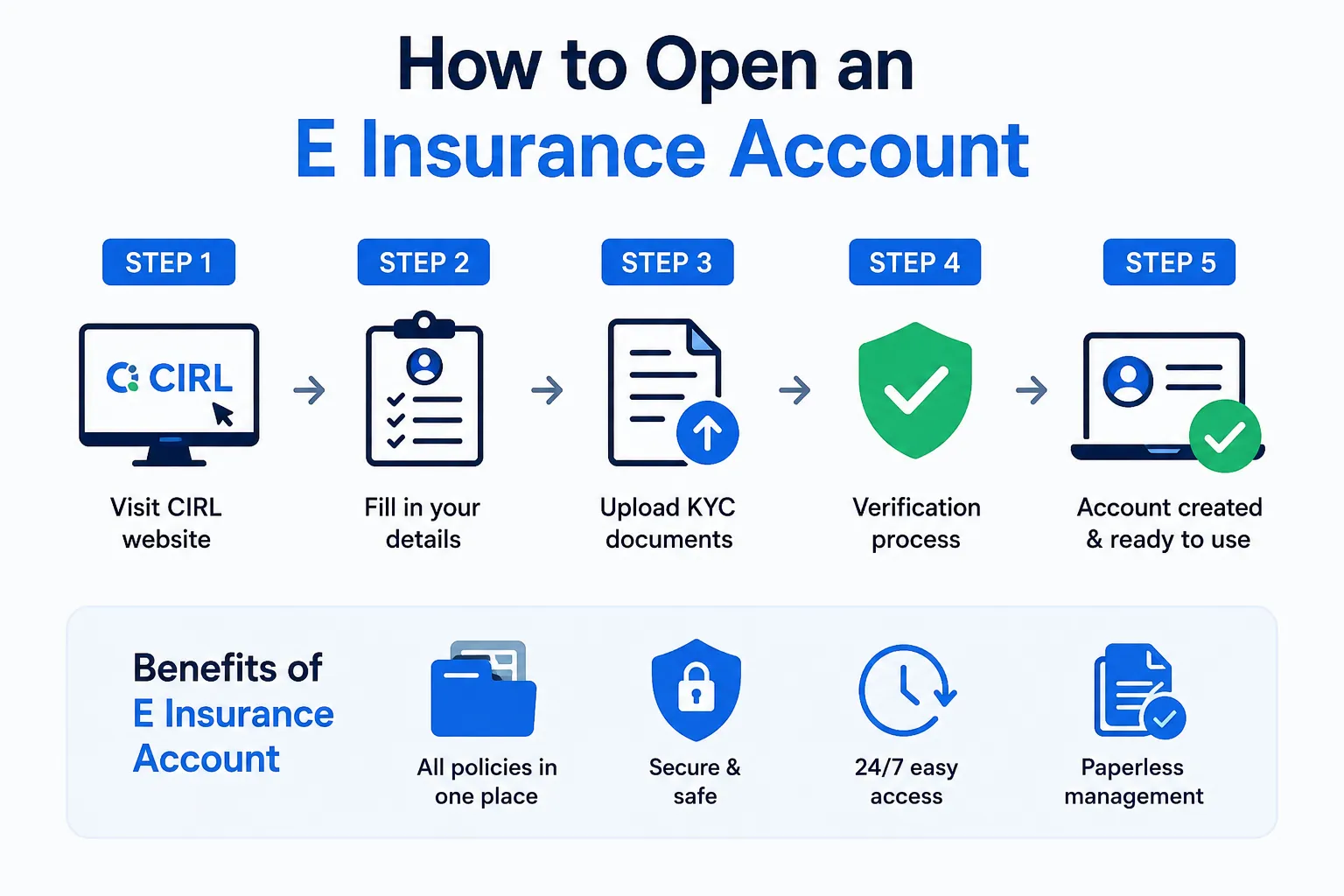
1. Open an e-Insurance Account
If you do not already have an eIA, start by opening one through an Insurance Repository such as CIRL.
2. Identify Your Existing Policies
Make a list of your current life, health, and motor insurance policies. Check old documents, emails, insurer messages, and premium payment records if necessary.
3. Link Eligible Policies
Submit the required service request to convert and link eligible existing policies to your eIA.
4. Use Your eIA Details for Future Policies
When purchasing a new eligible insurance policy, provide your eIA details as required so the policy can be credited to the same account.
5. Review Your Insurance Portfolio Regularly
Make it a habit to periodically check your eIA and review the policies associated with your account.
This can help you identify policies you may have forgotten about, check your overall coverage, and keep your insurance information organised.
Why Keeping Track of Your Policies Matters
Having multiple life insurance policies is not necessarily a problem. In fact, different policies may have been purchased for different financial needs.
The real problem is losing track of them.
An overlooked policy can mean missed premiums, outdated contact information, difficulty locating policy documents, or confusion for family members when they need to understand the insurance portfolio.
A consolidated electronic record can reduce some of that administrative burden.
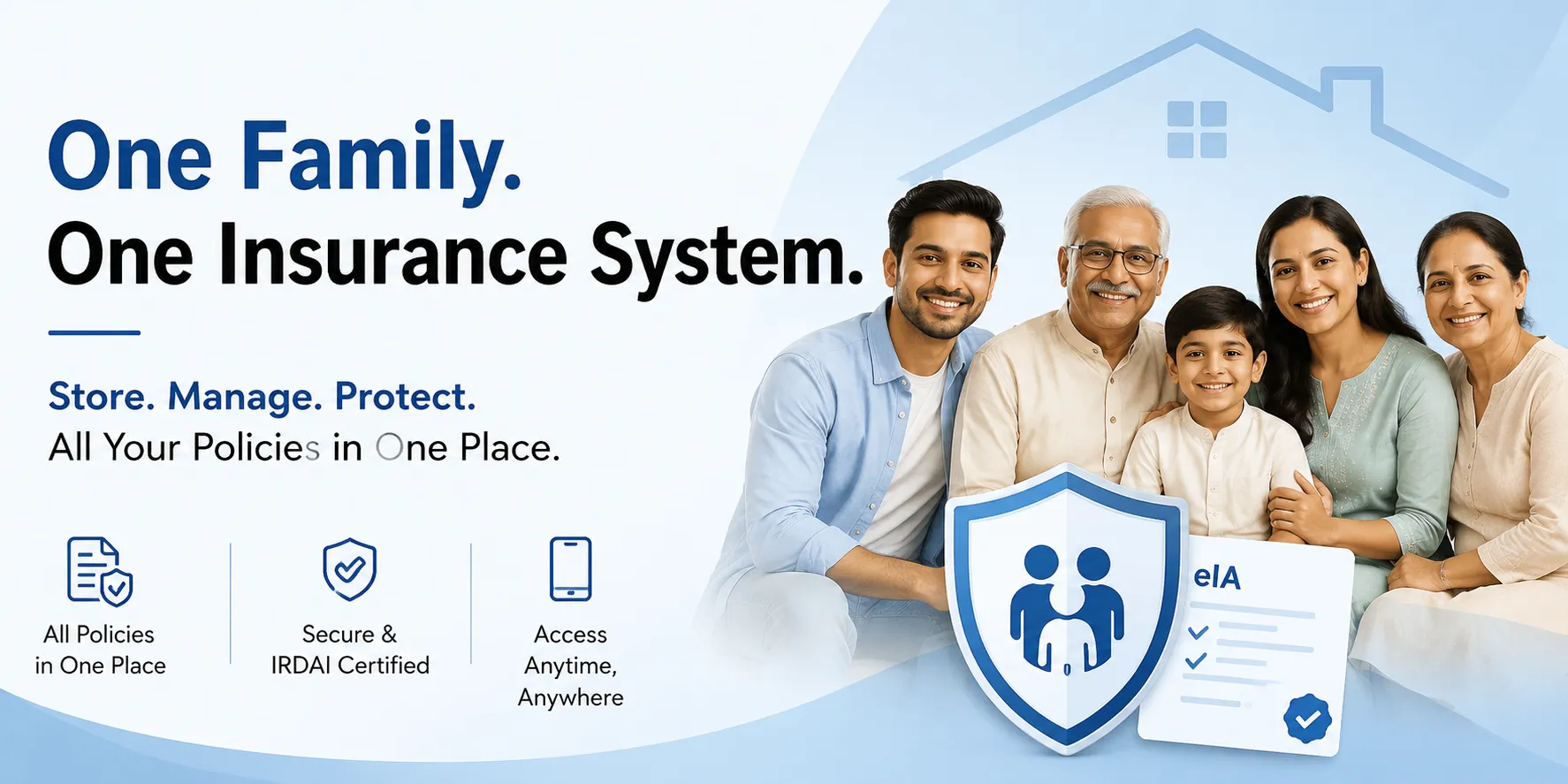
For families, this is particularly useful because insurance information should not exist only in one person's memory. Keeping policies organised and accessible can make financial planning easier and help family members understand what protection is already in place.
Conclusion
Managing multiple life insurance policies does not have to mean managing multiple folders, emails, websites, and reminders.
An e-Insurance Account provides a way to consolidate eligible insurance policies electronically, helping policyholders maintain a clearer view of their insurance portfolio.
With CIRL, policyholders can use an eIA to digitally manage eligible insurance policies from participating insurers and access their policy information through one account.
For someone who has accumulated several policies over the years, the benefit is simple: instead of asking, "Where did I keep that policy?", you can start by checking one consolidated electronic account.
Open your e-Insurance Account with CIRL
FAQs
Can I hold policies from different insurers in the same eIA?
Yes. An eIA is designed to maintain eligible insurance policies from participating insurers in a single electronic account. The exact availability of a policy depends on the applicable insurer and repository arrangements.
Can old paper policies be added to my eIA?
Yes. Existing eligible physical policies can be converted into electronic form through the applicable service request process and linked to your eIA. CIRL's eIA form specifically includes a process for submitting existing policy details for electronic conversion.
Can I add a new policy to my existing eIA?
Yes. When purchasing a new eligible policy, you can provide your eIA details as required so that the policy can be credited to your existing account.
Will I receive notifications when a policy is credited?
CIRL's eIA documentation provides for policy and account-related communications through the registered email address and mobile number.
Is opening an eIA free?
The Insurance Repository framework provides for free basic eIA services. CIRL's current account-opening documentation distinguishes between free basic services and certain premium services that may be chargeable.
Where can I open an e-Insurance Account?
You can visit the official CIRL website to learn more about the e-Insurance Account and available services.



























Sign in to leave a comment.