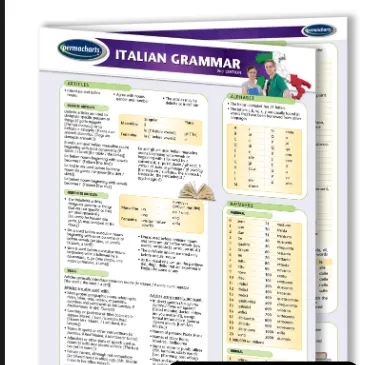

Learning a new language becomes much easier when you understand how its sentences are organized. Italian grammar may seem complicated at first because of verb forms, articles, prepositions, and word agreement. However, beginners can make steady progress by studying sentence structure step by step.
Start With the Basic Parts of a Sentence
A simple Italian sentence usually contains a subject and a verb, and it may also include an object or additional information.
For example:
Marco legge un libro.
In this sentence, Marco is the person performing the action, legge is the verb, and un libro is the object. Learning to identify these basic elements makes longer sentences easier to understand.
Learn to Identify the Role of Each Word
When reading an Italian sentence, do not focus only on translating every word. Try to understand the function of each part. Ask yourself who performs the action, what action is happening, and whether another person or thing receives the action.
This approach can be especially helpful when studying analisi logica, because it encourages learners to examine the grammatical function of words and phrases within an Italian sentence.
Practice With Short Examples
Short sentences are useful for beginners because they make grammar patterns easier to recognize.
For example:
Maria studia italiano ogni sera.
Maria is the subject, studia is the verb, italiano is the object, and ogni sera gives information about time. Once you become comfortable with short examples, you can gradually move to longer sentences.
Pay Attention to Italian Verbs
Italian verbs are an important part of sentence structure. They change according to the person and tense. Common verbs such as essere, avere, andare, fare, and parlare are useful starting points.
Instead of memorizing long lists, practice each verb in a complete sentence.
For example:
Io parlo italiano.
Tu parli italiano.
Noi parliamo italiano.
Seeing the verb in context makes the changes easier to remember.
Understand Articles and Nouns Together
Italian nouns have grammatical gender and number, so articles are important. Beginners should learn articles together with the nouns they describe.
For example:
- il libro
- la casa
- gli studenti
- le ragazze
Practicing these combinations regularly can help you recognize correct sentence patterns more naturally.
Practice Italian Prepositions
Prepositions such as a, di, da, in, con, su, and per appear frequently in Italian sentences. Their use can sometimes be confusing because one preposition may have different meanings depending on the context.
For example:
Vado a Roma.
Studio con Maria.
Il libro è sul tavolo.
Writing your own examples is a useful way to become familiar with common preposition patterns.
Read and Analyze Real Sentences
Reading simple Italian texts can improve both vocabulary and grammar. Choose short paragraphs and look at each sentence carefully. Identify the subject, verb, object, and other information such as place, time, or manner.
You do not need to analyze every sentence in a long text. Even studying three or four sentences each day can help you notice recurring grammar patterns.
Create a Simple Study Routine
Consistency is more useful than studying for many hours once a week. A beginner can spend fifteen or twenty minutes each day reviewing Italian sentences.
For example, you could spend five minutes reviewing vocabulary, five minutes studying a grammar rule, and another ten minutes writing or analyzing sentences.
Over time, this small routine can make Italian grammar feel much more familiar.
Conclusion
Understanding Italian sentence structure is an important step toward becoming more confident with the language. Start with simple sentences, learn the function of different words, practice common verbs and prepositions, and gradually work with longer examples.
With regular practice, Italian grammar becomes less intimidating. The key is to study small concepts consistently and use them in real sentences.



























Sign in to leave a comment.