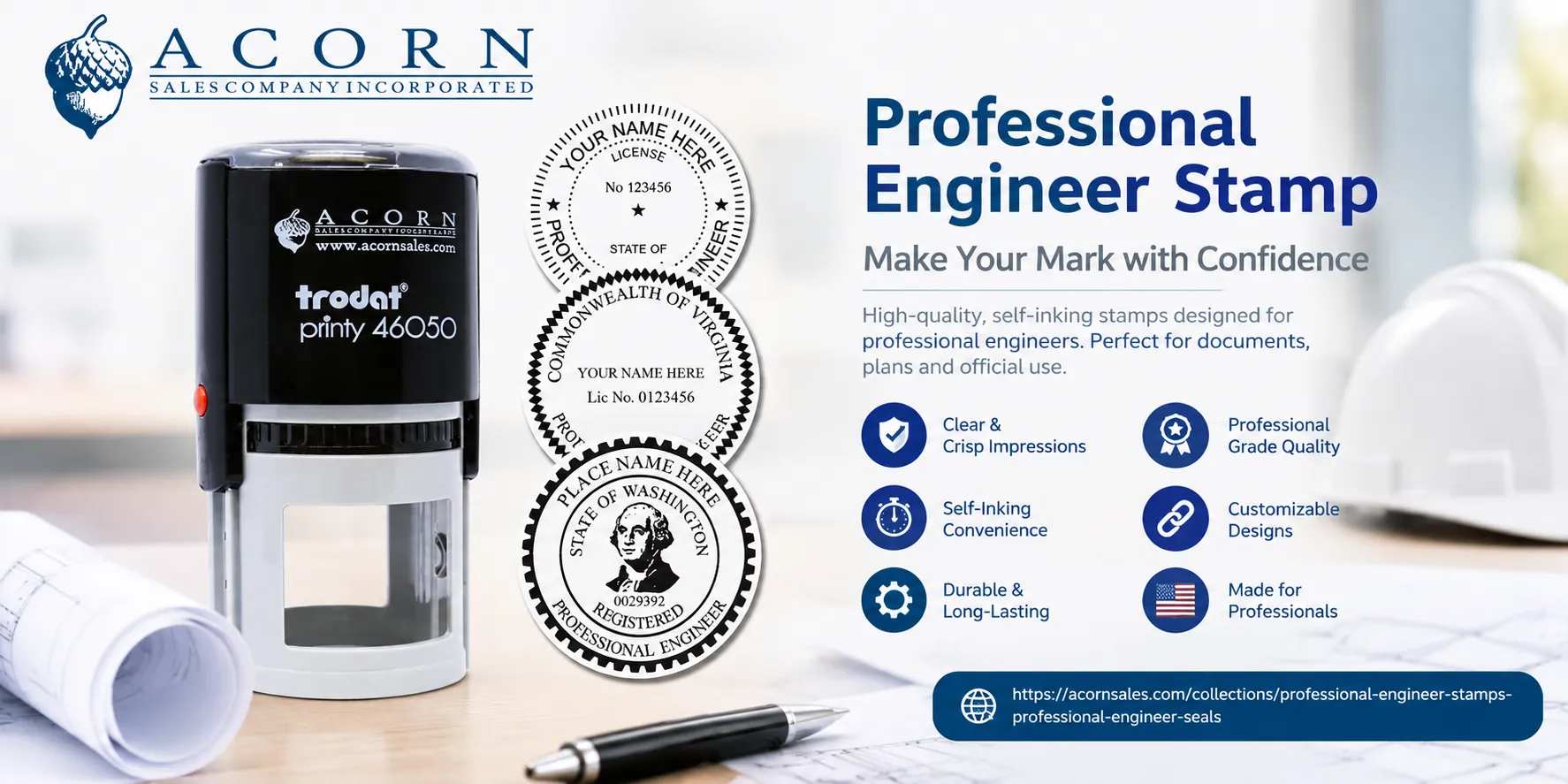

A professional engineer stamp is more than an ink impression placed on an engineering drawing. For a licensed Professional Engineer (PE), the seal and signature identify the engineer responsible for applicable professional work and help demonstrate that the document has been reviewed and prepared under the engineer’s responsible charge. In the United States, exact PE seal requirements vary by state, so engineers should always verify the current rules of the licensing board governing the project.
Whether you are preparing construction drawings, specifications, calculations, reports, or other engineering documents, knowing how to use a professional engineer stamp correctly can help you avoid preventable compliance issues.
What Is a Professional Engineer Stamp?
A professional engineer stamp, also commonly called a professional engineer seal or PE seal, is an official marking associated with a licensed engineer. Depending on the jurisdiction, it may be applied as an ink stamp, embossing seal, or permitted electronic or digital seal.
The seal generally identifies information such as the engineer’s name, license number, jurisdiction, and professional designation. Exact wording, dimensions, format, and placement depend on the applicable state requirements.
A PE stamp is generally used to authenticate applicable final engineering documents and identify the licensed professional responsible for the work. However, engineers should always check the rules of the state where the work is being performed or submitted.
When Should You Use a PE Stamp?
The first step is determining whether the document is a final engineering deliverable that requires professional authentication.
Documents that may require a PE stamp or seal can include:
- Engineering drawings and plans
- Construction documents
- Engineering specifications
- Design calculations
- Technical reports
- Certain plans submitted to government agencies
- Other engineering documents requiring professional approval
Preliminary or working documents may be treated differently depending on state requirements. If a document is clearly marked as preliminary and is not intended for construction, recording, or implementation, sealing requirements may differ.
Always confirm the requirements with the appropriate state engineering board and, when applicable, the agency receiving the documents.
How to Use a Professional Engineer Stamp on Engineering ?
Drawings
1. Check Your State Requirements
Before applying your PE stamp, check the engineering board in the state where the work will be submitted. Professional engineer stamp requirements by state can differ in areas such as seal design, size, placement, signature, date, electronic authentication, and required professional information.
Do not assume that a stamp format accepted in one state will automatically be accepted in another.
2. Confirm You Are Responsible for the Work
A PE should not simply place a stamp on drawings prepared independently by someone else without the required professional involvement.
The engineer should have the appropriate professional knowledge, involvement, and responsibility for the work being sealed. The exact definition of responsible charge or responsible control depends on applicable state regulations.
This is an important part of the process because a professional engineer stamp represents professional responsibility, not simply permission to use a design.
3. Finalize the Engineering Document
Before applying the stamp, make sure the drawing or document is in its final form.
Review important details such as:
- Project information
- Drawing revisions
- Design calculations
- Technical specifications
- Applicable codes and standards
- Title blocks
- Engineer identification
- Required signatures
- Dates
Avoid sealing a document that still contains unresolved design changes.
4. Apply the Professional Engineer Seal
The placement of the PE stamp on engineering drawings depends on the applicable state requirements.
Some jurisdictions may require a seal on each applicable sheet, while others may have different requirements for drawings, specifications, calculations, reports, or multi-sheet documents.
When multiple engineers are responsible for different portions of a project, additional identification or sealing requirements may apply.
Because these rules vary, engineers should verify the current requirements before applying their professional engineer seal.
5. Add Your Signature and Date
A professional engineer seal is commonly used together with the engineer's signature and date, subject to the applicable state rules.
The signature and seal identify the licensed professional associated with the engineering work. Some jurisdictions specify where the signature should appear in relation to the seal or how an electronic signature must be applied.
For physical documents, follow the state's requirements for the stamp, signature, and date. For electronic documents, verify the requirements for digital authentication before submitting the final PDF.
6. Review the Completed Document
Before submitting the drawings, perform a final review.
Check that:
- The correct PE is identified.
- The license information is accurate.
- The seal is clear and legible.
- The required signature is present.
- The date is included when required.
- Required sheets are properly sealed.
- Revisions are correctly identified.
- Electronic authentication requirements are satisfied when applicable.
This final check can help prevent unnecessary delays during document review.
Common Mistakes to Avoid
Using a PE stamp correctly requires more than simply placing it on a drawing. Avoid these common mistakes:
- Using a seal for work outside your professional competence
- Stamping documents without the required professional involvement
- Assuming another state's seal format applies to your project
- Sealing preliminary documents as final documents
- Ignoring state-specific signature requirements
- Using an unauthorized digital seal format
- Failing to update the seal after significant document changes
- Assuming a scanned seal automatically satisfies electronic-sealing requirements
A professional engineer should understand the responsibility associated with signing and sealing engineering work and follow the rules of the applicable jurisdiction.
Professional Engineer Stamp Requirements by State
There is no single nationwide rule covering every aspect of engineering document stamping requirements.
State engineering boards establish their own licensing and sealing requirements. These may address:
- Seal appearance
- Seal size
- Required information
- Placement
- Signature requirements
- Date requirements
- Electronic seals
- Digital signatures
- Multi-sheet documents
- Engineering firms and certificates of authorization
For this reason, engineers should verify the current requirements of the state board before ordering or using a professional engineer stamp.
If an engineering project crosses state lines, requirements may need to be checked in more than one jurisdiction.
Final Checklist Before Submitting a Sealed Drawing
Before submitting an engineering drawing, ask:
- Am I licensed in the applicable jurisdiction?
- Am I authorized to take responsibility for this work?
- Was the work prepared under my required professional involvement?
- Is the document final?
- Does my seal meet the applicable state requirements?
- Is my signature included when required?
- Is the date included when required?
- Are all required sheets properly sealed?
- Are revisions correctly identified?
- Does the receiving agency accept the sealing method being used?
Following this checklist can make the sealing process more consistent and help reduce avoidable document-submission problems.
When choosing a professional engineer stamp, engineers should look for a reliable option that suits their state’s requirements and professional workflow. An Acorn stamp can be a convenient choice for engineers who need a clear, professional impression for engineering drawings and documents. Depending on the required format, engineers can select suitable professional engineer stamps, seals, or embossers while ensuring that the stamp information complies with applicable state regulations.
Conclusion
Using a professional engineer stamp correctly is an important part of preparing engineering documents for professional and regulatory purposes. The process involves more than applying an impression. A PE must have the appropriate professional responsibility for the work, ensure the document is ready for sealing, and follow the applicable jurisdiction's requirements for the seal, signature, date, and submission format.
Because professional engineer stamp requirements by state can differ, engineers should always check the current rules of the relevant licensing board before finalizing a stamped drawing. Selecting the appropriate professional engineer stamp or seal can then support an organized and professional document workflow.
Frequently Asked Questions (FAQ)
What is a professional engineer stamp?
A professional engineer stamp is an official marking associated with a licensed Professional Engineer. It identifies the engineer and, when properly applied with the required signature and date, helps authenticate applicable engineering documents.
Is a PE stamp the same as a PE seal?
The terms are often used interchangeably, although physical formats can differ. A stamp generally creates an ink impression, while a seal may also refer to an embossed or electronic format.
Where should a PE stamp go on engineering drawings?
The placement depends on the requirements of the applicable state. Some jurisdictions may require sealing each applicable sheet, while others provide different requirements depending on the document type.
Does a PE stamp need a signature and date?
In many jurisdictions, the professional seal is accompanied by a signature and date. However, exact requirements vary by state, so engineers should verify the current rules before submitting documents.
Can a PE use a digital seal?
Some states permit electronic or digital sealing, but requirements vary. Engineers should confirm that digital sealing is authorized and follow the required authentication process.
Can I stamp drawings prepared by another engineer?
A PE should not simply stamp another engineer's work without meeting the applicable requirements for professional responsibility and responsible charge. The engineer should follow the rules of the jurisdiction and only seal work for which they can properly accept professional responsibility.
Do professional engineer stamp requirements differ by state?
Yes. State boards can have different requirements for seal format, placement, signatures, dates, electronic authentication, and other aspects of professional document sealing.

























Sign in to leave a comment.