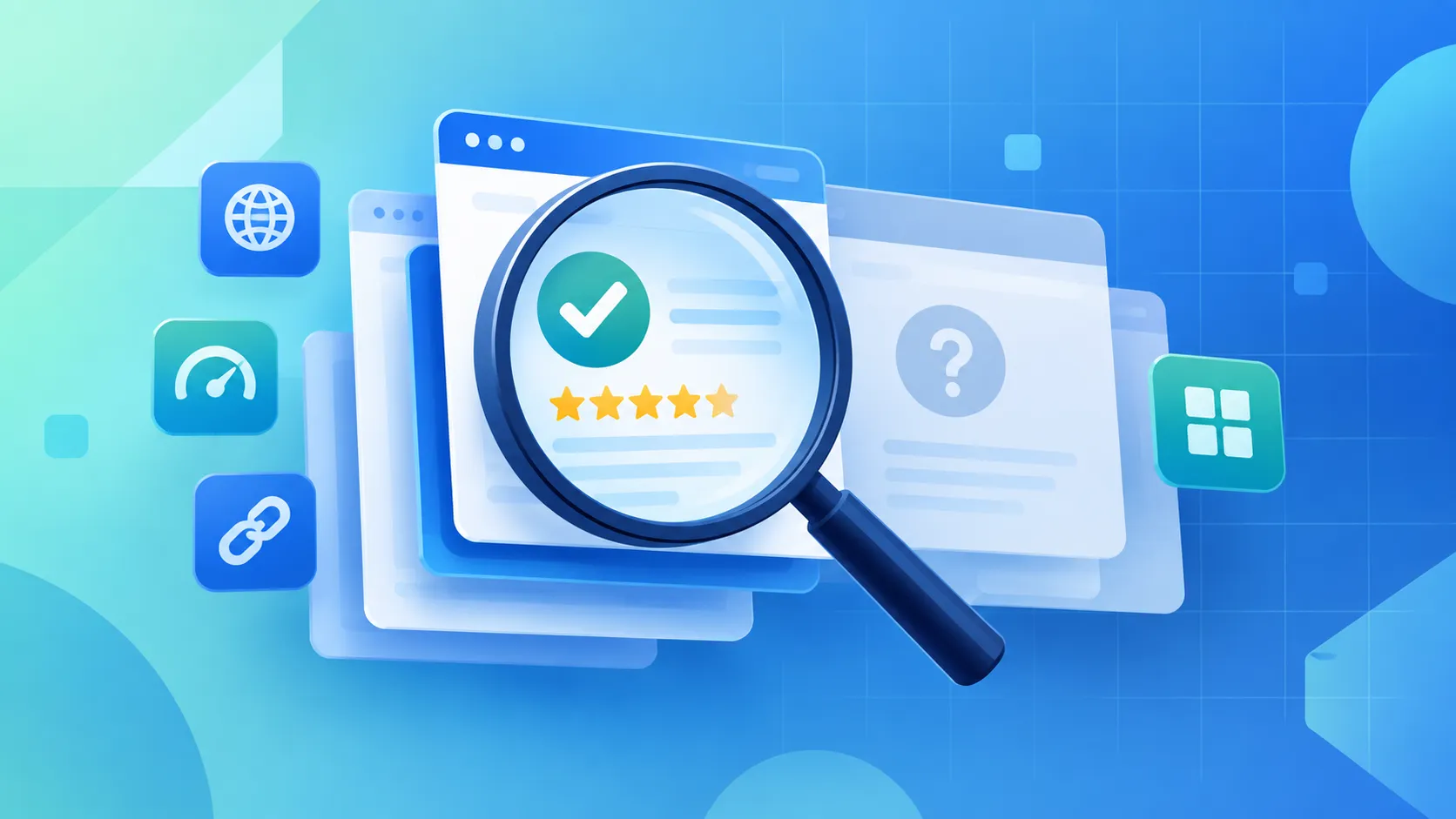
Quick Answer: Verifying a software development agency means confirming their portfolio work is real, checking reviews across multiple independent platforms, and speaking directly with past clients. The goal is to separate agencies that actually built what they show from agencies that repackaged someone else’s work or bought their five star ratings.
Most businesses pick a development partner based on a polished website and a handful of glowing testimonials. That’s not enough. Portfolios get exaggerated, case studies get stretched, and reviews can be bought in bulk on more than one freelance marketplace. A few focused checks before you sign a contract can save you months of frustration and a budget you can’t get back.
Why Does Portfolio and Review Verification Matter Before You Sign?
A development agency’s portfolio and reviews are the closest thing you have to proof of past performance before you commit real money. Skipping verification means you’re trusting marketing copy instead of evidence, and marketing copy is written to sell, not to inform.
The risk isn’t just a bad app. It’s the cost of discovering the problem six weeks into a project, when switching agencies means starting the codebase review from zero. A short verification process up front, usually a few hours of work, protects a budget that can run into six figures.
- A padded portfolio often means the agency oversold its actual capability
- Fake reviews hide real client complaints about delays, communication, or quality
- Agencies that can’t produce references usually have something to hide
How Do You Verify a Software Agency’s Portfolio Is Genuine?

You verify a portfolio by confirming the agency actually built the work they’re showing you, not just designed the marketing screenshots around it. This means checking live products, asking direct questions about their specific role, and looking for technical detail that only a builder would know.
Start with these checks:
- Ask for live, working links. A real portfolio item should have a live app store listing or a working website you can click through yourself. Screenshots alone are not proof.
- Check who actually built it. Some agencies list projects where they only did design or QA, not development. Ask directly: “What percentage of the engineering did your team own?”
- Look for technical specificity. An agency that built something can tell you the tech stack, the integration challenges, and what didn’t work the first time. Vague answers about “cutting-edge solutions” are a warning sign.
- Cross-check dates and team size. If an agency claims to have shipped five enterprise apps in the same quarter with a five person team, ask how that math works.
- Search the product independently. Look up the app or website outside the agency’s own site. Read its actual App Store or Play Store reviews, separate from the agency’s marketing.
In practice, the agencies worth working with are comfortable walking you through the messy middle of a project, not just the finished result. If a portfolio item only has a polished after photo and no explanation of the process, ask why.
How Do You Spot Fake or Inflated Client Reviews?

You spot fake reviews by comparing patterns across multiple independent platforms instead of trusting testimonials posted on the agency’s own website. Real reviews tend to be specific, dated over time, and mixed in tone. Fake ones tend to be generic, clustered, and uniformly perfect.
| Signal | Likely Genuine | Likely Fabricated |
|---|---|---|
| Review timing | Spread out over months or years | Dozens posted in the same short window |
| Review detail | Names a specific project, timeline, or problem solved | Vague praise like “great team, highly recommend” |
| Reviewer profile | Has other reviews, a real company link, a LinkedIn match | New account, no history, generic name |
| Rating spread | Mix of 4 and 5 stars, occasional constructive criticism | Only 5 star ratings with no exceptions |
| Platform diversity | Present on Clutch, Google, G2, and social proof matches | Reviews only exist on one site the agency controls |
Practical steps for checking reviews:
- Cross-reference the same client name or company across Clutch, Google Business Profile, and LinkedIn recommendations
- Search the reviewer’s name plus the agency’s name to see if that person is connected to the agency in any obvious way
- Read the one and two star reviews first. Every agency with real history has a few. Their absence is unusual, not impressive.
- Check review platforms that verify identity, like Clutch, which requires a phone interview before publishing a review
What Should You Ask During a Reference Call?

You should ask reference clients about communication, timeline accuracy, and how the agency handled problems, since those questions reveal more than “were you happy with the outcome.” A reference who only says positive generalities usually hasn’t been asked the right questions.
Questions worth asking every reference:
- Did the project finish close to the original timeline and budget, and if not, why?
- How did the agency communicate delays or scope changes when they came up?
- Would you hire this team again for a project of similar complexity?
- Who from the agency actually did the hands-on development work?
- What would you do differently if you started the engagement again?
If an agency provides references and every single one gives you a perfect, uncomplicated answer, dig a little deeper. Real projects hit friction. The value of a reference call is hearing how that friction got handled, not confirming that friction never existed.
What Red Flags Mean You Should Walk Away?
The clearest red flags are an agency that resists giving you live portfolio links, hesitates to provide direct client contacts, or has reviews concentrated in an unnatural pattern. Any one of these alone might have an explanation. Two or more together is a reason to keep looking.
Walk away if you see:
- Refusal to connect you with a past client directly, offering only written testimonials instead
- Portfolio case studies with no live links, only static images or PDFs
- A sudden spike of near-identical five star reviews within a short window
- Inconsistent claims about team size, location, or ownership of the work across different channels
- Pressure to sign quickly before you’ve had time to complete reference checks
This is one of the first filters we walk clients through at Apptage when they’re evaluating any technology partner, including us. A team that has actually shipped the work they claim will never be uncomfortable proving it.
Frequently Asked Questions
How many client references should I ask for?
Two to three references is usually enough to spot a pattern. If an agency can only provide one, or none, treat that as a significant gap rather than a minor inconvenience.
Are agency ratings on platforms like Clutch reliable?
Clutch reviews are generally more trustworthy than testimonials on an agency’s own site because Clutch verifies the reviewer through a phone interview before publishing. No platform is immune to manipulation, so cross-checking across two or more sources is still worth the time.
What if an agency only has a few reviews but strong portfolio work?
A smaller agency with limited reviews isn’t automatically a risk. Weigh the quality and specificity of the portfolio and reference calls more heavily than raw review count, especially for newer or boutique teams.
Should I be worried if an agency has some negative reviews?
Not necessarily. Agencies with years of client history and zero negative feedback are less common than you’d expect. What matters is how the agency responded to criticism and whether the complaint pattern points to a real, recurring problem.
Choosing a development partner is easier when you treat the portfolio and reviews as a starting point for questions, not a final answer. If you’re currently vetting agencies for an upcoming project, talk to Apptage’s team and we’ll walk you through what a transparent evaluation process should look like.

























Sign in to leave a comment.