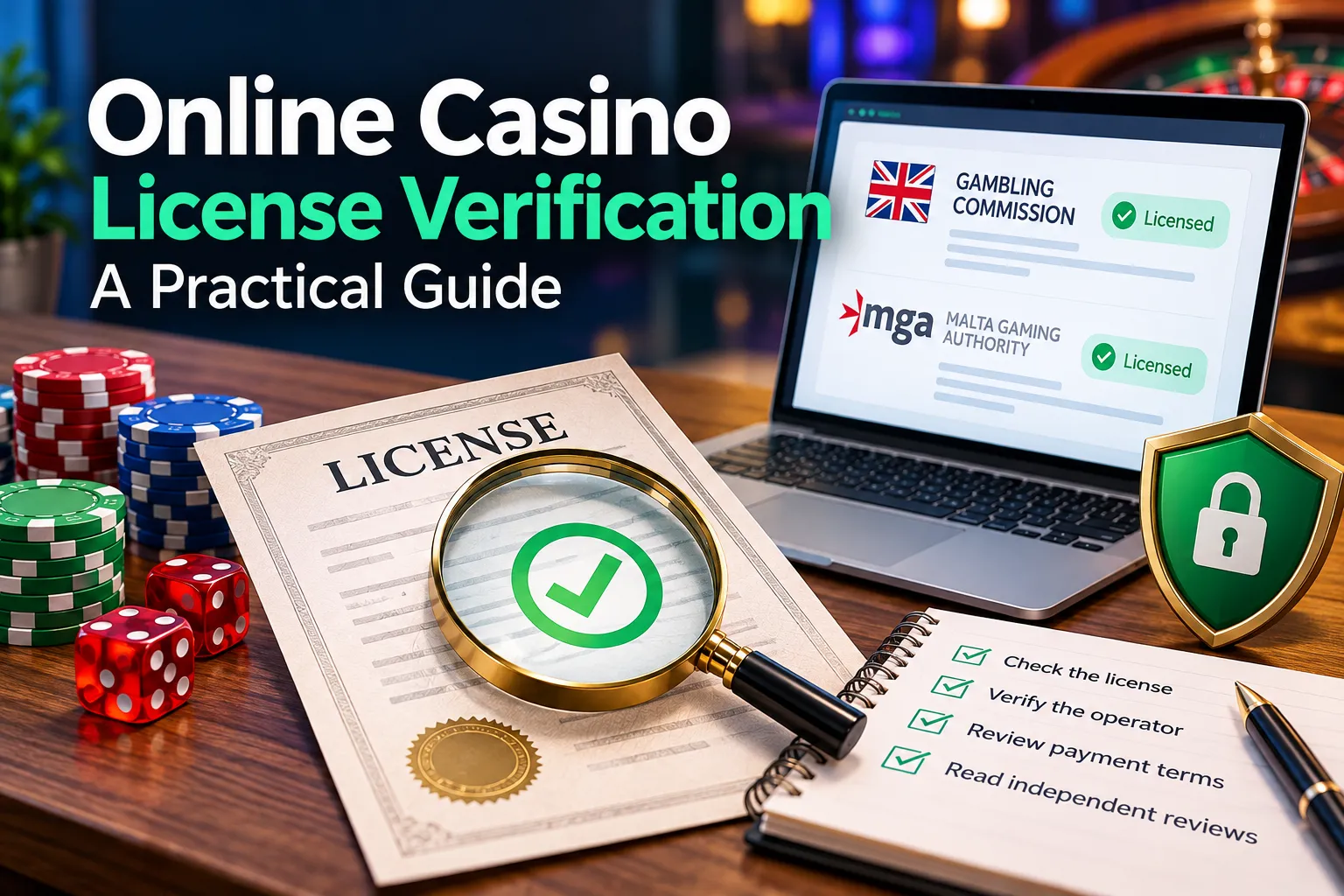

Online casino websites often display licensing badges, regulatory information, and security claims to build trust with visitors. However, the presence of a logo or license number does not automatically confirm that an operator is properly authorized.
Understanding how to verify casino licensing information is an important part of evaluating any gambling website. A license can provide information about an operator's legal status, but players should also consider payment policies, account verification procedures, and consumer protection measures.
This guide explains how to investigate casino licensing claims, identify potential warning signs, and use independent resources to make more informed comparisons.
1. Understanding Casino Licensing
A gambling license is an authorization issued by a regulatory authority that permits an operator to offer specified gambling services under certain conditions.
Depending on the jurisdiction, licensing requirements may cover:
- Identity and ownership of the operating company
- Financial and operational controls
- Anti-money laundering procedures
- Player identity verification
- Responsible gambling measures
- Complaints and dispute resolution procedures
- Technical standards for gaming systems
However, regulatory requirements differ significantly between jurisdictions.
A license issued in one country does not necessarily authorize an operator to accept customers from every other country.
It is also important to remember that licensing does not eliminate the financial risks associated with gambling or guarantee that individual disputes will be resolved in a player's favor.
2. Identify the Company Behind the Website
The first step in checking an online casino is identifying its legal operator.
Many casino brands use commercial names that differ from their registered company names. This can make verification confusing.
Start by examining the website footer, Terms and Conditions, and About Us section.
Look for the following details:
- Registered company name
- Licensing authority
- License or authorization number
- Registered business address
- Information about the operating entity
Compare these details across the website.
If the footer lists one company while the Terms and Conditions identify another, investigate the relationship before making assumptions.
A missing company name, incomplete licensing information, or conflicting legal details should prompt additional research.
3. Verify the License Through Official Registers
Casino websites may display regulatory logos, but these should never be treated as sufficient proof of authorization.
Where possible, verify licensing claims directly through the regulator's official database.
UK Gambling Commission
The UK Gambling Commission Public Register allows visitors to search for businesses holding gambling operating licenses.
When reviewing a registration, compare the legal company name and relevant authorized activities with the information published by the casino.
Check whether the business holds the appropriate authorization for the gambling services it offers.
Malta Gaming Authority
The Malta Gaming Authority Licensee Register provides information about authorized gaming operators and includes tools for checking licensing status.
Users can investigate the registered entity and review relevant authorization information.
A license should always be considered in its proper jurisdictional context. Registration with a recognized regulator does not automatically establish that an operator is permitted to serve players in every country.
4. Compare Information From Multiple Sources
Official records are essential for license verification, but they may not answer every practical question about the user experience.
Players may also want information about payment options, account verification requirements, customer support, and withdrawal conditions.
Casino review websites can help organize these details into a more accessible format.
For example, YummySpins casino reviews can serve as a starting point for exploring operator information and identifying subjects that deserve closer examination.
However, third-party reviews should not replace official licensing records or the casino's current legal documentation.
Comparison platforms may contain affiliate links or commercial relationships. Readers should consider these relationships when evaluating recommendations.
The strongest research approach combines official regulatory information with current operator policies and clearly sourced third-party reviews.
5. Check Payment and Withdrawal Conditions
A valid license is only one part of a broader website evaluation.
Players should also examine how deposits, withdrawals, and account verification work.
Important questions include:
What payment methods are supported?
Check whether the operator offers payment options available in the player's location and currency.
What are the withdrawal limits?
Some websites impose minimum or maximum withdrawal amounts, including limits that vary by payment method.
What verification documents are required?
Operators may request identity and payment verification documents in accordance with applicable laws and their own policies.
Are there additional processing conditions?
Processing schedules, banking delays, and account restrictions can affect when funds become available.
These details should be clearly explained before a user deposits money.
6. Recognize Common Warning Signs
Not every questionable website is necessarily fraudulent, but certain patterns justify greater caution.
Potential warning signs include:
- Licensing logos without verifiable registration details
- Different operator names across legal documents
- Broken or misleading links to regulators
- Unclear withdrawal restrictions
- Missing information about customer complaints
- Unsupported claims of guaranteed winnings
- Terms and Conditions that are difficult to locate
One warning sign does not always establish wrongdoing. However, several inconsistencies together may indicate that additional verification is necessary.
Users should be especially cautious when a website creates pressure to deposit quickly without allowing sufficient time to review important conditions.
7. Organize Casino Research With a Comparison Checklist
A structured comparison process makes research more consistent.
Instead of relying on advertising claims, create a simple checklist covering legal and operational information.
A useful checklist might include:
- Confirm the operating company's legal identity.
- Verify the claimed license in the regulator's database.
- Check whether the operator is authorized in the relevant jurisdiction.
- Review payment and withdrawal terms.
- Examine identity verification requirements.
- Read complaints and dispute resolution procedures.
- Check when the information was last updated.
A resource such as Best Casino Directory can be used to build an initial list of operators for further research.
Directory listings should be treated as research starting points rather than proof that a particular operator is licensed, suitable, or safe.
8. Why Information Transparency Matters
Transparency is an important indicator of how responsibly a gambling website presents itself.
Visitors should be able to identify the operating company, access important policies, and understand relevant limitations without searching through confusing menus.
Clear licensing information and accessible terms also make third-party reviews more useful.
When reviewers distinguish confirmed facts from marketing claims, users have a better basis for evaluating the information.
A well-organized casino research process is not about finding websites that promise the largest rewards. It is about identifying verifiable information and understanding the limitations of each source.
Conclusion
Checking an online casino license requires more than looking for a regulatory badge.
A careful review should establish the legal identity of the operator, verify its authorization through official sources, and examine important financial and account conditions.
Independent comparison resources can support this process, but regulatory databases and current legal documents remain essential.
Taking time to verify information helps users recognize misleading claims, understand practical restrictions, and make more informed decisions about gambling websites.
Gambling should always be approached as a form of paid entertainment involving financial risk, never as a reliable way to earn money.



















Sign in to leave a comment.