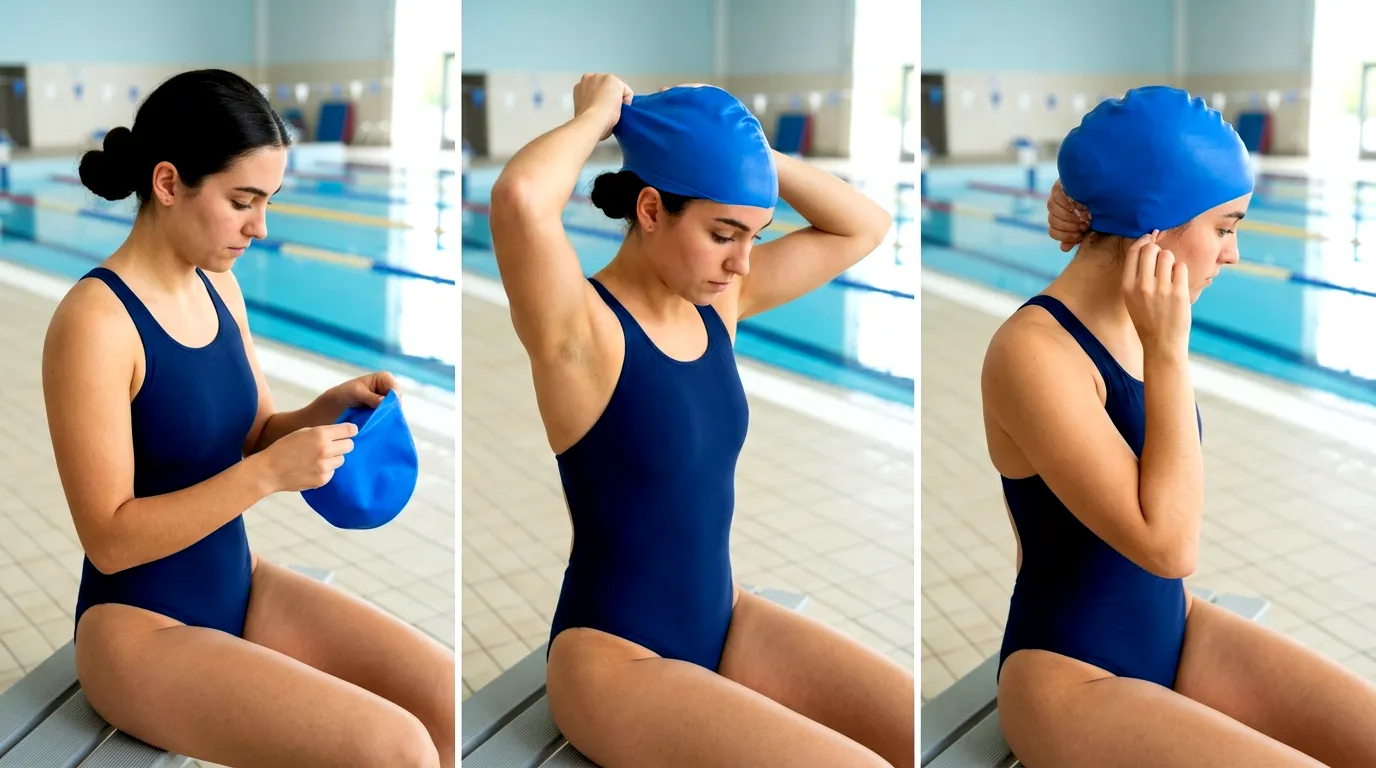

A swim cap that slides off halfway down the pool is annoying. One that tugs at your hair is worse. Most of the time the problem is not the cap but the way it goes on. Knowing how to wear a swimming cap properly takes a few minutes to learn, and it makes lessons and lane swimming far more comfortable for adults and children alike.
This guide covers the types of caps, a clear step-by-step method, how to adapt it for different hair types, and the mistakes we see most often poolside.
Quick answer: Tie your hair back, stretch the cap open with both hands, set the front edge on your forehead, then ease the cap over the back of your head. Tuck in loose strands, smooth out any wrinkles and check that the edges sit snugly around your ears.
Why Wearing a Swim Cap Correctly Matters
A cap that sits flat and secure does several jobs at once. For competitive swimmers, it smooths the head's profile in the water, which can reduce drag slightly. For everyone else, it keeps hair out of your face and away from your goggle straps.
It also helps protect your hair from repeated chlorine exposure, which can leave hair dry and brittle over time. Pool hygiene is another reason. Loose hair ends up in filters, and many pools and swim schools ask swimmers to wear a cap for that reason, so it is worth checking the rules at your local pool.
Types of Swim Caps
The material affects how a cap feels, how long it lasts and how easy it is to put on.
| Material | Fit | Durability | Best for |
| Silicone | Snug, smooth, grippy | Long-lasting | Regular swimmers, long or thick hair |
| Latex | Tight, thin, lightweight | Shorter lifespan | Budget option, racing |
| Lycra | Loose, soft, breathable | Moderate | Gentle comfort, aqua fitness |
| Neoprene | Thick, warm | Durable | Cold water and open water |
Silicone is the usual recommendation for beginners. It is easy to stretch, kind to hair and does not tear as readily as latex. Latex caps are cheap and light, but they can snag hair and pull on the way on. Latex allergies do exist, so silicone is the safer choice if you or your child has sensitive skin. Lycra caps feel comfortable but let water in, so they suit relaxed swims better than serious training. Neoprene caps add warmth and are mainly for open water.
What You Need Before You Start
Pick a cap that suits your head size. Children's caps and adult caps are cut differently, and a cap that is too big will slip no matter how well you put it on. You will also want a soft, metal-free hair tie, since metal clips can tear the cap.
Optional extras are a little conditioner or leave-in oil to protect your hair, and talcum powder if you use latex. Have your goggles to hand as well.
How to Wear a Swimming Cap: Step by Step
- Brush your hair and tie it back. Smooth, untangled hair slides in far more easily. A low ponytail or loose bun works for most people.
- Wet your hair or add conditioner (optional). Slightly damp, conditioned hair helps the cap glide on and protects it from chlorine. Some swimmers prefer dry hair for better grip, so try both.
- Open the cap from the inside. Put your fingers inside and stretch it gently. Keep your fingernails away from the material, as they cause most tears.
- Hold it with both hands. Place your thumbs inside the edge and your fingers outside, so you can control the stretch.
- Place the front on your forehead. The edge should sit just above your eyebrows.
- Pull the cap back over your head. Work from the front to the back in one smooth motion. Pulling from the back first usually makes the cap twist.
- Tuck in your hair. Gather any loose strands and push them under the edge, especially around the ears and nape.
- Adjust the edges. The cap should cover the tops of your ears and sit evenly all the way round.
- Smooth out wrinkles and air. Run your hands over the top and sides to flatten bubbles. Trapped air makes the cap balloon in the water.
- Put on your goggles. See the next section for the placement that works best.
The cap should feel snug without giving you a headache. If it pinches at the temples or leaves a deep red line after a swim, it is too small.
Wearing a Swim Cap with Different Hair Types
Long hair. Twist it into a bun or low ponytail, then put the cap on over the top. Some swimmers wear a second cap for extra hold, but a single well-fitted silicone cap is usually enough. A high bun tends to push the cap up at the back, so keep it low.
Short hair. This is the easiest case. Check that the edges are fully covered and the cap is not sliding forward over the forehead.
Thick or curly hair. Choose a larger cap, ideally silicone, as it stretches without pulling. Smooth your hair down and tuck it in a section at a time rather than cramming it in all at once.
Fine or thin hair. Slippery hair makes a cap shift. A cap with a slightly textured inner surface or a snugger fit helps, and applying it to dry hair can improve grip.
Braids or locs. Gather them into a low bundle first. A large, stretchy silicone cap, often sold as a "long hair" or "extra-large" cap, makes this much more comfortable and protects the style.
Men, Women and Children
Women. Most of the advice above applies. The main task is managing longer hair, so spend a moment on the tie-back stage.
Men. Men with short hair or a shaved head often find standard caps sit well, though a cap on a smooth head can slide, so a snug size matters more than usual.
Children. Choose a junior cap and expect it to take some patience. Some children dislike the feel at first, and that is perfectly normal. Letting them hold the cap, stretch it and put it on a toy first can take the pressure off. A parent or instructor can help with the first few attempts, and most children manage alone with practice, though the pace varies from child to child. Hair should be tied back gently, never tightly.
Goggles Over or Under the Swim Cap?
There is no single correct answer. Many competitive swimmers wear the goggle strap under the cap, so the cap holds it firmly in place when diving. The downside is that you have to take the cap off or lift it to adjust the goggles.
For lessons and relaxed swimming, putting the goggles over the cap is often easier, particularly for children who need to adjust the strap. Try both and see which suits you.
Common Mistakes When Wearing a Swim Cap
- Choosing the wrong size. Too loose and it slips; too tight and it hurts.
- Wearing it with tangled or wet-through hair. This creates lumps and uneven coverage.
- Using long nails. Fingernails can puncture the cap, particularly latex.
- Pulling from the back first. It twists the cap and leaves the front uneven.
- Leaving air trapped inside. Smooth it flat before you get in.
Tips to Keep Your Cap in Place
A well-fitting silicone cap on dry or only slightly damp hair tends to grip best. Adjust the cap before you dive or push off the wall, because that is when most caps move. If you swim hard, a second cap over the first can add hold, though it is not necessary for most people.
How to Remove a Swim Cap Without Hurting Your Hair
Do not drag the cap straight off. Instead, peel the edge up at the back of your neck, then roll it forwards and off your head. Removing it while your hair is still wet helps it glide away without catching.
Looking After Your Swim Cap
Rinse the cap in fresh water after each swim and let it dry naturally, away from direct sunlight and heat. Dust latex caps lightly with talcum powder before storing. Avoid folding or crumpling the cap, as creases weaken the material over time. A cap that is cared for will usually last far longer than one left in a swim bag.
Do Swim Caps Keep Hair Completely Dry
No, and it helps to know this from the start. A cap lowers the amount of chlorinated water reaching your hair, but most caps are not fully waterproof. Silicone is the most watertight, though a little water can still find its way in. If you want to keep your hair as dry as possible, a snug silicone cap is your best option, and rinsing your hair afterwards still matters.
Final Thoughts
Wearing a swim cap well comes down to the right size, tidy hair and a smooth front-to-back motion. Once you have the knack, it takes seconds, and it makes the whole session more comfortable. If your child is just starting out, be patient with them and let them get used to the feel. A little practice before the lesson often makes the pool far less daunting.
FAQs
Should my hair be wet or dry when I put on a swim cap?
Either works. Slightly damp or conditioned hair slides in more easily, while dry hair can give a better grip. Experiment to see what suits you.
Why does my swim cap keep slipping off?
It is usually the wrong size, trapped air or a high bun pushing it up. Check the fit and tuck the edges in properly.
How tight should a swim cap be?
Snug and secure, without causing pain or a headache. If it leaves a deep mark, try a larger size.
Is silicone or latex better?
Silicone is generally easier to wear and lasts longer, and it suits anyone with a latex sensitivity. Latex is lighter and cheaper but wears out faster.
Can you wear a swim cap with a ponytail or bun?
Yes. Keep the style low and flat so the cap can sit smoothly over it.

















Sign in to leave a comment.