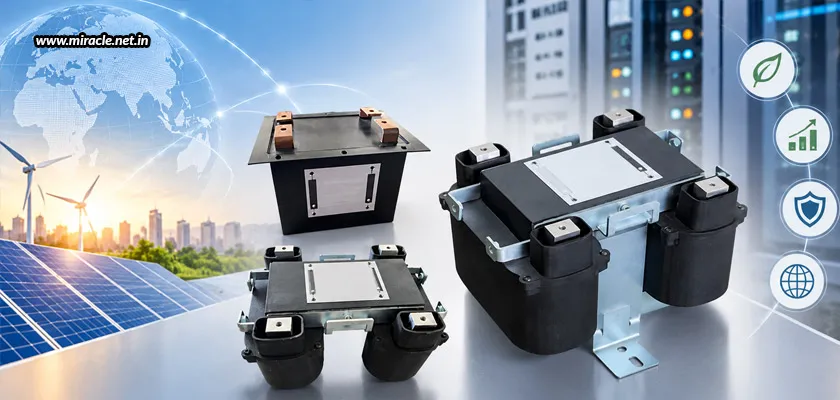

Energy efficiency has become an important part of modern electronic and electrical system design. Equipment manufacturers need to reduce unnecessary power losses while maintaining reliable performance, controlled temperatures, and good power quality. At the same time, electronic systems are becoming smaller and more complex, making electromagnetic interference and unwanted current fluctuations more difficult to manage. Toroidal chokes can help address some of these challenges by filtering unwanted electrical noise and controlling current variations. Their circular core construction also provides efficient magnetic performance in a compact form. This blog explains how toroidal chokes support efficient system design and contribute to meeting demanding performance requirements.
Understanding the role of toroidal chokes
A toroidal choke is an inductor wound around a circular magnetic core. It is primarily used to restrict unwanted changes in current and suppress electrical noise within a circuit. Depending on the design, it can be used for common-mode or differential-mode filtering. The circular core provides a closed magnetic path, allowing the magnetic flux generated by the winding to remain largely within the core. This helps reduce magnetic leakage while providing effective inductance. Toroidal chokes are commonly found in power supplies, industrial equipment, motor drives, communication equipment, renewable energy systems, and other electronic applications where controlled current and reduced interference are required.
Reducing electromagnetic interference
One of the main uses of toroidal chokes is reducing electromagnetic interference. Modern electronic equipment often uses switching circuits that generate high-frequency electrical noise. If this noise travels through power lines or signal paths, it can affect nearby circuits and equipment. A properly selected choke provides impedance to unwanted frequencies, helping reduce their transmission through the system. This can result in cleaner electrical signals and more stable equipment operation. Reduced interference can also support electromagnetic compatibility requirements. However, the choke is only one part of the overall EMC design. PCB layout, grounding, shielding, cables, and other filtering components must also be considered.
Why the toroidal core design matters
The circular core is one of the main features that distinguishes toroidal chokes from many other inductor designs. Its continuous magnetic path allows magnetic flux to circulate efficiently through the core. This reduces the amount of flux escaping into the surrounding area and helps limit unwanted magnetic fields. The winding can also be distributed evenly around the core, supporting consistent magnetic performance. This design can provide effective inductance without requiring a large physical structure. As a result, toroidal chokes are useful where designers need both filtering performance and compact construction, particularly when power and signal components are positioned close together.
Supporting efficient power conversion
Power conversion circuits frequently deal with rapidly changing currents and high-frequency switching. Without suitable filtering, these changes can introduce unwanted ripple, noise, and electrical stress into the system. Toroidal chokes can be positioned at appropriate points within power conversion circuits to control these current variations. By limiting unwanted high-frequency components, they help maintain cleaner current characteristics and reduce interference. This can support stable operation of other components within the circuit. The efficiency improvement comes from the overall system rather than the choke alone. Therefore, the choke must be selected carefully so its filtering benefits do not introduce excessive resistance or magnetic losses.
Managing heat through proper choke selection
Thermal performance is closely connected to electrical efficiency because power losses eventually appear as heat. Toroidal chokes mainly experience copper losses in their windings and magnetic losses in their cores. Copper losses increase as winding resistance and current increase, while core losses depend on factors such as material, frequency, and magnetic flux density. Proper component selection helps control these losses and limits temperature rise. The conductor size, number of turns, core material, and operating conditions must therefore be matched to the application. A choke operating within its intended limits can provide reliable filtering without creating unnecessary thermal stress inside the equipment.
Choosing the right core material
Core material has a major influence on the performance of a toroidal choke. Different materials have different magnetic properties and are suitable for different frequency ranges and operating conditions. The selected material affects inductance, core losses, saturation behaviour, and temperature performance. A material suitable for high-frequency filtering may not provide the same performance in a lower-frequency power application. Designers therefore need to consider operating frequency, current, required inductance, and expected temperature when selecting the core. Using an appropriate material helps maintain the desired filtering performance while keeping magnetic losses and heat generation under control.
Importance of winding design
The winding arrangement directly affects the electrical and thermal performance of a toroidal choke. The conductor must carry the required current without excessive temperature rise, while the number of turns must provide the required inductance. Winding resistance should also be kept under control because higher resistance increases I²R losses. Proper insulation between turns and windings is equally important for safe operation. Consistent winding tension and distribution can improve manufacturing quality and electrical consistency. For applications produced in large quantities, maintaining the same winding characteristics across different units helps ensure predictable performance and reduces variation between individual components.
Selecting the correct current rating
Current rating is an important consideration when selecting a toroidal choke. The component must handle the expected operating current without excessive temperature rise or magnetic saturation. If the current exceeds the choke’s suitable operating range, the core may approach saturation, causing inductance to decrease and potentially increasing electrical stress. Designers should therefore consider both continuous and peak current conditions. The expected duty cycle and ambient temperature should also be evaluated. Selecting a choke with appropriate current-handling capability helps maintain stable inductance, effective filtering, and controlled thermal performance during normal operation.
Testing and quality control
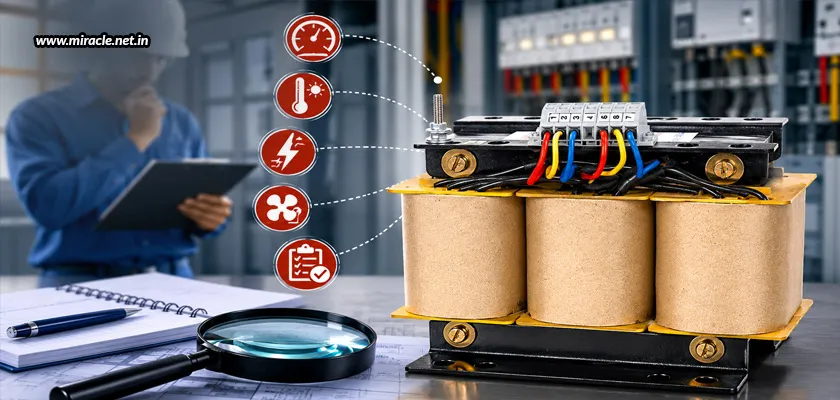
Consistent manufacturing and testing are essential for reliable toroidal choke performance. Important electrical characteristics may include inductance, DC resistance, rated current, temperature rise, insulation resistance, and dielectric strength. Depending on the application, manufacturers may also evaluate saturation characteristics and performance at different frequencies. These tests help confirm that the finished component performs according to its intended specifications. Consistent winding processes and controlled core assembly are equally important. For equipment manufactured in larger quantities, reliable quality control helps minimize variation between batches. This supports predictable system performance and makes it easier for equipment manufacturers to maintain consistent product quality.
Designing for international requirements
Electronic equipment intended for international markets may need to satisfy different electrical, safety, EMC, and energy-efficiency requirements depending on its application. Toroidal chokes can support these objectives by helping control unwanted electrical noise, current variations, and thermal losses. However, using a compliant choke does not automatically make the finished product compliant with every applicable requirement. The complete equipment must be evaluated according to the relevant standards. Designers should therefore consider the choke during the early stages of product development rather than treating filtering as a final-stage addition. Proper component selection can make the overall compliance process more straightforward.
For applications requiring consistent performance and dependable quality, working with an experienced manufacturer is important. Miracle Electronics is a toroidal chokes manufacturers exporter from India to USA that manufactures toroidal chokes to meet specific electrical and application requirements, with controlled production and testing processes that support reliable performance for OEMs and equipment manufacturers.
Toroidal chokes can contribute to efficient and reliable electronic system design by controlling unwanted current variations, reducing electromagnetic interference, and supporting stable power quality. Their closed magnetic path and compact construction make them particularly useful where space and EMC performance are important. However, achieving good results depends on selecting the right inductance, core material, current rating, winding design, and operating range. The choke itself is only one part of an energy-efficient system, so its characteristics must be considered alongside the complete circuit design. With appropriate selection and manufacturing quality, toroidal chokes can support the efficiency, thermal performance, and reliability requirements of modern electronic equipment.
Resource: How Toroidal Chokes Help Meet Global Energy Efficiency Standards























Sign in to leave a comment.