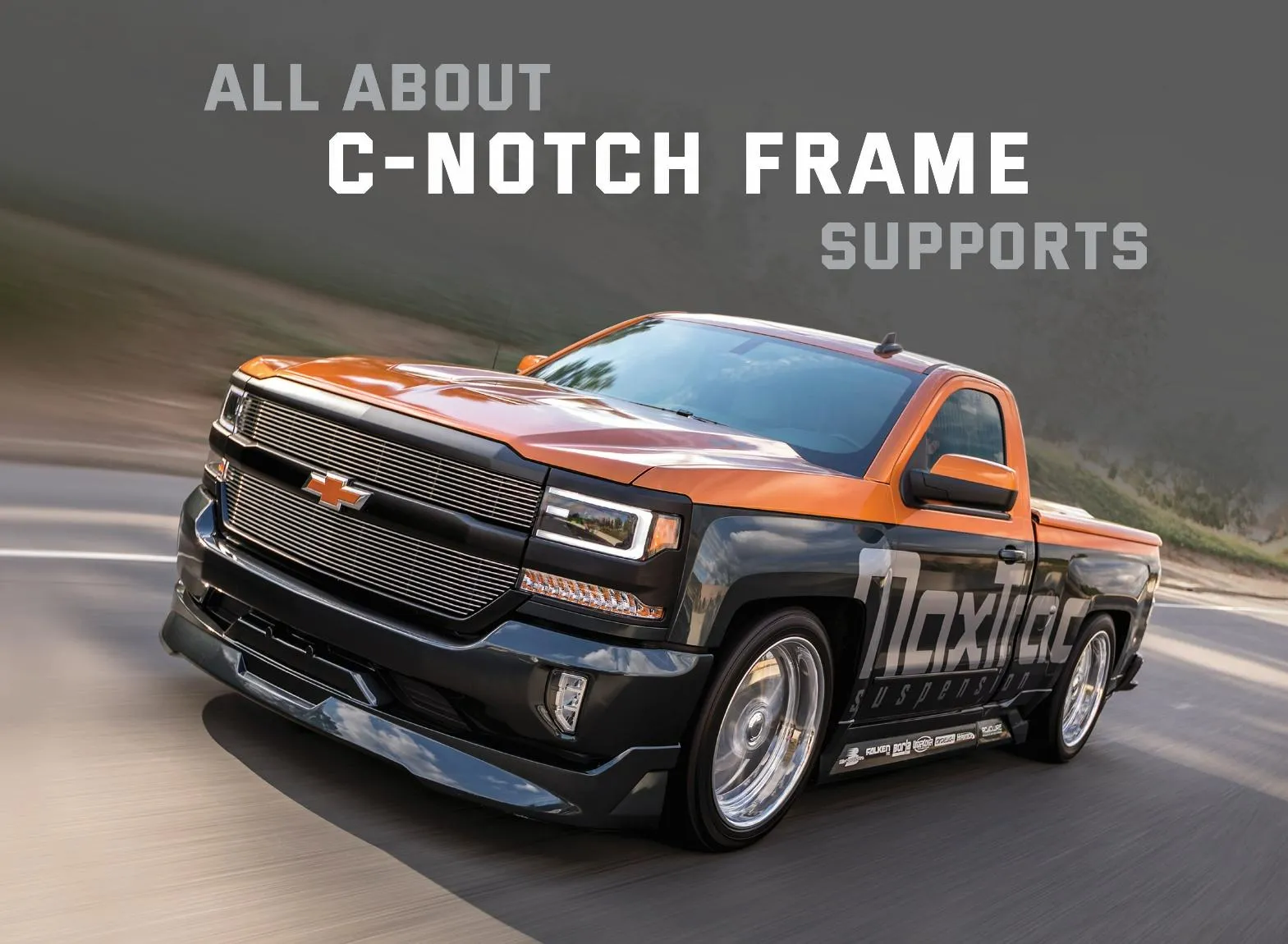

Lowering a truck can transform its appearance and give the vehicle a more customized stance. But changing the ride height also affects the relationship between the rear axle and the chassis. As the suspension moves through compression, the available space can become limited. Understanding how clearance works is therefore an important part of planning a successful lowered truck build.
Truck lowering frame support helps create additional space around the rear axle when a lowered suspension brings the axle closer to the chassis. This type of solution is commonly associated with C-notch frame modifications, which reshape a section of the frame to provide more room for upward axle movement. The objective is to support useful suspension travel while maintaining an appropriate structural setup.
Why Frame Clearance Is Important
Frame clearance determines how much room the suspension has to move before the axle or another component reaches the chassis. When a truck is lowered, this space can become smaller than it was in the factory configuration.
Insufficient clearance may cause unwanted contact when the suspension compresses over bumps or uneven surfaces. It can also limit the amount of usable travel available from the suspension system.
For this reason, clearance should be considered before selecting the components for a lowering project rather than treated as an issue after installation.
Step 1: Measure the Existing Clearance
Begin by examining the space between the rear axle and frame. Measurements should be taken at the intended ride height and considered alongside the expected suspension movement.
It is also useful to identify nearby components that could become contact points. Shocks, brackets, brake lines, and other suspension hardware can occupy space around the axle.
Accurate measurements provide a better understanding of what the finished setup will require.
Step 2: Understand How a C-Notch Creates Space
A C-notch changes a portion of the frame above the axle. The modified section provides additional vertical room so the axle can move upward without contacting the original frame rail as quickly.
The exact requirements depend on the truck. Different frame designs, suspension configurations, axle positions, and ride heights can require different approaches.
A C-notch should therefore be selected according to the specific application instead of assuming that one design will work for every truck.
Step 3: Match Frame Clearance With Suspension Travel
Additional space only becomes useful when it works with the complete suspension system. The amount of clearance should correspond with the movement the suspension is expected to provide.
Consider how the suspension behaves when the truck encounters a dip, bump, or other change in road surface. The axle needs sufficient room to move through its intended range without unnecessary interference.
This makes suspension travel an important part of the planning process. A truck should not be lowered simply according to its parked appearance while overlooking how the suspension functions during actual driving.
Step 4: Consider the Complete Truck Setup
Frame clearance is connected to many other aspects of a custom build. Wheel and tire size, shock placement, suspension components, and intended ride height can all influence the available space.
Before installation, review the complete setup together. This can help identify potential interference points and determine whether the selected components are compatible with the truck.
A complete approach also makes it easier to maintain a consistent relationship between ride height, suspension movement, and available clearance.
Step 5: Pay Attention to Structural Strength
The frame is a major structural part of the vehicle, so modifications require careful consideration. Creating additional clearance should not come at the expense of the frame's intended structural function.
Use components designed for the specific application and follow the manufacturer's installation requirements. Proper fitment, alignment, reinforcement, and installation are important factors in achieving a dependable result.
For projects involving significant structural modifications, having the work completed or inspected by an experienced professional can be beneficial.
Step 6: Check for Potential Contact
After the modification has been installed, inspect the surrounding components carefully. Look for areas where the axle, suspension hardware, or other parts could contact the frame during movement.
Checking clearance at different points of suspension travel can reveal issues that may not be visible when the truck is sitting at its normal ride height.
This inspection is particularly important because real-world driving introduces movement that cannot be evaluated from the parked position alone.
Common Clearance Mistakes
One common mistake is assuming that a lower ride height automatically means better suspension performance. Lowering changes the available geometry, so clearance needs to be evaluated as part of the entire system.
Another mistake is focusing only on axle-to-frame distance while ignoring nearby components. A setup can have sufficient space in one area while another component creates interference elsewhere.
Using parts without confirming application compatibility can also create unnecessary installation challenges. Reviewing measurements and component specifications beforehand can help avoid these problems.
Building a Better Lowered Truck
A well-planned lowered truck balances appearance, clearance, suspension movement, and structural considerations. Creating additional space around the rear axle can help the suspension operate within a more practical range while supporting the goals of the overall build.
Rather than choosing a modification based only on how low the truck looks, consider how the suspension will move and how every component fits together. Careful planning can make the difference between a visually appealing project and a properly coordinated suspension setup.
For truck enthusiasts looking for lowering and suspension solutions designed for custom applications, MaxTrac Suspension offers products and resources to help support different lowered-truck build requirements.
























Sign in to leave a comment.