
OTT platforms grow fast. Then they hit a wall.
A platform launches in a new country. Subscribers sign up. Then, a few weeks later, growth flattens. The content hasn't changed. But something feels off to local viewers. Often, it's the audio.
This is where dubbing services matter. They turn a foreign-sounding catalog into something that feels local. Without that, platforms lose viewers fast.
The Real Reason OTT Growth Stalls in New Markets
Here's a pattern seen across the industry in 2026. A platform enters three or four new markets. Signups spike. Then numbers flatten almost overnight.
The shows are good. The catalog is large. But something's missing.
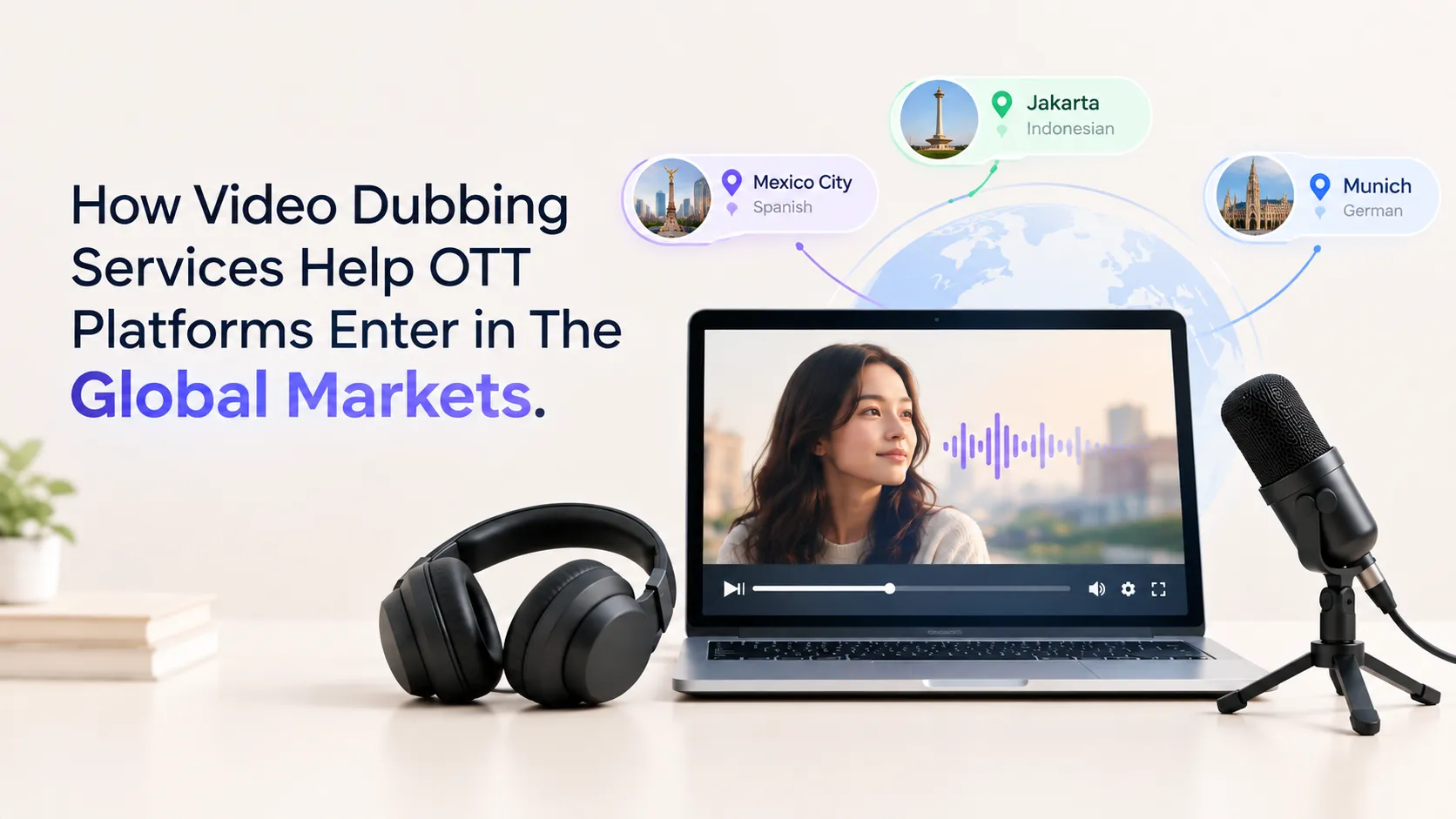
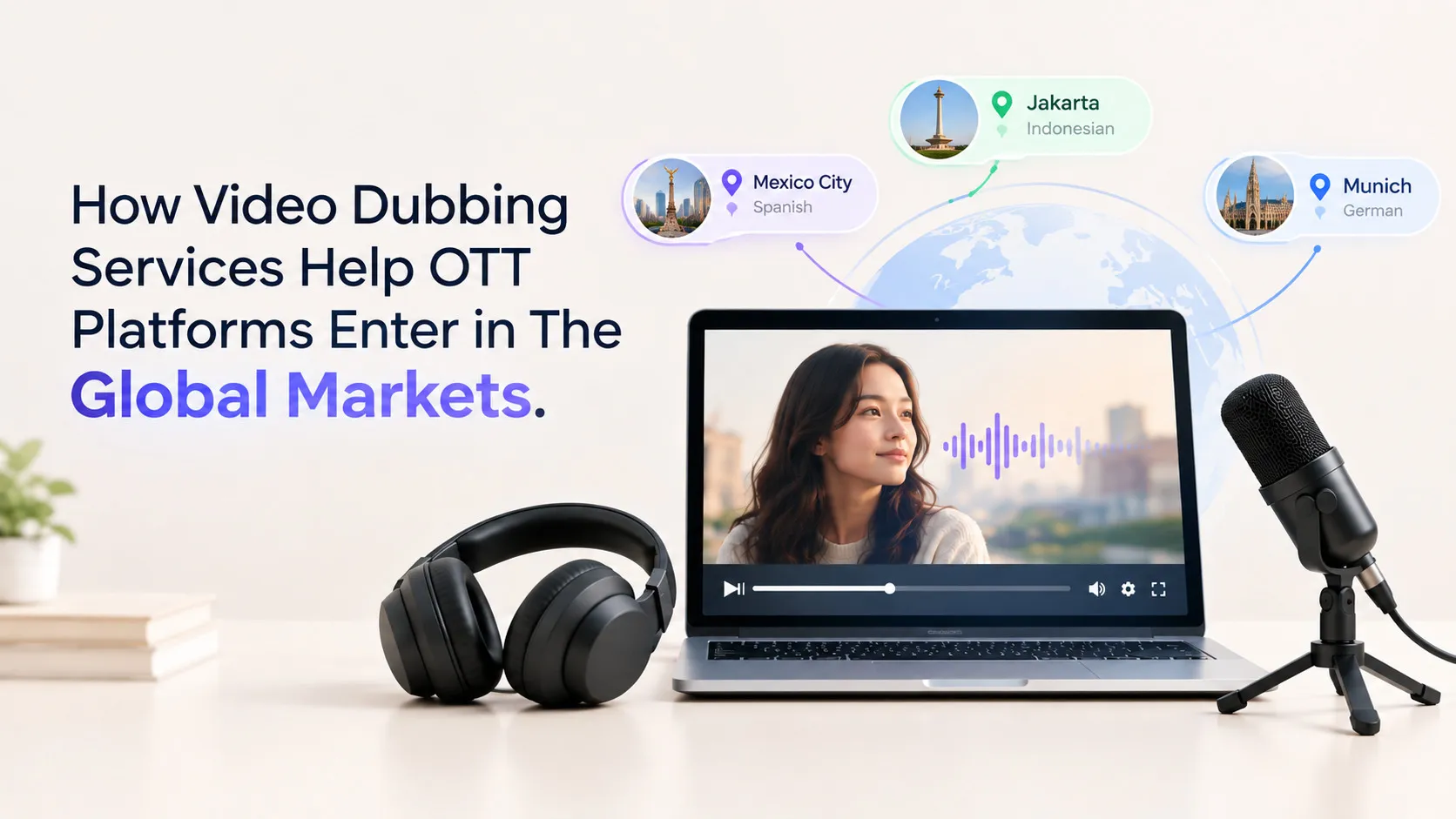
Viewers in places like Mexico City, Jakarta, or Munich drop off. Why? The content still feels foreign. Subtitles are inconsistent. Audio tracks are missing.
This isn't a content problem. It's a localization problem.
Platforms like Netflix, Disney+, and Amazon Prime Video already know this. That's why they treat localization as a priority, not an extra step.
Why Dubbing Services Are Now Core to OTT Growth
Localization used to mean subtitles. Just text on screen.
That's changed. Today, localization covers much more:
- Audio dubbing
- Subtitles and captions
- Translated metadata
- Local app interfaces
- Payment and compliance details
But audio still matters most. It decides whether a show feels native or foreign.
This is why dubbing services have become essential. They're no longer a bonus feature. They're part of the core product.
Some regions expect dubbing by default. Southern Europe and Latin America are good examples. Other regions, like Scandinavia, prefer subtitles. Smart platforms offer both. Skipping either one creates friction. And friction drives viewers away.
Dubbing also used to be slow and expensive. Studios had to match scripts to lip movements. They needed local voice actors. Then came detailed audio mixing.
That made full dubbing rare. Only top titles got it. Everything else shipped with subtitles only.
That's changing now. Production pipelines are faster. Dubbing is scaling across entire catalogs, not just flagship shows.
The Numbers Behind the Shift
The data backs this up.
The AI-assisted dubbing market for OTT was worth about $530 million in 2025. It's expected to hit $750 million in 2026. By 2031, it could reach $2.45 billion. That's a growth rate of over 26% per year.
This growth isn't random. Dubbed content converts better. Platforms know this now.
There's another driver too: YouTube.
Around 300 hours of video get uploaded to YouTube every minute. About 70% of YouTube viewers live outside the U.S.
This is why YouTube video dubbing has exploded. Creators can't rely on English alone anymore. A channel dubbed into three or four languages often reaches far more viewers than an English-only channel ever could.
Where the New Demand Is Coming From
Five years ago, dubbing meant movies and big TV shows. That's no longer true.
Today, short drama dubbing is booming. These are quick, vertical-format shows. Episodes often run under two minutes. They're made for mobile viewing.
Speed matters here. A lot.
Platforms release new episodes every week. Sometimes every day. A three-week dubbing turnaround won't work. Studios have had to rebuild their process. Faster scripts. Quicker casting. But without cutting quality.
That includes lip-sync dubbing. This part can't be rushed.
If the audio doesn't match the mouth movements, viewers notice. Fast. They lose interest just as quickly. Good lip sync isn't a small detail. It's often the reason someone keeps watching past the first scene.
The Netflix Effect on Dubbing Standards
Netflix changed how people think about dubbing.
Shows like Money Heist, Squid Game, and Dark became global hits. Many viewers watched the dubbed versions, not the subtitled ones. That surprised a lot of people. English-speaking audiences accepted dubbing more than expected.
But there's a catch. The dubbing had to be excellent. Not just accurate. It had to feel natural.
That raised the bar. Becoming a Netflix dubbing partner today means more than translating scripts. It means:
- Managing multiple languages at once
- Keeping lip sync tight across all of them
- Meeting tight delivery deadlines
- Staying consistent, whether it's a drama or a reality show
The standard is high. And it keeps rising.
What This Means for Platforms Still Using Subtitles Only
The message is clear. Subtitles alone aren't enough anymore.
Audio localization isn't an extra step. It's a retention tool. This is especially true in regions where dubbing is expected. It's also true for short-form, mobile-first content, where attention spans are short, and expectations are high.
The platforms growing fastest right now aren't always the ones with the biggest libraries. They're the ones treating dubbing services as part of their core strategy. Not something added later. Something built in from day one.
A few years ago, localization was seen as a cost to reduce. Now, it's seen as an investment that drives growth.
Where the Industry Goes From Here
AI is changing dubbing. But it's not replacing people.
The best results come from a mix: fast, AI-assisted tools plus human input for tone, humor, and cultural nuance. That combination is what makes dubbed content feel real, not robotic.
Platforms that get this balance right will keep winning new markets. Those that don't will keep seeing the same pattern: a strong launch, then a quiet decline.




















Sign in to leave a comment.