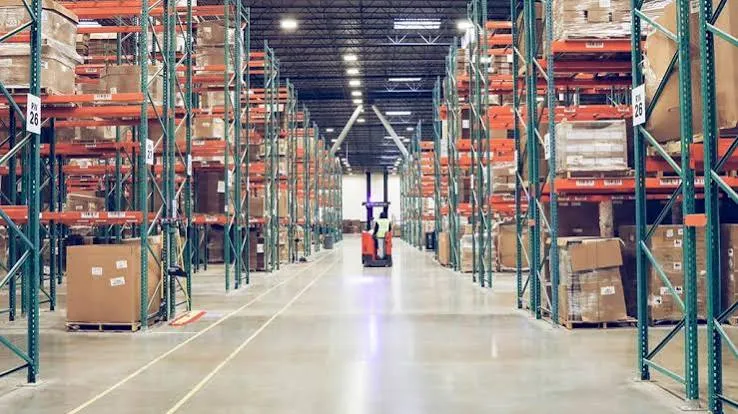

How Warehousing Companies in India Are Using Data Analytics to Transform Quick Commerce
India’s quick commerce industry has changed the way consumers shop. From groceries and household essentials to personal care products and electronics, customers increasingly expect their orders to arrive within minutes. Behind this speed is a complex supply chain that depends on efficient inventory management, strategically located warehouses, accurate demand forecasting, and fast order processing.
As quick commerce continues to expand, warehousing companies in India are adopting advanced technologies to manage these challenges. Among the most important technologies is data analytics, which helps businesses make faster and more informed supply chain decisions.
The Growing Importance of Warehousing in Quick Commerce
Quick commerce operates differently from traditional e-commerce. Instead of relying primarily on large centralized warehouses, quick-commerce businesses use smaller fulfillment centers or dark stores located close to customers.
These facilities need to maintain the right products in the right quantities while processing a large number of orders within a short period. Even a small inventory error can result in stockouts, delayed deliveries, or excess inventory.
This is where modern warehousing solutions become important. Warehousing companies in India are increasingly using automation, warehouse management systems, real-time inventory tracking, and analytics to improve operational efficiency.
How Data Analytics Supports Quick Commerce
Data analytics for quick commerce allows businesses to collect and analyze information from different stages of their supply chain. This may include sales data, customer orders, inventory levels, delivery performance, product movement, and seasonal demand.
By analyzing this information, businesses can identify patterns and make better decisions.
1. Accurate Demand Forecasting
One of the biggest challenges in quick commerce is predicting what customers will order and when they will order it.
Data analytics can analyze historical sales, seasonal trends, customer behavior, location-based demand, and other factors to forecast future requirements.
For example, demand for beverages may increase during summer, while certain grocery products may experience higher demand during festivals. By identifying these patterns, businesses can position inventory closer to customers before demand increases.
This helps reduce stockouts while preventing unnecessary overstocking.
2. Better Inventory Management
Inventory needs to move quickly in a quick-commerce environment. Keeping too much inventory can increase storage costs and the risk of product expiry, while insufficient inventory can lead to missed sales.
Data analytics provides visibility into inventory movement and helps warehouse teams identify fast-moving and slow-moving products.
Businesses can use these insights to determine:
- Which products should be stocked more frequently
- Which products require higher inventory levels
- Which products are moving slowly
- When replenishment should happen
- Which fulfillment centers require additional stock
This creates a more responsive and efficient inventory system.
3. Optimizing Warehouse Locations
Location is critical to quick-commerce success. The closer a fulfillment center is to customers, the easier it becomes to achieve faster delivery times.
Data analytics can help businesses study order density, customer locations, delivery times, and product demand across different areas.
This information can support decisions about where to establish new fulfillment centers or dark stores. Instead of relying solely on assumptions, companies can use actual demand data to optimize their network.
4. Improving Order Fulfillment
Speed is one of the primary differentiators of quick commerce. Once an order is received, warehouse employees need to locate the products, pick them, pack them, and hand them over for delivery as quickly as possible.
Analytics can identify bottlenecks in this process.
For example, if data shows that certain products are frequently ordered together, they can be positioned closer to each other. Similarly, frequently purchased products can be placed in easily accessible locations.
These small operational improvements can significantly reduce picking and processing times.
The Role of Technology in Modern Warehousing
The combination of data analytics with warehouse technology is helping warehousing companies in India build more intelligent and scalable operations.
Modern warehouses can use technologies such as:
- Warehouse Management Systems (WMS)
- Barcode and QR-code scanning
- Automated inventory tracking
- Robotics and warehouse automation
- Real-time dashboards
- Cloud-based supply chain platforms
- Artificial intelligence and machine learning
- Predictive analytics
When these technologies work together, businesses can gain greater visibility across their warehouse and fulfillment operations.
Reducing Costs Through Data-Driven Decisions
Quick commerce requires businesses to balance speed with profitability. Faster fulfillment can increase operational costs if processes are not optimized.
Data analytics can help identify areas where costs can be reduced without compromising customer experience.
For example, businesses can analyze warehouse productivity, labor utilization, inventory carrying costs, order volumes, and delivery performance.
These insights can help managers allocate resources more effectively and identify inefficient processes.
Preparing for the Future of Quick Commerce
The Indian quick-commerce market is expected to remain highly competitive. As consumers become accustomed to faster deliveries, businesses will need to continuously improve their fulfillment and logistics capabilities.
This means that the role of data analytics for quick commerce will extend beyond basic reporting. Businesses will increasingly use predictive and real-time analytics to anticipate demand, optimize inventory, improve warehouse productivity, and make supply chains more responsive.
At the same time, warehousing companies in India will continue investing in automation, technology-enabled fulfillment centers, and integrated supply chain solutions.
Conclusion
The growth of quick commerce has created new demands for speed, accuracy, and flexibility across the supply chain. Warehouses are no longer simply storage facilities; they have become strategic fulfillment hubs that directly influence customer experience.
By combining modern warehousing infrastructure with data analytics for quick commerce, businesses can improve inventory accuracy, forecast demand, optimize warehouse operations, reduce costs, and support faster fulfillment.
As India's logistics ecosystem continues to evolve, warehousing companies in India that embrace data-driven decision-making will be better positioned to support the next generation of quick-commerce and e-commerce businesses.


























Sign in to leave a comment.