
The renewable energy industry is expanding rapidly across the United States as companies invest in wind farms, solar facilities, energy storage systems, and advanced manufacturing operations. While much of the attention focuses on energy production technologies, one critical factor often goes unnoticed: the safe and efficient movement of large, heavy, and complex components throughout the manufacturing and installation process.
From turbine blades and nacelles to generators, transformers, and battery storage systems, renewable energy manufacturers rely heavily on custom lifting equipment to handle oversized loads safely and efficiently. Standard material handling tools are often insufficient for the unique dimensions, weights, and production requirements found in renewable energy facilities. As a result, manufacturers increasingly turn to specialized lifting systems designed specifically for their applications.
In this article, we’ll explore how wind turbine and renewable energy manufacturers use custom lifting systems, the challenges they face, and the benefits these solutions provide.
Why Renewable Energy Manufacturing Requires Specialized Lifting Systems
Renewable energy equipment is significantly larger and heavier than many traditional industrial products. Modern wind turbine blades can exceed 250 feet in length, while nacelles and generators often weigh several tons. Solar panel production lines also involve handling delicate but high-volume materials that require precise positioning.
These unique challenges create a need for industrial lifting solutions that can:
- Safely lift oversized components
- Improve worker safety and ergonomics
- Reduce product damage
- Increase manufacturing efficiency
- Support lean production processes
- Meet strict industry safety requirements
Unlike off-the-shelf lifting devices, custom-engineered systems can be designed around specific production workflows, facility layouts, and load characteristics.
Common Lifting Challenges in Wind Turbine Manufacturing
Wind turbine production presents some of the most demanding material handling challenges in modern manufacturing.
Handling Large Turbine Blades
Wind turbine blades are long, awkwardly shaped, and susceptible to damage during movement. Even minor impacts can affect aerodynamic performance and lead to costly repairs.
Manufacturers often use specialized lifting beams, vacuum lifting systems, and custom blade-handling equipment to safely transport blades between production stations. These systems distribute weight evenly while minimizing stress on the composite structure.
Moving Heavy Nacelles and Gearboxes
Nacelles house critical turbine components such as generators, gearboxes, braking systems, and control equipment. Their size and weight require highly controlled lifting operations.
Custom cranes, lift tables, and positioning devices help manufacturers move these assemblies through production and testing processes while maintaining alignment and safety.
Precision Assembly Requirements
Many wind turbine components require precise positioning during assembly. Even small alignment errors can impact performance and reliability.
Custom lifting systems equipped with rotation, tilt, and positioning capabilities allow operators to accurately place components while reducing manual intervention.
Applications of Custom Lifting Equipment in Renewable Energy Facilities
Renewable energy manufacturers use custom lifting equipment throughout nearly every stage of production.
Component Manufacturing
During manufacturing, large parts must be moved between fabrication, machining, coating, and assembly stations.
Examples include:
- Turbine blade molds
- Generator housings
- Steel tower sections
- Battery storage enclosures
- Solar tracking systems
Custom lifting devices enable smooth transitions between processes while minimizing bottlenecks.
Assembly Operations
Assembly often involves lifting components into precise locations for fastening, welding, or integration with larger systems.
Engineered lifting solutions may include:
- Lift-and-tilt tables
- Work positioners
- Floor cranes
- Articulating jib cranes
- Custom lifting fixtures
These systems improve accessibility for workers and support safer assembly procedures.
Quality Testing and Inspection
Large renewable energy components frequently undergo extensive testing before shipment.
Specialized lifting equipment helps rotate, position, and transport products during inspection and testing processes, allowing technicians to access all sides of the component efficiently.
Packaging and Shipping
Wind turbine and renewable energy components are often shipped worldwide.
Custom material handling systems help manufacturers safely transfer finished products into shipping containers, trailers, or specialized transport equipment without causing damage.
Benefits of Custom Lifting Equipment for Renewable Energy Manufacturers
Improved Workplace Safety
Worker safety remains a top priority in renewable energy manufacturing.
Large components create risks associated with manual handling, awkward postures, suspended loads, and repetitive motions. Custom lifting systems reduce these hazards by minimizing manual lifting and providing controlled load movement.
By integrating ergonomic lifting solutions into production workflows, manufacturers can significantly reduce workplace injuries and improve overall safety performance.
Increased Production Efficiency
Production delays caused by inefficient material handling can impact project schedules and profitability.
Custom lifting equipment streamlines movement between workstations, reduces downtime, and enables faster assembly operations. As production volumes increase, efficient material handling becomes even more critical for maintaining throughput.
Reduced Product Damage
Renewable energy components represent significant investments in materials and labor. Damage during handling can result in expensive repairs, delays, and quality concerns.
Specialized lifting fixtures are designed around the exact dimensions and weight distribution of each component, helping reduce the risk of scratches, impacts, and structural stress.
Enhanced Ergonomics
Many renewable energy manufacturing tasks require workers to access difficult-to-reach areas.
Custom lifting and positioning equipment can rotate, tilt, or elevate components into optimal working positions. This improves ergonomics, reduces physical strain, and allows employees to perform tasks more efficiently.
Heavy-Duty Lifting Equipment Used in Renewable Energy
Renewable energy facilities often utilize a combination of heavy duty lifting equipment designed for specific applications.
Common solutions include:
- Hydraulic lift tables
- Custom work positioners
- Upenders and inverters
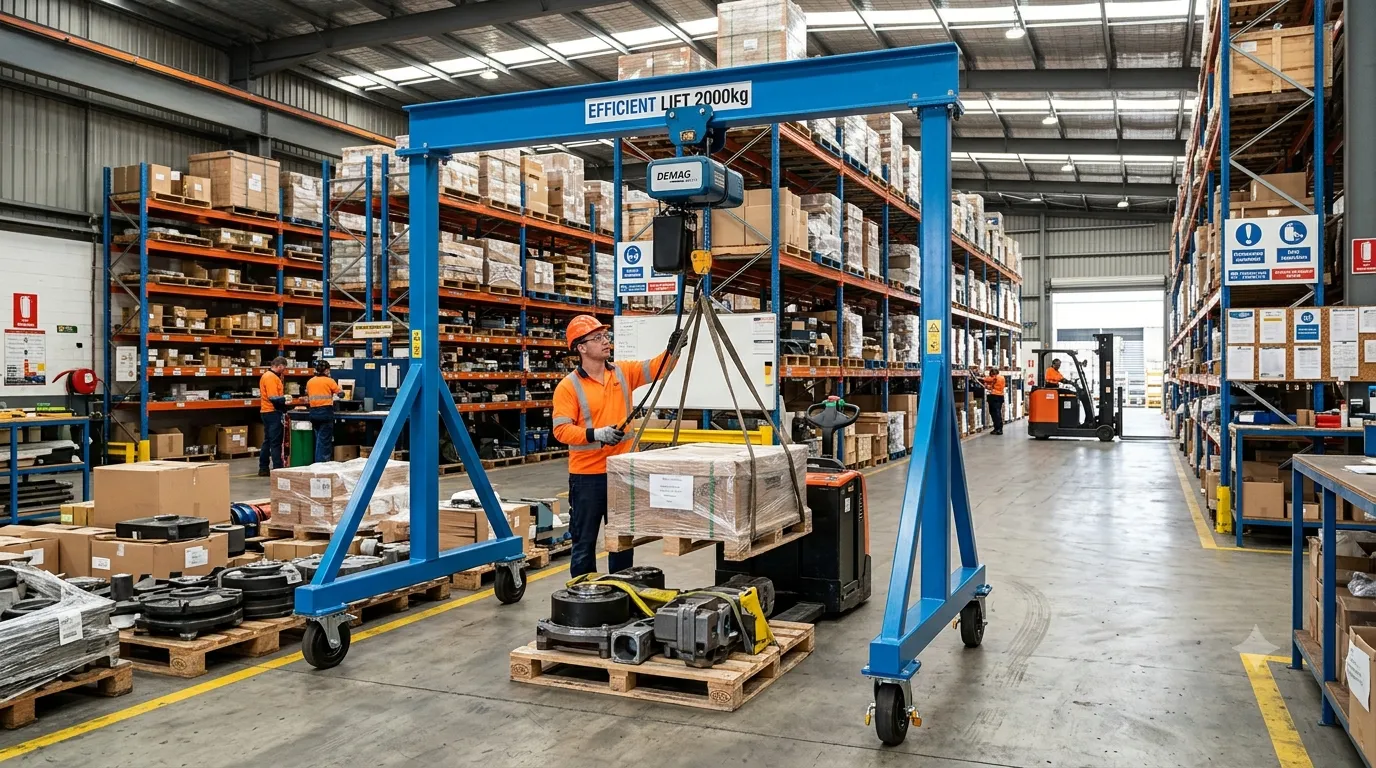
- Portable and fixed jib cranes
- Overhead crane systems
- Lift-and-tilt tables
- Vacuum lifting devices
- Battery-powered lifting systems
- Material transfer carts
- Custom-engineered lifting fixtures
Each solution is tailored to accommodate unique load sizes, weights, and production requirements.
Why Customization Matters
No two renewable energy manufacturing facilities operate exactly the same way. Facility layouts, product designs, production volumes, and safety requirements vary significantly from one manufacturer to another.
A custom-designed lifting solution can address specific operational challenges such as:
- Limited floor space
- Unusual load dimensions
- High-capacity requirements
- Specialized positioning needs
- Automated production integration
- Future production expansion
This flexibility allows manufacturers to maximize productivity while maintaining safety and operational efficiency.
The Future of Material Handling in Renewable Energy Manufacturing
As renewable energy technologies continue to evolve, manufacturers are producing larger and more sophisticated components than ever before. Wind turbine blades continue to increase in length, battery storage systems are growing in capacity, and solar manufacturing operations are becoming increasingly automated.
These trends are driving demand for smarter material lifting equipment that incorporates advanced controls, automation capabilities, and ergonomic designs. Future lifting systems will likely feature enhanced precision, data monitoring, and integration with Industry 4.0 manufacturing environments.
Manufacturers that invest in advanced lifting technologies today will be better positioned to meet growing production demands while maintaining safety and efficiency.
Conclusion
The renewable energy sector depends on safe, reliable and efficient material handling to support the production of wind turbines, solar equipment, battery systems and other clean energy technologies. Standard lifting methods often cannot meet the unique demands of these applications, making custom lifting equipment an essential part of modern renewable energy manufacturing.
By implementing specialized industrial lifting solutions, companies can improve safety, increase productivity, reduce product damage, and create more ergonomic workplaces. Whether handling turbine blades, heavy generators, battery enclosures, or large structural components, properly engineered heavy duty lifting equipment plays a critical role in helping renewable energy manufacturers achieve operational excellence and support the growing demand for clean energy infrastructure.
Request a Quote
Looking for custom-engineered lifting and material handling systems for renewable energy manufacturing applications? Air Technical Industries designs and manufactures specialized lifting equipment, ergonomic work positioners, lift tables, cranes and custom material handling solutions to help manufacturers improve safety, productivity and operational efficiency. Contact our team today to discuss your application requirements.





















Sign in to leave a comment.