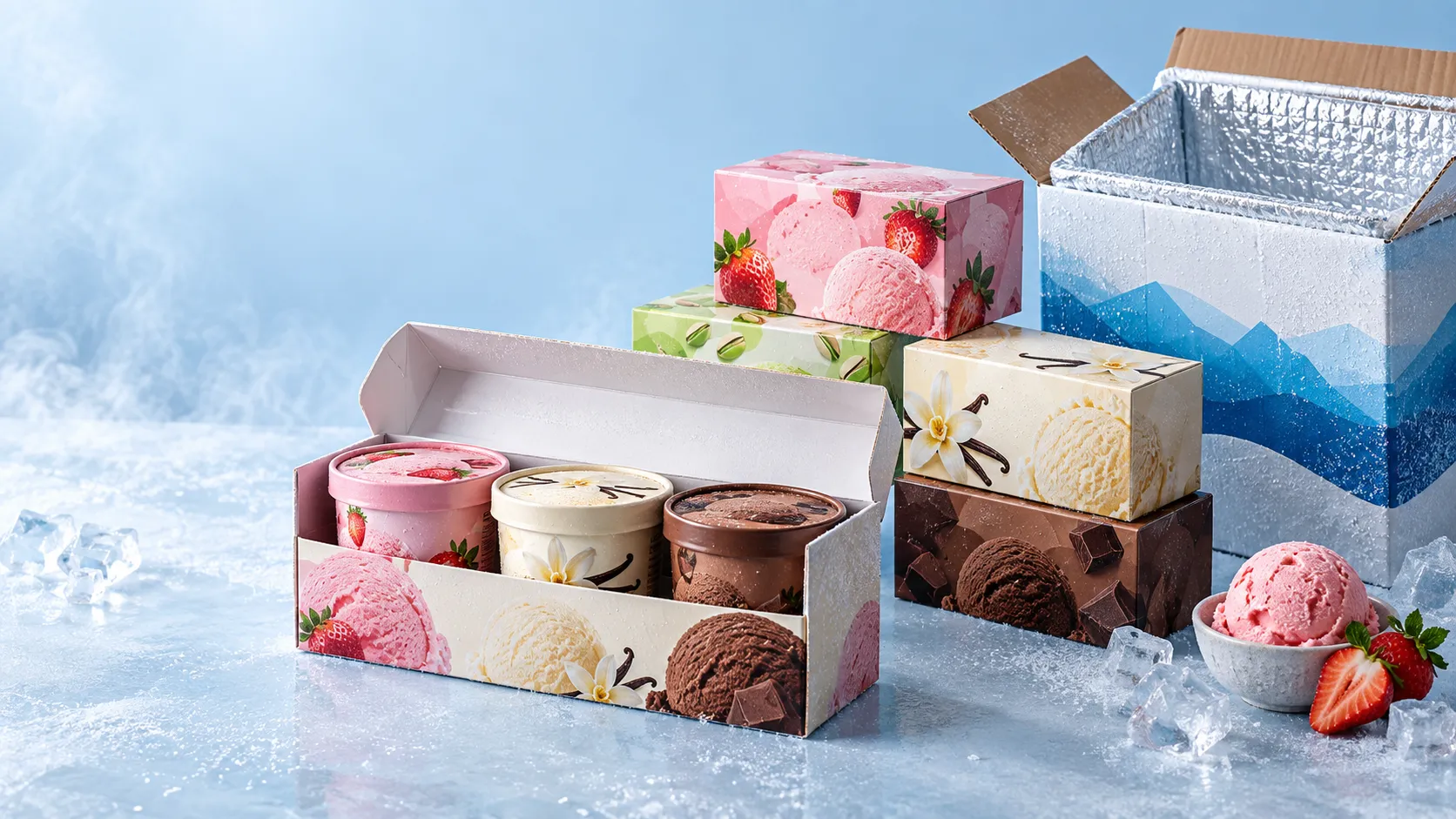

Have you ever bought a pint of ice cream that turned soft and messy before you even got it home? A weak box is often the reason. Packaging does more than hold a frozen treat together; it keeps the cold in, the mess out, and the brand name front and center.
Packagly helps ice cream makers, from home kitchens to growing shops, find packaging that holds up in the freezer and looks good on the shelf. This guide walks through what makes strong ice cream packaging boxes, what materials work best, and how to avoid the mistakes that cost brands money and customer trust.
Why Standard Boxes Fail With Frozen Products
Regular paper boxes were never built for the cold and the moisture that comes with frozen treats. Ask yourself this: would you trust a plain cardboard box to survive a freezer for two weeks straight? Most cannot. Moisture soaks into the fibers, the box goes soft, and the seams start to split.
That is why ice cream packaging boxes need a different build. Brands need material that resists water, holds its shape at low temperatures, and still prints well so the logo and flavor name stay sharp.
Key Materials Used in Ice Cream Packaging Boxes
Here is a quick look at the main material choices and what each one offers.
| Material | Cold Resistance | Best For |
|---|---|---|
| Paperboard with PE coating | Good | Pints, small tubs |
| Corrugated with wax coating | Strong | Bulk tubs, shipping boxes |
| Rigid board with foil lining | Very strong | Premium gift sets |
A paperboard box with a polyethylene coating stops moisture from soaking through the paper. This keeps the box firm even after sitting in a freezer for weeks. Wax-coated corrugated boxes work well for larger tubs that need extra strength during shipping.
Insulation: The Part Customers Never See But Always Notice
Good ice cream packaging boxes do more than look nice. They slow down melting during the short trip from freezer to home. Studies on cold chain logistics show that packaging design alone can extend the safe transport window for frozen food by 30 to 60 minutes, which matters a great deal for a home delivery order on a warm day.
Adding a thin foam liner or double-wall construction gives a box extra insulation without making it bulky. Small local ice cream shops often skip this step to save money, then lose customers when a delivered order arrives half melted.
Size Matters More Than Most Brands Think
Picking the wrong size wastes money and hurts presentation. A box too large leaves room for the tub to shift and get dented. A box too small puts pressure on the seams and can crack the lid.
Common sizes for ice cream packaging boxes include:
- Pint size (about 4 x 4 x 4.5 inches)
- Quart size (about 5 x 5 x 5.5 inches)
- Half-gallon tubs (about 6 x 6 x 7 inches)
- Custom sleeve boxes for small scoop shops selling by weight
Measuring your product with the lid on, then adding a small buffer, is the safest way to land on the right fit before placing a bulk order.
Printing and Branding Without Losing Function
A cold, damp surface is a hard place to print on, so ink and coating choices matter. Water-based inks paired with a matte or gloss laminate hold their color even in freezer conditions. Foil stamping can also work well for premium lines, though it costs more per unit.
One small ice cream shop we worked with switched from plain kraft tubs to printed ice cream packaging boxes with a simple color-coded system for each flavor. Customers told the owner they could spot their favorite flavor from across the counter without reading a label. That kind of small design choice builds repeat business.
A Quick Case Study Worth Noting
A regional creamery chain shared that after redesigning its packaging with better insulation and clearer flavor labeling, customer complaints about melted product dropped by nearly 40 percent within one season. This lines up with wider food packaging research showing that structural design changes often reduce product loss more than changes in ink or artwork alone.
Common Mistakes Brands Make
We see the same handful of errors again and again with new clients ordering ice cream packaging boxes:
- Choosing thin paperboard without a moisture-resistant coating
- Skipping a test batch before a full production run
- Ignoring how the box performs after 48 hours in a freezer, not just at room temperature
- Using bright colors that fade fast under cold storage lighting
- Forgetting to check seal strength on lids that get opened and closed many times
Fixing even two or three of these points can cut down on returns and customer complaints within a single season.
Sustainability and the Push for Better Materials
More shoppers now check whether packaging can be recycled or composted before buying. Recyclable paperboard with a plant-based coating is becoming common in the ice cream packaging boxes market, giving brands a way to stay cold-resistant and eco-friendly at the same time. This shift matters most for brands selling in regions like the UK, Canada, and Australia, where recycling habits and packaging labels get close attention from shoppers.
Ordering Tips Before You Commit
Before placing a bulk order for ice cream packaging boxes, it helps to request a sample run first. Check how the box holds up after sitting in your actual freezer for at least two days. Look at the seams, the lid fit, and whether the print still looks sharp. A small first batch costs a little more per unit but saves a brand from a costly reprint if something goes wrong with a large order.
Conclusion
Ice cream packaging boxes need to do more than hold a tub together on a shelf. They need to survive the freezer, resist moisture, keep the product cold during delivery, and still carry a brand's name and colors clearly. Choosing the right material, the right size, and adding proper insulation can cut down on melted returns and unhappy customers. Packagly works with ice cream brands of every size to build boxes that hold up in real freezer conditions, not just in a design mockup. Testing a sample batch before a full order remains the safest way to avoid costly mistakes down the road.
Frequently Asked Questions
What material works best for ice cream packaging boxes?
Paperboard with a polyethylene coating is one of the most common choices because it resists moisture while staying easy to print on. For bulk tubs or shipping, wax-coated corrugated board offers extra strength. Rigid board with foil lining is often reserved for premium or gift-style products.
How do I stop my ice cream boxes from getting soggy in the freezer?
A moisture barrier coating on the inside of the box is the main defense against sogginess. Double-wall construction or a thin foam liner adds extra protection during longer freezer storage. Testing a sample box in your actual freezer for a few days before a bulk order helps confirm it holds up.
What size box should I use for a pint of ice cream?
A standard pint box measures close to 4 by 4 by 4.5 inches, though exact sizing depends on the tub shape you use. It helps to measure your container with the lid on and add a small buffer for a snug fit. Ordering one sample box before a large production run avoids sizing mistakes.
Can ice cream packaging boxes be recycled?
Many paperboard options now use plant-based coatings that allow the box to be recycled or composted after use. This differs from older wax-coated boxes, which are harder for standard recycling programs to process. Checking with your local packaging supplier about coating type helps confirm what your specific box can support.
How much does custom ice cream packaging cost?
Cost depends on material thickness, order size, and printing detail, with smaller test runs costing more per unit than bulk orders. A basic printed paperboard box often falls in a mid-range price point, while foil-stamped or rigid board options cost more. Requesting a direct quote based on your exact size and finish gives the clearest number.























Sign in to leave a comment.