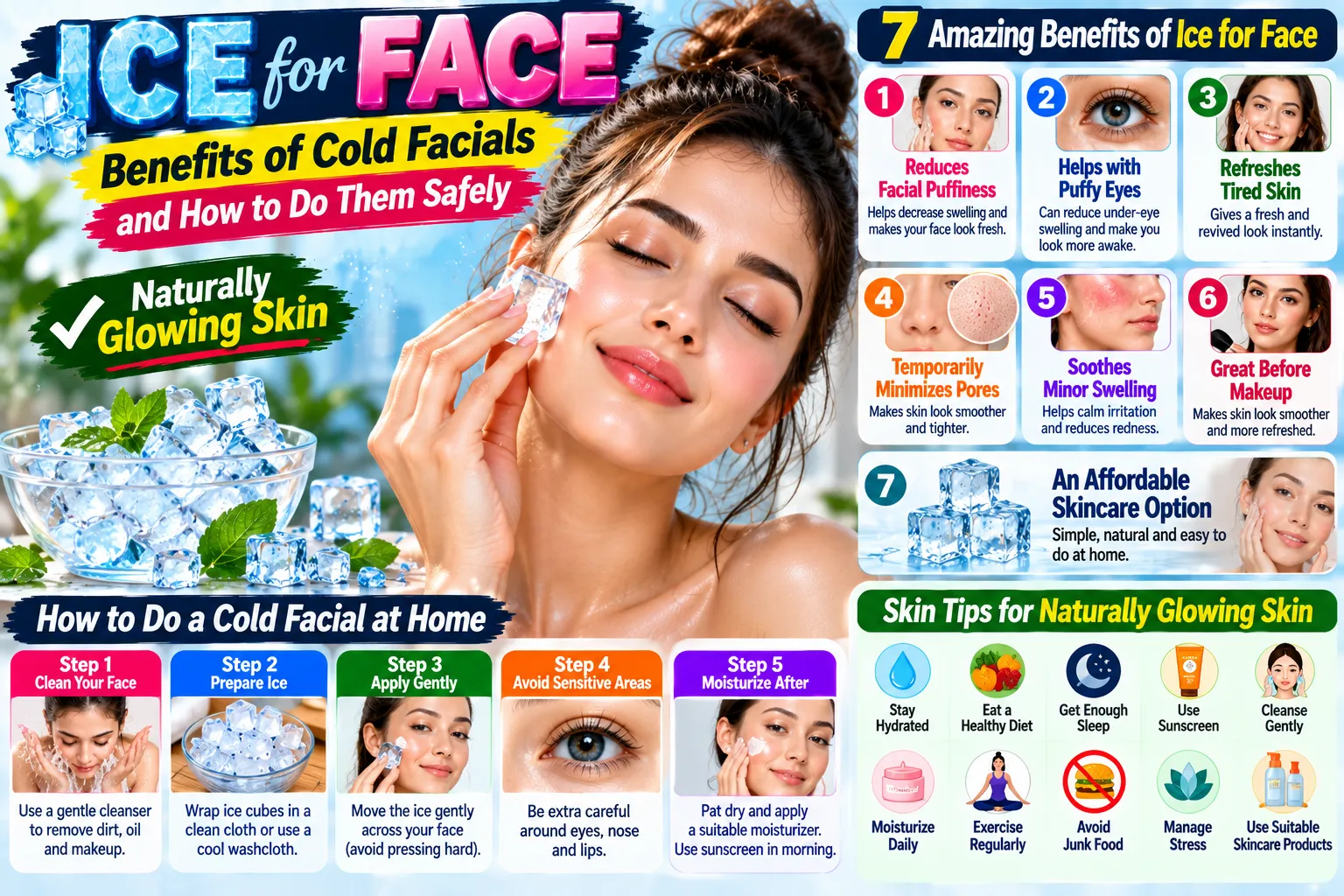

Ice for Face: Benefits of Cold Facials and How to Do Them Safely
Have you ever wondered whether ice can make your face look fresher and healthier? Ice for face treatments, also known as cold facials or facial icing, have become popular in skincare routines because they are simple, affordable, and easy to try at home.
Many people use ice on their face to help reduce morning puffiness, refresh tired-looking skin, and temporarily improve the appearance of facial swelling. But is ice good for your face, and how should you use it safely?
In this guide, we explore the potential benefits of ice on the face, how to do a cold facial at home, common mistakes to avoid, and useful skin tips for naturally glowing skin.
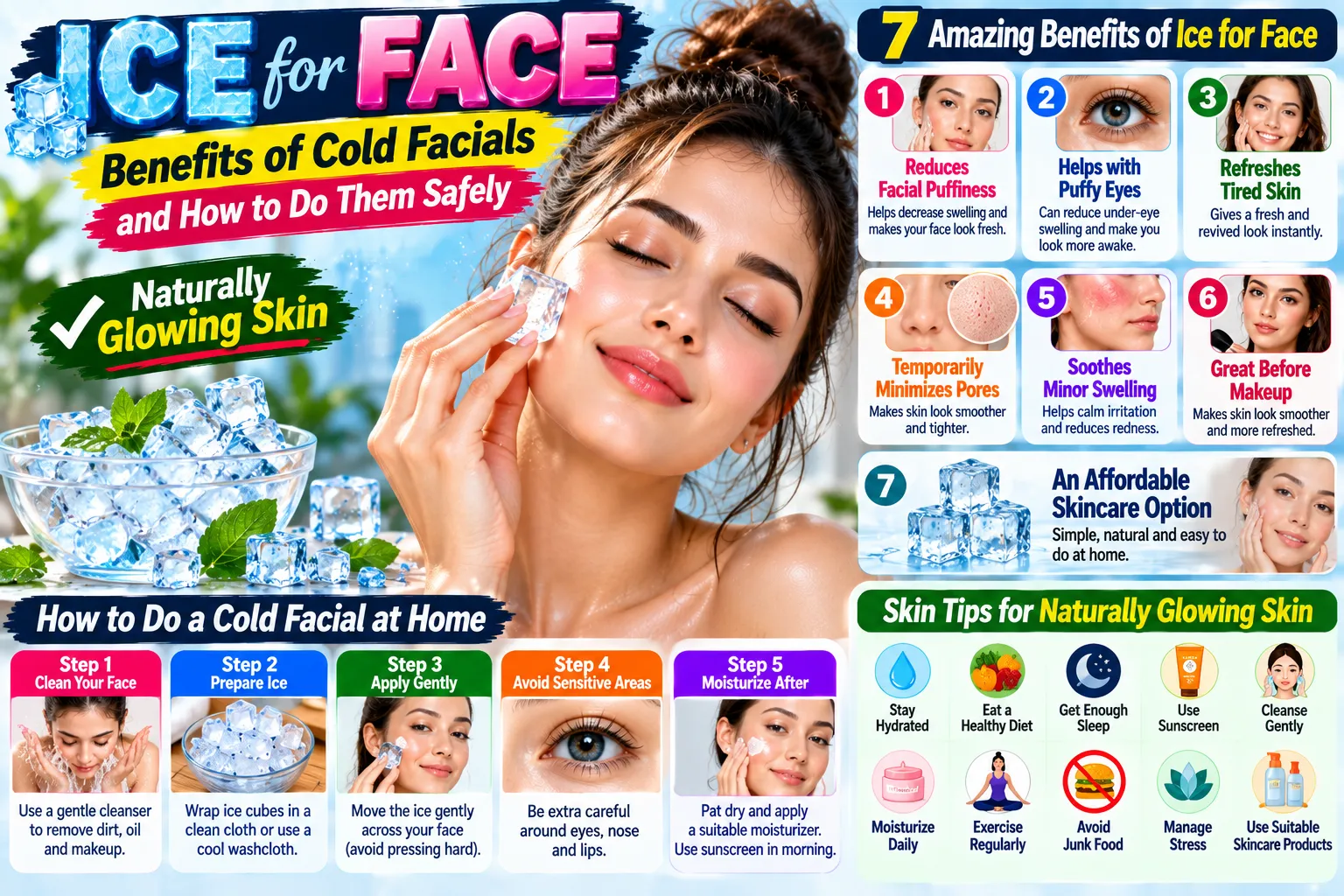
What Is a Cold Facial?
A cold facial is a skincare technique that uses a cool compress, chilled skincare tool, or cloth-wrapped ice to cool the skin briefly. Some people include it in their morning skincare routine to help their face look refreshed.
Cold temperatures can temporarily narrow blood vessels and reduce the appearance of mild swelling. However, scientific evidence supporting many beauty claims about facial icing is limited.
Important: Ice is not a cure for acne, dark circles, wrinkles, or enlarged pores. Its cosmetic effects are usually temporary.
7 Potential Benefits of Ice for Face
1. May Reduce Facial Puffiness
One of the most popular benefits of ice on the face is its potential to reduce mild puffiness temporarily. Your face may look swollen after sleeping, eating a salty meal, or experiencing fluid retention.
A cool compress can help make the skin look less puffy for a short time.
Skin tip: Try a clean, cool washcloth in the morning instead of applying bare ice directly to your skin.
2. Helps Refresh Tired-Looking Skin
If your face looks tired after a long night, a brief cool compress may help you feel refreshed. This is why some people use ice for face in the morning before applying moisturizer or makeup.
However, cold water cannot replace adequate sleep, hydration, or a consistent skincare routine.
3. May Help With Puffy Eyes
Ice for puffy eyes is a common home skincare practice. A cool compress may temporarily reduce mild swelling around the eyes, making the area look more awake.
However, it will not eliminate every cause of dark circles or under-eye bags. Avoid placing ice directly on your eyelids or pressing firmly around your eyes.
4. May Temporarily Reduce the Appearance of Pores
Many people search for how to shrink pores naturally. Cooling the skin may temporarily change the appearance of pores, but ice cannot permanently shrink them.
For better skincare for large pores, cleanse gently, choose non-comedogenic products, and consider suitable ingredients such as salicylic acid if appropriate for your skin.
5. May Soothe Minor Swelling
Cold therapy can sometimes help relieve mild swelling. A cool compress may provide temporary comfort when your face feels slightly puffy.
However, persistent facial swelling, severe pain, signs of infection, or swelling associated with an allergic reaction requires appropriate medical attention. Do not rely on ice to treat an underlying condition.
6. Can Give a Temporary Refreshed Appearance Before Makeup
Some people use a cold facial before makeup because their skin looks less puffy afterward. A brief cool compress may help your face appear refreshed before applying makeup.
Ice does not permanently smooth skin texture or remove fine lines. For a smoother makeup finish, use a suitable moisturizer and allow it to absorb before applying makeup.
7. Is an Affordable Skincare Option
A cool compress is an inexpensive way to add a refreshing step to your routine. You do not need an expensive facial device to enjoy the cooling sensation.
Remember that natural skincare tips should still prioritize safety. Direct or prolonged ice exposure can injure the skin, so a gentle cool compress is often the simpler option.
How to Do an Ice Facial at Home
If you want to try facial icing at home, follow these steps carefully.
Step 1: Clean Your Face
Wash your face with a gentle cleanser suitable for your skin type. Remove makeup, sunscreen, and excess oil before beginning your routine.
Step 2: Prepare a Cool Compress
The safer option is to use a clean washcloth soaked in cool water and gently wrung out. If you choose to use ice, wrap it completely in a clean, thin cloth.
Never apply bare ice directly to your face.
Step 3: Apply Gently
Move the cool compress gently across your face without pressing hard. Avoid holding it against one area for an extended period.
Keep the session brief. There is no universally established ideal duration for cosmetic facial icing, so do not aim for a specific number of minutes or push through discomfort.
Step 4: Avoid Sensitive Areas
Use extra caution around your eyes, nose, and lips. Do not use ice on broken skin, burns, irritated areas, or recently treated skin unless your healthcare professional advises that it is appropriate.
Step 5: Apply Moisturizer
Afterward, gently pat your skin dry and apply a suitable moisturizer. In the morning, finish with a broad-spectrum SPF 30 or higher sunscreen.
Step 6: Monitor Your Skin
Stop immediately if you experience burning, pain, numbness, significant redness, or irritation. If symptoms persist, seek medical advice.
Skin Tips for Naturally Glowing Skin
A cold facial is optional. For healthier-looking skin, focus on everyday habits that support your skin barrier.
- Cleanse gently: Wash your face without harsh scrubbing.
- Moisturize daily: Choose a moisturizer suited to your skin type.
- Use sunscreen: Apply broad-spectrum SPF 30 or higher during the day and reapply as directed.
- Get enough sleep: Consistent sleep habits can help reduce tired-looking skin.
- Eat a balanced diet: Include vegetables, fruits, whole grains, and adequate protein.
- Stay hydrated: Drink fluids regularly according to your needs and activity level.
- Avoid over-exfoliation: Excessive scrubbing and strong products can irritate your skin.
- Choose suitable products: Fragrance-free, non-comedogenic products may be helpful for sensitive or acne-prone skin.
These skin tips for glowing skin are generally more useful for long-term skin health than relying on a single beauty treatment.
Is Ice Good for Every Skin Type?
Not necessarily. Facial icing may not suit everyone.
Sensitive skin: Extreme cold can cause irritation or discomfort. A cool, damp cloth may be a gentler option.
Dry skin: Avoid anything that leaves your skin feeling tight or uncomfortable. Apply moisturizer afterward.
Acne-prone skin: Ice may temporarily soothe discomfort, but it does not treat the underlying causes of acne. Use evidence-based acne care.
Rosacea-prone skin: Cold temperatures can trigger symptoms in some people. Avoid facial icing if it worsens redness or flushing.
People with circulation or sensation problems: Consult a healthcare professional before using ice on your skin.
Common Mistakes to Avoid When Using Ice on Your Face
To keep your skincare routine safe, avoid these common mistakes:
- Applying ice directly to the skin.
- Holding ice in one spot for too long.
- Pressing hard or rubbing aggressively.
- Using ice on injured, sunburned, or irritated skin.
- Expecting ice to cure acne or permanently shrink pores.
- Skipping moisturizer or sunscreen because you used a cold facial.
- Continuing despite pain, numbness, burning, or worsening redness.
Prolonged exposure to ice can cause a cold injury. If you notice persistent pain, unusual skin color changes, or blistering, seek medical advice.
Final Thoughts
Ice for face can be a simple, affordable addition to your skincare routine if you enjoy the refreshing sensation. A cool compress may temporarily reduce mild puffiness and help tired-looking skin appear fresher.
However, cold facials are not a miracle skincare treatment. They cannot permanently shrink pores, erase wrinkles, remove all dark circles, or cure acne.
For healthy, naturally glowing skin, focus on gentle cleansing, daily moisturizing, sun protection, adequate sleep, and balanced nutrition. If you try facial icing, keep it brief, protect your skin with a cloth barrier, and stop if irritation develops.
Healthy skin comes from consistent care and realistic expectations—not extreme temperatures or overnight beauty promises.
Frequently Asked Questions (FAQs)
1. Is ice good for your face every day?
Daily facial icing is not necessary. If you try it, use a cool compress or cloth-wrapped ice briefly and stop if your skin becomes irritated.
2. What are the main benefits of ice on the face?
A cool compress may temporarily reduce mild puffiness, soothe minor swelling, and make tired-looking skin appear refreshed. Results vary between individuals.
3. Can ice make your skin glow?
Ice may temporarily improve the appearance of puffiness. For longer-term glowing skin, focus on moisturizer, sunscreen, sleep, and a balanced diet.
4. Can ice remove pimples?
No. Ice may temporarily soothe swelling or discomfort, but it does not cure acne. Consider appropriate acne treatments or consult a dermatologist.
5. Does ice permanently shrink pores?
No. Ice cannot permanently shrink pores. Gentle cleansing and suitable skincare may help manage oil and clogged pores.
6. Should I apply ice before or after washing my face?
Wash your face first. If you use ice, wrap it in a clean cloth and apply it gently. Moisturize afterward if needed.
7. Can ice reduce dark circles?
A cool compress may temporarily reduce puffiness, but it cannot address every cause of dark circles, such as genetics or pigmentation.
8. Can I use ice if I have sensitive skin?
Extreme cold may irritate sensitive skin or trigger redness. A cool washcloth may be a gentler alternative.
9. Does facial icing remove wrinkles?
No. Facial icing does not permanently remove wrinkles. Sunscreen, moisturizers, and appropriate dermatologist-recommended treatments are more suitable options for managing visible signs of aging.
10. What is the safest way to do a cold facial?
Use a clean, cool washcloth or completely cloth-wrapped ice, move it gently, keep the application brief, and stop if you experience discomfort. Never apply bare ice directly to your skin.




























Sign in to leave a comment.