
The Idhifa Market: Strategic Trends and Commercial Opportunities in the AML Therapy Landscape
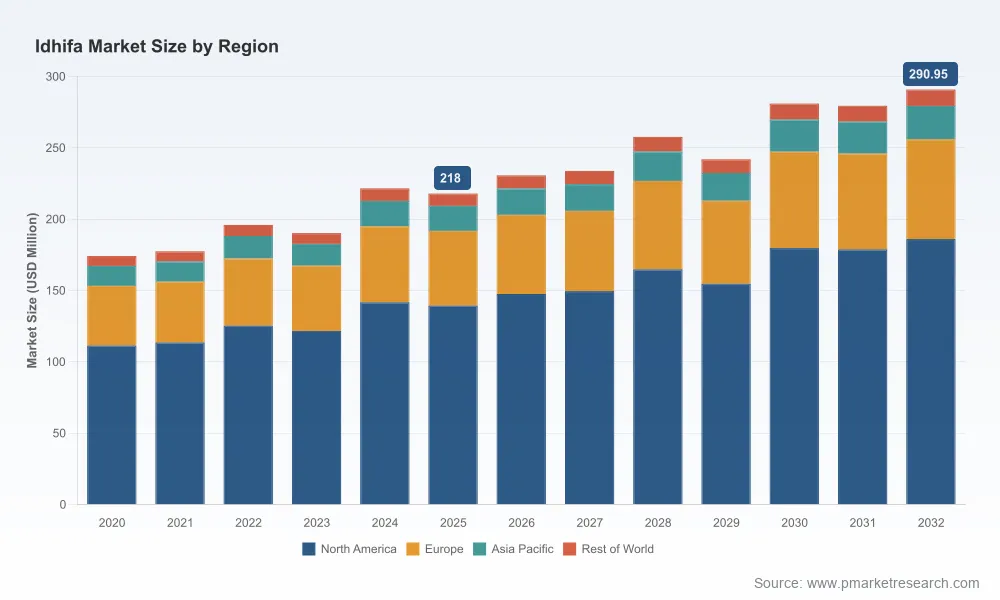
The global market for Idhifa (enasidenib) has matured into a specialized but strategically critical segment within the acute myeloid leukemia (AML) treatment ecosystem. Valued at approximately $218.0 million in 2025, the market has navigated a period of consolidation and recalibration following its initial launch trajectory. Over the historical window of 2020 through 2025, the market demonstrated a compound annual growth rate of 4.21 percent, reflecting a measured expansion rather than explosive uptake. Looking ahead to 2032, the trajectory suggests a continued upward curve, with revenues projected to surpass $290.95 million by the end of the forecast period. This growth is not merely a function of population expansion or disease prevalence; it reflects a deliberate reshaping of treatment paradigms, regulatory milestones, and the competitive positioning of targeted oncology therapies.
The market structure reveals a pronounced concentration pattern. A small number of players control the vast majority of commercial activity, with the top three entities accounting for nearly 88.4 percent of market value and the top five reaching 94.15 percent. This concentration is typical of specialized, patent-protected oncology niches where clinical differentiation, regulatory approval pathways, and payer adoption create high barriers to entry. For decision-makers, this landscape presents a dual reality: limited competitive fragmentation but also concentrated counterparty risk and pricing tension. The market’s structural stability invites strategic patience, but also demands precise positioning to capture near-term upside as indications expand and diagnostic workflows mature.
Market Landscape: Navigating Consolidation and Clinical Realities
A Market Defined by Narrow Indication Focus and Structural Concentration
The Idhifa market operates at the intersection of precision oncology and hematology, where therapeutic efficacy is tightly coupled with molecular diagnosis. The product’s commercial footprint is anchored in a specific mutation-driven patient population, which inherently limits addressable volume but elevates per-patient value. This dynamic creates a market that rewards diagnostic integration, treatment sequencing expertise, and payer alignment rather than broad-scale volume competition. The concentration profile indicates that commercial execution, reimbursement positioning, and clinical advocacy remain the decisive levers of share retention, particularly as the therapeutic class faces growing scrutiny around differentiation syndrome and treatment-related toxicity profiles.
Key Challenges and Inflection Points Shaping Near-Term Strategy
Three structural challenges define the current operating environment. First, the requirement for confirmed IDH2 mutation status through FDA-approved testing introduces a diagnostic dependency that can delay treatment initiation and complicate patient access workflows. Clinicians must navigate testing turnaround times, reimbursement for companion diagnostics, and variability in mutation screening practices across care settings. Second, the safety profile demands vigilant management of differentiation syndrome, a potentially life-threatening adverse event observed in a meaningful subset of treated patients. This clinical reality shapes prescribing caution, hospital protocols, and risk communication strategies, particularly as indications move into earlier-line or newly diagnosed settings. Third, the patent expiration horizon in 2029 introduces a medium-term exclusivity cliff that will force manufacturers to defend brand loyalty, optimize pricing architecture, and potentially prepare for lifecycle management strategies. These factors collectively create a market that is value-dense but operationally sensitive, requiring disciplined commercial execution and proactive risk management.
Core Drivers: Technology, Policy, Demand, and Cost Architecture
Precision Diagnostics and the Expansion of Mutation-Led Treatment Pathways
The most decisive driver of market evolution is the tightening alignment between molecular diagnostics and targeted therapy selection. As IDH2 mutation testing becomes more standardized and accessible, the ability to identify eligible patients improves, directly influencing treatment initiation rates and the pace of adoption in newly diagnosed settings. The approval of expanded indications for combination use with azacitidine in older or comorbid patients represents a structural shift: the therapy moves beyond a narrowly defined relapsed/refractory niche into an earlier intervention window. This transition expands the addressable population while simultaneously raising the bar for clinical evidence, supportive care infrastructure, and multidisciplinary coordination. The commercial implication is clear: therapies that integrate diagnostic workflows, offer robust real-world evidence, and align with guideline recommendations are positioned to capture incremental share as treatment algorithms evolve.
Regulatory Milestones and Guideline Anchoring
Regulatory and guideline dynamics function as both an enabler and a constraint. Inclusion in authoritative clinical practice guidelines as a category 1 preferred regimen for IDH2-mutated relapsed/refractory disease establishes a strong clinical foundation, reinforcing prescriber confidence and supporting formulary positioning. At the same time, label expansions require careful navigation of safety communications, post-marketing surveillance, and payer review cycles. The boxed warning associated with differentiation syndrome does not preclude adoption, but it does elevate the importance of risk mitigation protocols, clinician education, and patient selection rigor. For market participants, regulatory success is no longer measured solely by approval; it is increasingly defined by the speed and credibility with which a therapy is embedded into care pathways, supported by real-world outcomes, and defended against safety-related scrutiny.
Demand-Side Shifts: Aging Demographics and the Push for Lower-Intensity Regimens
Demand patterns are being reshaped by demographic realities and treatment philosophy. A growing proportion of AML patients are older or present with comorbidities that preclude intensive chemotherapy, creating sustained demand for oral targeted agents that can be administered in less intensive regimens. The shift toward lower-intensity, mutation-directed treatment aligns with broader oncology trends favoring quality of life, outpatient management, and personalized risk-benefit calculus. This demand evolution favors therapies that offer oral administration, manageable safety profiles, and combination flexibility. It also increases the importance of payer willingness to cover high-cost targeted therapies in earlier-line or maintenance contexts, making reimbursement strategy a central competitive variable rather than a downstream administrative concern.
Cost Structure, Pricing Architecture, and Value Signaling
Pricing and cost dynamics are increasingly central to commercial strategy. The wholesale acquisition cost for a 30-day supply of 100 mg tablets remains elevated, reflecting the specialized nature of the therapy and the value attached to mutation-specific efficacy. This pricing level creates a value signaling challenge: payers and providers must reconcile high per-patient costs with evidence of meaningful clinical benefit, particularly in populations where treatment alternatives are limited. Over time, cost pressures will intensify as health systems seek to optimize oncology spending, negotiate access terms, and manage total cost of care. Manufacturers that can articulate clear value propositions, support adherence and monitoring, and provide access programs or outcomes-based frameworks will be better positioned to sustain pricing stability. The cost architecture also influences sequencing decisions, as clinicians weigh targeted therapy against other available options within the same line of treatment.
Competitive Dynamics: Concentration, Differentiation, and the Road Ahead
The Dominant Player’s Strategic Positioning
The market’s concentration is anchored by a single developer and global marketer that controls the branded therapy and has invested in building a targeted oncology franchise around IDH2 inhibition. The company’s strategic advantage rests on a combination of regulatory execution, guideline alignment, and the ability to mold the therapy’s role within treatment algorithms. By securing a category 1 guideline recommendation for relapsed/refractory disease and expanding the label into newly diagnosed settings for patients unsuitable for intensive chemotherapy, the company has reinforced its position as the reference point for IDH2-directed therapy. This positioning is not simply about clinical efficacy; it reflects a deliberate effort to own the diagnostic-treatment narrative, shape prescribing habits, and build the evidence base that supports payer acceptance.
Differentiation Through Clinical Niche Ownership and Lifecycle Management
Differentiation in this market is increasingly defined by how well a company integrates its therapy into the broader AML care continuum. The branded product’s profile benefits from its specificity, oral administration, and the clinical momentum generated by guideline adoption and label expansion. As the patent exclusivity window extends toward 2029, the dominant player has a runway to deepen clinical advocacy, expand real-world evidence, and strengthen access arrangements. Lifecycle management will likely focus on optimizing dosing strategies, reinforcing safety monitoring, and exploring combination regimens that broaden applicability without diluting the core value proposition. The strategic priority is to convert a mutation-specific asset into a durable standard-of-care reference point before the exclusivity horizon narrows competitive options.
Market Evolution: Integration, Potential Fragmentation, and Entry Barriers
The near-term trajectory suggests continued concentration, but the medium-term picture is more dynamic. The market’s structural barriers—diagnostic dependency, safety management requirements, guideline anchoring, and pricing sensitivity—favor incumbents with established clinical and commercial infrastructure. However, the evolving treatment landscape creates opportunities for adjacent players that can offer complementary diagnostics, alternative sequencing strategies, or competing targeted agents if exclusivity erodes. Integration trends may also emerge as health systems consolidate oncology services and seek standardized mutation-testing and treatment protocols. The presence of a strong incumbent does not preclude future fragmentation, but it does mean that any new entrant will need to overcome substantial clinical credibility, reimbursement, and workflow-integration hurdles. For incumbents, the challenge is to defend share through evidence generation and access optimization; for potential entrants, the opportunity lies in identifying unmet needs that the current architecture does not fully address.
Refuge Chamber Market
Future Outlook: Three Trends Shaping the 2026–2032 Horizon
Trend One: Earlier-Line Integration and Combination Regimen Expansion
The most visible trajectory is the gradual migration of IDH2-directed therapy from heavily pretreated settings into earlier intervention windows, particularly for patients who cannot tolerate intensive chemotherapy. If clinical evidence continues to support the safety and efficacy of combination approaches, the addressable population will expand, and the therapy’s role in treatment algorithms will become more entrenched. This trend creates commercial opportunity for manufacturers that can demonstrate consistent outcomes across broader patient cohorts, support multidisciplinary care models, and align with payer expectations for value-based use. The corresponding risk is that broader use also exposes the therapy to greater comparative scrutiny, especially if alternative regimens or competing targeted agents demonstrate favorable risk-benefit profiles in similar populations.
Trend Two: Diagnostic Standardization and Access Pathway Refinement
As mutation testing becomes more embedded in routine hematological workflows, the speed and reliability of patient identification will improve. Standardization of diagnostic pathways reduces friction in treatment initiation, strengthens the case for guideline-aligned prescribing, and supports more predictable demand forecasting. This trend is commercially significant because it converts latent eligibility into active treatment volume. However, it also depends on consistent reimbursement for testing, equitable access across care settings, and clinician adoption of mutation-driven treatment selection. Any disruption in diagnostic access or reimbursement could slow the pace of uptake, particularly in regions where testing infrastructure remains uneven.
HDI Market
Trend Three: Pricing Pressure, Patience, and Lifecycle Positioning Ahead of Exclusivity Erosion
The 2029 patent expiration horizon injects a medium-term strategic variable into the market’s trajectory. In the lead-up to exclusivity erosion, manufacturers will likely focus on cementing brand preference, optimizing access strategies, and reinforcing clinical differentiation to delay share shifts. Payers may increasingly seek favorable pricing terms, outcome-based arrangements, or step-therapy structures as they manage oncology budgets. The commercial opportunity lies in proactive lifecycle management: expanding evidence across real-world settings, strengthening safety communication, and building access frameworks that preserve affordability while sustaining value perception. The risk is that pricing negotiations and competitive pressure could compress margins or accelerate switching behavior if alternative options gain clinical traction and guideline endorsement.
Strategic Actions for Decision-Makers
For Manufacturers and Brand Owners
- Reinforce clinical differentiation by investing in real-world evidence, safety monitoring protocols, and multidisciplinary education that supports guideline-aligned use and responsible patient selection.
- Develop lifecycle strategies that prepare for the exclusivity horizon without prematurely discounting brand value, including combination research, adherence support, and access programs that align with payer cost-management priorities.
- Strengthen diagnostic-workflow integration by partnering with testing providers, supporting turnaround-time improvements, and ensuring that prescribing pathways are simplified for mutation-positive patients.
For Investors and Capital Allocators
- Assess the durability of guideline anchoring and payer acceptance as leading indicators of share stability, especially as the market approaches the patent expiration window and competitive dynamics may shift.
- Monitor label expansion momentum and combination-regimen evidence as signals of addressable-market growth, while weighting safety and differentiation-syndrome management as factors that could moderate adoption speed.
- Evaluate total cost-of-care positioning, including access frameworks and reimbursement dynamics, as pricing pressure will increasingly influence commercial performance even in a concentrated market.
For Procurement Leaders and Payer Strategists
- Structure access and formulary strategies that balance mutation-specific clinical value with budget predictability, considering outcomes-based or risk-sharing models where appropriate.
- Track diagnostic access and testing consistency across care settings, since treatment initiation reliability directly affects utilization patterns and budget forecasting.
- Maintain visibility into safety monitoring requirements and differentiation-syndrome management protocols to align coverage decisions with clinical risk mitigation and patient-safety priorities.
The Idhifa market is moving through a phase where clinical specificity, regulatory momentum, and diagnostic integration converge to shape commercial outcomes. The next several years will reward participants who can translate targeted efficacy into durable care-pathway adoption, manage safety and access realities with discipline, and prepare for the structural shift that arrives as exclusivity horizons tighten. Detailed segmentation data, region-specific dynamics, and customized scenario modeling are available in the full market research report, which provides a deeper operational view for teams building near-term execution plans or medium-term portfolio strategies.
PW Consulting
For detailed analysis of this topic, please visit the official page: Worldwide Idhifa Market
Lacy Lee
Senior Marketing Manager
[email protected]
PW Consulting: www.pmarketresearch.com


























Sign in to leave a comment.