Ilkal Saree Pallu: The Traditional Detail That Gives the Drape Its Character


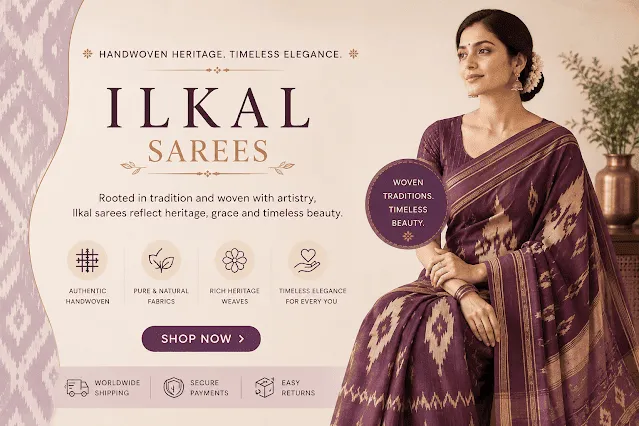
If there's one part of an Ilkal saree that weavers and buyers alike point to first, it's the pallu. Unlike many South Indian handlooms where the pallu is simply an extension of the body's weave, the Ilkal saree pallu is often woven using an entirely different yarn, colour, and technique, then joined to the body through a distinctive hand-interlocking process. This single detail is responsible for much of what makes an Ilkal saree instantly recognisable, and understanding it helps when identifying genuine pieces or deciding how to style one.
Why Is the Pallu the Most Distinctive Part of an Ilkal Saree?
The pallu stands out because it's frequently woven in a contrasting colour and sometimes even a different fibre altogether, most traditionally a rich red or maroon silk pallu paired with a cotton or silk body in a different shade. This deliberate contrast, rather than a continuous single-colour weave, is what gives the Ilkal saree its bold, graphic appearance and distinguishes it at a glance from other regional handlooms.
How Is the Ilkal Saree Pallu Woven Onto the Body?
The Ilkal saree pallu is woven separately from the body and then joined using a traditional technique called Tope Teni, where the body's warp threads are interlocked with the pallu's warp threads through a series of hand-formed loops. This process requires considerable skill and is typically carried out with the help of skilled assistants who manage the preparatory warping work before the main weaving begins.
What Is the Kondi or Interlocking Technique?
The interlocking method used to join the Ilkal saree pallu to its body is sometimes referred to as the Kondi technique, closely related to the Tope Teni process. Rather than stitching the two sections together, weavers interlock the threads directly on the loom, creating a visible, slightly textured seam that is considered a hallmark of authenticity rather than an imperfection.
Why Does the Pallu Use a Different Yarn Than the Body?
Traditionally, the pallu uses a richer, often pure silk yarn even when the body of the saree is cotton, giving the pallu more weight, sheen, and drape than the rest of the garment. This contrast in yarn quality isn't incidental — it's intentional, designed to make the pallu stand out as the visual centrepiece of the saree when draped over the shoulder.
What Motifs Appear on an Ilkal Saree Pallu?
Ilkal saree pallus commonly feature motifs such as temple towers, palanquins, elephants, and lotuses, often enhanced with Kasuti embroidery in some traditional pieces. These motifs are rooted in the region's temple architecture and rural, agrarian imagery, and they're typically woven in contrasting thread colours against the pallu's base shade, giving each pallu a distinct, story-like quality.
What Are the Different Border Styles Paired With an Ilkal Saree Pallu?
The border design chosen alongside the pallu plays a major role in how the overall saree looks and is traditionally categorised into a few recognised styles.
| Border Style | Also Known As | Visual Character |
|---|---|---|
| Gomi | Ilkal Dadi | Bold, temple-tower inspired geometric border |
| Paraspet | Chikki Paras / Dodd Paras | Fine checks or larger block patterns along the edge |
| Gaadi | — | Simpler linear border, often paired with striped bodies |
How Do You Identify an Authentic Ilkal Saree Pallu?
An authentic Ilkal saree pallu shows a visible, slightly raised interlocking join where it meets the body — a flat, seamless transition usually signals a printed or power-loom imitation rather than a handwoven piece. Genuine pallus also tend to use a noticeably richer yarn than the body, and motifs appear woven into the fabric rather than printed on top of it. Checking for these details is especially important when choosing to buy Ilkal saree online, where texture and weave can't be felt before purchase.
How Should You Style an Ilkal Saree Around Its Pallu?
Since the pallu carries most of the saree's visual weight, it's usually best styled with a plain or lightly detailed blouse in a colour picked from the body rather than the pallu, so the pallu remains the focal point. Draping the pallu with a few pleats, rather than flattening it completely, also helps showcase its motifs and contrasting weave, particularly for festive or ceremonial occasions.
How Do You Care for the Pallu of an Ilkal Saree?
Because the pallu often uses a different and sometimes more delicate yarn than the body, dry-cleaning is generally recommended for Ilkal sarees with silk or zari-detailed pallus. Store the saree folded along different lines periodically to prevent a permanent crease forming at the pallu's interlocking join, and keep it away from direct sunlight, which can fade the contrasting colours over time.
Where Can You Buy Ilkal Saree Online With an Authentic Pallu?
As more buyers look to buy Ilkal saree online, it's worth choosing platforms that clearly document weaving technique, yarn composition, and sourcing, since the pallu's authenticity is central to the saree's value. Indeloom is one such platform that curates traditional handloom sarees, including Ilkal weaves, for buyers seeking genuine craftsmanship alongside the convenience of shopping online.
Frequently Asked Questions About Ilkal Saree Pallu
What is the Tope Teni technique in Ilkal sarees? It's the traditional hand-interlocking method used to join the Ilkal saree's pallu to its body without stitching, creating a distinctive textured seam.
Why is the Ilkal saree pallu usually red or maroon?
Red and maroon are traditional, auspicious colour choices in the region, and their contrast against lighter or differently coloured bodies is part of the saree's signature look; modern variations now include other colours too.
Is Ilkal saree a GI-recognised craft?
Yes, Ilkal sarees carry a Geographical Indication tag, and details on their weaving technique and pallu craftsmanship are documented by Incredible India, an initiative of the Ministry of Tourism, Government of India.
Can the pallu of an Ilkal saree be in a different fabric from the body?
Yes, it's common for the pallu to be pure silk even when the body is cotton, which is part of what gives Ilkal sarees their distinctive two-texture character.
Final Thoughts
The Ilkal saree pallu is far more than a decorative end piece — it's the result of a deliberate, skilled weaving process that sets the saree apart from other regional handlooms. From the Tope Teni interlocking technique to its temple-inspired motifs and contrasting yarn, understanding the pallu makes it easier to appreciate, style, and identify an authentic Ilkal saree. For anyone ready to buy Ilkal saree online, platforms like Indeloom that highlight these weaving details make it simpler to choose a piece that honours the craft.





Sign in to leave a comment.