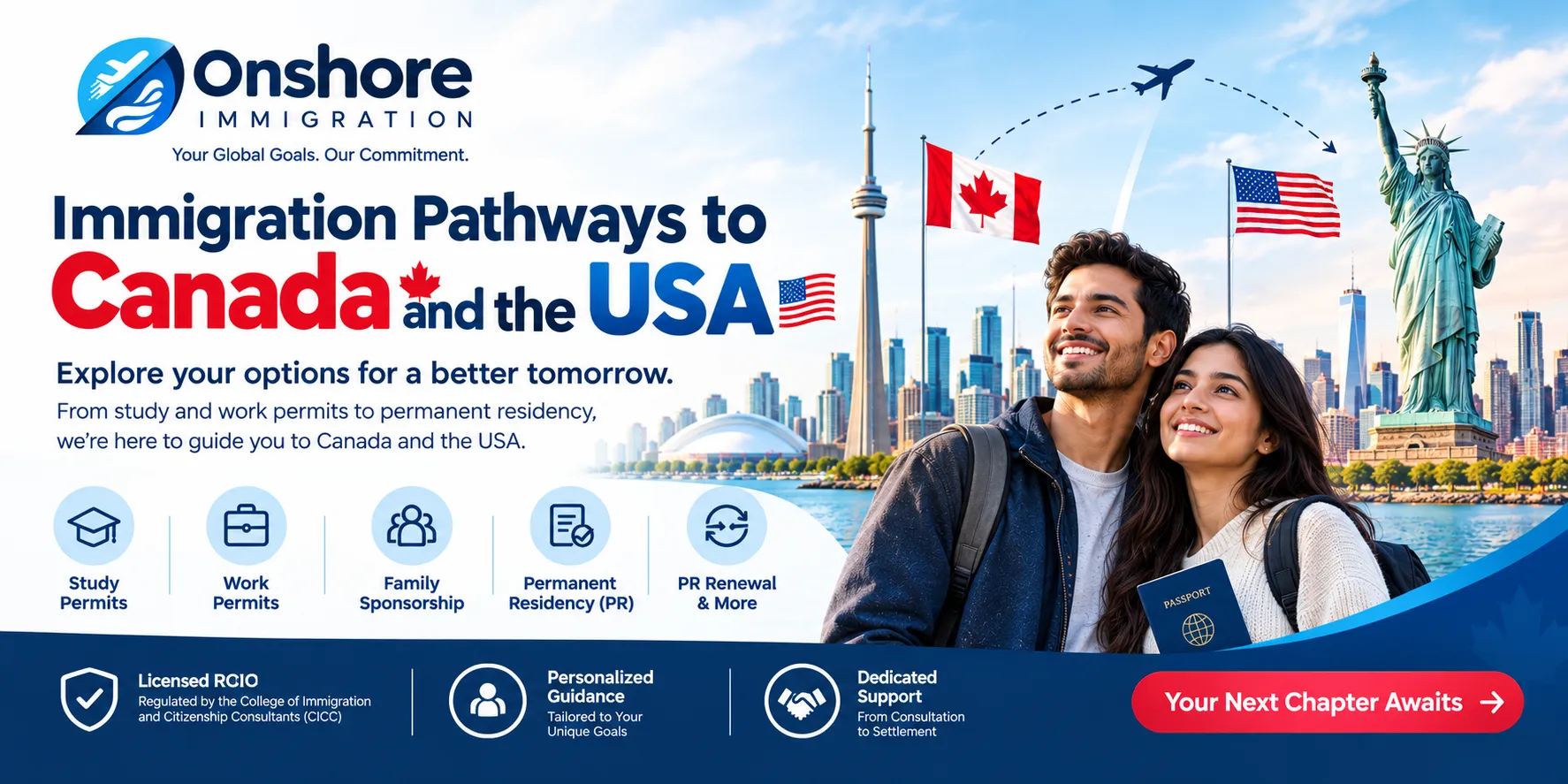

If you're planning to study or work abroad, Canada and the USA are usually top of the list. But the two countries handle immigration very differently, and mixing up their programs is one of the most common mistakes applicants make. This guide breaks down the main immigration pathways in Canada, along with USA student visas and work permits, so you can figure out which route actually fits your goals.
What Are the Main Immigration Pathways in Canada?
Canada's immigration system is built around several distinct pathways, each targeting a different type of applicant.
- Express Entry – covers federal economic programs like the Federal Skilled Worker Program, Canadian Experience Class, and Federal Skilled Trades Program
- Provincial Nominee Program (PNP) – lets individual provinces nominate candidates who match their local labour market needs
- Family Sponsorship – for Canadian citizens or permanent residents sponsoring a spouse, partner, parent, or child
- Study Permits – for international students enrolled at a designated learning institution
- Work Permits – temporary authorization to work in Canada, either employer-specific or open
Most applicants start with one of these pathways and later move toward permanent residency once they've built up Canadian experience or credentials.
What Immigration Programs Does Canada Offer?
Beyond the pathways above, Canada runs a mix of federal and provincial programs designed for specific situations:
- Atlantic Immigration Program – for skilled workers and international graduates in Atlantic Canada
- Rural and Northern Immigration Pilot – connects candidates with smaller communities facing labour shortages
- Start-Up Visa Program – for entrepreneurs with a qualifying business idea and support from a designated organization
- Caregiver Programs – for those working in home child care or home support
- Agri-Food Pilot – for workers in specific agricultural and food processing roles
Because eligibility criteria and intake numbers change over time, it's worth checking the current status of any program directly on the IRCC website before applying.
How Do You Choose the Right Canadian Immigration Pathway?
Ask yourself three questions:
- Do I have a job offer or Canadian work experience already? If yes, Express Entry or a PNP stream may move faster.
- Do I have family in Canada? Family sponsorship might be the most direct route.
- Am I starting with study first? A study permit followed by a post-graduation work permit is a common stepping stone toward permanent residency.
A licensed immigration consultant can match your specific background to the pathway most likely to succeed, rather than the one that just sounds familiar.
What Do USA Student Visa Consultants Help With?
USA student visa consultants guide applicants through the F-1 visa process, which is the standard visa for full-time students at accredited US institutions. Their support usually includes:
- Helping you choose a school that fits your academic and budget needs
- Reviewing your Form I-20 and SEVIS registration
- Preparing you for the visa interview at the US consulate
- Explaining financial proof requirements
- Advising on maintaining status once you're in the US
Unlike Canada, the US doesn't have a single centralized "immigration consultant" licensing body. This makes it especially important to work with someone who has verifiable experience and a track record with US student visa cases specifically.
What's the Difference Between a US Visa and a US Work Permit?
This trips up a lot of applicants, so here's the short version:
- A visa is what lets you enter the United States (like an F-1 student visa or H-1B work visa).
- A work permit, officially called Employment Authorization Document (EAD), is a separate document that allows certain visa holders to legally work in the US.
Not every visa comes with automatic work rights. For example, F-1 students generally need separate authorization, like Curricular Practical Training (CPT) or Optional Practical Training (OPT), before they can work.
How Do You Get a Work Permit in the USA?
Work permit eligibility in the US depends heavily on your current status. Common paths include:
- OPT/CPT – for F-1 students working in a field related to their study program
- H-1B – for specialty occupation workers sponsored by a US employer
- L-1 – for employees transferring within the same multinational company
- EAD through a pending green card application – for those already in the process of adjusting status
Because US immigration law is complex and changes with policy shifts, timelines and eligibility should always be confirmed through official USCIS resources or a qualified consultant before making decisions.
Canada vs USA: Which Is Easier for Students and Workers?
There's no single right answer here, it depends on your goals.
| Factor | Canada | USA |
|---|---|---|
| Path to permanent residency | Clearer, multiple defined pathways | More complex, often employer-dependent |
| Student work rights | Generally allowed part-time during studies | Limited, usually needs separate authorization |
| Processing predictability | Structured point systems (Express Entry, PNP) | Varies by visa category and annual caps |
| Family sponsorship | Well-established program | More restrictive and slower in many categories |
If your priority is a clear, structured route to permanent residency, Canada tends to be more straightforward. If your priority is a specific US employer or university, the USA route may make more sense despite the added complexity.
Final Thoughts
Whether you're weighing Canada's immigration pathways or looking into a US student visa and work permit, the biggest risk isn't the paperwork, it's picking the wrong route for your situation. Getting the right guidance early can save months of delay and unnecessary rejections.
Visit the onshore immigration website to explore your options and get guidance tailored to your immigration goals.
FAQs
1. What are the main immigration pathways to Canada?
Express Entry, Provincial Nominee Programs, Family Sponsorship, Study Permits, and Work Permits are the core pathways most applicants use.
2. What immigration programs does Canada offer besides Express Entry?
Canada also runs programs like the Atlantic Immigration Program, Rural and Northern Immigration Pilot, Start-Up Visa, and Agri-Food Pilot.
3. Do I need a consultant to apply for a Canadian immigration program?
Not always, but a licensed consultant can help avoid mistakes, especially for complex cases or unfamiliar programs.
4. What does a USA student visa consultant do?
They help with school selection, Form I-20 and SEVIS registration, visa interview prep, and maintaining student status in the US.
5. Is a US visa the same as a US work permit?
No. A visa lets you enter the country, while a work permit (EAD) separately authorizes you to work.
6. Can international students work in the USA on an F-1 visa?
Only with separate authorization, such as CPT or OPT, not automatically with the visa itself.



























Sign in to leave a comment.