

Maintaining the correct temperature throughout pharmaceutical storage and transportation is essential for protecting medicine quality, product stability, and patient safety. Many pharmaceutical products, including vaccines, biological medicines, insulin, and other temperature-sensitive formulations, require controlled environmental conditions to preserve their intended quality.
Even minor temperature deviations can affect sensitive products and create challenges for pharmaceutical manufacturers, distributors, healthcare providers, and logistics companies. This makes Pharmaceutical Temperature Monitoring an important part of modern pharmaceutical supply chain management.
With advanced temperature data loggers, real-time monitoring systems, and thermal protection solutions, businesses can monitor environmental conditions, identify temperature fluctuations, and maintain better visibility throughout the cold chain.
Why Pharmaceutical Temperature Monitoring Is Important
Pharmaceutical products often require specific storage and transportation conditions. Exposure to temperatures outside the recommended range may affect product stability, depending on the formulation and duration of exposure.
Effective Pharmaceutical Temperature Monitoring helps businesses maintain appropriate environmental conditions and identify potential risks before products reach their destination.
Key benefits include:
- Maintaining product quality during storage and transportation.
- Identifying temperature deviations and potential cold chain failures.
- Supporting pharmaceutical quality management procedures.
- Improving visibility across warehouses and distribution networks.
- Maintaining temperature records for audits and investigations.
- Reducing avoidable product damage and shipment losses.
Temperature monitoring is particularly important for products that require refrigerated, frozen, or ultra-low-temperature storage.
Common Temperature Requirements in Pharmaceutical Storage
Different pharmaceutical products require different temperature conditions. The appropriate range should always be determined using the product label, manufacturer instructions, and applicable storage requirements.
Some commonly encountered temperature categories include:
| Storage Category | Typical Temperature Range |
|---|---|
| Controlled room temperature | 20°C to 25°C, where specified |
| Refrigerated storage | 2°C to 8°C |
| Frozen storage | Product-specific frozen range |
| Ultra-low-temperature storage | Often -60°C to -80°C for applicable products |
| Cryogenic storage | Product-specific liquid nitrogen conditions |
These ranges are examples rather than universal requirements. Pharmaceutical businesses should follow the approved storage conditions for each product.
Role of Temperature Data Loggers in Pharmaceutical Monitoring
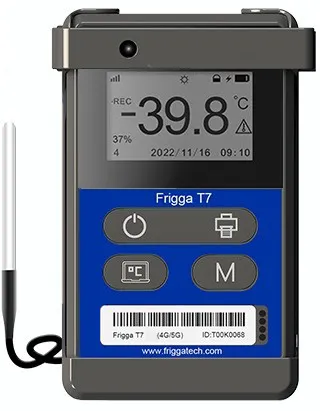
Temperature data loggers are essential instruments for recording temperature conditions throughout pharmaceutical storage and transportation.
These devices measure and record temperature at predefined intervals, creating a data history that can be reviewed to identify fluctuations and assess environmental conditions.
Modern temperature data loggers offer several useful features:
Continuous Temperature Recording: Data loggers record temperature readings at configured intervals, helping businesses maintain a consistent monitoring history.
Temperature Alarm Notifications: Certain devices provide alerts when temperatures exceed predefined limits, allowing responsible personnel to investigate deviations.
Data Storage and Reporting: Recorded information can be downloaded or accessed through compatible software to support documentation and quality reviews.
Portable Monitoring: Compact loggers can accompany pharmaceutical shipments during transportation.
Wireless Connectivity: Connected monitoring devices can transmit temperature information remotely, depending on network availability and device configuration.
At Temp Note, temperature monitoring solutions support businesses seeking improved visibility and control over temperature-sensitive products.
Real-Time Temperature Monitoring for Pharmaceutical Shipments
Traditional monitoring methods may provide temperature information only after a shipment reaches its destination. This can delay the identification of temperature deviations during transportation.
Real-time monitoring systems provide access to temperature information while shipments are in transit, subject to device connectivity and service availability.
These solutions can help pharmaceutical logistics teams:
- Monitor shipment temperatures remotely.
- Receive alerts when configured thresholds are exceeded.
- Review temperature conditions during transportation.
- Investigate possible temperature excursions.
- Improve communication between logistics teams and receiving facilities.
Real-time monitoring is particularly useful for long-distance pharmaceutical transportation, international shipments, and high-value temperature-sensitive products.
Maintaining the Pharmaceutical Cold Chain
The pharmaceutical cold chain includes the equipment, processes, transportation methods, and storage facilities used to maintain appropriate environmental conditions for temperature-sensitive products.
A reliable cold chain requires coordination between manufacturers, warehouses, transportation providers, distributors, and healthcare facilities.
Important cold chain management practices include:
1. Use Appropriate Temperature Monitoring Equipment
Select temperature data loggers according to the required temperature range, monitoring duration, accuracy, and reporting needs.
2. Monitor Storage Facilities
Refrigerators, cold rooms, freezers, and pharmaceutical warehouses should be monitored according to established procedures.
3. Maintain Proper Packaging
Insulated containers, thermal covers, and suitable packaging help protect products against external temperature variations.
4. Review Temperature Records
Regularly examine monitoring data to identify unusual fluctuations, recurring problems, or potential equipment issues.
5. Establish Deviation Procedures
Document how temperature excursions are reported, investigated, assessed, and resolved.
These practices help create a more controlled and traceable pharmaceutical distribution process.
Importance of Temperature Logger Calibration
Accurate temperature readings are essential for effective pharmaceutical monitoring. However, temperature monitoring equipment may develop measurement deviations over time or require verification according to its operating conditions and quality procedures.
Regular calibration helps establish confidence in measurement accuracy by comparing an instrument's readings against suitable reference standards.
Temperature logger calibration supports reliable monitoring and helps businesses maintain documented measurement records.
Calibration services may include:
- Temperature measurement verification.
- Comparison against reference instruments.
- Assessment of measurement deviations.
- Calibration documentation.
- Review of measurement uncertainty, where applicable.
For pharmaceutical businesses, calibration records can support quality assurance activities and equipment management.
Temp Note provides temperature monitoring and calibration-related solutions to support businesses managing temperature-sensitive products.
Temperature Mapping in Pharmaceutical Warehouses
Temperature mapping is another important component of pharmaceutical temperature management.
It involves assessing temperature distribution across a defined storage area to identify variations and understand how environmental conditions change throughout the space.
Mapping studies may be conducted in:
- Pharmaceutical warehouses.
- Cold rooms and refrigerated storage areas.
- Vaccine storage facilities.
- Refrigerators and freezers.
- Temperature-controlled distribution environments.
Mapping can help identify warmer or colder locations, evaluate storage conditions, and support decisions about monitoring sensor placement.
When combined with routine temperature monitoring, mapping provides a more complete understanding of storage conditions.
Challenges in Pharmaceutical Temperature Monitoring
Pharmaceutical businesses may encounter several challenges while maintaining temperature-controlled operations.
Temperature Fluctuations During Transportation
Frequent loading and unloading, extended transit times, and changes in external weather conditions can affect shipment temperatures.
Equipment Failure
Refrigeration breakdowns, power interruptions, and sensor problems can compromise environmental control.
Limited Shipment Visibility
Without suitable monitoring systems, businesses may have difficulty identifying when and where a temperature deviation occurred.
Incomplete Documentation
Missing or inconsistent temperature records can complicate quality investigations and compliance reviews.
Using suitable monitoring equipment, maintaining calibration records, and establishing clear operating procedures can help address these challenges.
How Temp Note Supports Pharmaceutical Temperature Monitoring
Temp Note offers temperature monitoring and cold chain solutions designed for pharmaceutical, healthcare, and logistics applications.
Its product and service portfolio includes temperature data loggers, temperature and humidity monitoring devices, thermal covers, calibration services, and temperature mapping solutions.
These solutions can support businesses in monitoring environmental conditions, maintaining temperature records, and improving temperature management across storage and transportation activities.
Whether monitoring pharmaceutical warehouses, refrigerated shipments, or temperature-sensitive healthcare products, selecting suitable monitoring equipment is an important part of an effective cold chain strategy.
Conclusion
Pharmaceutical Temperature Monitoring plays a critical role in protecting temperature-sensitive medicines throughout storage, transportation, and distribution. Temperature data loggers, real-time monitoring systems, calibration services, and temperature mapping help businesses maintain better control over environmental conditions.
By implementing suitable monitoring equipment, reviewing temperature records, and following established quality procedures, pharmaceutical organizations can improve cold chain visibility and support product integrity.
Temp Note provides temperature monitoring and cold chain solutions to help businesses manage the challenges of temperature-sensitive pharmaceutical operations.




























Sign in to leave a comment.