
The decision is straightforward: If IBM i (or AS/400, if you’re honest about your legacy code) drives core proprietary IP that requires daily, deep internal domain knowledge, keep it in-house.
But if you’re burning high-value payroll merely babying nightly batch jobs, chasing PTF patches round-the-clock SLA, or modernizing RPG into REST APIs without enough bench strength, outsource it yesterday.
In-House is a Gamble
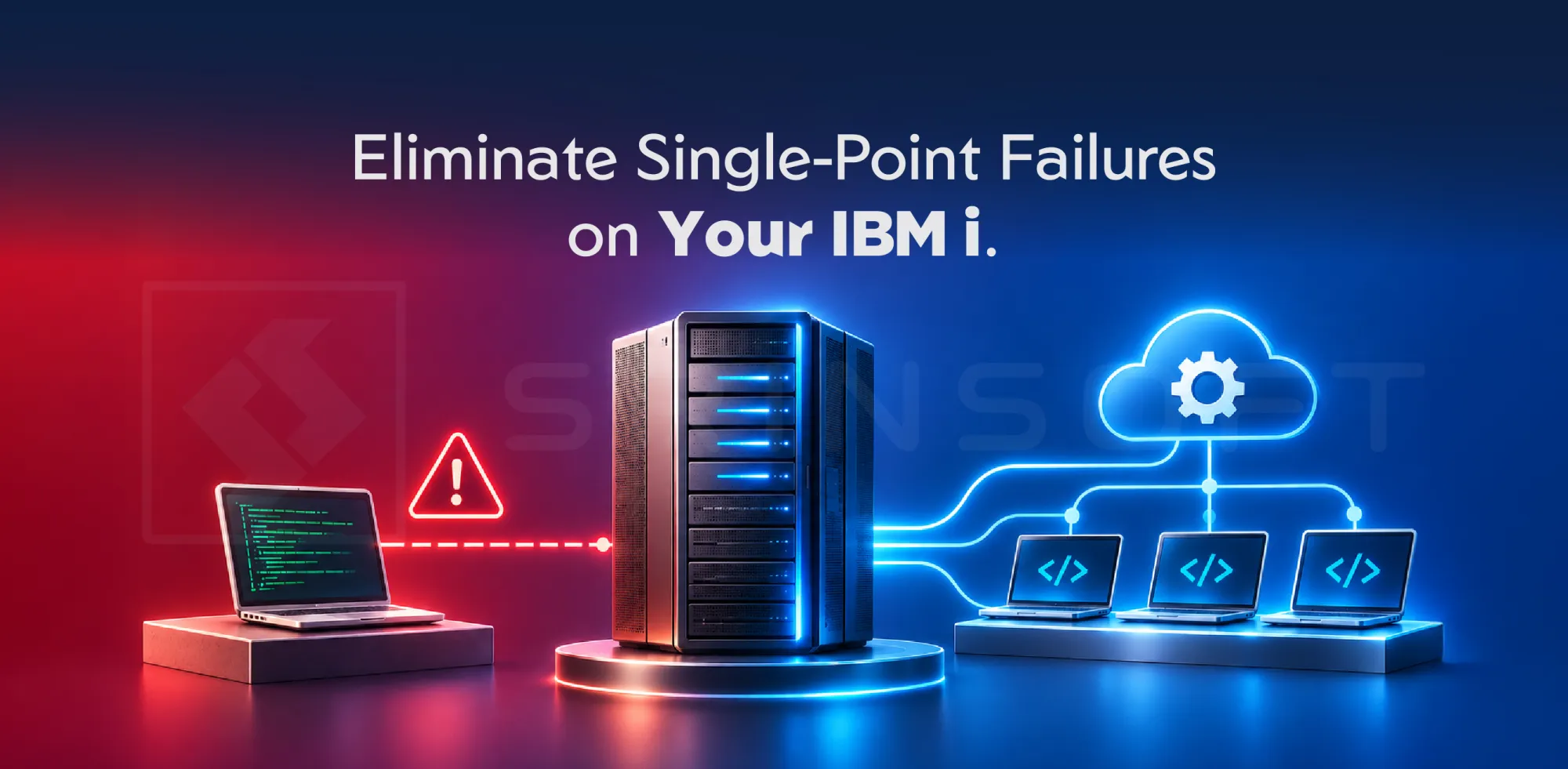
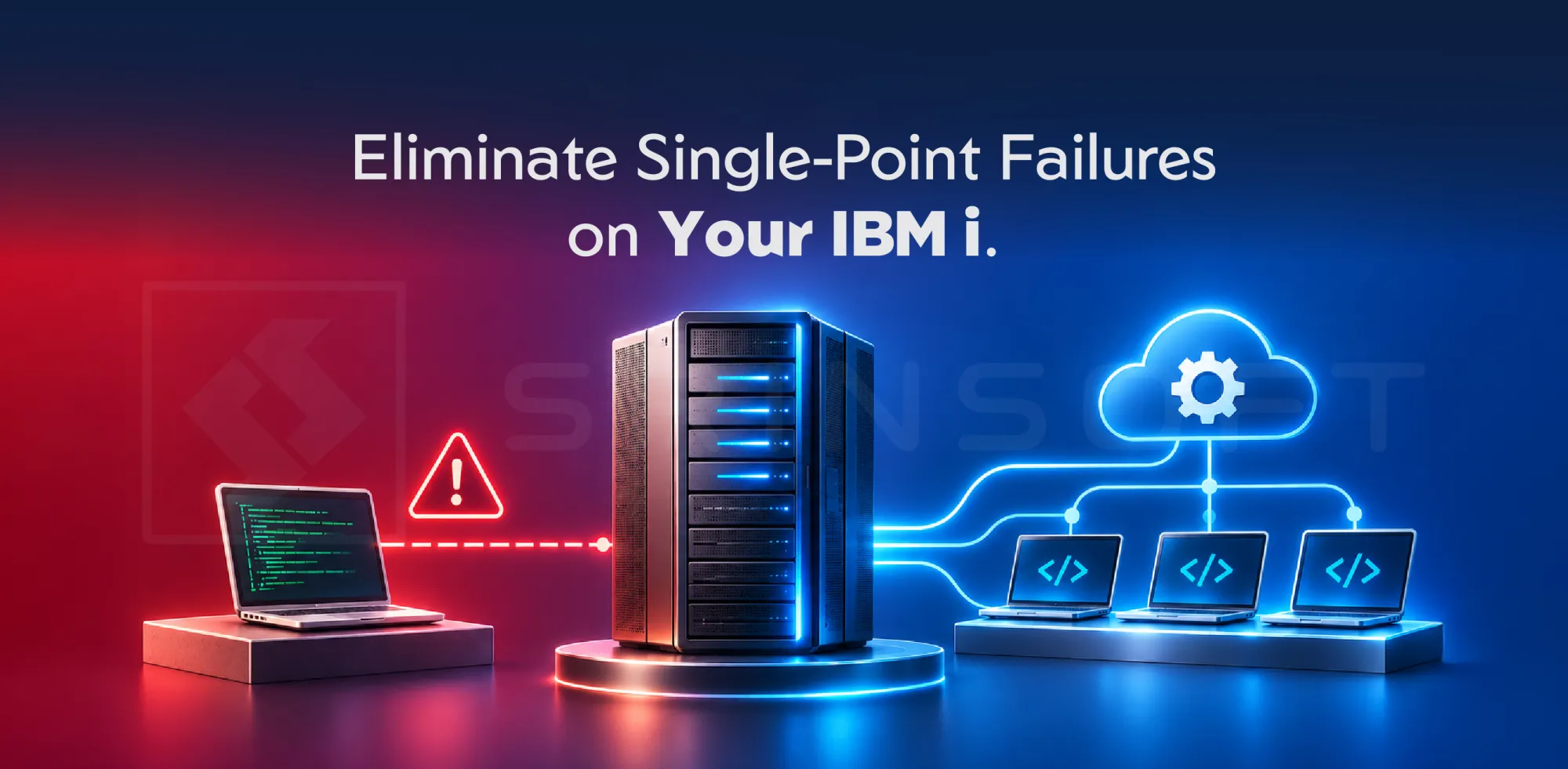
When green-screen veterans retire and your modern stack demands agility, keeping maintenance in-house turns into an expensive, single-point-of-failure gamble.
There are no OG developers left to guide the “completely green” new developers through the legacy system, its intricacies, and business-critical workflows. If you want to keep everything in-house, you need someone who can gradually take over responsibilities from retiring colleagues, mentor new team members, automate processes, introduce APIs, and modernize reporting and integrations over time.
Keeping it internal also means you own the entire headache: rising payroll, retention panic, and continuous retraining. Sure, the IP stays locked inside your building. But the moment your sole remaining specialist hands in their two-week notice, your core business operations are hanging by a single, terrifying thread.
Outsourcing: Buying a Bench
Outsourcing IBM i support isn’t about ditching control; it’s about trading single-person vulnerability for an entire collective brain.
Instead of hunting for one mythical developer who can fix a broken overnight batch run and architect microservices, you get a managed bench. A specialized partner already employs the graybeard who debugs fixed-format RPG IV in his sleep, alongside the modern engineer turning your green screens into clean RESTful endpoints.
You stop waking up in a cold sweat over sick days, PTO, or surprise resignations. Coverage shifts to round-the-clock SLAs, PTF updates happen without paralyzing the sprint, and knowledge gets systematically documented instead of trapped in someone’s head.
Best of all, your internal talent stops playing babysitter to legacy code. They can finally focus on customer-facing features and high-impact software, while the partner keeps the core engine running silently in the basement.
In-House Dependency vs. Scaled IBM i Operations
| Strategic Dimension | In-House IBM i Support | Outsourced / Managed Services (MSP) |
| Talent & Continuity | High single-point risk: Vulnerable to retirements, vacation coverage gaps, and scarce RPG replacement talent. | Institutional depth: Dedicated bench covering legacy fixed-format RPG, modern RPG/LE, and modern API/open-source skill sets. |
| Coverage & SLAs | Shift-constrained: Nightly batch monitoring, PTF installs, and weekend runs depend on overtime or unmonitored alerts. | 24/7/365 operational SLAs: Continuous automated monitoring of message queues (QSYSOPR), backups, and replication health. |
| Modernization Pace | Reactive maintenance: Limited bandwidth; staff time is consumed keeping legacy applications and print queues alive. | Proactive execution: Established toolsets to wrap green screens in REST APIs, modernize Db2, and connect CI/CD pipelines. |
| Cost Predictability | Fixed & volatile: High fixed payroll + benefits, plus premium recruiter fees and unbudgeted emergency consulting. | Predictable OpEx: Fixed monthly contract rate with variable scaling based on core LPAR counts and business requirements. |
| Governance & Control | Total native control: Direct oversight over all business rules, code access, and internal compliance policies. | Shared responsibility: Requires strict access boundaries, formal change control, and auditing (QAUDJRN, *ALLOBJ). |
Guidelines for an Effective Co-Managed IBM i Outsourcing Model
Before signing a contract, identify the specific business objectives and operational outcomes you expect from an external partner. For organizations running IBM i, the most effective structure is typically a co-managed model, where operational boundaries are clearly defined between internal staff and the external provider.
1. Keep Front-Line IBM i Helpdesk In-House
Day-to-day user support - handling spool and outq print errors, 5250 terminal emulator disconnects, device configuration drops, and user profile password resets (CHGUSRPRF) - is managed most efficiently by your internal helpdesk. Internal technicians know business roles, resolve routine workflow access faster, and keep tier-one tickets out of expensive billable partner queues.
2. Outsource Systems Administration, PTF Management, and Core Modernization
LPAR-level administration, high-availability replication, and specialized development are prime candidates for an external managed service provider (MSP). Internal teams know their custom business logic intimately, but that focus can create blind spots around broader platform maintenance. MSP teams work across multiple Power Systems daily, giving them deeper exposure to complex PTF groups, OS upgrade paths, hardware HMC maintenance, and modern tooling like RPG-to-REST API integration. You retain strategic architecture while leveraging a deep engineering bench for maintenance and night-shift coverage.
3. Establish Strict Operational Boundaries and Security Scopes
A co-managed IBM i setup fails without clear authority lines. Conduct two mandatory alignment sessions:
- Internal Governance: Define which specific LPARs, core libraries, subsystems (SBS), and job queues are fully delegated versus managed internally.
- Technical Briefing: Meet directly with the provider’s engineers who hold *ALLOBJ or elevated operational authorities on your partitions. Document precise boundaries for production changes, batch-schedule adjustments, object promotions, and incident escalation protocols.
4. Enforce Cutover Dates, Save/Restore Protocols, and SLA Auditing
Establish a firm cutover date for operational transfer and stick to it. Following the cutover, actively govern the relationship: regularly audit QAUDJRN security journals, backup integrity (BRMS / Save-While-Active), and SLA response times. Consistent oversight ensures the system remains stable, compliant, and within contracted scope.
Deciding Your Next Move
Treating IBM i as an all-or-nothing bet is a mistake. Keep your business logic and frontline helpdesk close to home, but offload infrastructure risk and scarce RPG skills to an expert bench. Outsource to secure 24/7 resilience, cut operational single-point failures, and free your best engineers to build what drives future revenue.






















Sign in to leave a comment.