In-House vs. Outsourced — Which Is Better for Your Business?

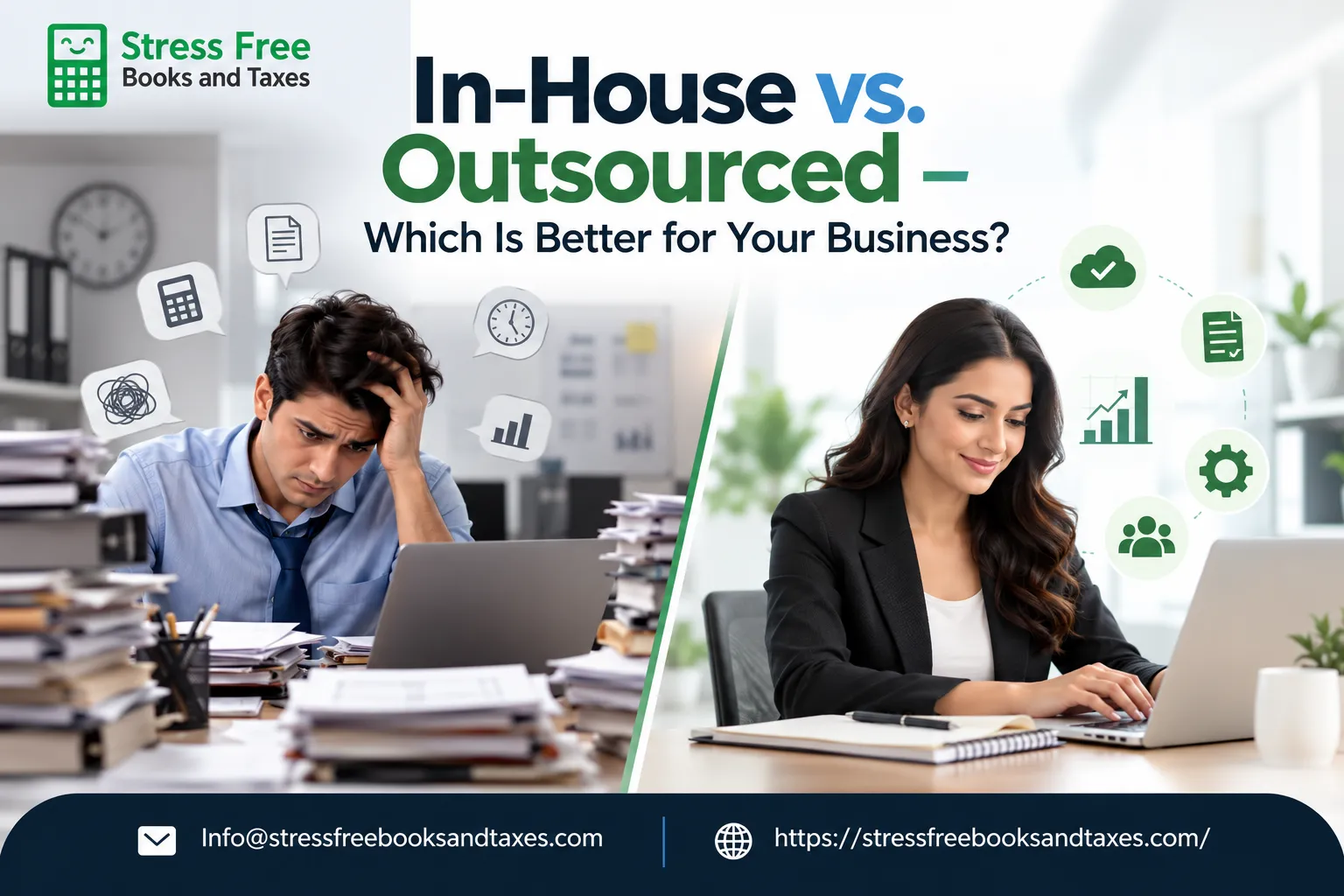
Managing business finances efficiently is essential for long-term success. One important decision business owners face is whether to handle bookkeeping internally or hire an external provider. Choosing between an in-house team and an outsourced bookkeeping service can affect your costs, productivity, and financial accuracy. So, which option is better for your business?
What Is In-House Bookkeeping?
In-house bookkeeping involves hiring employees to manage your company's financial records, track expenses, record transactions, and prepare financial reports.
Benefits of in-house bookkeeping include:
- Direct control: You can monitor daily financial activities and manage bookkeeping processes closely.
- Easy communication: Your team can quickly coordinate with other departments.
- Business familiarity: In-house employees can develop a deeper understanding of your company's financial operations.
However, hiring an in-house bookkeeper involves expenses such as salaries, employee benefits, training, and accounting software. These costs may become challenging for small businesses and startups.
What Is an Outsourced Bookkeeping Service?
An outsourced bookkeeping service allows businesses to delegate financial recordkeeping to an external professional or specialized firm. These providers can manage transaction recording, bank reconciliations, accounts payable, accounts receivable, and financial reporting.
Key advantages of outsourcing include:
- Cost savings: Reduce the overhead associated with hiring and maintaining a full-time employee.
- Professional expertise: Access experienced bookkeeping professionals and established processes.
- Time efficiency: Spend less time managing financial records and more time growing your business.
- Scalability: Adjust services as your business expands or financial needs change.
Nevertheless, outsourcing requires careful provider selection. Businesses should evaluate data security practices, communication processes, service quality, and pricing before making a decision.
In-House vs. Outsourced: Which Is Better?
The right choice depends on your company's size, budget, and financial requirements.
An in-house bookkeeper may be suitable if your business requires frequent on-site collaboration, immediate access to financial information, and close internal supervision.
On the other hand, an outsourced bookkeeping service can be an excellent option for small businesses, startups, and growing companies seeking professional support without the expense of building a dedicated team.
Some businesses also benefit from a hybrid approach, keeping financial oversight in-house while outsourcing routine bookkeeping tasks.
Final Thoughts
Both in-house and outsourced bookkeeping offer valuable benefits. The best option is the one that aligns with your business goals, budget, and operational needs.
Before deciding, compare the total costs, expertise, flexibility, and security offered by each approach. Choosing the right bookkeeping solution can help you maintain accurate financial records, improve efficiency, and focus on building a successful business.




Sign in to leave a comment.