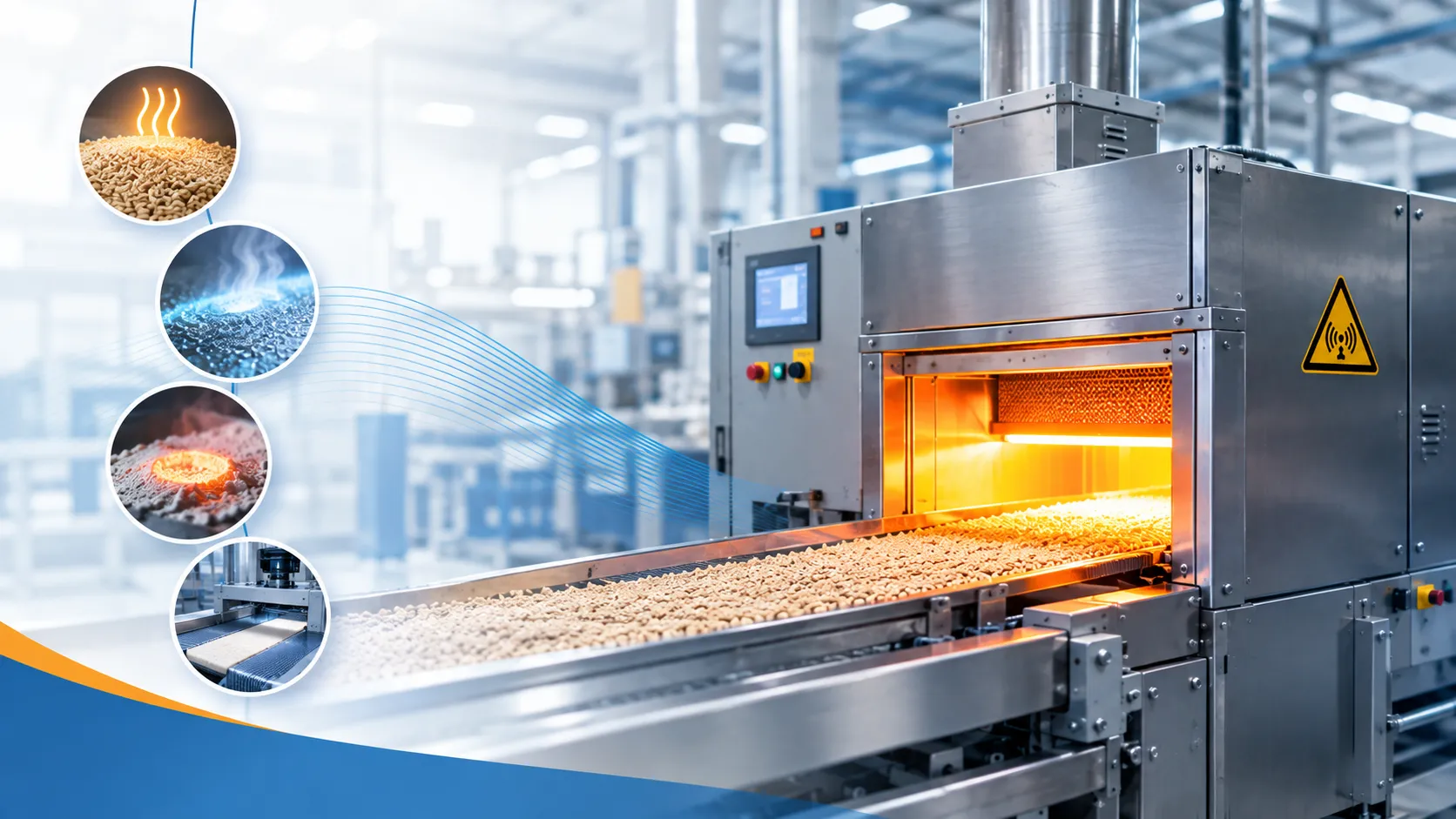

Heating plays a major role in manufacturing, but not every material responds well to the same heating method. Some processes need faster heat transfer, better temperature control, or a way to heat material without depending entirely on a hot external surface. This is where industrial microwave systems are becoming an area of interest for manufacturers exploring different approaches to industrial heating and processing.
Microwave technology uses electromagnetic energy to generate heat within suitable materials. Depending on the application, these systems can be used for drying, thermal processing, material treatment, and other industrial uses.
What Are Industrial Microwave Systems?
Industrial microwave systems are equipment setups designed to use microwave energy for controlled heating and processing.
Unlike a traditional furnace or oven, where heat generally moves from an external source toward the material, microwave energy interacts with materials that can absorb electromagnetic energy.
A typical system may include:
- Microwave power sources
- Energy transmission components
- Processing chambers
- Material handling equipment
- Temperature sensors
- Process control systems
- Safety and shielding equipment
The exact arrangement depends on the material, production requirements, temperature range, processing time, and intended use.
This makes industrial microwave technology quite different from simply placing a larger microwave oven inside a factory.
How Does Microwave Heating Work?
Microwave heating happens when electromagnetic energy interacts with suitable materials.
Certain materials absorb microwave energy and convert it into heat. The resulting heating can occur within the material rather than relying only on heat moving inward from the surface.
This is one of the main differences between microwave heating and many conventional thermal processes.
For example, a material containing moisture may respond differently to microwave energy than a dry material. Its composition, density, geometry, moisture content, and dielectric properties can all affect how effectively it absorbs microwave energy.
Because of this, microwave processing needs to be designed around the material rather than treated as a universal heating method.
Industrial Microwave Heating vs Conventional Heating
Conventional heating commonly depends on an external heat source. Heat is transferred through the surrounding environment and then moves into the material.
Microwave heating takes a different route by using electromagnetic energy that interacts with the material itself.
| Feature | Conventional Heating | Microwave Heating |
|---|---|---|
| Main energy method | Heat transfer from an external source | Electromagnetic energy |
| Heating pattern | Often surface-to-interior | Volumetric heating can occur |
| Material suitability | Works with many materials | Depends on microwave response |
| Equipment | Furnaces, ovens, heaters | Microwave sources, chambers, controls |
| Processing | Batch or continuous | Batch or continuous |
Neither method is automatically suitable for every industrial process. The right choice depends on the material and the requirements of the production line.
Where Can Microwave Technology Be Used?
Microwave heating has applications across several areas of industrial processing.
Industrial Drying
Drying is one of the areas where microwave energy can be useful.
Materials that contain moisture can interact with microwave energy, allowing systems to be designed around controlled moisture removal. Microwave drying can also be combined with conveyor-based production systems for continuous processing.
The drying process still needs careful control because excessive heating or uneven energy distribution can affect the material.
Microwave Furnaces
Microwave furnaces are designed for specialized thermal treatment.
Depending on the system and material, microwave furnaces can support processes that require elevated temperatures and controlled heating conditions.
They may be considered for materials research, specialized production, and industrial thermal processing.
Materials Processing
Microwave energy can also be used in different materials-processing applications.
The way a material responds to electromagnetic energy can create opportunities for processes where conventional heating does not provide the desired heating pattern.
Material composition, target temperature, processing duration, and production volume all influence whether microwave processing is appropriate.
Continuous Microwave Processing
Factories often need to process large quantities of material without stopping the production line for every batch.
Continuous microwave processing can be designed for this type of environment.
A system may combine a microwave source, processing chamber, conveyor, sensors, and control equipment. Material moves through the processing area while being exposed to controlled microwave energy.
The speed of material movement becomes an important factor. Moving too quickly may reduce energy exposure, while slower movement can increase processing time.
This is one reason system design needs to consider the complete production process rather than focusing only on microwave power.
What Factors Matter in System Design?
Designing an industrial microwave system involves more than selecting a microwave generator. Several technical factors need to be considered.
1. Material Properties
Different materials absorb microwave energy differently.
Moisture content, density, composition, temperature, and dielectric properties can all affect heating behavior.
2. Microwave Power
The required power depends on the amount of material being processed, the target temperature, moisture content, heating rate, and production capacity.
3. Processing Chamber
The chamber needs to distribute microwave energy appropriately while keeping the electromagnetic field contained.
Its size and design depend on the material and production setup.
4. Material Movement
For continuous systems, conveyor speed and material thickness can affect the amount of microwave energy received during processing.
5. Temperature and Process Controls
Sensors and control systems can help operators monitor temperature and other process conditions.
These controls become particularly important when consistent processing is required across large production volumes.
Why Application-Specific Design Matters
A microwave system designed for drying one type of material may not work in the same way for another application.
Every production process has its own requirements.
Manufacturers may need to consider:
- Material characteristics
- Production capacity
- Heating temperature
- Processing time
- Available floor space
- Batch or continuous operation
- Existing equipment
- Safety requirements
For this reason, industrial microwave equipment is often designed around the intended application.
Testing is also important. Before introducing a system into full-scale production, manufacturers may need to evaluate how the material responds to microwave energy under different operating conditions.
Can Microwave Heating Improve Energy Use?
Energy efficiency is one of the reasons manufacturers investigate microwave processing.
Since microwave energy interacts directly with suitable materials, there may be situations where less energy is spent heating surrounding equipment or air compared with a conventional process.
The actual result depends on many factors, including the material, equipment design, operating conditions, microwave absorption, and the conventional process being replaced.
A microwave system should not be considered automatically more energy efficient simply because it uses electromagnetic energy. Performance needs to be measured for the particular application.
Safety in Industrial Microwave Processing
Safety is a major part of industrial microwave system design.
Microwave equipment requires appropriate shielding and controls to prevent unintended exposure. Interlocks, monitoring systems, and other protective measures may be incorporated into industrial equipment.
There are also other hazards to consider.
Industrial heating equipment can involve high temperatures, electrical systems, moving machinery, pressure, and material-specific risks. A proper safety design needs to account for the complete system rather than microwave radiation alone.
Questions to Ask Before Using Microwave Heating
Before introducing microwave technology into a manufacturing process, companies can start by asking a few practical questions:
- Does the material absorb microwave energy effectively?
- What temperature needs to be reached?
- How quickly does the material need to be processed?
- Is moisture removal part of the process?
- Will production be continuous or batch-based?
- What production volume is required?
- How will the microwave system connect with existing equipment?
- What sensors and controls are needed?
- What safety measures are required?
These questions can help determine whether microwave processing fits the production environment.
The Growing Role of Microwave Technology in Industry
Industrial heating continues to develop as manufacturers look for different ways to handle drying, thermal treatment, and material processing.
Microwave technology offers a distinct method of delivering energy to suitable materials. Its ability to support volumetric heating, continuous processing, and controlled energy delivery makes it relevant to several specialized industrial applications.
At the same time, microwave heating is not a replacement for every conventional heating method. Material behavior and process requirements remain central to the decision.
The most useful approach is to look at the complete production process, test the material, and compare actual results before making a large-scale change.
A Practical Way to Look at Industrial Microwave Systems
Microwave technology is often discussed in terms of faster heating or energy savings, but the bigger picture is more interesting.
The real value lies in how electromagnetic energy can be incorporated into a carefully designed industrial process.
For one manufacturer, that could mean controlled drying. For another, it could involve a specialized furnace or continuous material treatment system.
The technology works best when the system, material, controls, and production requirements are considered together.
As industrial processes become more specialized, microwave heating will remain an option worth examining where conventional heating does not provide the desired results. The decision, though, should always come down to the material, process requirements, safety, and measured performance rather than the technology alone.


























Sign in to leave a comment.