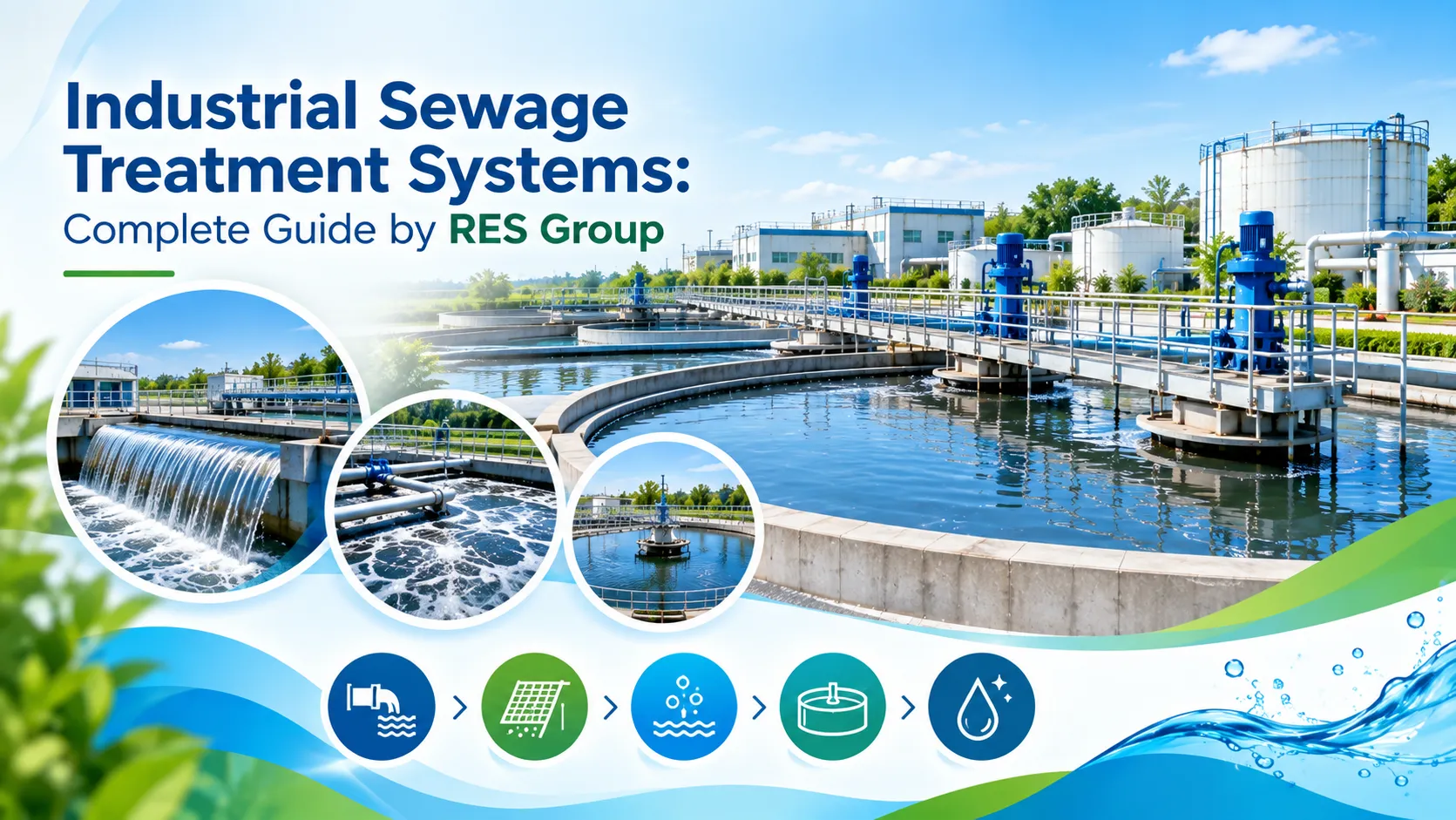
Managing industrial wastewater isn't optional anymore — it's a regulatory, environmental, and financial necessity. Whether you run a textile unit, pharmaceutical plant, or food processing facility, choosing the right industrial sewage treatment systems determines whether you stay compliant, control costs, and protect the environment around your operations. This guide breaks down everything you need to know, from how these systems work to what they cost and how to choose one.
What Are Industrial Sewage Treatment Systems?
Industrial sewage treatment systems are engineered setups that remove contaminants, organic matter, and pollutants from wastewater generated by industrial processes before it's discharged or reused. Unlike municipal systems, they're customized to handle industry-specific pollutants — heavy metals, oils, chemical residues, or high biological loads — depending on the sector.
A typical system includes:
- Screening and equalization — removes large solids and balances flow
- Primary treatment — settles suspended solids
- Secondary (biological) treatment — breaks down organic waste using microorganisms
- Tertiary treatment — polishes water via filtration, disinfection, or membrane processes
- Sludge management — dewaters and disposes of residual solids
How Do Industrial Sewage Treatment Systems Work?
At a basic level, the process follows this sequence:
- Collection — Wastewater is gathered from production units into a collection tank.
- Screening — Coarse solids and debris are filtered out.
- Equalization — Flow and pollutant load are stabilized to prevent shock loading.
- Primary clarification — Heavier solids settle out.
- Biological treatment — Aerobic or anaerobic bacteria digest organic pollutants.
- Secondary clarification — Treated water is separated from biological sludge.
- Tertiary treatment — Filtration, UV, or chlorination removes remaining contaminants.
- Discharge or reuse — Treated water meets discharge norms or is recycled for industrial use.
This layered approach is what separates effective sewage treatment solutions from basic filtration setups.
Why Do Industries Need Sewage Treatment Solutions?
Beyond legal compliance, treating wastewater properly protects water bodies, reduces freshwater dependency through recycling, and prevents costly penalties. Industries operating without adequate treatment risk shutdowns, fines, and reputational damage — especially as pollution control boards tighten enforcement nationwide.
What Types of Wastewater Treatment Systems Are Available?
| System Type | Best For | Key Feature |
| ASP (Activated Sludge Process) | Medium-to-large industries with steady organic load | Cost-effective, widely used |
| SBR (Sequencing Batch Reactor) | Facilities with fluctuating flow | Compact, batch-based treatment |
| MBR (Membrane Bioreactor) | High-reuse requirements | Superior effluent quality |
| ETP (Effluent Treatment Plant) | Chemical/pharma industries | Handles toxic, non-biodegradable waste |
| STP (Sewage Treatment Plant) | Domestic-type industrial waste | Standard biological treatment |
Industrial Sewage Treatment Systems vs. Sewage Treatment Solutions vs. Wastewater Treatment Systems
These terms are often used interchangeably, but there's nuance. "Industrial sewage treatment systems" refers to the physical infrastructure. "Sewage treatment solutions" is a broader term covering design, consulting, and turnkey services. "Wastewater treatment systems" is the umbrella category that includes both industrial and municipal applications. RES Group works across all three — from system design to installation and long-term maintenance.
How Much Does an Industrial Sewage Treatment System Cost?
Costs vary widely based on:
- Plant capacity (KLD — kiloliters per day)
- Wastewater characteristics (BOD, COD, TSS levels)
- Technology chosen (ASP, MBR, SBR)
- Land availability and civil work
- Automation level
Small-scale units may start in the lower lakhs range, while large industrial ETPs with advanced membrane technology can run significantly higher. Getting a site assessment is the only reliable way to get an accurate quote.
How Do You Choose the Right Sewage Treatment Solution for Your Industry?
- Textile industry — Needs systems handling dyes and high color load; MBR often preferred.
- Pharmaceutical industry — Requires ETP with advanced oxidation for drug residues.
- Food processing — High BOD/COD loads suit ASP or SBR systems.
- Chemical manufacturing — Needs robust pretreatment for toxic effluents.
Match your industry's waste profile, daily flow volume, and reuse goals before finalizing a system.
What Are the Compliance Standards for Industrial Wastewater in India?
Industries must meet discharge norms set by the Central Pollution Control Board (CPCB) and respective State Pollution Control Boards. These cover parameters like BOD, COD, TSS, pH, and heavy metal concentrations before wastewater can be discharged into water bodies or sewers. You can review official effluent standards directly on the CPCB website.
Why Choose RES Group for Industrial Sewage Treatment Systems?
RES Group brings hands-on engineering experience designing and commissioning industrial sewage treatment systems across multiple sectors. From feasibility assessment to installation and ongoing maintenance, the team focuses on solutions that are compliant, cost-efficient, and built for long-term reliability. Reach out for a site-specific assessment and tailored wastewater treatment systems recommendation.
Frequently Asked Questions
Is industrial sewage treatment mandatory in India?
Yes. Industries generating wastewater above prescribed limits must install treatment systems as per CPCB and state pollution control board regulations.
Can treated industrial wastewater be reused?
Yes, with tertiary treatment (like MBR or RO), treated water can be reused for cooling, gardening, or process applications, reducing freshwater consumption.
How long does installation take?
Depending on capacity and complexity, installation typically takes a few weeks to a few months.
What maintenance do these systems need?
Regular sludge removal, filter cleaning, aeration system checks, and periodic water quality testing.























Sign in to leave a comment.