

An inflatable tent looks like magic the first time you see one. A tube-framed shell rises in minutes, holds its shape and gives a garden party a roof. It also raises sensible questions. How does it stay up? What if the wind picks up? Can it sit on a lawn?
These are the questions hosts ask most often about inflatable tent hire, with answers based on how air-supported and air-beam structures generally work. Where details depend on the supplier or the model, the text says so.
How Does an Inflatable Tent Stay Up?
Most inflatable tents use air. Some are fully air-supported, which means the whole shell is held up by air pressure from a blower. Others use air beams, which are inflated tubes that form the frame while the fabric stretches between them. A blower keeps the pressure constant, so small leaks do not cause a collapse.
Anchoring is just as important as air. A tent needs ground fixings or weights to hold it down. The method depends on the surface. Grass often takes pegs. Hard standing, such as a patio or car park, needs ballast weights instead. Ask the supplier which method they use at your site.
What Is the Difference Between an Inflatable Tent and an Inflatable Marquee?
People use the terms loosely, but the pictures in their heads differ. "Tent" often suggests a smaller, enclosed shape such as a dome or a night-party shell. "Marquee" suggests a larger, rectangular space with clear sides for a sit-down event. Many suppliers use both words for the same product, so look at the photos and the stated size, not the label.
When you compare inflatable marquee hire in Manchester, ask for the internal floor area, the height at the centre and the door sizes. Those details tell you what will fit inside.
Will Rain Be a Problem?
Rain is rarely the issue. Inflatable fabrics are designed to shed water, and a closed structure keeps guests dry. The things to check are the entrances and the ground. A flooded lawn can turn a dry tent into a muddy walkway.
Ask about flooring or matting, and ask where water will run if the ground is sloping. A good supplier visits or asks for photos of the site first. If rain is forecast on the day, the supplier can usually advise on drainage and entry points.
What About Wind?
Wind is the real limit for any lightweight structure. Every inflatable has a maximum safe wind speed set by its maker. Above that limit, the structure should not be used, and a responsible supplier will cancel or take it down.
Agree a decision plan before the event. Ask the supplier for the wind limit in writing and agree a cut-off time, such as noon on the day, for deciding whether to go ahead. Ask what happens to the booking if the wind forces a cancellation. This question matters more than any other on the list.
Does It Need Power?
Yes. The blower needs a continuous electricity supply for the whole time the tent stands. Lighting, heating or sound inside the tent add to that need. Check that the venue has a suitable outdoor socket, or ask the supplier whether they bring a generator.
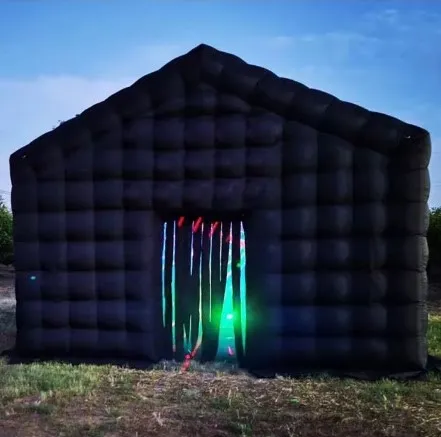
Hired electrical equipment should be PAT tested and covered by public liability insurance. The Manchester hire company Bee Moments N Experience offers an inflatable night tent among its services and lists insurance, PAT-tested equipment and risk assessment support for its hire work. Ask any supplier you shortlist for the same documents.
How Much Space Do I Need?
Measure the area, not just the lawn. A tent needs space for the structure itself, a clear zone around it and a route for the delivery team to carry equipment in. Overhead obstacles such as low branches and cables also matter.
A simple check: stand at the planned spot and look for four things. Is the ground level? Is the area clear of branches and wires? Is there a route wide enough to carry bulky equipment? Is there power within reach? If you answer yes to all four, the site is likely suitable. Send a photo to the supplier to confirm.
What Can I Do Inside?
An inflatable tent is a shell. What goes inside is your choice. Popular uses include a party space with lighting and seating, a cosy outdoor lounge, a stage for a small show or a covered area for a photo booth. Because the structure is enclosed, it also works well for projection and night-time events, since it blocks side light and keeps the space warm.
Confirm the internal height and entrance size before you plan big items. A tall piece of furniture or a screen may not fit through a standard door.
How Is It Priced and Booked?
Prices depend on the model, the location and your requirements. Most Manchester suppliers give a personalised quote. The usual items in the quote are hire time, delivery, set-up, collection and any extras such as flooring or lighting.
Availability is subject to confirmation, so a date is only held once it is confirmed in writing. Some suppliers cover locations within about 50 miles of Manchester. Check that your venue is in range and ask whether travel is charged.
Quick Answers in One Table
Question
Short answer
How does it stay up?
Air pressure from a blower, plus pegs or weights
Tent or marquee?
Labels vary; check size and photos
Rain?
Fabric sheds water; check ground and entrances
Wind?
Each model has a limit; get it in writing
Power?
Needed for the blower throughout
Space?
Structure, clear zone and delivery route
Cost?
Personalised quote based on your requirements
Safety Habits for the Day
A few simple habits keep an inflatable structure safe once it is up:
- Keep sharp objects, candles and open flames away from the fabric.
- Do not unplug the blower, even for a moment, to free a socket.
- Keep entrances and exits clear of chairs and bags.
- Limit the number of guests to the supplier's stated capacity.
- Tell the supplier at once if the structure looks soft or the blower sounds different.
The supplier should walk you through these points at hand-over. If nobody does, ask. A short briefing at set-up is normal practice and protects guests.
A Garden Party Example (Hypothetical)
Imagine a host in Altrincham planning an evening party for 40 guests in June. The host wants a covered space in case of showers and a place for string lights and a small speaker. The host measures the lawn, finds a level spot away from a tree and photographs it. Two suppliers receive the photos, the date and the guest number.
One supplier replies with the wind limit, the power needs and a note that pegs suit the lawn. The other replies with a price only. The host books the first, agrees a noon decision time on the day and arranges an outdoor socket. This is an illustration, not a real booking, but it shows how a few questions turn a nervous plan into a workable one.
A Last Check Before You Book
Ask the supplier three final questions. What is the wind limit and cancellation rule? Which safety documents can you share? What is included in the price? Clear answers on those three tell you the supplier has run this kind of event before.
Choosing With Confidence
Inflatable marquee hire and tent hire are simple once you know how the structure works. Air and anchoring hold it up. Wind sets the limit. Power keeps it inflated. Space and access decide where it can go. Treat each of those four as a question for the supplier, and you will avoid the common surprises.
If you are researching inflatable tent hire in Manchester for a garden party, a wedding or a community day, start by measuring your space and photographing the site. Send those two things with your date to two or three suppliers and compare their replies.
















Sign in to leave a comment.