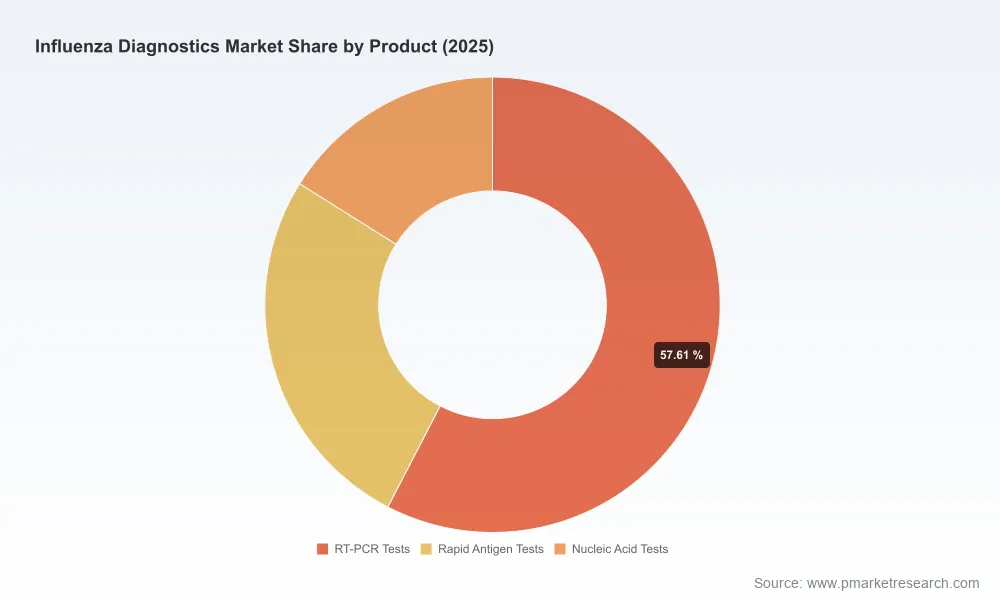

Strategic Shifts and Commercial Opportunities in the Influenza Diagnostics Market
The influenza diagnostics market enters 2025 at a defining inflection point. Valued at approximately USD 137.4 million in the base year, the sector has maintained consistent growth through the 2020–2025 historical period, recovering from pandemic-era volatility to establish a more predictable demand rhythm. With a projected compound annual growth rate of 7.45 percent through 2032, annual revenues are expected to approach USD 228.5 million by the end of the forecast window. This trajectory signals a market that is maturing beyond crisis-driven procurement and moving toward sustained, clinically integrated deployment. Yet the headline numbers obscure the structural tensions reshaping commercial strategies across manufacturers, laboratory providers, and healthcare networks.
Three interconnected dynamics define the current landscape. First, diagnostic protocols continue to oscillate between centralized laboratory workflows and decentralized point-of-care settings, creating uneven demand signals that complicate capacity planning. Second, reimbursement frameworks are undergoing periodic recalibration, directly influencing which platforms healthcare facilities prioritize when allocating capital. Third, the post-pandemic normalization of procurement cycles has introduced greater price transparency and competitive intensity, squeezing margins for players that rely on undifferentiated commodity assays. These forces are not mutually exclusive; they interact to determine which companies capture share and which struggle to justify premium positioning.
PW Consulting
For executives evaluating portfolio direction or capital allocation, the market presents both expansion potential and execution complexity. The growth curve is real, but it rewards organizations that align product architecture with workflow realities, regulatory expectations, and reimbursement durability. The remainder of this analysis unpacks the drivers behind the trajectory, maps the competitive field, and outlines where strategic positioning can translate market momentum into defensible advantage.
Key Drivers Reshaping Market Dynamics
Technological Innovation and Diagnostic Performance
The most consequential shift in influenza diagnostics is the convergence of molecular accuracy with simplified sample handling. Reverse transcription polymerase chain reaction platforms have long served as the reference standard, but their laboratory dependency limited deployment speed and geographic reach. Recent product introductions are closing that gap by delivering centralized-level sensitivity in formats designed for physician offices, urgent care centers, and pharmacy-based testing sites. Concurrently, multiplex respiratory panels are gaining traction as clinical teams seek to differentiate influenza from other circulating pathogens without ordering separate assays. This convergence reduces turnaround time, supports antimicrobial stewardship, and aligns diagnostic purchasing with broader infection management protocols.
Commercial implications are straightforward. Manufacturers that engineer assays combining rapid turnaround, robust sensitivity thresholds, and compatibility with existing sample collection workflows gain a structural advantage in procurement evaluations. The performance bar set by regulatory guidance reinforces this direction, pushing developers to validate clinical utility rather than rely on convenience alone. Organizations investing in assay design that minimizes hands-on steps, standardizes extraction or lysis processes, and supports flexible throughput are better positioned to defend pricing and expand indication coverage.
Policy and Reimbursement Architecture
Regulatory clarity and payment structures increasingly determine market access more than raw technical capability. Recent revisions to Medicare coverage articles have refined how molecular and antigen influenza tests are coded and reimbursed, particularly for hospitalized patients with suspected influenza. The adjustment allows dual influenza A and B detection under defined coding pathways, which directly affects laboratory and hospital purchasing decisions by clarifying which tests can be billed without administrative friction. At the same time, updated FDA requirements for rapid influenza diagnostic tests establish a minimum sensitivity threshold relative to molecular reference methods for clearance. These requirements raise the performance floor for new entrants and reward established players with validated clinical data packages.
This environment creates a clear strategic filter. Products that can demonstrate consistent analytical performance, straightforward coding compatibility, and documented clinical utility in target care settings enjoy smoother adoption cycles. Conversely, assays that depend on ambiguous reimbursement pathways or fall short of updated sensitivity expectations face longer adoption horizons and greater scrutiny from procurement teams. For commercial leaders, regulatory and reimbursement tracking is no longer a compliance function; it is a core input into product roadmap prioritization and sales enablement.
Demand-Side Behavior and Clinical Workflow Integration
End-user expectations are shifting from isolated test purchases to integrated diagnostic workflows. Clinicians and laboratory managers increasingly prioritize solutions that reduce operational variability, support staffing constraints, and provide decision-relevant results within the clinical window where treatment choices matter. Hospital clinics, diagnostic centers, and point-of-care environments each demand different throughput characteristics, but all share a common preference for platforms that minimize training burden and supply-chain dependencies. This has encouraged broader interest in assays that can be deployed across settings without sacrificing reliability, as well as in multiplex options that consolidate multiple respiratory pathogen detections into a single encounter.
The commercial consequence is a move away from single-attribute purchasing decisions. Price per test remains relevant, but it competes with total cost of ownership considerations such as instrument utilization, consumable shelf life, waste management, and operator efficiency. Suppliers that articulate workflow value through clinical evidence and operational data are more likely to win sustained contracts than those competing solely on unit cost. This trend also benefits platforms that can pivot across seasonal demand fluctuations, as healthcare networks seek to avoid stranded capacity during off-peak periods.
Supply Chain Stability and Cost Structure Evolution
The diagnostic supply chain has absorbed lessons from previous disruption cycles, but cost volatility and component availability remain sensitive points. Thermo Fisher Scientific and other large-scale manufacturers continue to emphasize integrated reagent and instrument ecosystems that reduce dependency on fragmented third-party inputs. At the same time, smaller and mid-tier developers are pursuing leaner production models and focused assay portfolios to maintain margin integrity while meeting regional demand. These divergent approaches reflect a broader market reality: scale can stabilize supply and lower unit economics, but portfolio focus can reduce complexity and improve responsiveness to specific clinical segments.
Cost structure is therefore a strategic variable rather than a background concern. Companies that align manufacturing footprint, inventory strategy, and distribution design with seasonal demand patterns can better manage working capital and avoid commodity-cycle erosion. For procurement organizations, supplier reliability and transparent lifecycle support increasingly factor into vendor selection alongside assay performance. The organizations that communicate predictable availability, clear expiry management, and consistent lot-to-lot quality gain credibility in environments where diagnostic continuity directly affects patient flow and infection control.
Competitive Landscape and Strategic Positioning
Leading Players and Differentiation Playbooks
The competitive field combines diversified diagnostics conglomerates, molecular specialists, and focused test developers, each pursuing distinct positioning strategies. Abbott Diagnostics has reinforced its rapid antigen and molecular offerings by emphasizing speed and ease of deployment in settings that require CLIA-waived flexibility. Becton Dickinson has concentrated on point-of-care antigen platforms tailored for physician offices and hospitals, aligning product design with high-traffic outpatient environments. QuidelOrtho has expanded its footprint by pairing established rapid antigen assays with multiplex-capable options that address overlapping respiratory pathogen testing needs, including recent launches designed to detect influenza and SARS-CoV-2 from a single sample in a compact format.
On the molecular side, Roche Molecular Systems and Thermo Fisher Scientific anchor their strategies in validated assay performance and broad instrument compatibility. Roche’s point-of-care and laboratory-oriented molecular assays emphasize consistent detection in settings where result reliability carries high clinical weight. Thermo Fisher’s combination kits and platform options target laboratories and integrated testing networks seeking to standardize respiratory pathogen workflows across multiple targets. bioMérieux differentiates through multiplex respiratory panel assays that support syndromic testing, appealing to institutions that value comprehensive pathogen coverage in a single run. Hologic and Cepheid reinforce similar molecular positioning with assays designed for rapid detection and streamlined sample handling, while DiaSorin and Sekisui Diagnostics maintain presence through combined rapid and molecular offerings that address varied care settings. Meridian Bioscience and Luminex Molecular Diagnostics contribute further assay diversity, often with an emphasis on specialized detection formats or multiplex respiratory panels. Public health authorities such as the Centers for Disease Control and Prevention also shape the landscape indirectly by providing reference diagnostic panels that influence surveillance practices and laboratory calibration standards.
The common thread across these positions is not a single product type but a strategic choice about where to win. Some players compete on deployment simplicity and speed, others on analytical depth and multiplex utility, and still others on instrument ecosystem reach and supply reliability. The most durable portfolios typically combine one strong clinical narrative with operational support that reduces adoption friction.
Worldwide Veterinary Diagnostics Market
Concentration, Consolidation, and Entry Dynamics
Market concentration remains moderate, with the top three and top five players holding a defined but not overwhelming share of revenue. This structure leaves room for targeted growth by companies that can differentiate in specific segments rather than requiring broad supremacy across all assay types and channels. At the same time, the market is experiencing selective consolidation pressures as larger organizations pursue integrated product lines, cross-selling opportunities, and platform economies. Smaller entrants often respond by concentrating on underserved workflow niches, regional distribution advantages, or assay formats that address specific clinical or operational constraints.
New entry remains possible but disciplined. The combination of updated performance expectations, reimbursement nuance, and established brand relationships raises the barrier to undifferentiated launches. Successful challengers typically enter with a clear use-case narrative, such as a specific point-of-care need, a multiplex configuration that improves diagnostic yield, or a regional service model that strengthens adoption support. Broad commodity plays face steeper headwinds as procurement teams increasingly differentiate among tests based on clinical reliability and workflow fit rather than price alone.
Rapid Influenza Diagnostic Test (RIDT) Market
The evolving pattern suggests a market that is neither fully consolidated nor fragmented into irrelevance. Instead, it is stratifying into segments where scale, molecular expertise, rapid deployment capability, and syndromic multiplex options each create distinct competitive moats. Organizations that understand which layer they are competing in can allocate resources more effectively than those attempting to lead everywhere simultaneously.
Future Trends and Commercial Implications
The next three to five years are likely to be shaped by three interrelated trends that directly influence commercial strategy.
1. Workflows will increasingly favor integrated molecular and rapid solutions rather than either-or choices. Clinical environments are moving toward tiered testing approaches in which rapid antigen or simplified molecular tests support immediate triage while laboratory molecular or multiplex platforms address confirmation, subtyping, and broader respiratory pathogen assessment. This creates opportunities for suppliers that can offer coherent assay families, compatible reporting formats, and clear guidance on when each test type delivers the highest value. Commercially, this trend rewards companies that can articulate diagnostic pathways rather than isolated test features.
2. Reimbursement and coding continuity will become a strategic differentiator. As payment policies continue to be refined, healthcare organizations will prioritize assays and platforms with predictable billing compatibility and clear documentation support. Products that align with established coding pathways and demonstrate reliable performance in covered patient populations gain an adoption advantage. Suppliers that invest early in coding literacy, clinical evidence generation, and reimbursement-ready packaging are likely to secure longer contract cycles and stronger retention. The risk here is regulatory drift: changes in coverage interpretation or coding guidance can quickly alter demand patterns, so commercial teams need processes to monitor and adapt quickly.
3. Seasonal volatility will intensify the value of flexible capacity and portfolio agility. Influenza demand remains inherently cyclical, and healthcare networks increasingly prefer partners that can support surge periods without leaving them with stranded assets in quieter months. This favors platforms with adjustable throughput, consumables that balance shelf life with responsiveness, and service models that help sites scale operations efficiently. For manufacturers, the opportunity lies in designing products and commercial terms that accommodate peak demand without forcing buyers into rigid capacity commitments. The uncertainty is that severe or muted influenza seasons can shift purchasing timing and volume in ways that challenge forecasting accuracy, making supply-chain resilience and demand-sensing capabilities more valuable than static capacity models.
Together, these trends point toward a market where commercial success depends on alignment between assay characteristics, workflow integration, and payment durability. The organizations that treat these elements as a single system rather than separate functions will be better positioned to convert market growth into recurring revenue and margin stability.
Strategic Recommendations for Decision-Makers
For manufacturers and product leaders: Prioritize differentiation through workflow fit and validated performance rather than catalog breadth alone. Build assay portfolios around clearly defined clinical settings, ensure documentation supports reimbursement compatibility, and invest in evidence that demonstrates how each test reduces operational friction. Where possible, design product lines that can scale throughput up or down without forcing buyers into inefficient fixed-cost structures. Monitor regulatory and coding developments as early inputs to roadmap decisions, not as after-the-fact compliance tasks.
For investors and strategy teams: Evaluate opportunities based on how well a company is positioned across the layers that matter most in this market: molecular reliability, point-of-care convenience, multiplex utility, and supply resilience. Companies with disciplined niche positioning, strong clinical evidence packages, and predictable reimbursement alignment are generally better insulated from commodity pricing pressure than those competing primarily on breadth or unit cost. Pay attention to consolidation signals and regional distribution strengths, since market access and channel relationships increasingly influence commercial outcomes alongside product quality.
For procurement and laboratory/network leaders: Focus evaluations on total operational impact rather than headline test price alone. Consider how each platform affects staffing requirements, turnaround time, reporting consistency, instrument utilization, and seasonal flexibility. Demand clear documentation on performance characteristics, coding compatibility, and supply continuity. Where possible, structure agreements that accommodate demand variability and provide visibility into product lifecycle support. Choosing platforms that fit the specific mixing of hospital clinics, laboratories, and point-of-care sites within your network can reduce downstream inefficiencies and improve result reliability across settings.
For organizations seeking more granular segmentation data, regional demand splits, product-level revenue breakdowns, and customized scenario analysis, the full market study provides deeper detail across product types, application settings, end-user categories, and regional dynamics. A comprehensive report can support portfolio benchmarking, market entry assessment, pricing strategy refinement, and competitive tracking with the specificity needed for near-term planning.
For detailed analysis of this topic, please visit the official page: Influenza Diagnostics Market
Lacy Lee
Senior Marketing Manager
[email protected]
PW Consulting: www.pmarketresearch.com


























Sign in to leave a comment.