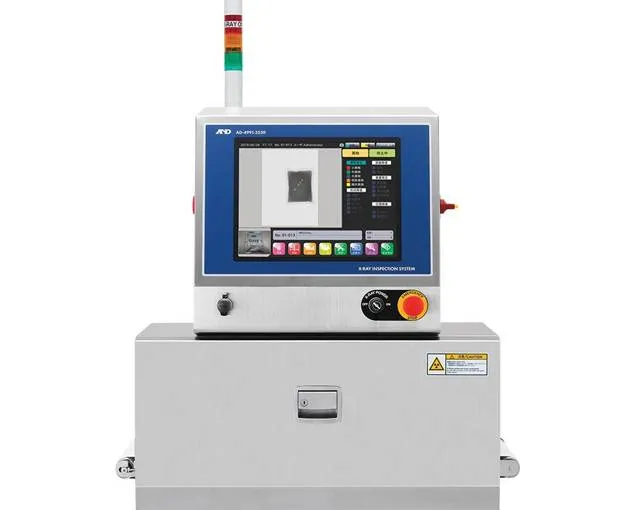

Modern food processing plants need more than visual quality checks to protect consumers and maintain consistent product quality. Foreign materials such as metal, glass, stones and calcified bone can sometimes enter products during manufacturing, even when strict hygiene and production controls are in place.
Inline X-ray inspection systems provide a non-destructive way to inspect food products continuously as they move through a production line. By analysing differences in X-ray absorption, these systems can identify contaminants and certain product defects without opening or damaging the packaging.
What Is an Inline X-Ray Inspection System?
An inline X-ray inspection system is an automated food inspection technology installed directly into a production line. Products pass through an X-ray beam while sensors capture images of their internal structure.
Unlike conventional metal detection, which primarily identifies conductive or magnetic metal contaminants, X-ray inspection can detect a wider range of dense foreign materials.
Depending on the system and application, an inline X-ray inspection machine may detect:
- Metal
- Glass
- Stones and mineral fragments
- Calcified bone
- Dense plastic
- Rubber and other high-density materials
- Missing or broken product components
- Certain packaging defects
- Product fill-level inconsistencies
The system can inspect products at production speed, making it suitable for continuous food manufacturing environments.
How Does Inline X-Ray Inspection Work?
The basic process involves four main stages: X-ray generation, image capture, image analysis and product rejection.
1. X-Ray Generation
An X-ray generator produces a controlled beam that passes through the food product and its packaging.
Different materials absorb X-rays at different rates. Dense materials absorb more X-rays, while lower-density food products allow more of the radiation to pass through.
This difference creates a contrast in the resulting X-ray image.
2. Image Capture
As products move along a conveyor, an X-ray detector captures an image of each product.
Modern detectors can generate high-resolution images rapidly enough to inspect products moving continuously through a production line.
The system can therefore examine the product without requiring operators to stop production or open packaging.
3. Image Analysis
Specialised software analyses the captured X-ray image and compares detected patterns against programmed inspection criteria.
If the system identifies an object or condition outside the defined parameters, it can classify the product as defective.
Advanced systems may use algorithms designed to compensate for variables such as product position, packaging and background density.
4. Automatic Rejection
When a contaminated or defective product is identified, the inspection system communicates with an automated rejection mechanism.
Depending on the production line, this could involve an air blast, pusher, diverter or other rejection device.
The objective is to remove the affected product without unnecessarily interrupting the rest of the production process.
Why Use X-Ray Inspection in Food Processing?
Food manufacturers need to control risks throughout production, from receiving raw ingredients through to final packaging.
Inline X-ray inspection provides an additional control point that can help identify physical contamination that may not be visible externally.
It can be particularly valuable for products such as:
- Meat and poultry
- Dairy products
- Bakery products
- Ready meals
- Frozen foods
- Canned foods
- Confectionery
- Packaged snacks
- Processed fruit and vegetables
For manufacturers operating high-speed production lines, automated inspection can also provide more consistent monitoring than relying solely on manual inspection.
X-Ray Inspection vs Metal Detection
X-ray inspection and metal detection are both widely used food inspection technologies, but they operate differently.
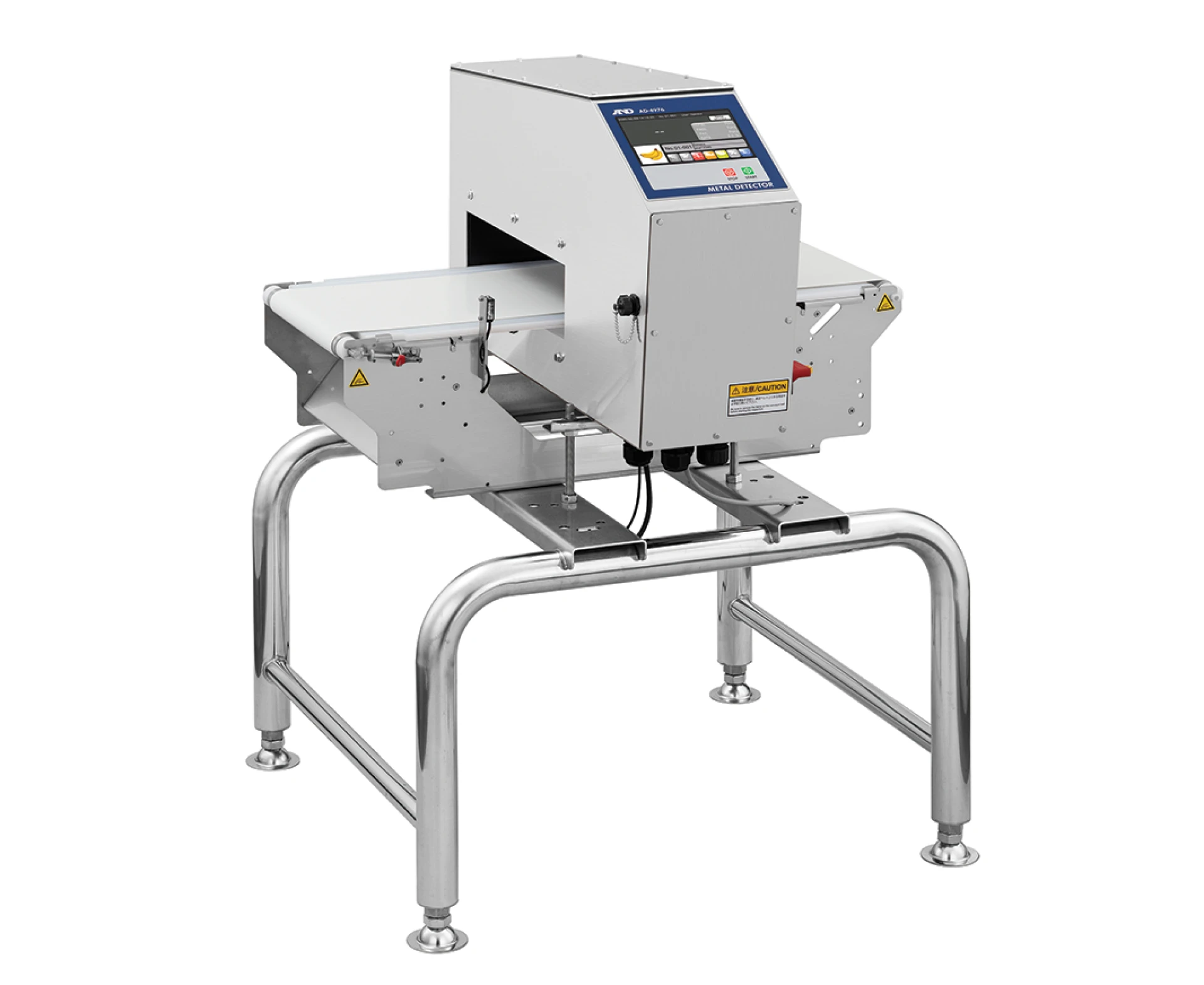
Metal detectors generate an electromagnetic field and identify changes caused by metal contaminants. They are effective for detecting many types of metal but generally cannot identify non-metallic contaminants.
X-ray inspection systems analyse differences in density and can therefore detect certain non-metallic foreign materials as well as metal.
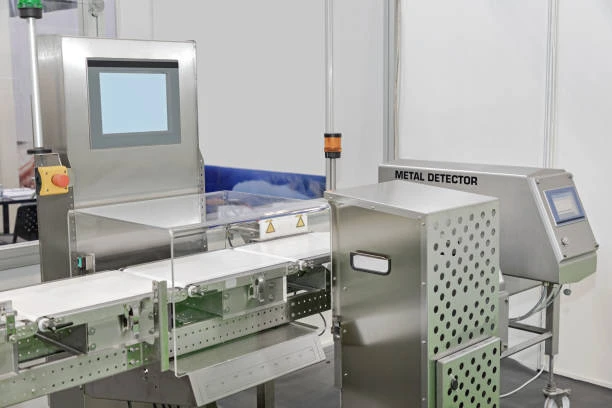
The right technology depends on the product, packaging, contaminant risks and production environment. In some food processing plants, X-ray inspection and metal detection may be used together as complementary quality-control measures.
What Can X-Ray Inspection Systems Detect?
The detection capability of an X-ray system depends on the product, contaminant characteristics, packaging and machine configuration.
Metal Contamination
X-ray systems can detect ferrous and non-ferrous metal contaminants, including fragments that may originate from processing equipment.
Glass
Glass fragments can present a significant food safety risk. Because glass is denser than many food products, it can often be identified through X-ray inspection.
Stone and Mineral Contamination
Raw agricultural ingredients can occasionally contain stones or mineral fragments. X-ray technology can help identify these dense materials before products reach consumers.
Bone
In meat and poultry processing, X-ray inspection may help identify certain bone fragments, including dense calcified material.
Product and Packaging Defects
Some X-ray systems can perform additional quality checks beyond foreign-body detection. Depending on the application, these may include checking for:
- Missing products
- Broken components
- Incorrect fill levels
- Incomplete seals
- Damaged packaging
- Product positioning
- Incorrect quantities
This can allow manufacturers to combine food safety inspection with quality-control processes on a single production line.
How X-Ray Inspection Supports HACCP Programs
Food manufacturers commonly use Hazard Analysis and Critical Control Point (HACCP) principles to identify and control food safety hazards.
An X-ray inspection system may form part of a manufacturer's broader physical-contamination control strategy. However, the machine itself should not be viewed as a substitute for good manufacturing practices, supplier controls, sanitation procedures or other preventive measures.
Its role is to provide an automated inspection point capable of identifying defined physical hazards and triggering corrective action when a product fails inspection criteria.
The inspection system should therefore be selected, installed, validated and maintained according to the manufacturer's requirements and the food processor's food safety plan.
What Factors Should Food Manufacturers Consider?
Choosing an inline X-ray inspection system requires more than comparing detection specifications.
Product Characteristics
The density, size, shape and composition of the food can influence inspection performance.
Packaging
Packaging material and format can affect the X-ray image and should be considered when selecting equipment.
Production Speed
The system must be capable of inspecting products at the required line speed without compromising detection performance.
Contaminant Type and Size
Manufacturers should identify the physical hazards most relevant to their ingredients and processes and establish realistic detection requirements.
Cleaning and Hygiene
Food-processing equipment must be compatible with the plant's cleaning regime and hygienic design requirements.
Integration
The X-ray system should integrate effectively with conveyors, production controls, rejection mechanisms and other inspection equipment.
Is X-Ray Inspection Safe for Food?
Food X-ray inspection systems are designed specifically for industrial food inspection and use controlled X-ray radiation within a shielded system.
The X-rays are used to inspect the product rather than to sterilise or alter it. Properly designed and maintained equipment incorporates shielding and safety controls to prevent unnecessary exposure to operators.
Food manufacturers should always follow the equipment manufacturer's safety instructions and applicable workplace and radiation-safety requirements.
Benefits of Inline X-Ray Inspection
For suitable food processing applications, inline X-ray inspection can provide several operational benefits:
- Continuous inspection: Products can be inspected automatically during production.
- Non-destructive testing: Products remain sealed and intact during inspection.
- Broad contaminant detection: X-ray technology can identify certain dense non-metallic materials as well as metal.
- Reduced manual inspection: Automated systems can reduce dependence on visual checks.
- Quality control: Some systems can perform additional product and packaging checks.
- Traceability: Inspection results can potentially be integrated with production data and quality systems.
- Reduced product recalls: Detecting contamination before products leave the facility can help reduce food safety risks.
The Future of Inline X-Ray Inspection
Modern food inspection systems are becoming increasingly sophisticated. Improvements in detector technology, image processing and software can help manufacturers achieve higher inspection performance while integrating quality control more closely with automated production.
Artificial intelligence and machine-learning techniques are also increasingly relevant to industrial inspection. These technologies can support more advanced image analysis and product classification, although manufacturers should evaluate such capabilities against their specific inspection requirements rather than treating AI as a replacement for validation and established food safety controls.
Conclusion
Inline X-ray inspection systems provide food processing plants with an automated method for identifying foreign materials and certain product defects while products move through the production line. The technology works by passing X-rays through the product, capturing the resulting image and analysing differences in density to identify anomalies.
For food manufacturers, the value of X-ray inspection goes beyond foreign-body detection. Depending on the system, it can also support product quality checks, automated rejection and production-line monitoring.
The most suitable system depends on the food product, packaging, contaminant risks, production speed, hygiene requirements and inspection objectives. When properly specified and integrated into a broader food safety program, inline X-ray inspection can become an important layer of protection between food production and the consumer.
Frequently Asked Questions
What does an inline X-ray inspection system detect?
Inline X-ray systems can detect many dense foreign materials, including metal, glass, stones, mineral fragments and calcified bone. Depending on the system, they may also identify certain product and packaging defects.
How does X-ray inspection differ from metal detection?
Metal detectors primarily detect metal contaminants using electromagnetic principles. X-ray inspection analyses differences in material density and can therefore detect certain non-metallic contaminants as well as metal.
Can X-ray inspection be used on packaged food?
Yes. X-ray inspection is particularly useful for packaged food because products can generally be inspected without opening or damaging their packaging.
Is X-ray inspection suitable for high-speed production lines?
Many industrial X-ray inspection systems are designed for continuous inline operation. However, the system's inspection capability must be matched to the required production speed and product characteristics.
Does X-ray inspection replace HACCP?
No. X-ray inspection can form part of a broader HACCP-based food safety program, but it does not replace preventive controls, sanitation, supplier management, process controls or other food safety measures.
























Sign in to leave a comment.