Inside the Manufacturing Process of High-Performance Gravure Printing Cylinders

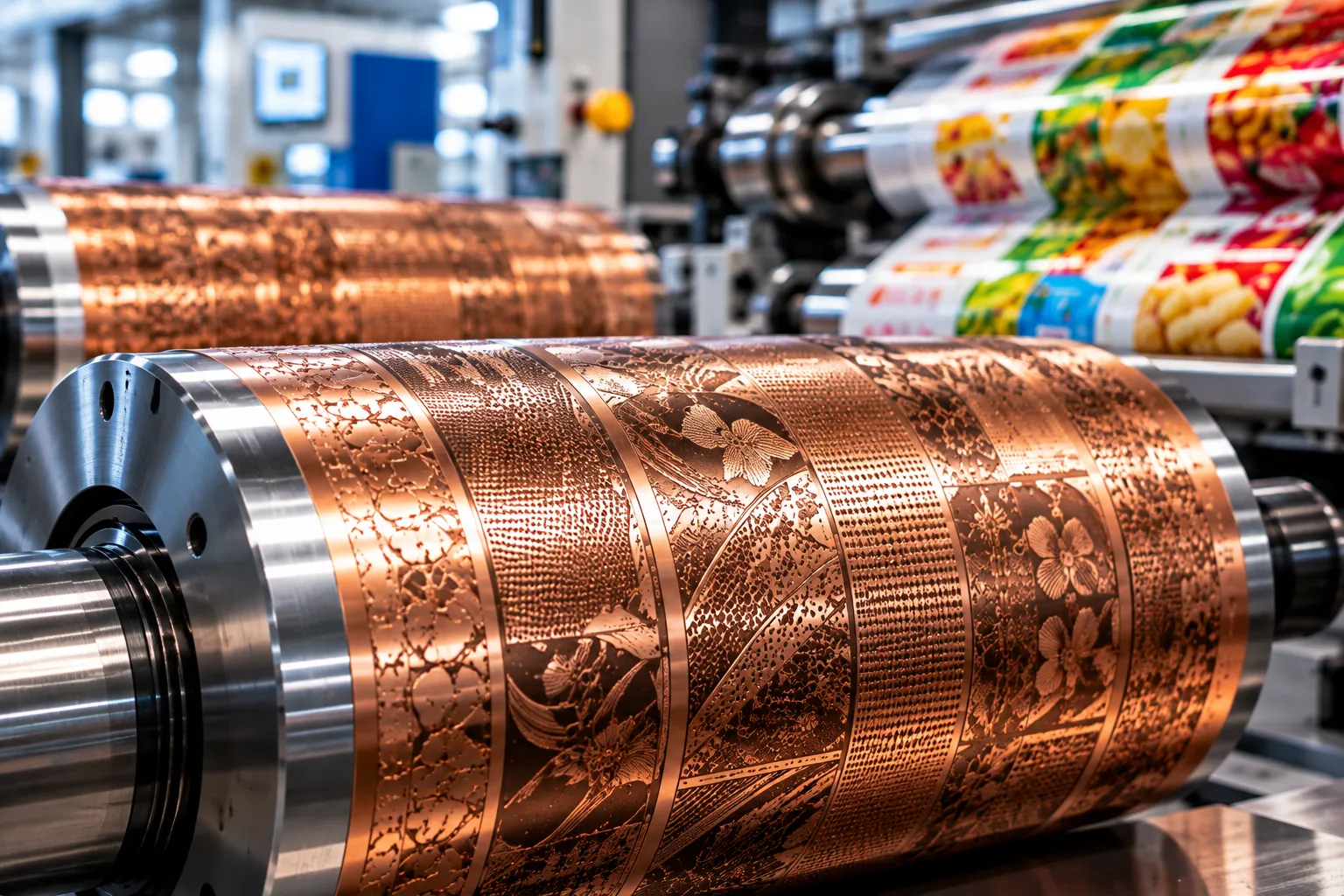
Gravure printing requires printing cylinders that can reproduce intricate designs with accuracy and consistency throughout demanding production runs. Behind every reliable cylinder is a carefully controlled manufacturing process involving surface preparation, copper plating, precision engraving, finishing, balancing, and quality inspection. Understanding these stages helps explain what makes high-performance Roto Gravure Printing Cylinders in India suitable for modern packaging, labels, decorative printing, and other applications.
1. Cylinder Preparation and Inspection
The manufacturing process begins with preparing the cylinder body according to the required technical specifications. Important parameters such as diameter, face length, repeat circumference, and shaft configuration are checked to ensure compatibility with the intended printing press.
The cylinder surface is then prepared to create a suitable foundation for subsequent processes. Proper cleaning, polishing, and surface inspection help remove irregularities that could affect plating or engraving accuracy.
2. Controlled Copper Plating
Copper plating creates the working surface on which the printing image will be engraved. Achieving the appropriate copper thickness and surface uniformity is essential for maintaining engraving accuracy.
The plating process needs to be carefully controlled because variations in the copper layer can influence subsequent machining and engraving. After plating, the surface is finished and inspected to ensure that it meets the required specifications before moving to the next stage.
3. Precision Engraving
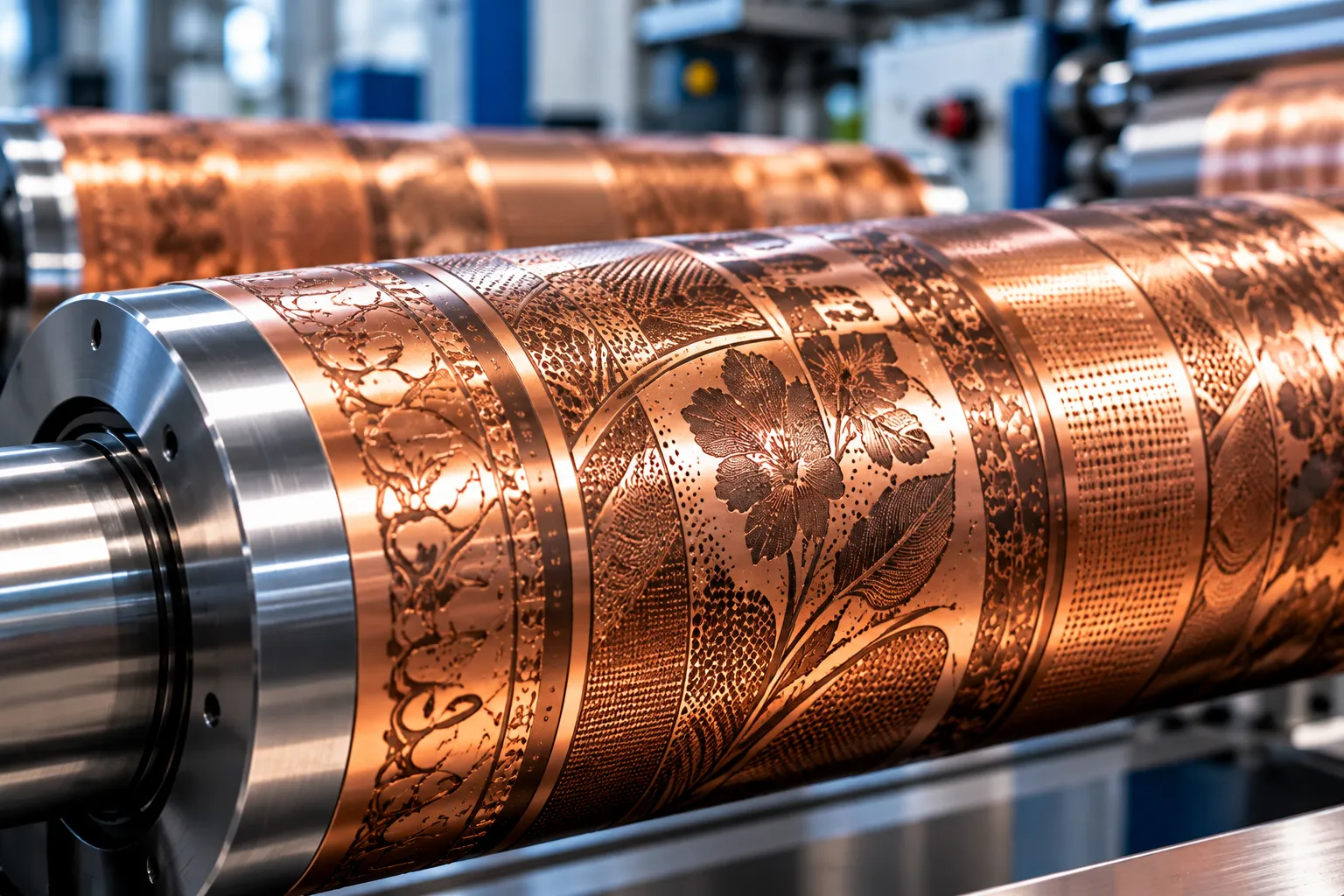
Engraving transforms the prepared cylinder into a functional gravure printing component. Thousands of microscopic cells are created across the copper surface according to the requirements of the artwork and printing application.
Modern engraving systems can precisely control parameters such as cell depth, geometry, screen ruling, and tonal distribution. These characteristics influence how accurately fine details, gradients, text, and solid areas are reproduced.
For manufacturers producing Roto Gravure Printing Cylinders in India, maintaining consistent cell formation across the entire cylinder is an important part of achieving dependable printing performance.
4. Chrome Finishing
After engraving, chrome finishing can be applied to provide additional surface hardness and wear resistance. Since gravure cylinders may be used repeatedly in high-volume production, surface durability is an important consideration.
The chrome layer needs to be applied uniformly while preserving the integrity of the engraved cells. Inspection after finishing helps ensure that the cylinder maintains the required surface characteristics and dimensional specifications.
5. Dynamic Balancing
A cylinder may contain highly precise engraving, but mechanical balance is equally important for high-speed printing. Dynamic balancing helps ensure that the cylinder rotates smoothly under operating conditions.
Proper balancing can reduce unwanted vibration and contribute to stable press operation. This is particularly relevant for longer cylinders and applications involving high rotational speeds.
6. Quality Inspection
Quality control should take place throughout the manufacturing process. Rather than depending solely on final inspection, manufacturers can evaluate the cylinder at different stages to maintain consistency.
Checks may include dimensional measurements, surface condition, copper thickness, engraving characteristics, chrome finish, and dynamic balance. These inspections help identify deviations before the cylinder reaches the printing press.
Manufacturing for Different Applications
Gravure cylinders are used for a wide variety of printed products. Flexible packaging, labels, laminates, decorative surfaces, and other applications may require different cylinder dimensions and engraving specifications.
This makes manufacturing flexibility and technical understanding important when selecting a cylinder supplier. The ability to adapt cylinder specifications to the application can help support consistent results across different printing requirements.
Primetech Gravures uses a structured manufacturing approach covering preparation, copper plating, precision engraving, chrome finishing, balancing, and inspection. Such process control helps develop cylinders designed around the technical requirements of modern gravure printing.
Why Manufacturing Precision Matters
Each manufacturing stage contributes to the final performance of a gravure cylinder. An accurately prepared surface supports uniform plating, consistent copper supports precise engraving, and controlled finishing contributes to durability. Balancing and inspection then help ensure that the finished cylinder is suitable for stable operation.
When evaluating Roto Gravure Printing Cylinders in India, looking beyond the finished product and understanding the manufacturer's complete production process can provide a better indication of expected quality and reliability.
Conclusion
High-performance gravure printing cylinders are created through a combination of precision engineering and controlled manufacturing processes. From initial preparation and copper plating to microscopic engraving, chrome finishing, dynamic balancing, and detailed inspection, every stage plays a role in producing a reliable cylinder.
As printing applications continue to demand greater detail, consistency, and production efficiency, manufacturers with strong process control remain important to the industry. A well-engineered Roto Gravure Printing Cylinders in India solution can provide the precision and durability required for demanding modern printing operations.


Sign in to leave a comment.