

Schools, hospitals, universities, houses of worship, and government offices serve thousands of people every day, and each of them carries a duty to keep those visitors safe. In a diverse borough with heavy foot traffic, that duty requires more than locked doors and a few cameras. This is why institutional security in Queens has become a planned, layered effort that blends trained personnel, clear procedures, and community awareness. The goal is to protect students, patients, staff, and visitors while keeping the environment open and welcoming. Understanding how these programs work helps administrators build safety plans that fit their buildings, their populations, and their budgets.
Why Institutions Face Unique Risks
Unlike a private office, an institution welcomes the public. Parents drop off children, patients arrive at all hours, and visitors move through corridors with little oversight. This openness creates challenges such as unauthorized entry, theft, disputes, and medical emergencies. Large campuses add complications, including multiple entrances, parking areas, and crowded events. Vulnerable populations, such as young students or elderly patients, also need extra care. A realistic view of these risks is the first step toward choosing protections that match how the building is truly used.
Conducting a Site-Specific Assessment
Every facility differs, so planning should begin with a walkthrough. Assessors examine entrances, hallways, stairwells, parking lots, loading docks, and areas that are unsupervised during certain hours. They review past incident reports and speak with staff about concerns they observe daily. The findings shape decisions about staffing, lighting, camera placement, and visitor procedures. Effective institutional security in Queens depends on this groundwork, because a plan built on assumptions often leaves the most important gaps untouched.
Access Control and Visitor Screening
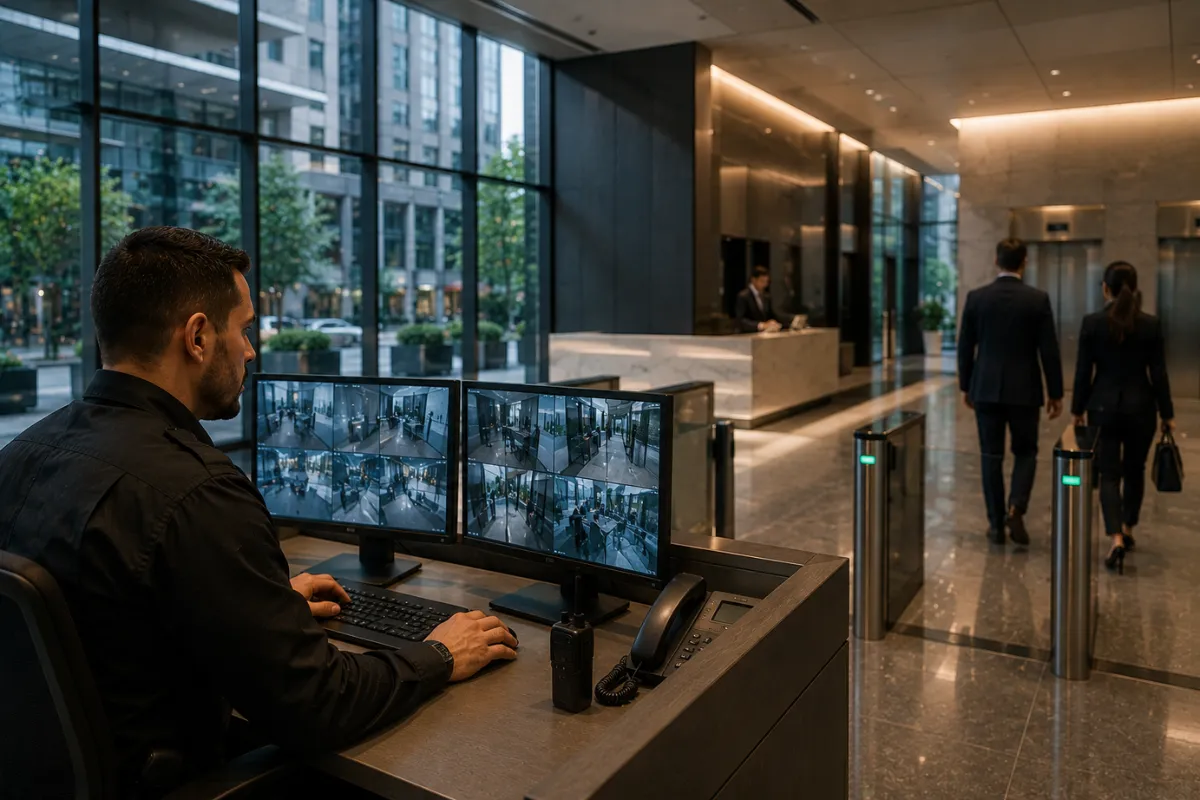
Managing who enters is the backbone of any protection plan. Front-desk checkpoints, sign-in systems, and visitor badges create a record and discourage unauthorized access. Guards trained in courteous communication can greet people, ask about their purpose, and direct them appropriately without creating tension. At schools, controlled entry during class hours and supervised dismissal protect children at the most vulnerable moments. Hospitals and universities often add restricted zones that require additional credentials.
Emergency Preparedness and Response
Institutions must be ready for fires, medical events, severe weather, and security threats. Written plans should define evacuation routes, lockdown steps, communication methods, and assembly points. Regular drills help staff and occupants respond calmly instead of hesitating. Guards play a key role by directing people, assisting responders, and keeping exits clear. Coordination with local police and fire departments also improves response times and ensures everyone understands their responsibilities before a crisis begins.
Training, Licensing, and Professional Conduct
Guards working in sensitive environments need more than basic qualifications. Look for state licensing, background screening, first aid and CPR certification, and training in de-escalation and report writing. Because they interact with children, patients, and worshippers, guards should also show patience, respect, and cultural awareness. Ask providers how they supervise staff, replace absent guards, and handle complaints. Strong institutional security in Queens programs treats professionalism as a requirement, since a guard's manner shapes how safe people feel on the premises.
Balancing Safety With a Welcoming Atmosphere
Overly aggressive measures can make a school or clinic feel like a fortress. The best programs rely on visibility, friendly interaction, and consistent procedures rather than intimidation. Simple steps, such as clear signage, well-lit entrances, and approachable guards, deter misconduct while keeping the space comfortable. Feedback from staff, students, and visitors helps administrators fine-tune this balance over time.
Reviewing and Improving the Plan
Threats and building use change, so security plans should be reviewed on a schedule. Analyze incident logs for patterns, test procedures through drills, and update staffing when hours or programs expand. Documenting improvements also supports funding requests, audits, and insurance discussions. Small, regular adjustments prevent larger problems and keep protection aligned with current needs.
Conclusion
Protecting a public-facing facility takes careful assessment, controlled access, prepared staff, and continuous review. When these elements work together, institutions can remain open and welcoming while reducing risk. Many facilities find that trained unarmed security guards in Queens provide the right mix of visibility, calm communication, and quick response for daily operations. Whatever approach you choose, verify licensing, request references, and revisit your plan regularly so protection stays matched to the people you serve.

























Sign in to leave a comment.