

A university can survive a smaller freshman class. The problem becomes more serious when fewer international students begin showing up across graduate programs, laboratories and teaching departments.
That is the concern emerging from recent evidence surrounding the US international student enrollment decline. Research compiled from university testimony describes a sharp fall in applications at the University of Illinois and late withdrawals at the University of Maryland, Baltimore. The common factor is growing uncertainty around a new Department of Homeland Security framework for F-1 students.
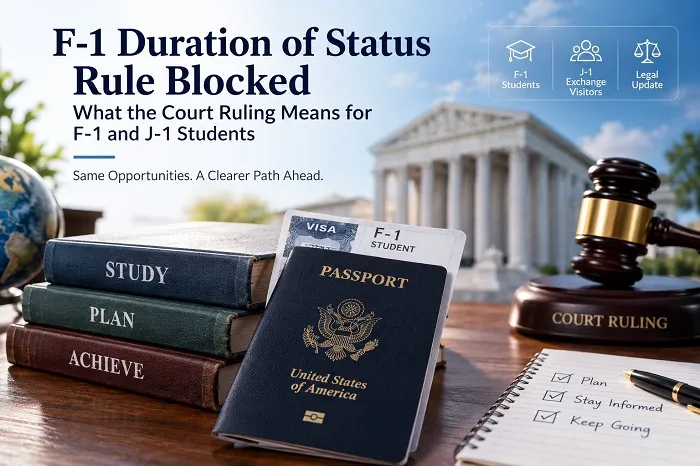
Under the framework described in the research, the previous “duration of status” approach is replaced by a four-year admission period. Students whose academic programs extend beyond that period may need to apply for an extension.
The change matters because international students are connected to far more than university admissions.
The First Impact Appears in University Budgets
The most immediate consequence of falling international enrollment is financial.
International graduate students can contribute substantial tuition revenue, particularly because many pay full tuition rather than subsidized in-state rates. A sudden decline can therefore alter departmental budgets and force universities to reconsider plans that were built around expected enrollment.
The effects may not appear as a single dramatic budget cut.
Instead, departments can face smaller incoming classes, fewer teaching assistants and changes to planned staffing. Over time, those adjustments can affect the courses a department offers and the resources available for research.
The research describes international enrollment as an important source of both tuition revenue and academic labor. That combination makes the current decline more significant than a conventional admissions shortfall.
For students, the practical lesson is that choosing a university also means understanding how stable its international programs are likely to remain.
Research Laboratories Could Feel the Pressure
The second impact is less visible but potentially just as important: research capacity.
Graduate students often contribute directly to laboratory work. They collect data, run experiments, analyze results and support projects funded through university research programs.
When fewer students arrive, research teams may have fewer people available to complete that work. The research notes that a steep decline can affect grant-funded research timelines and hiring plans.
Imagine a laboratory planning a year-long project around a team of six graduate researchers. If two expected students decide not to enroll, the project does not simply lose two names from a spreadsheet. The remaining researchers may have to absorb additional work, and some tasks may take longer.
That can create a chain reaction.
A delay in one project can affect publication schedules, grant milestones and the department's ability to begin another project. Universities that depend heavily on graduate researchers may therefore feel enrollment changes well beyond the admissions cycle.
This is one reason the international student enrollment decline deserves attention from academic leaders as well as admissions teams.
College Towns Are Part of the Equation
Universities do not operate in isolation.
International students rent apartments, buy groceries, use public transportation, eat at restaurants and spend money on local services. When large numbers of students withdraw or decide not to enroll, businesses surrounding universities can feel the difference.
The research specifically identifies housing, retail and other services in college towns as areas that can be affected by lower international student spending.
The effect may be difficult to measure at first because one student's withdrawal is rarely enough to change a local business.
The picture changes when the decline continues across multiple enrollment cycles.
A university town that expects thousands of international students each year builds part of its local economy around that population. Fewer students can mean fewer rental agreements, smaller restaurant crowds and reduced demand for everyday services.
That makes the issue broader than the relationship between a university and the federal government.
Longer Degrees Face a Different Kind of Risk
The new four-year framework is especially relevant to students whose programs routinely take longer than four years.
The research identifies PhD programs, dual degrees and five-year professional tracks such as architecture as examples. Engineering programs can also require close attention where their academic structure extends beyond four years.
The problem is not that these students cannot apply for an extension. The concern is that the extension process is new and its outcomes are not yet predictable.
For a student beginning a doctorate, that uncertainty can affect the decision to accept a US offer in the first place.
Students comparing the US with Canada, the UK or Australia may consider visa predictability alongside research quality, tuition and career opportunities. The research suggests that some students are already changing their decisions in response to the new framework.
That makes academic planning increasingly important. Students carrying heavy coursework loads may need practical support to keep assignments and research deadlines under control. Coursework writing assignments help can provide subject-focused assistance when students need additional academic support while managing these competing demands.
Universities Need to Address the Confidence Gap
Universities cannot control every federal immigration decision. They can control how clearly they communicate with students.
The research recommends proactive advising, transparent communication and early extension guidance. Institutions that explain what students should expect may be better positioned to retain international applicants than those that leave students searching for answers themselves.
This matters because uncertainty often influences decisions before a student ever reaches campus.
A prospective student does not need to believe that an extension will definitely be denied. They only need to believe that the outcome is uncertain enough to make another destination more attractive.
That can be enough to change an enrollment decision.
Universities should therefore make immigration guidance part of international recruitment rather than treating it as an issue students address only after admission.
Students, meanwhile, should ask about typical completion times, extension procedures and the support available through the international student office.
For students working through major research assignments or long academic papers, term paper writing help can also provide additional subject-specific assistance. The aim is to reduce unnecessary workload pressure while students focus on academic progress and official immigration requirements.
A Recruitment Problem Can Become a Research Problem
The evidence presented in the research points to a larger concern for US higher education.
International enrollment affects university revenue, graduate staffing, research teams and local economies. If the decline continues, institutions may have to adjust more than their recruitment targets.
They may need to rethink graduate program budgets, laboratory staffing and the support offered to international students.
The current situation also gives universities an opportunity to respond before enrollment losses become structural. Better communication cannot remove federal policy uncertainty, but it can help students understand their options and plan realistically.
The central issue is confidence. International students need to believe that the academic path they are paying for can be completed within a workable immigration framework.
If that confidence weakens, the consequences will not remain inside admissions offices. They can reach laboratories, classrooms, university budgets and the communities built around American campuses.
For US universities, the message from the recent enrollment figures is difficult to ignore: when international students hesitate, the whole campus can feel the ripple.




























Sign in to leave a comment.