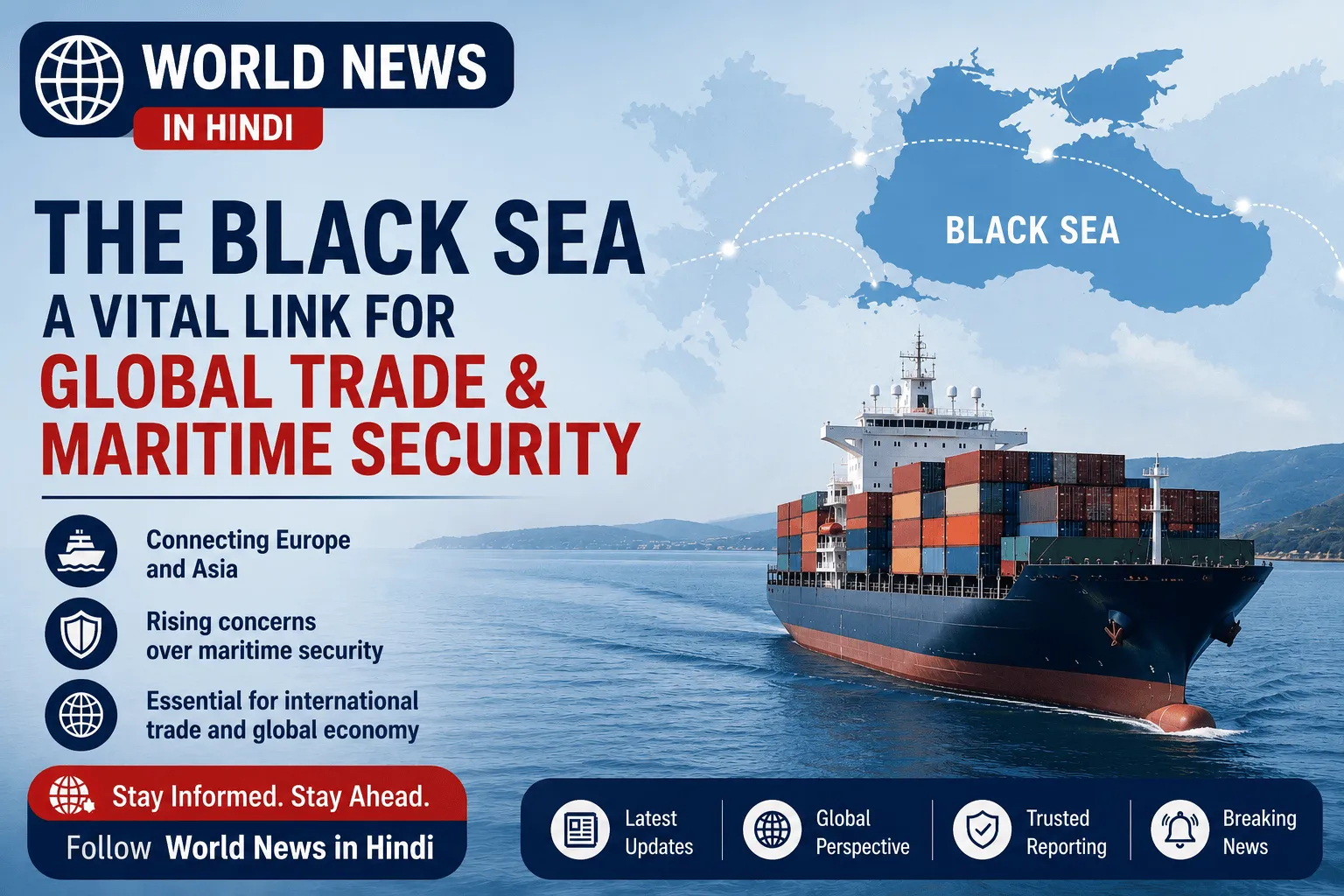


The Black Sea has become one of the world's most strategically important maritime regions due to its role in international trade and the ongoing geopolitical tensions surrounding the Russia–Ukraine conflict. Recent incidents involving commercial cargo vessels have once again drawn global attention to the safety of international shipping routes and civilian seafarers operating in conflict-affected waters. As maritime security remains a key concern for governments and shipping companies, understanding the importance of the Black Sea helps explain why developments in the region frequently make global headlines.
Readers who regularly follow World News in Hindi often come across reports about attacks on commercial vessels, disruptions to shipping routes and diplomatic responses from affected countries. These events are not only regional security issues but also have broader implications for global trade, food supplies and energy markets.
What is the Black Sea?
The Black Sea is a large inland sea located between Europe and Asia. It is bordered by Ukraine, Russia, Türkiye, Romania, Bulgaria and Georgia. Through the Bosphorus Strait and the Dardanelles, it connects to the Mediterranean Sea, making it an essential maritime corridor for international commerce.
Its geographical position makes the Black Sea a critical link between Eastern Europe, the Caucasus and global markets. Every year, thousands of commercial vessels transport goods through this region.
Why is the Black Sea Important?
The Black Sea serves as one of the world's major shipping routes. It supports the transportation of a wide range of commodities, including:
- Wheat and other grains
- Sunflower oil
- Fertilisers
- Crude oil and petroleum products
- Iron and steel
- Container cargo
Several countries depend on Black Sea ports for exports and imports. Any disruption to maritime traffic can affect international supply chains, increase transportation costs and influence global commodity prices.
Impact of the Russia–Ukraine Conflict
Since the Russia–Ukraine conflict began in 2022, maritime activity in the Black Sea has become increasingly complex. Military operations, missile strikes, drone attacks and sea mines have raised concerns about the safety of civilian shipping.
Although merchant vessels are civilian ships and are not involved in military operations, they may face risks while navigating through conflict-affected waters. Governments and international organisations continue to monitor maritime security and encourage the protection of commercial navigation in accordance with international law.
What is a Commercial Vessel?
A commercial vessel, also known as a merchant ship, is a ship used to transport cargo or passengers for commercial purposes.
Common types include:
- Container ships
- Bulk carriers
- Oil tankers
- Chemical carriers
- General cargo vessels
These ships are responsible for transporting goods between countries and form the backbone of international trade.
What Does "MV" Mean?
Many commercial ships use the prefix MV, which stands for Motor Vessel. It indicates that the ship is powered by engines rather than sails and is commonly used for cargo vessels operating worldwide.
Who Are Seafarers?
A seafarer is a trained maritime professional who works aboard commercial ships. Their responsibilities include navigation, engineering, cargo handling, safety management and ship operations.
Seafarers spend extended periods at sea transporting essential goods across international waters. Their work supports global trade and ensures that products reach markets around the world.
India's Contribution to the Maritime Industry
India is recognised as one of the world's leading suppliers of skilled seafarers. Indian officers and crew members serve on thousands of merchant ships operated by international shipping companies.
They work on:
- Cargo ships
- Oil and gas tankers
- Container vessels
- LNG carriers
- Offshore support vessels
- Cruise ships
Because a large number of Indian citizens are employed in the global shipping industry, their safety during international conflicts remains an important concern for the Government of India.
Maritime Security and International Trade
According to international maritime organisations, around 90% of global merchandise trade by volume is transported by sea. Safe and uninterrupted shipping routes are therefore essential for the global economy.
When shipping lanes are disrupted, countries may experience:
- Delays in imports and exports
- Higher freight and insurance costs
- Supply chain disruptions
- Increased prices of essential commodities
- Delays in food and energy supplies
For this reason, protecting commercial shipping has become an international priority.
India's Position on Commercial Shipping Safety
India has consistently stated that attacks on commercial shipping and civilian crew members are unacceptable. Following recent incidents involving Indian seafarers in the Black Sea, the Ministry of External Affairs (MEA) reiterated the importance of ensuring the safety of maritime navigation and maintaining the uninterrupted flow of global commerce.
India has also extended diplomatic assistance to affected citizens and their families while emphasising the need to protect civilian vessels operating in international trade routes.
Conclusion
Developments in the Black Sea demonstrate how regional conflicts can have far-reaching consequences for international trade, maritime security and the safety of civilian seafarers. As one of the world's busiest shipping regions, the Black Sea continues to play a crucial role in global commerce and international relations.
For readers interested in Breaking international news today in Hindi, understanding the background of such events provides valuable context beyond the headlines. Following reliable International News in Hindi sources helps readers stay informed with verified information about global developments, international diplomacy and major geopolitical events.






























Sign in to leave a comment.