
Navigating the Global Talent Landscape: Strategic Trends in the Worldwide International Recruitment Services Market
Market Overview and Core Challenges
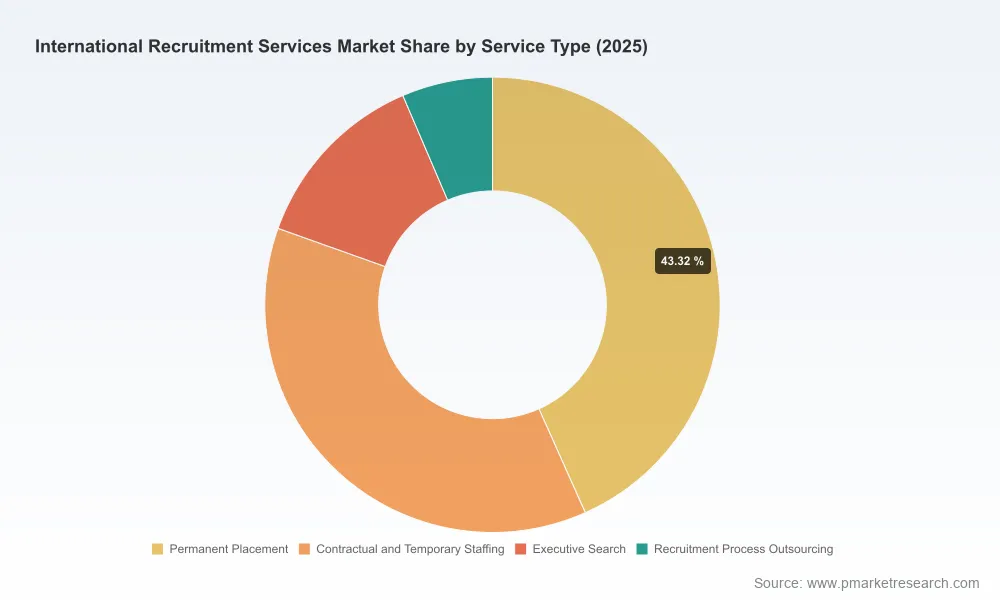
The worldwide international recruitment services market has demonstrated remarkable resilience and expansion over the past half-decade, evolving from a traditional staffing function into a strategic imperative for organizations navigating complex global labor dynamics. With the market valued at approximately $38.1 billion in 2025 and projected to reach $62.5 billion by 2032, the sector reflects a compound annual growth rate of 7.34 percent. This trajectory underscores a fundamental shift: cross-border talent acquisition is no longer a peripheral HR activity but a core component of enterprise growth strategies, particularly as businesses confront persistent skill shortages and increasingly fluid workforce expectations.
Behind these headline figures lies a more nuanced reality characterized by structural tensions that are reshaping competitive dynamics. First, the market is simultaneously experiencing consolidation and fragmentation. While established players maintain strong positions in mature economies, emerging markets present both high-growth opportunities and operational complexity that resist one-size-fits-all approaches. The coexistence of large-scale global firms and agile regional specialists suggests that market leadership will increasingly depend on the ability to balance standardized processes with localized cultural intelligence.
Second, regulatory scrutiny surrounding international recruitment practices has intensified significantly. Governments and international bodies are reexamining fee structures, transparency requirements, and worker protection mechanisms, particularly in sectors where migrant labor plays a critical role. Compliance is no longer a checkbox exercise; it is becoming a competitive differentiator that influences client trust, operational risk, and long-term contractual stability. Organizations that proactively embed ethical recruitment standards into their value propositions are positioning themselves to capture demand from enterprises seeking to mitigate reputational and legal exposure.
Third, the sector faces a persistent tension between speed and quality. Employers increasingly demand rapid deployment of specialized talent, yet the complexity of cross-border placements—visa processing, credential verification, cultural alignment, and retention planning—requires thorough due diligence. This pressure is driving investment in technology-enabled workflows while simultaneously raising the premium on human expertise in negotiation, relationship management, and market navigation. The firms that succeed will be those that can compress timelines without compromising the rigor that distinguishes sustainable placements from transactional fills.
Key Drivers Shaping Market Evolution
Technology-Driven Transformation of Candidate and Client Experience
Digital innovation is fundamentally altering how international recruitment services are designed, delivered, and evaluated. Advanced analytics, artificial intelligence, and integrated platform ecosystems are enabling providers to match talent pools with organizational needs more precisely, reduce time-to-fill, and enhance the transparency of the placement journey. For multinational employers, these capabilities translate into greater predictability and visibility across dispersed hiring pipelines. For candidates, digital interfaces are raising expectations around communication cadence, status tracking, and personalized guidance through complex relocation processes.
Worldwide Job Search Recruitment Services Market
The implications extend beyond operational efficiency. Technology is reshaping the economic model of recruitment services by enabling scalable outreach, automated compliance checks, and data-rich insights that support strategic workforce planning for clients. Providers that integrate intelligent matching with robust advisory capabilities are better positioned to transition from transactional staffing to strategic talent orchestration. This shift is particularly pronounced in sectors such as information technology, healthcare, and engineering, where specialized skillsets and rapid deployment requirements push organizations to seek partners who can combine speed with domain expertise.
Evolving Regulatory and Ethical Standards
The regulatory environment for international recruitment is becoming more prescriptive, with growing emphasis on fee transparency, worker protection, and data governance. Recent developments highlight how policy frameworks are moving from general guidelines toward enforceable standards that affect day-to-day operations. In Europe and Central Asia, a substantial majority of reviewed countries have adopted policies that prohibit charging recruitment fees to workers for both national and international placements, reflecting a broader commitment to prevent financial burdens from falling on candidates. Similar legislative trends are emerging in parts of Africa, where laws increasingly require employers to shoulder relocation and transportation costs for overseas workers.
These regulatory shifts carry direct commercial consequences. Providers that continue to rely on opaque fee structures or that pass costs onto candidates face elevated compliance risk and potential reputational damage. Conversely, organizations that design ethical pricing models, invest in candidate protection mechanisms, and demonstrate verifiable adherence to emerging standards are gaining credibility with institutional clients who are themselves under pressure to demonstrate responsible sourcing. Data protection regulations are adding another layer of complexity, particularly for cross-border placements that involve sensitive candidate information, automated screening tools, and international data transfers. Navigating these requirements effectively is becoming a core competency rather than a peripheral legal concern.
Demand-Side Shifts in Workforce Strategy
Employer behavior is evolving in ways that expand the role of international recruitment services. Organizations are increasingly treating talent mobility as a strategic lever rather than a reactive fix for immediate vacancies. Several dynamics are driving this change. Persistent skill gaps in specialized functions have led companies to look beyond domestic labor pools, especially where local training pipelines cannot keep pace with technology adoption or sector growth. At the same time, workforce expectations around flexibility, career progression, and global experience are prompting both employers and candidates to consider cross-border opportunities more seriously than in previous cycles.
This demand-side evolution is creating differentiated opportunity pockets. Large enterprises with mature global footprints are seeking providers who can coordinate multi-country hiring projects, standardize quality across regions, and align recruitment outcomes with broader workforce planning. Mid-sized and growth-focused organizations, meanwhile, are looking for partners who can accelerate access to niche talent without requiring them to build in-house international capabilities. The result is a market where service depth, sector specialization, and consultative engagement increasingly matter more than generic scale alone.
Cost Structures and Operational Realignment
International recruitment is also being reshaped by changes in cost structures and operational models. The expense of maintaining physical presence across multiple jurisdictions, combined with the administrative burden of compliance, visa coordination, and relocation logistics, has pushed many providers to rethink delivery architectures. There is growing interest in hybrid models that combine centralized technology platforms, shared compliance frameworks, and locally embedded talent specialists. Such approaches seek to capture the benefits of scale while preserving the market knowledge and relationship depth that drive placement success.
For clients, these shifts are altering expectations around pricing, service levels, and accountability. Employers are increasingly evaluating providers not only on placement volume but also on metrics such as retention, regulatory compliance, time-to-productivity, and the quality of market intelligence delivered throughout the engagement. This move toward outcome-oriented evaluation is encouraging providers to invest in measurement capabilities and advisory services that demonstrate tangible business impact beyond the transaction.
Competitive Landscape and Leading Strategies
The competitive environment in international recruitment services is defined by a mix of global incumbents, specialized recruiters, and consultative talent partners, each pursuing distinct positioning strategies. Large multinational providers have built advantage through broad geographic coverage, deep candidate databases, and the ability to manage complex, multi-market assignments. Their value proposition often centers on reliability at scale, standardized processes, and the capacity to support enterprise clients with diverse industry needs across regions. For organizations running sustained global hiring programs, this breadth can reduce coordination overhead and provide a single point of accountability.
A second strategic cluster emphasizes sector specialization and senior-level expertise. These firms compete on domain knowledge, market mapping, and the ability to engage passive or hard-to-reach candidates in targeted fields. Their strength lies in nuanced understanding of compensation dynamics, credential expectations, and career pathways within specific industries. For clients seeking leadership talent or highly specialized technical roles, this model offers depth that generic staffing approaches often cannot match. The trade-off is typically narrower geographic reach and a focus on higher-value placements rather than high-volume volume throughput.
A third orientation blends recruitment with broader organizational advisory capabilities. Some providers have expanded beyond placement into leadership assessment, workforce strategy, and cultural integration support. This approach resonates with clients who view international hiring as part of a larger transformation, such as entering new markets, restructuring operations, or scaling specialized functions. By connecting talent acquisition to organizational design and performance objectives, these firms aim to create longer-term partnerships rather than episodic transactional relationships.
The market structure is evolving along several axes. Consolidation remains a constant theme, as larger entities seek to strengthen geographic coverage, acquire specialized capabilities, or integrate technology assets. At the same time, differentiation is intensifying in segments where clients demand deeply localized knowledge, ethical recruitment credentials, or industry-specific expertise. New entrants and smaller specialists continue to find space by serving underserved regions, focusing on emerging skill categories, or building reputation around transparency and candidate care. The overarching trend is a move away from pure volume competition toward value-based positioning, where trust, compliance, specialization, and measurable outcomes increasingly determine competitive advantage.
A notable feature of the current landscape is that market concentration remains relatively moderate, suggesting that scale alone does not confer dominant control. This creates room for firms that can combine credible global infrastructure with sharp local execution, ethical standards, and sector-focused value propositions. In practice, the winners are likely to be those that can demonstrate consistent quality across borders while adapting to the regulatory and cultural specifics of each market they serve.
Future Trends and Strategic Opportunities
Looking ahead, several trends are likely to shape the next three to five years of international recruitment services. First, technology-enabled matching and workflow automation will continue to advance, but the differentiator will shift from basic digitization to intelligent integration. Providers that connect predictive talent insights, compliance automation, and candidate experience design into a coherent service model will be better equipped to meet demand for both speed and reliability. The opportunity lies not in replacing human judgment but in augmenting it with better data, faster verification, and clearer communication channels.
Second, ethical recruitment and regulatory compliance will move from risk management to brand strategy. As standards around fee transparency, worker protection, and data handling become more entrenched, organizations that can credibly demonstrate responsible practices will gain preference with enterprise clients and institutional stakeholders. This creates openings for providers to build differentiated offerings around ethical sourcing, candidate safeguards, and auditable compliance frameworks. Failure to adapt, by contrast, will increase exposure to legal, operational, and reputational risk.
Third, demand is likely to become more segmented by industry and role complexity. Sectors such as technology, healthcare, engineering, and financial services will continue to drive disproportionate demand for specialized international talent, but each will impose distinct requirements around credentialing, security clearance, cultural integration, and retention. Providers that develop deep vertical capabilities, supported by sector-specific market intelligence and tailored service workflows, are well positioned to capture higher-value engagements. At the same time, economic variability, geopolitical shifts, and changing immigration policies introduce uncertainty that can affect labor mobility patterns and hiring timelines. Organizations should therefore treat flexibility, scenario planning, and diversified market coverage as strategic essentials rather than optional enhancements.
Strategic Recommendations for Decision-Makers
For enterprises that rely on international talent, the priority is to treat recruitment partnerships as strategic capabilities rather than vendor transactions. This means evaluating providers against a broader set of criteria, including compliance rigor, ethical standards, sector expertise, technology integration, and the ability to provide market intelligence that informs workforce planning. Building clear internal processes for cross-border hiring—such as standardized compliance checks, relocation support structures, and retention strategies—will amplify the value derived from external partners and reduce execution risk.
PW Consulting
For investors and strategic planners, the market signals a shift toward quality, specialization, and responsible practices as key sources of durable advantage. Opportunities are likely to emerge in firms that combine scalable technology with credible local execution, strong ethical positioning, and depth in high-demand verticals. At the same time, due diligence should account for regulatory exposure, data governance maturity, and the provider's ability to adapt to changing immigration and labor policies across jurisdictions.
Worldwide Recruitment Advertising Agency Market
For procurement and workforce leaders, the actionable imperative is to align recruitment strategy with broader talent and operational objectives. That includes mapping critical skill gaps, identifying markets with sustainable talent pipelines, and selecting partners who can support both immediate hiring needs and longer-term mobility planning. In a market where conditions are evolving quickly, access to detailed segment-level data and customized scenario analysis can materially improve decision quality. For those seeking a deeper dive into regional dynamics, service-type performance, industry vertical breakdowns, and competitive benchmarking, a comprehensive research report can provide the granularity needed to translate these strategic directions into executable plans.
For detailed analysis of this topic, please visit the official page: Worldwide International Recruitment Services Market
Lacy Lee
Senior Marketing Manager
[email protected]
PW Consulting: www.pmarketresearch.com























Sign in to leave a comment.