
A man was told, two years back, that surgery was his only option for an enlarged prostate. He waited. He hoped it would settle down on its own. It didn't. By the time he finally came in, he was surprised to hear about PAE treatment in Chennai, an option that had been sitting right there the whole time; nobody had told him about it.
This kind of story comes up a lot. So let's explain it simply, once and for all. What pinhole treatment actually means. Which conditions it can fix. And why so many patients across Chennai are being pointed toward it now, instead of straight to the operation theatre.
What Is Interventional Radiology? The Era of Pin-Hole Surgery
Medical Matrix: Pin-Hole IR vs. Traditional Open Surgery. Entry point: a tiny 1–2mm puncture at the wrist or groin, versus a multi-inch surgical cut. Anaesthesia: local numbing with mild sedation, versus full general or spinal anaesthesia. Hospital stay same-day discharge, versus 3 to 7 days admitted. Recovery: 24 to 48 hours back to normal, versus 3 to 6 weeks of bed rest. Scarring none at all, just a bandage, versus permanent stitches and scars.
A Tiny Puncture Instead of a Scalpel
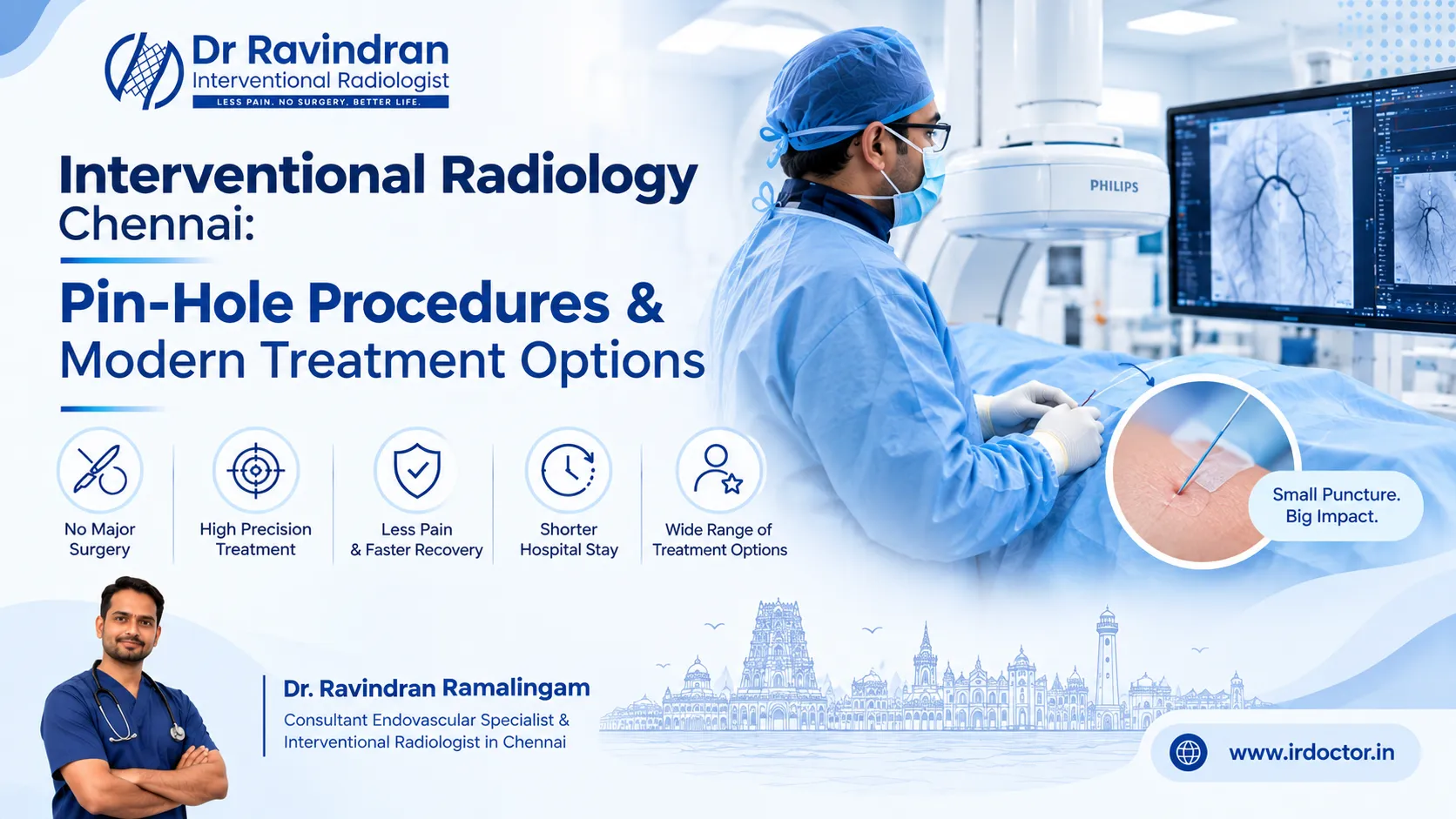
Long, painful surgical cuts are slowly being replaced by something much smaller: a pinhole puncture, just 1 to 2mm wide, usually made at the wrist or groin. No stitches needed. No lasting scar left behind.
How Doctors "See" Inside the Body
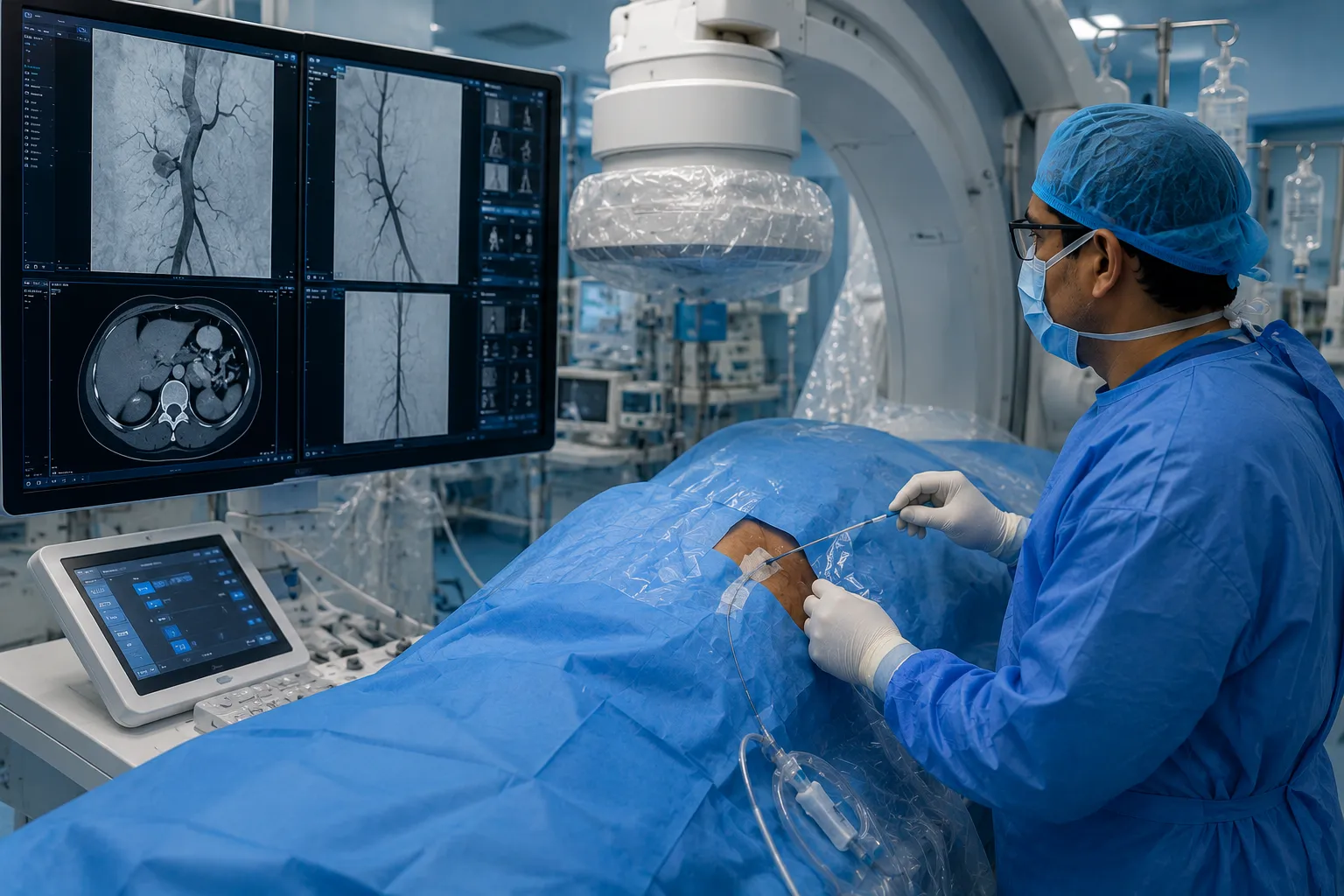
Live imaging ultrasound, CT, and fluoroscopy work like a live map. Through this, a thin catheter can be steered through the blood vessels, straight to the diseased organ, with accuracy down to the millimetre.
Why Full Anaesthesia Usually Isn't Needed
Most of these procedures only need local numbing and light sedation. Because of this, the long recovery, intensive care risk, and nausea that come with full general anaesthesia are avoided almost completely.
Modern Non-Surgical Treatment Options Available in Chennai
Varicose Veins: Laser and Radiofrequency Treatment
A painful, diseased leg vein can be sealed shut from the inside using gentle heat, delivered through a tiny fibre. The whole thing usually takes about 30 minutes and is done as day care. Old-style vein stripping surgery is being replaced by this more and more.
Uterine Fibroid Embolization: Keeping the Uterus Intact
Heavy-bleeding fibroids can be treated by simply blocking their blood supply. Starved of blood, they shrink and shrivel over time, and the uterus stays completely untouched. A major hysterectomy is avoided entirely.
Before choosing a specialist for any of these procedures, it's worth understanding what qualifications actually matter. This guide is a helpful read: Best Interventional Radiologist in Chennai — Non-Surgical Pin-Hole Treatment Specialist
PAE Treatment Chennai for an Enlarged Prostate
Normal urinary flow can be restored in older men without a catheter, without a surgical cut, and without the risk of sexual side effects that sometimes come with traditional TURP surgery. PAE treatment in Chennai has become a real option for men who were once told surgery was their only path. In this procedure, the arteries feeding the enlarged prostate are targeted directly. Once that blood supply is reduced, the gland shrinks slowly, over the following weeks.
Thyroid Nodules: Radiofrequency Ablation
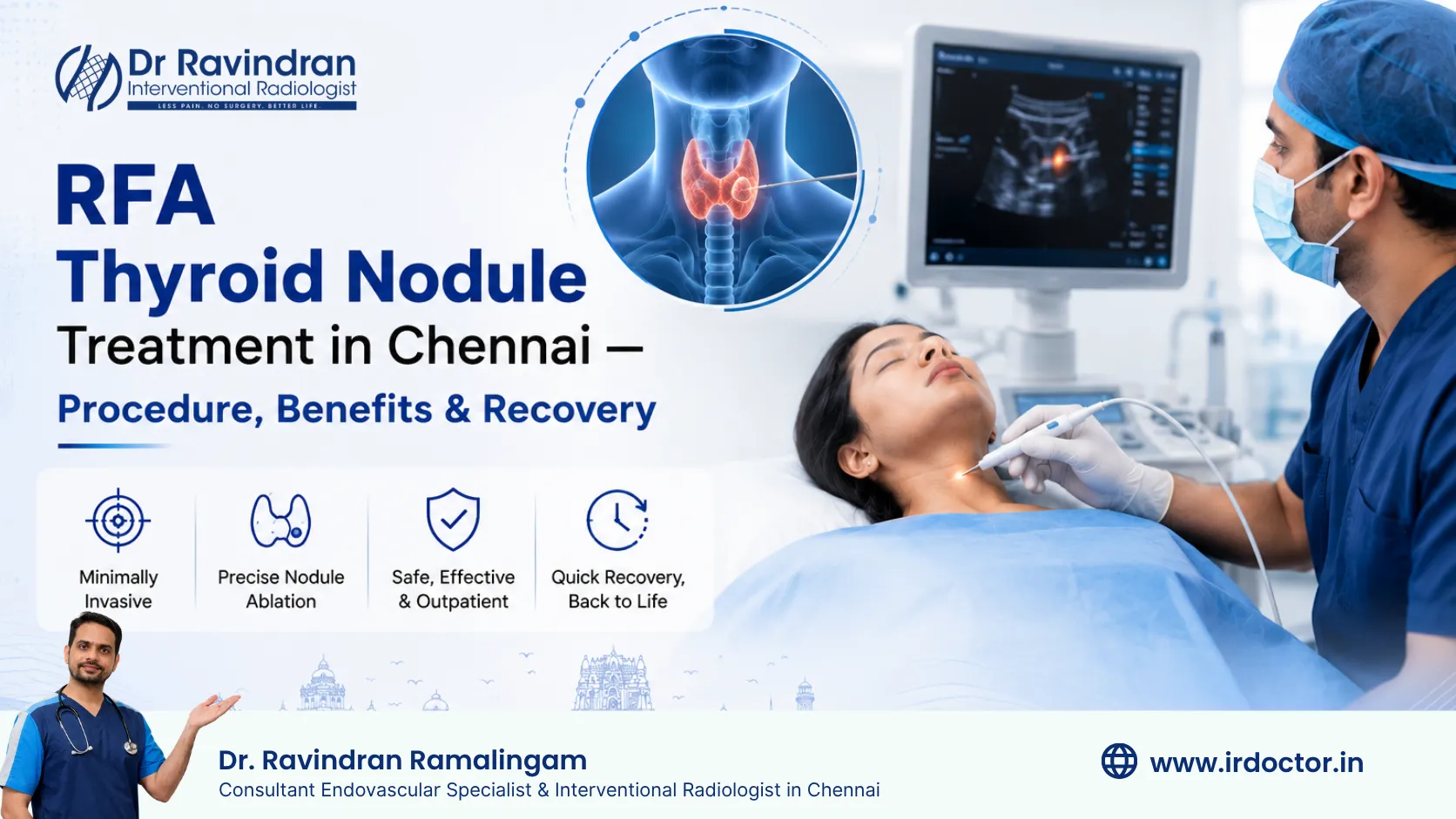
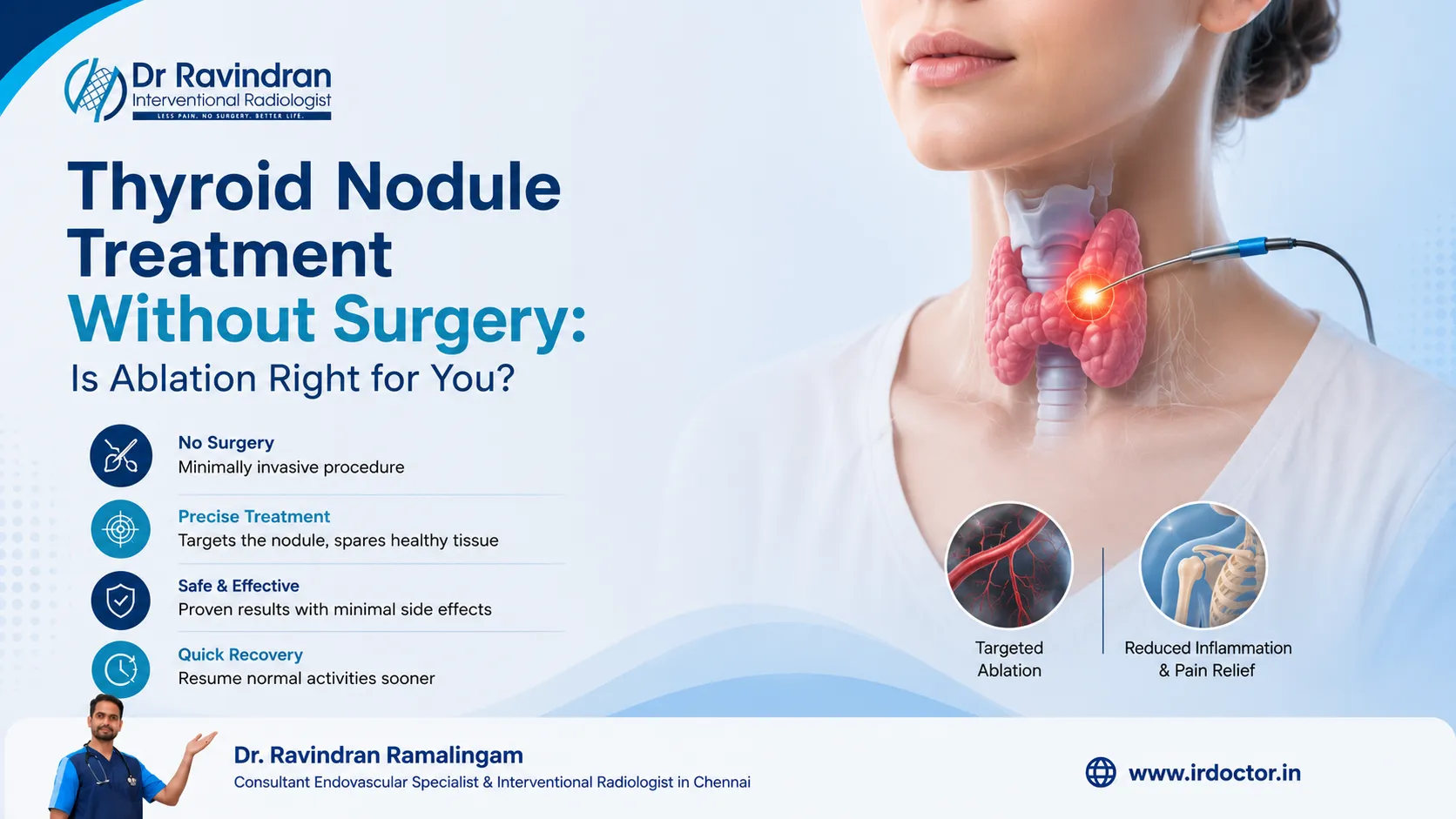
A large swelling in the neck can be shrunk from the inside, using a special radiofrequency needle. No scar is left on the neck, and in most cases, the thyroid keeps working normally on its own, so lifelong medication isn't needed.
Chronic Joint Pain: Genicular Artery Embolization
Tiny, abnormal blood vessels that fuel inflammation in the knee can be targeted and reduced. This offers lasting pain relief for severe arthritis, without needing a joint replacement right away.
Advanced Vascular and Emergency Care
This same pin-hole approach also saves lives in emergencies: clot removal for a brain stroke, coiling for a brain aneurysm, and clot-dissolving treatment for a deep vein thrombosis. These are some of the most urgent, time-sensitive uses of this entire field.
Why Patients Prefer Pin-Hole Treatment Over Traditional Surgery
Home the Same Day
More than 80 out of every 100 pinhole procedures are done as day care. Patients go home within hours, and overall hospital costs come down too.
Back to Normal, Fast
Just 1 to 2 days of recovery is usually enough before normal life resumes. Compare that to the 3 to 6 weeks of bed rest that open surgery often demands.
Fewer Infections, Less Bleeding
Since there's no open surgical wound, the risk of infection, blood loss, and unnecessary tissue damage all drop significantly.
Consulting an Expert Interventional Radiologist in Chennai
What to Check Before Choosing a Specialist
Look for advanced fellowship training first. A dedicated background in these exact procedures, ideally with recognized certification, is what separates real hands-on experience from general radiology training alone.
Booking a Consultation with Dr. Ravindra Ramalingam
Bring your Doppler reports, CT scans, or MRI scans to your first visit with Dr. Ravindra Ramalingam, at Gleneagles Health City, Sholinganallur, or Maruti Scans, Velachery, Chennai. In most cases, you'll get a same-visit opinion on whether surgery can be avoided altogether.
Most patients seen in this clinic never actually needed the surgery they were first told about. Whether it's an enlarged prostate, fibroids, thyroid nodules, or joint pain, pinhole treatment now covers a genuinely wide range of conditions that once meant weeks lost to recovery.
Consult Dr. Ravindra Ramalingam, Interventional Radiologist at Gleneagles Health City, Sholinganallur, and Maruti Scans, Velachery, Chennai, for a personalized evaluation and the right non-surgical treatment path — irdoctor.in





















Sign in to leave a comment.