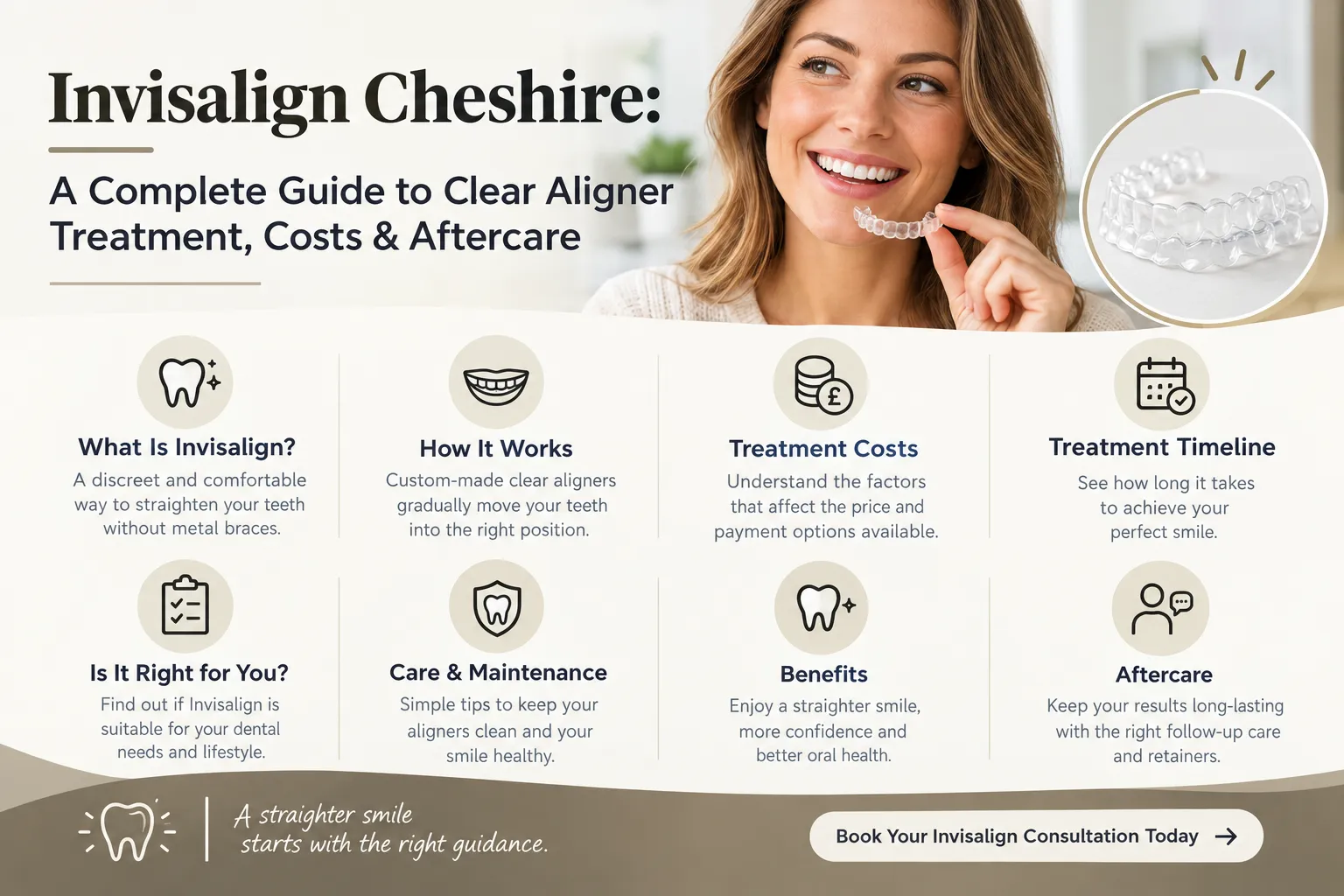

A straighter smile can make a noticeable difference to your confidence, oral hygiene, and everyday comfort. However, many people are hesitant about traditional braces because of their appearance, fixed brackets, or the inconvenience associated with wearing them. Clear aligner treatment offers an alternative for suitable patients who want a more discreet way to straighten their teeth.
For people researching invisalign cheshire, understanding how the treatment works, what it can correct, how much it may cost, and what happens after treatment can make the decision easier.
Invisalign uses a series of custom-made, clear, removable aligners to gradually move teeth into planned positions. Because the aligners can be removed for eating, drinking, brushing, and flossing, they can fit more easily into many people's daily routines.
This complete guide explains what you should know before considering clear aligner treatment.
What Is Invisalign?
Invisalign is a form of orthodontic treatment that uses a sequence of transparent, removable aligners rather than conventional metal brackets and wires.
Each aligner is designed to apply controlled pressure to particular teeth. As you progress through the series, your teeth gradually move according to the treatment plan created by your dental professional.
Unlike fixed braces, the aligners can be removed when eating and cleaning your teeth. However, wearing them consistently is essential for treatment to progress as planned.
Fence House Dental explains that its Invisalign patients are generally advised to wear their aligners for around 20–22 hours per day, removing them for eating, drinking, brushing, and flossing.
Who Can Consider Clear Aligner Treatment?
Clear aligners can be suitable for many teenagers and adults, although suitability depends on the individual's teeth, gums, bite, and overall oral health.
Orthodontic treatment may be used to address concerns such as:
- Crowded teeth
- Crooked teeth
- Gaps between teeth
- Certain overbites
- Certain underbites
- Crossbites
- Teeth that have shifted after previous orthodontic treatment
The NHS notes that orthodontic treatment can improve the alignment of crooked, protruding, or crowded teeth and can also address bite problems.
However, not every orthodontic problem can be treated with the same type of aligner. A professional assessment is therefore important before deciding whether Invisalign is appropriate.
Why Do People Choose Invisalign?
One of the biggest attractions of Invisalign is its discreet appearance. The clear material makes the aligners considerably less noticeable than traditional metal braces.
Other potential advantages include:
Removable design
You can take the aligners out when eating and drinking. This means there are generally fewer dietary restrictions compared with fixed braces.
Easier oral hygiene
Because the aligners are removable, you can brush and floss your natural teeth without having to clean around fixed brackets and wires.
Comfortable construction
The aligners are made from smooth plastic rather than using traditional metal brackets and wires. Some patients may still experience temporary pressure or mild discomfort when changing to a new aligner.
Digital treatment planning
Modern clear-aligner treatment can involve digital scans and computer-assisted treatment planning. At Fence House Dental, patients can receive a 3D iTero smile scan as part of the consultation process, allowing the proposed treatment to be visualised before treatment begins.
What Happens During an Invisalign Consultation?
Your treatment begins with an assessment rather than immediately receiving aligners.
During a consultation, your dental professional may examine your teeth and gums, discuss your concerns, assess your bite, and determine whether clear aligners are suitable.
At Fence House Dental, the stated treatment journey includes an initial consultation, a 3D digital scan, creation of a bespoke treatment plan, aligner treatment, regular progress appointments, and retention after treatment.
This initial stage is also an opportunity to ask questions about:
- Expected treatment duration
- The number of aligners required
- The anticipated cost
- How often appointments are needed
- What happens if an aligner is lost
- Whether additional treatments are necessary
- Retainers and aftercare
A clear treatment plan should explain the proposed approach before you commit to treatment.
How Long Does Invisalign Take?
There isn't one standard treatment time for every patient.
The duration depends on the complexity of the case, the amount of tooth movement required, your response to treatment, and how consistently you wear the aligners.
Fence House Dental states that many of its patients complete treatment within approximately six to 18 months, with some minor cases taking around three to six months and more complex cases potentially requiring longer.
It is important to treat these figures as general guidance rather than a guarantee. Your dentist should provide an individual estimate after assessing your teeth.
How Often Do You Need to Wear Invisalign?
Consistency is one of the most important parts of successful aligner treatment.
Fence House Dental recommends wearing its Invisalign aligners for approximately 20–22 hours each day.
You generally remove them when:
- Eating
- Drinking beverages other than water
- Brushing your teeth
- Flossing
- Cleaning the aligners
Forgetting to wear your aligners regularly can affect the planned treatment schedule. If you are struggling to wear them for the recommended amount of time, speak with your dental team rather than simply stopping treatment.
What Does Invisalign Cost in Cheshire?
The cost of treatment can vary considerably between patients.
Factors that can influence the final price include:
- The complexity of tooth movement
- The number of aligners required
- The expected treatment duration
- Whether additional procedures are needed
- The type of Invisalign package recommended
- Retainers and post-treatment care
Fence House Dental currently advertises Invisalign treatment from £1,300 on its dedicated Invisalign page. Its general fees page separately lists Invisalign/orthodontics from £1,500, demonstrating why patients should obtain an individual quotation based on their specific treatment plan rather than relying solely on a starting price.
The NHS also notes that private orthodontic treatment costs vary according to the complexity of treatment and the appliances used.
When comparing prices, don't look only at the headline figure. Ask what is included in the package.
For example, you may want to check whether the quoted price covers:
- Initial consultation
- Digital scans
- Treatment planning
- Aligner sets
- Progress appointments
- Refinements, if required
- Retainers
- Follow-up appointments
Fence House Dental also advertises finance options, including 0% finance, subject to its applicable terms and eligibility.
Invisalign vs Traditional Braces
Both clear aligners and traditional braces are orthodontic treatments, but the experience can be different.
| Feature | Clear Aligners | Traditional Braces |
|---|---|---|
| Appearance | Clear and discreet | More visible |
| Removable | Yes | Generally no |
| Eating | Aligners removed for meals | Certain foods may need to be avoided |
| Cleaning | Aligners removed for brushing | Requires cleaning around brackets |
| Appointments | Regular monitoring | Regular adjustments |
| Suitability | Depends on the case | Suitable for a broad range of cases |
Traditional braces remain an established orthodontic treatment, and clear aligners aren't automatically suitable for every patient.
The right choice depends on your dental needs, treatment goals, lifestyle, and professional assessment.
What Should You Eat During Invisalign Treatment?
One benefit of removable aligners is that you can generally take them out before eating.
This means you don't have to make the same dietary adjustments associated with fixed orthodontic appliances. However, good oral hygiene remains important.
Before putting your aligners back in, clean your teeth according to your dentist's instructions. Leaving food debris on your teeth for prolonged periods can contribute to plaque accumulation and increase the risk of dental problems.
You should also clean your aligners regularly using the method recommended by your dental professional.
How Should You Clean Invisalign Aligners?
Keeping your aligners clean helps maintain their appearance and hygiene.
A simple routine can include:
- Remove your aligners carefully.
- Rinse them as directed.
- Clean your teeth before replacing them.
- Follow the manufacturer's or dentist's cleaning recommendations.
- Store aligners safely whenever they are not being worn.
- Avoid exposing them to unnecessarily high temperatures.
Don't use harsh household chemicals or unsuitable cleaning products unless specifically advised by your dental professional.
If an aligner becomes cracked, damaged, or lost, contact your dental practice for advice.
Is Invisalign Painful?
Clear aligners can cause some pressure or temporary discomfort, particularly when moving to a new set.
This sensation is generally associated with the planned movement of your teeth. Fence House Dental describes the discomfort associated with new aligners as generally mild and temporary.
However, significant or persistent pain should not simply be ignored. Contact your dentist if you experience unusual discomfort, persistent irritation, swelling, or other concerning symptoms.
Why Is Oral Hygiene Important During Treatment?
Maintaining good oral hygiene is particularly important while undergoing orthodontic treatment.
Although removable aligners make brushing easier than with fixed braces, patients still need to clean their teeth thoroughly.
The NHS advises that orthodontic treatment should only begin when patients have a good standard of oral hygiene because orthodontic appliances can increase the risk of tooth decay and gum problems.
Continue with regular dental check-ups and hygiene appointments throughout your treatment unless your dental team recommends a different schedule.
Choosing Dentists for Invisalign Treatment
When researching dentists cheshire, consider more than the treatment price.
Important factors may include:
Experience
Ask about the dental professional's experience with clear aligner treatment and the types of cases they regularly manage.
Consultation process
A thorough consultation should give you an opportunity to discuss your concerns and understand your treatment options.
Technology
Digital scanning and treatment-planning technology can help create a more personalised approach.
Aftercare
Ask what happens once you finish your final aligner. Retention is an important part of maintaining your results.
Transparent pricing
Make sure you understand what is included in the quoted treatment price and whether additional costs could arise.
Fence House Dental describes itself as a private, family-run practice in Macclesfield serving patients across Cheshire and the North West. Its website also states that it provides Invisalign consultations, 3D smile scanning, and teeth-straightening treatments.
What Happens After Invisalign Treatment?
Finishing your final aligner doesn't necessarily mean your treatment journey is over.
Teeth can move after orthodontic treatment, which is why retention is important.
Retainers are designed to help keep your teeth in their new positions. Your dental professional will advise you about the type of retainer required and how frequently it should be worn.
The NHS states that retainers are generally required after orthodontic treatment to help maintain the new position of the teeth.
Fence House Dental states that retainers are included with its Invisalign treatment packages, although patients should confirm the exact package and current offer when booking.
Tips for Maintaining Your Results
After completing treatment, you can help protect your new smile by:
- Wearing your retainer according to professional instructions.
- Maintaining good brushing and flossing habits.
- Attending routine dental examinations.
- Having professional hygiene appointments when recommended.
- Contacting your dentist if your retainer becomes damaged.
- Replacing retainers when advised.
- Avoiding habits that could damage your teeth or retainers.
Long-term retention is not something to overlook. Consistent aftercare can help preserve the alignment achieved during treatment.
Start Your Invisalign Journey With Fence House Dental
If you're considering clear aligner treatment and want to understand whether it is suitable for your smile, a professional consultation is a useful first step.
Fence House Dental offers Invisalign consultations in Macclesfield and serves patients from across Cheshire and surrounding areas. The practice states that its Invisalign process includes a consultation, digital smile scan, personalised treatment plan, progress monitoring, and retention.
Whether your concern is crowding, gaps, crooked teeth, or another alignment issue, an individual assessment can help you understand the available treatment options, expected timeline, and potential costs before making a decision.
Frequently Asked Questions About Invisalign
1. Is Invisalign suitable for adults?
Yes. Adults can undergo orthodontic treatment, provided their oral health and individual dental circumstances make treatment appropriate. Fence House Dental specifically promotes Invisalign for adult patients.
2. Can Invisalign fix crowded teeth?
Clear aligners can treat many cases of dental crowding. However, the severity and underlying cause of the crowding determine whether Invisalign is appropriate. A professional assessment is necessary.
3. How many hours a day should Invisalign be worn?
Fence House Dental recommends approximately 20–22 hours of wear per day for its Invisalign patients. The aligners should generally only be removed for activities such as eating, drinking, brushing, and flossing.
4. Can I drink coffee while wearing Invisalign?
It is generally advisable to remove clear aligners when consuming drinks other than water. This helps reduce the risk of staining the aligners and allows you to maintain better oral hygiene.
5. How often are Invisalign aligners changed?
The schedule depends on your individual treatment plan. Fence House Dental states that its patients may change aligners every one to two weeks, according to the prescribed plan.
6. What happens if I lose an aligner?
Contact your dental practice for advice. Do not automatically move to the next aligner without professional guidance, as the correct response can depend on where you are in your treatment.
7. Will I need retainers after Invisalign?
Yes. Retainers are normally an important part of maintaining orthodontic results. Your dental professional will advise you about the appropriate type and wearing schedule.
8. Can Invisalign be removed for special occasions?
The removable design allows patients to take their aligners out temporarily, but they should still aim to follow the recommended daily wearing time. Frequent or prolonged removal can interfere with treatment progress.
9. How much does Invisalign cost?
There is no single price for every patient. The cost depends on factors such as case complexity, the number of aligners required, treatment duration, and what is included in the package. Fence House Dental currently advertises treatment from £1,300 on its dedicated Invisalign page.
10. How do I know whether Invisalign is right for me?
The best way to determine suitability is through a professional consultation. Your dentist can assess your teeth and gums, discuss your goals, explain potential treatment options, and provide an individual treatment plan and cost estimate.



























Sign in to leave a comment.