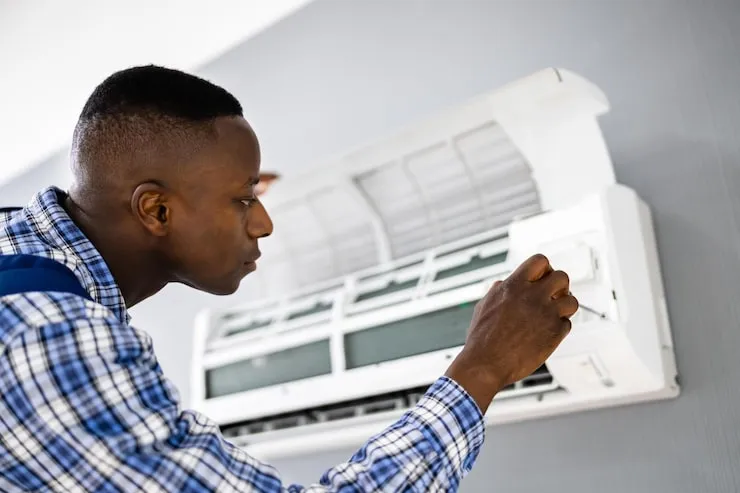

Iraq's air-conditioning industry is being shaped by extreme summer temperatures, rising electricity consumption, urban expansion, and the growing need for dependable indoor cooling. Residential buildings remain the largest source of demand, while commercial facilities, hospitality properties, healthcare establishments, and other non-residential applications are creating additional requirements. At the same time, electricity shortages are increasing attention toward efficient and resilient cooling technologies.
Insights published by MarkNtel Advisors indicate that the Iraq Air Conditioner Market was valued at USD 850.34 million in 2025 and is projected to grow from USD 901.33 million in 2026 to USD 1,222.01 million by 2032, registering a CAGR of 5.2% during 2026–2032. The Iraq Air Conditioner Market report identifies rising electricity demand, increasing cooling requirements, extreme climatic conditions, urbanization, infrastructure development, and the gradual adoption of advanced technologies as important factors shaping the industry.
Extreme Heat Sustains Cooling Requirements
Iraq's climate creates a structural need for air conditioning rather than a purely seasonal requirement. Around 70% of the country has a warm desert climate, including western and southern areas where summer temperatures can exceed 50°C. The International Energy Agency reports that Iraq experienced an average warming rate of 0.48°C per decade between 2000 and 2023, while cooling degree days have continued to increase.
The country's increasing exposure to heatwaves is also placing pressure on electricity infrastructure. The IEA assessment of Iraq's climate resilience notes that rising temperatures and more frequent heatwaves are expected to increase demand for air conditioning and refrigeration, adding to peak electricity demand.
Split ACs Maintain a Leading Position
Split air conditioners account for around 60% of Iraq's air-conditioner industry in 2026, making them the leading product category. Their position is supported by relatively accessible installation, room-level temperature control, broad availability, and suitability for residential as well as small and medium-sized commercial applications.
Split systems are particularly relevant in a market where electricity availability and operating costs remain important considerations. Individual room cooling allows users to operate selected units according to occupancy rather than cooling an entire building through a centralized system.
The growing availability of inverter-based split systems is also influencing product selection. These systems can adjust compressor operation according to cooling requirements, making energy consumption an increasingly important consideration for households and businesses.
Residential Users Drive Demand
Residential users account for approximately 48% of Iraq's industry in 2026, representing the largest end-user segment. Households depend heavily on cooling systems during Iraq's long and intense summers, with many homes requiring multiple units to maintain comfortable conditions across different rooms.
Urban expansion is supporting this demand. The World Bank's urban population data for Iraq shows the country's continuing concentration of population in urban areas, supporting demand for apartments, houses, commercial buildings, and related cooling infrastructure.
New residential construction creates demand for first-time installations, while the existing installed base provides recurring replacement opportunities as older systems become less efficient or reach the end of their operating lives.
Electricity Constraints Influence Technology Choices
Electricity availability is one of the industry's most important considerations. Iraq's power system continues to face capacity and transmission challenges, while extremely hot summers cause electricity demand to rise precisely when cooling requirements are highest.
The IEA reports that Iraq's electricity network has transmission losses of around 50–60% and that available generation capacity remains below installed nameplate capacity. These conditions can create reliability challenges during periods of extreme heat, increasing the importance of equipment that can operate efficiently under constrained power conditions.
This environment is encouraging attention toward inverter-based air conditioners, efficient compressors, and systems designed to manage power consumption. The shift is not driven solely by environmental considerations; reducing electricity consumption can also help households and businesses manage operating expenses.
Energy Efficiency Gains Greater Attention
Energy efficiency is becoming an increasingly relevant factor in Iraq's air-conditioner industry. Extended operating hours during hot weather can create substantial electricity requirements, making equipment efficiency important for both residential and commercial users.
Recent developments in Iraq also demonstrate growing institutional attention to appliance efficiency. In August 2026, Iraq's Central Organization for Standardization and Quality Control and the United Nations Development Programme discussed strengthening energy-efficiency systems and market surveillance for household appliances, including air conditioners. The Iraq energy-efficiency initiative reflects a broader focus on testing, standards, and market oversight.
These developments can influence future product selection as manufacturers and distributors increasingly consider efficiency performance alongside cooling capacity, price, and durability.
Smart Cooling Technologies Gain Attention
Digitalization is gradually changing air-conditioning systems in Iraq. Smart and connected models can incorporate sensors, Wi-Fi connectivity, mobile controls, automated temperature adjustment, and energy-management functions.
The industry study identifies AI-powered smart and connected air-conditioning systems as an emerging trend. These technologies can enable users to monitor equipment remotely, adjust operating schedules, and optimize cooling according to occupancy and environmental conditions.
Such capabilities may be particularly relevant in Iraq because cooling systems frequently operate for extended periods and electricity availability can vary. For commercial buildings, connected controls can also support centralized monitoring of multiple units and help identify abnormal equipment performance.
Electricity Expansion Supports Cooling Infrastructure
Iraq is also pursuing additions to its electricity-generation infrastructure, which could influence the operating environment for cooling equipment. The country plans to add around 15 GW of generation capacity alongside 7.5 GW of solar projects, according to the study.
The IEA also identifies solar expansion as part of Iraq's pathway toward a more resilient energy system. Increased renewable generation could create longer-term opportunities for cooling solutions that combine efficient electrical operation with renewable-energy resources.
However, the relationship between power availability and air-conditioner adoption remains important. Greater generation capacity can support cooling demand, while more efficient equipment can help limit the additional electricity load created by rising temperatures and urbanization.
Commercial Applications Broaden the Product Mix
Although residential users dominate, offices, retail outlets, hotels, hospitals, educational institutions, manufacturing facilities, and oil and gas operations are contributing to broader demand.
Smaller commercial buildings can use split systems, while larger facilities may require VRF systems, chillers, packaged units, cassette air conditioners, or ducted systems. As commercial and industrial infrastructure develops, these applications can broaden the industry's product mix beyond residential cooling.
Hospitality and healthcare facilities may place particular emphasis on dependable temperature control because cooling requirements extend across guest rooms, patient areas, administrative spaces, and common facilities.
Cooling Moves Toward Energy Resilience
Iraq's air-conditioner industry is being shaped by extreme heat, urbanization, residential expansion, electricity constraints, infrastructure development, and technological advancement. Split air conditioners remain the leading product category, while residential users account for the largest share of demand.
The industry's projected expansion through 2032 reflects the continuing requirement for cooling across the country. At the same time, electricity constraints and rising temperatures are increasing attention toward inverter-based, energy-efficient, smart, and potentially renewable-assisted cooling systems. The direction of the industry is therefore increasingly connected with both indoor comfort and broader energy resilience.

























Sign in to leave a comment.