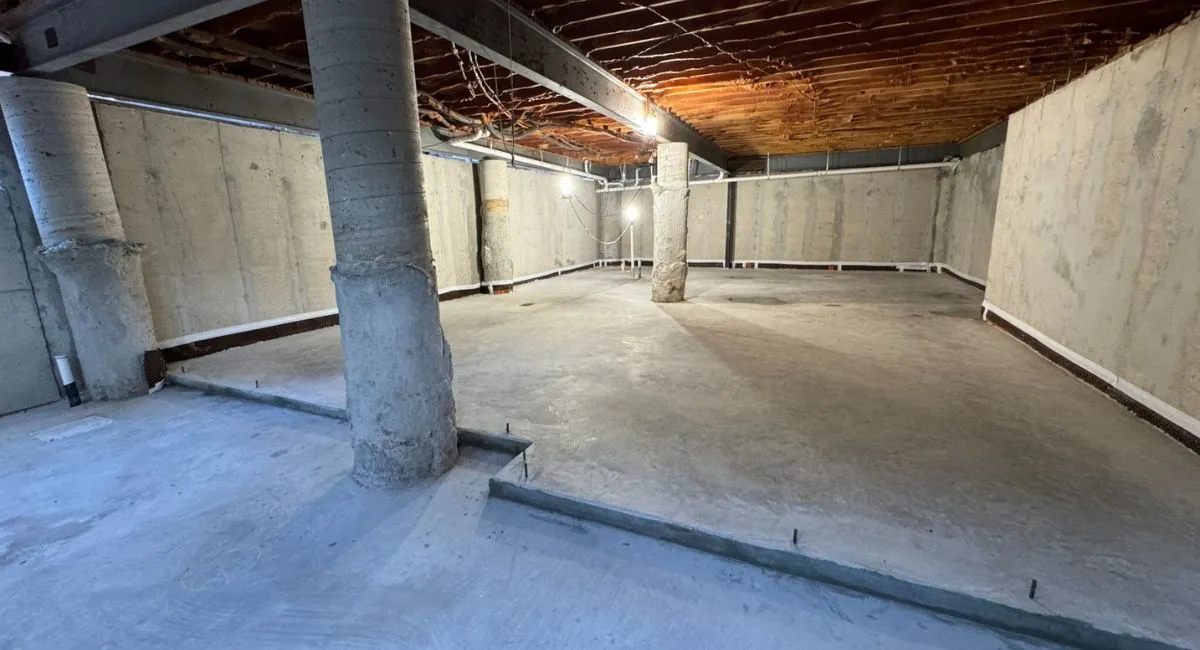

Texas homes can face basement moisture problems for several reasons, including heavy rainfall, groundwater, poor drainage, and water collecting around foundation walls. When moisture repeatedly reaches the basement, simply drying the area may not solve the underlying problem.
External basement waterproofing can be one option for controlling water before it reaches the interior of a basement. However, it is not automatically the right solution for every home. The best approach depends on where the water is coming from, the condition of the foundation, drainage around the property, and the type of basement construction.
What Is External Basement Waterproofing?
External basement waterproofing is a method of protecting basement walls from water on the outside of the structure. Instead of waiting for moisture to enter the basement, the work focuses on the exterior foundation wall and the surrounding soil.
Depending on the property, the process may involve exposing the outside foundation wall, preparing the surface, applying a waterproof coating or membrane, and improving drainage so water can move away from the foundation.
This approach is particularly useful when water is entering through foundation walls because of hydrostatic pressure or saturated soil. The goal is to reduce the amount of water reaching the foundation in the first place.
Why Texas Homes Can Have Basement Water Problems

Texas has different soil conditions and weather patterns across the state. Periods of heavy rain can saturate soil around a foundation, while changes in moisture levels can affect certain types of expansive clay soil.
Poor grading can also cause rainwater to collect near foundation walls. Gutters and downspouts that discharge too close to the house may increase the amount of water around the foundation.
Some common warning signs include:
- Damp or wet basement walls
- Water stains or discoloration
- Musty odors
- Efflorescence on masonry surfaces
- Water appearing after heavy rainfall
- Cracks that allow moisture to enter
- Standing water near exterior foundation walls
These signs do not always mean exterior waterproofing is necessary. They indicate that the source of the moisture should be identified before selecting a repair method.
How Does External Waterproofing Work?
Exterior waterproofing generally begins with an evaluation of the basement and surrounding property. The goal is to determine how water is reaching the foundation and whether drainage problems are contributing to the issue.
1. Foundation Assessment
The foundation walls, visible cracks, drainage conditions, gutters, downspouts, and surrounding soil should be examined. A basement inspection can help identify areas where water is entering and whether there are signs of a larger foundation concern.
2. Exterior Access
If exterior waterproofing is appropriate, the soil around the affected foundation wall may need to be excavated. This provides access to the outside surface of the basement wall.
Because excavation can involve landscaping, walkways, patios, or other structures, the property's layout should be considered before work begins.
3. Wall Preparation and Waterproofing
The exposed foundation wall is cleaned and prepared before the selected waterproofing material is applied. Depending on the wall condition and waterproofing system, coatings or membranes may be used to create a barrier against outside moisture.
The exact material should be selected according to the foundation type, existing conditions, and water problem.
4. Drainage Improvements
Waterproofing works best when water is also given a reliable path away from the foundation. Exterior drainage systems can help reduce water pressure against basement walls.
Gutters, downspouts, grading, and French drain systems may also be considered when they contribute to the water problem.
5. Backfilling
After the waterproofing and drainage work is completed, the excavated area is carefully filled. Proper backfilling and grading are important because the finished soil should direct water away from the home rather than back toward the foundation.
When Is Exterior Waterproofing a Good Choice?
External waterproofing may be worth considering when water is consistently reaching the outside of the foundation wall.
It can be particularly useful when:
- Exterior foundation walls show signs of water intrusion
- Soil remains saturated near the foundation
- Drainage problems are contributing to basement leaks
- Waterproofing needs to be addressed from the outside
- Existing exterior drainage needs improvement
- Interior solutions have not addressed the source of the water
However, exterior waterproofing is not a universal fix. A basement may have several sources of moisture, and treating only one area may leave another problem unresolved.
When Might Another Solution Be Needed?
Not every basement leak requires excavation around the home. For example, water may enter through a foundation crack, a window opening, a floor joint, or an interior drainage problem.
In some cases, correcting downspout discharge or improving surface grading may reduce water around the foundation. Other situations may require crack repair, interior drainage, sump equipment, or a combination of solutions.
This is where foundation basement repair can become important. If water intrusion is connected to cracks, movement, damaged foundation materials, or other structural concerns, waterproofing alone may not address the complete problem.
External vs. Interior Basement Waterproofing
The main difference is where the water-management work takes place.
| Exterior Approach | Interior Approach |
| Works from outside the foundation | Works from inside the basement |
| Helps address water before it reaches the wall | Helps manage water that has reached the basement |
| May require exterior excavation | Usually requires less exterior disruption |
| Can include exterior drainage improvements | Can include interior drainage systems |
| Useful when exterior wall conditions are the main concern | Useful when interior water management is needed |
Neither approach is automatically better for every property. The correct choice depends on the source of the moisture and the condition of the foundation.
How Much Does External Basement Waterproofing Cost in Texas?
There is no single price that applies to every Texas home. The total cost can vary based on the length of foundation wall involved, excavation requirements, soil conditions, accessibility, waterproofing materials, drainage improvements, landscaping, and the extent of existing damage.
A small section of foundation may require a very different scope of work than an entire basement perimeter.
Homeowners should also consider the cause of the water problem rather than choosing a system based only on its initial price. A lower-cost solution may not provide the right type of water management if the underlying issue is left untreated.
How to Decide If Your Home Needs It
Start by identifying when and where the water appears. Does it happen only after heavy rain? Is one wall consistently damp? Are there visible cracks? Does water collect against the exterior wall?
Next, check the simple drainage factors around the property. Gutters should move roof water away from the foundation, and the ground should generally direct surface water away from the house.
If the problem continues, a professional inspection can help determine whether waterproofing, drainage improvements, crack repair, or another solution is appropriate.
Final Thoughts
External basement waterproofing can be an effective way to reduce water exposure around basement foundation walls, but the right solution depends on the cause of the moisture problem.
Texas homeowners should look beyond the visible leak and consider drainage, foundation condition, soil, cracks, and water movement around the property. Addressing these factors early can help reduce the risk of continued moisture problems and more extensive repairs.
Before choosing a waterproofing system, have the basement and foundation evaluated so the repair approach matches the actual source of the water.
Frequently Asked Questions
1. Is exterior basement waterproofing effective in Texas?
It can be effective when outside water is contributing to basement moisture. Its success depends on proper surface preparation, waterproofing, drainage, and addressing the actual source of water.
2. Is external basement waterproofing better than interior waterproofing?
Not necessarily. Exterior and interior systems address water in different ways. The appropriate option depends on the location and source of the moisture, foundation conditions, and drainage around the property.
3. Can basement waterproofing fix foundation cracks?
Waterproofing can help prevent moisture from passing through certain areas, but structural or significant foundation cracks may require separate evaluation and repair.
4. How can I prevent water from collecting around my basement?
Start with proper gutter and downspout discharge, suitable grading, and effective drainage. If water continues to collect near the foundation, further evaluation may be necessary.
5. Should I waterproof my basement before finishing it?
It is generally sensible to address known moisture and drainage problems before finishing a basement. Doing so can reduce the risk of moisture damaging finished walls, flooring, and stored belongings later.




























Sign in to leave a comment.